


Health
Self isolation period to reduce from 10 to 7 days in Wales following review


THE WELSH GOVERNMENT have issued a formal three week review update on the coronavirus situation in Wales, announcing some changes.
Formally the regulations require a review ever 21 days, however recently the Welsh Government have been doing more frequent reviews. Today’s statement appears in line with the three weekly legal review period.
The update has come via a lengthy statement from First Minister, Mark Drakeford MS, which in summary notes:
- Self isolation period to reduce from 10 to 7 days on basis of two negative lateral flow tests taken on days six and seven
- ‘marked increase’ in covid, attributed to Omicron
- Case rate increasing in older people
- Hospitalisations remain low ‘but are starting to increase’
- Covid bed occupancy ‘has grown by a third over Christmas period’
- Wales has ‘not seen a rise in the number of Covid-19 patients needing critical care’
- Wales has ‘significant stock’ of lateral flow tests ‘sufficient’ for needs
- 4,000,000 more being loaned to England to help shortages, taking total loaned to 10,000,000 in ‘mutual’ aid
- Supply of such tests ‘responsibility of UK Government’ pointing to deliver and issues finding any at pharmacies.
The full statement from the First Minister is below:
“Since the last formal review of the regulations, the Cabinet has moved to a weekly review in response to the rapidly evolving public health situation and the emergence of the omicron variant.
Today, a review has taken place of the public health situation over the Christmas period. It has deteriorated in the last week as the omicron wave has arrived. We have seen a marked rise in cases of coronavirus – the majority are likely to be caused by the omicron variant.
This is similar to the position in the rest of the UK.
Over the last few days, record numbers of infections have been identified and the overall seven-day case rate has risen to more than 1,000 cases per 100,000 people across Wales.
Cases are highest among 20 to 29-year-olds and 30 to 39-year-olds. We are also starting to see the cases rates increase in the older age groups.
Hospitalisations remain lower than in previous waves, but these too are starting to increase. The overall Covid-19 bed occupancy has grown by a third over the Christmas period. This is a combination of both omicron and delta cases.
The number of confirmed Covid-19 patients in hospital has also increased to 446 on 29 December. This is 49% higher than the same day last week. We have not seen a rise in the number of Covid-19 patients needing critical care.
Enormous efforts have been made to provide booster vaccines to all eligible adults in the run-up to Christmas – almost 1.6m people have received a booster.
The concentrated attention on vaccination has also led to increases in the number of people coming forward for first and second vaccinations in December. It is never too late to be vaccinated in Wales.
I want to place on record my thanks to all those who have given up their time this Christmas to help protect others, and to all those people, in every part of Wales who have made coming forward for vaccination their priority too.
If you have not yet had your booster please make it a priority. It is the most important thing you can do to protect yourself against this awful virus.
Demand for PCR tests and for lateral flow devices continues to rise and has reached new record levels. Wales has a significant stock of lateral flow tests, sufficient to meet our needs over the weeks ahead.
The Health Minister has agreed today to loan a further four million such tests to the English NHS, bringing that mutual aid to 10 million lateral flow tests.
Distribution of lateral flow test kits through home delivery and pharmacies remains the responsibility of the UK Government and we are working with it, as it increases the capacity of the system.
Wales moved to alert level two on Boxing Day. The public health situation remains very volatile and the Christmas period is always one when collecting and analysing data is challenging.
Against this background, the outcome of the review is that we will continue with the current arrangements for alert level two protections in Wales, while continuing to closely monitor the situation.
The Health Minister published a written statement on 23 December about reducing the self-isolation period from 10 to seven days, on the basis of two negative lateral flow tests taken on days six and seven, from 5 January.
We will introduce this change tomorrow (31 December).
This means people who have tested positive for Covid-19 must self-isolate for seven days. On days six and seven of their self-isolation period they should take lateral flow tests and if these tests – taken 24 hours apart – are positive, they should continue to self-isolate.
We are bringing the change forward because the balance of harms has changed and the rising number of cases has begun to have an impact on the number of people, in critical jobs, who are excluded from the workplace because of self-isolation.
The Cabinet will continue to review the position in Wales on a weekly basis, as we see the omicron variant take hold across Wales. Given the seriousness of the threat the virus poses, it remains vitally important that each one of us continues to take all those simple precautions which will help to slow down the spread of the virus and the risks it poses to all of us.
This statement is being issued during recess in order to keep members informed. Should Members wish me to make a further statement or to answer questions on this when the Senedd returns I would be happy to do so.”
Commenting on the changes to the Labour Welsh Government’s isolation rules, Welsh Conservative Shadow Health Minister, Russell George MS, said: “Along with the Health Minister, I extend our enormous gratitude to all the NHS professionals and volunteers who have spent the Christmas period looking after us in hospital, and keeping the vaccine programme rolling out. Your dedication and commitment will not be forgotten.
“We welcome the changes announced today that sees the self-isolation reduced by three days to enable those critical workers, to keep the economy turning and to maintain staff levels in the NHS. It is a shame that the Labour Government rejected this change last week but at least they have seen the evidence and changed their minds.
“However, the Labour Government needs to lead by example and publish the evidence they are receiving before making decisions, so that we can thoroughly scrutinise their actions. It is not good enough that they want to impose restrictions, which do not make sense, without showing us this crucial evidence to justify them.”



MENTAL HEALTH support has become a key issue for businesses in Wales as employers face growing pressure to help staff manage financial strain, stress and wellbeing at work.
The issue is being highlighted during Mental Health Awareness Week, with new insight from Reed showing that support for employee wellbeing is now an important part of attracting and retaining staff.
Workers in Wales said they need an annual income of £42,000 to live comfortably, compared with an average regional salary of £36,000. That leaves a “comfort gap” of £6,000.
Reed’s latest salary guides also show that 71% of workers say pay has become more important since the cost-of-living crisis, with many employees feeling the pressure of rising everyday costs.
The strain is not only financial. Separate research shows almost one in four workers in Wales, 24%, say they have previously been formally diagnosed with a mental health condition — the highest reported proportion of any UK region.
Pay alone ‘not enough’
Becky Hole, Regional Director at Reed, said employers now needed to look beyond salary alone.
She said: “In Wales, financial pressure and mental health challenges are closely linked. Our data shows that many employees are placing greater importance on stability and support, particularly where salary growth is constrained.
“This means benefits that support work-life balance and mental wellbeing are becoming a much more important part of how valued people feel at work.
“Organisations that prioritise employee wellbeing also benefit in tangible ways. By providing stronger support for mental health, employers can lower staff turnover and reduce the long-term costs linked to ongoing recruitment and the loss of skilled, experienced employees.”

What workers want
WHEN asked what would help them manage stress, 35% of workers in Wales said they wanted more flexible working, 34% wanted better mental health training for managers, and 30% wanted clearer communication about support already available.
However, Reed said there remains a gap between what workers want and what they receive.
The most common benefits currently reported by workers in Wales are onsite parking, at 28%, flexi time, at 26%, and hybrid working, at 23%. Nearly one in five workers, 18%, said they receive no benefits at all.

Ms Hole added: “What this shows is a disconnect between what employees say would most help them manage stress and how clearly mental health support is currently embedded and communicated.
“However, Wales stands out when it comes to flexi time, with a higher proportion of employers offering this benefit compared to other regions — a positive step given its proven role in supporting employee wellbeing and work-life balance.
“Flexible working, open conversations about mental health and managers who are properly trained all come through strongly as priorities.
“Employers have a responsibility to look after their people, and those who want to help their workforce truly destress need to ensure their benefits are visible, accessible and actively support everyday mental resilience.”
Reed said businesses that take wellbeing seriously are more likely to retain skills, stability and trust over the long term.

NEW POLLING shows more than two-thirds of adults in Wales are using potentially harmful coping mechanisms when feeling stressed, anxious or low.
The Mental Health Foundation said the findings, released for Mental Health Awareness Week, show a need for the new Welsh Government to prioritise prevention and action on poor mental health.
The survey found that 69% of adults in Wales had taken harmful actions to cope with their mental health in the past month.
More than a third, 36%, said they had spent time isolating themselves from others, while 34% reported spending more time scrolling social media or going online as a way to deal with anxiety, stress or low mood.
Other commonly reported behaviours included comfort eating or overeating, at 27%, and oversleeping or not getting out of bed, at 31%.
The Mental Health Foundation said these behaviours were concerning because evidence suggests they can make mental health worse over time.
However, the polling also found that many people in Wales are taking positive steps to support their wellbeing.
More than four in five adults, 84%, had taken at least one helpful action to support their mental health. The most common were accessing nature, at 41%, doing something enjoyable such as a hobby, at 37%, and taking part in physical activity or prioritising sleep and rest, at 35%.
The poll of 1,015 people in Wales was carried out by Opinium on behalf of the Mental Health Foundation. It was released to mark Mental Health Awareness Week, which runs from May 11 to 17.
Catherine Razzell, Policy and Public Affairs Manager at the Mental Health Foundation, said: “This polling tells us that, here in Wales, there is a concerning degree of harmful actions taken by people as a way of dealing with their feelings of poor mental health, such as doomscrolling or overeating.
“We are hopeful to see positive actions being taken by individuals to help maintain and improve good mental health. Tried and trusted activities such as connecting with nature, which many of us are fortunate to have access to in Wales, and taking part in physical exercise and rest, in equal measure, are all known to support our mental health.”
Calls for action
The polling found that nearly two-thirds of people in Wales, 64%, are using at least one harmful coping mechanism alongside positive actions.

Only one in five, 20%, reported taking only helpful actions to support their mental health.
The Mental Health Foundation said the results come at a significant moment following the Senedd election, with a new Welsh Government now in place.
Ms Razzell added: “Whilst it is good news people are finding ways to prioritise and protect their mental health and support those around them, more action is needed from our governments to create the conditions to support good mental health.
“We are seeing a once in a generation change politically in Wales. We are one year into the new ten-year mental health strategy for Wales and are keen to see how the new government will implement and resource this.
“In addition to a resourced focus on prevention, which we know has long-term economic benefits, we know that inequalities exist here that are huge barriers to good mental health, keeping people locked in poverty for generations.
“We want to see these issues tackled head-on by the new government for Wales. Now is the time for action and not talk.”
Mental Health Awareness Week is run by the Mental Health Foundation. This year’s theme is “Action”.
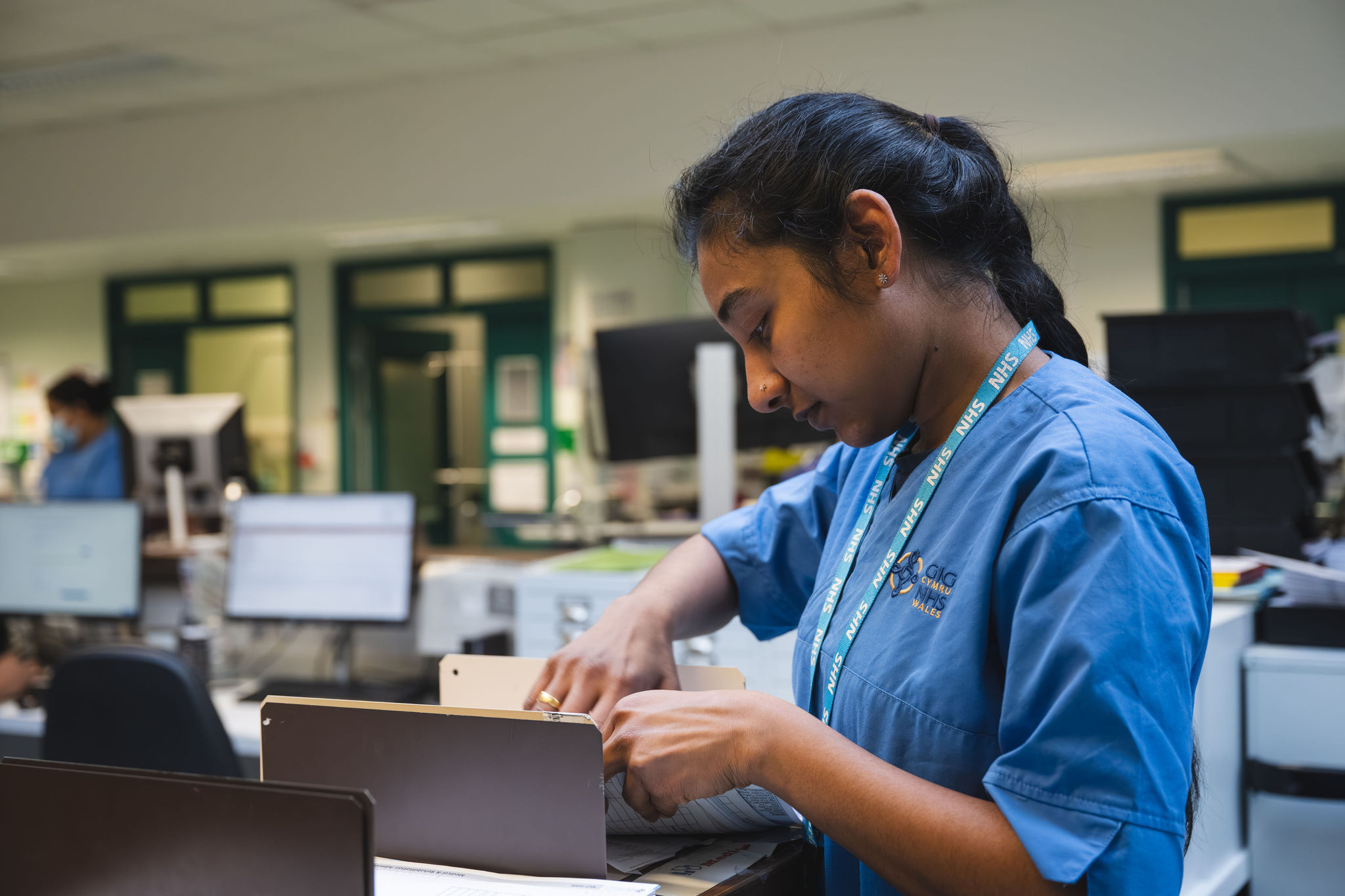
HEALTH chiefs are marking International Nurses Day by celebrating the vital contribution made by nurses across mid and west Wales.
Hywel Dda University Health Board said the day, held each year on May 12, is an opportunity to recognise the work nurses do for patients, families and communities.
This year’s theme is Empowered Nurses Save Lives, reflecting the role nurses play in delivering high-quality, compassionate care, often in challenging circumstances and at some of the most critical moments in people’s lives.
Nurses work across a wide range of settings, including hospitals, community services, primary care, education, research and leadership.
The health board said supporting and empowering the nursing workforce is key to enabling nurses to use their skills fully, continue to develop professionally, and lead improvements in care.
Sharon Daniel, Executive Director of Nursing, Quality and Patient Experience at Hywel Dda University Health Board, said: “International Nurses Day is an important opportunity to recognise the incredible difference our nurses make every single day.
“Empowered nurses save lives, and we see this through the skill, compassion and professionalism shown across our services.
“As we review our Nursing and Midwifery Strategic Framework, Empowered to Care, this is a timely moment to reinforce our commitment to supporting the nursing profession to grow, lead and shape services throughout their careers.
“When our staff feel valued, trusted and supported, teams are stronger and patient care is safer and more effective.”
The health board said nursing is founded on teamwork, with nurses working at the heart of multi-disciplinary teams alongside medical colleagues, allied health professionals and others to deliver joined-up, person-centred care.
It said the approach supports its wider ambition of improving health and wellbeing and providing care closer to home.
International Nurses Day is also being used as an opportunity to thank the nursing and midwifery workforce for their dedication, expertise and commitment to caring for others.




News24 hours ago
State Opening overshadowed by Starmer leadership crisis
KING CHARLES has arrived at Parliament for the State Opening as Sir Keir Starmer faces the most serious crisis of...


News2 days ago
Rhun ap Iorwerth becomes Wales’ new First Minister
PLAID CYMRU TAKES POWER AFTER HISTORIC SENEDD VOTE PLAID CYMRU leader Rhun ap Iorwerth has become Wales’ new First Minister...


News2 days ago
Hotel was hit during a Luftwaffe bombing raid
THE COMMEMORATION, held on Tuesday (May 12), marked the anniversary of the wartime attack, with members of the community gathering...


News2 days ago
Starmer fights for survival as Labour civil war erupts
Cabinet split, ministers resign and MPs revolt as pressure mounts on Prime Minister after disastrous election losses KEIR STARMER is...


News3 days ago
Starmer accused of ignoring Wales in major ‘reset’ speech
Prime Minister pledges EU reset, British Steel nationalisation and youth jobs guarantee — but critics say Wales was left out...


Community3 days ago
Concern grows after child hospitalised following Tenby sea swim
PARENT SAYS BOY BECAME SERIOUSLY ILL AFTER SWIMMING DURING FAMILY VISIT CONCERN is growing in Pembrokeshire after a parent claimed...


News4 days ago
Rhun prepares for clash with Starmer as Plaid eyes power in Cardiff Bay
PLAID CYMRU leader Rhun ap Iorwerth has signalled he is ready for confrontation with Prime Minister Keir Starmer after the...


News5 days ago
Plaid Cymru celebrates historic victory as Rhun ap Iorwerth arrives at Cardiff Bay
CROWDS gathered outside the Senedd as Plaid Cymru leader Rhun ap Iorwerth arrived in Cardiff Bay following his party’s historic...


Crime5 days ago
Police standoff ends after four-hour incident in Pembroke Dock
ELIZABETH COURT SCENE STOOD DOWN AFTER DOMESTIC INCIDENT A FOUR-HOUR police standoff in Pembroke Dock has ended with a 21-year-old...


Crime5 days ago
Teen denies attempted murder of Milford Haven teacher
TEENAGER REMANDED AHEAD OF JULY TRIAL A 15-YEAR-old boy has denied attempting to murder a teacher during a stabbing incident...
-

 Crime22 hours ago
Teenager banned from roads after being caught six times over drug-drive limit
-

 Crime1 day ago
Man threatens to torch Silverdale Lodge through ‘demon drink’, court hears
-

 Crime7 days ago
Racial abuse suspect barricaded himself inside Johnston lodge
-

 Local Government7 days ago
Tenant says botched wetroom repair left her fearing flooding
-

 Crime23 hours ago
Man sentenced for stalking women and threatening to torch home
-

 Crime7 days ago
Milford Haven woman denies causing suffering to cat
-
Crime5 days ago
Police standoff ends after four-hour incident in Pembroke Dock
-

 Crime22 hours ago
Violent man jailed after ‘Banksy’ claims and campaign of domestic abuse