


Health
Over £2m available for projects to help cut carbon emissions in Wales’ health service


OVER £2 million is being made available to help health boards and organisations across NHS Wales to reduce their carbon emissions.
The Health and Social Care Climate Emergency National Programme is looking to fund projects in a bid to cut emissions by more than a third by 2030.
NHS Wales produces around 1m tonnes of CO2 equivalent a year and is the largest public sector emitter in Wales.
The £2.4 million in funding will be available for projects put forward by health boards and NHS organisations to help cut their carbon footprint.
NHS Wales Chief Executive Judith Paget said: “As the largest public sector emitter of CO2, the NHS in Wales needs to play its part to protect the health and wellbeing of future generations.

“We can all help with this effort by returning unused medication to their pharmacy, asking for a more sustainable inhaler or using active or public transport to attend appointments.
“We are also encouraging applications from NHS Organisations for up to £60k in the first year for small to medium sized initiatives to reduce carbon emissions or help the sector adapt to the impacts of climate change.”
The Welsh Government published its NHS Wales Decarbonisation Strategic Delivery Plan last year which included 46 initiatives to help NHS Wales meet its contribution to the 2030 ambition. This will help Wales meet its total legislative target of Net Zero by 2050.
The strategy included electrifying fleet vehicles, using low carbon lighting in all NHS buildings, reducing the use of harmful gases and designing the future health and care social system to be as low carbon as possible.
One of the ways NHS Wales is working to reduce carbon emissions is by reducing the use of high global warming potential (GWP) inhalers from more than 70 per cent to less than 20 per cent by 2025.
People who use inhalers can ask their prescriber to switch their regular inhaler to a low-carbon alternative.
Dr Thomas Downs, Junior Doctor, founder Ysbyty Gwynedd Green Group, Bevan Commission Fellow and part of the Green Health Wales team, said: “To date a lot of the work to make our healthcare more sustainable and climate-smart in Wales has been voluntary, with hospital green groups and specialty green networks being developed across Wales, as part of our Green Health Wales network.

“This funding from the Welsh Government will be well-received, as it should increase health workers capacity for action and hopefully accelerate our transition to more environmentally sustainable and resilient healthcare.
“As health workers we recognise our human health and well-being, and our ability to provide sustainable healthcare depends on a healthy climate and nature, so professionally our duty to “do no harm” extends beyond our clinics and hospitals to our shared environment, on which our patients’ health and well-being depends.”
Eligible projects for the £2.4m funding must deliver towards the ambition for the Welsh public sector to be collectively Net Zero by 2030 and/or increase resilience to the impacts of climate change, by:
- Supporting communication, engagement or behavioural change activity that helps embed the climate change agenda within the organisation
- Driving the implementation of organisation-level decarbonisation plans, including through funding specific initiatives or posts,
- Providing funding for small to medium-sized grass-roots initiatives or innovation activity.


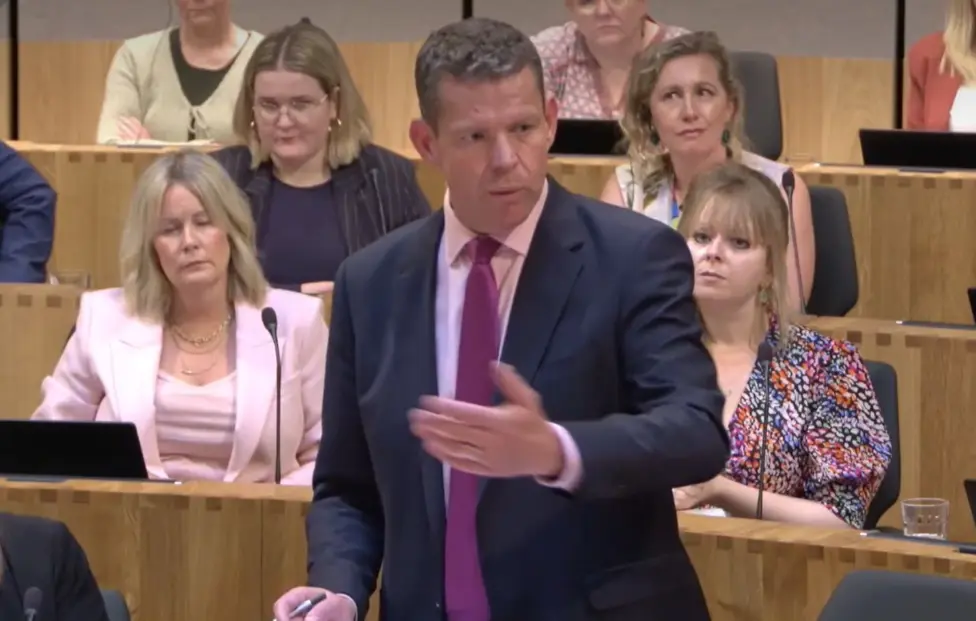
PLAID CYMRU’S Rhun ap Iorwerth was challenged on budget decisions and the NHS in this week’s First Minister’s questions.
Tuesday’s plenary also saw the First Minister face questions on biological sex and funding for children with additional learning needs.
There was disruption in the chamber as shouting broke out when the First Minister admitted he had met with Reform UK’s Welsh leader Dan Thomas.
In his questions to the First Minister, Mr Thomas pressed him to disclose if he had had any talks with other political parties, if there are any potential areas of compromise within the supplementary budget, and if he’d be willing to work with Reform.
The First Minister responded: “It really shouldn’t come as a surprise to anybody that I have met all leaders of political parties in this Senedd.
“When I speak of wanting to be a co-operative government, that means having conversations with leaders of Reform, the Conservatives, Labour, and the Green Party.
“I’m sorry if that’s come as a surprise to anybody.”
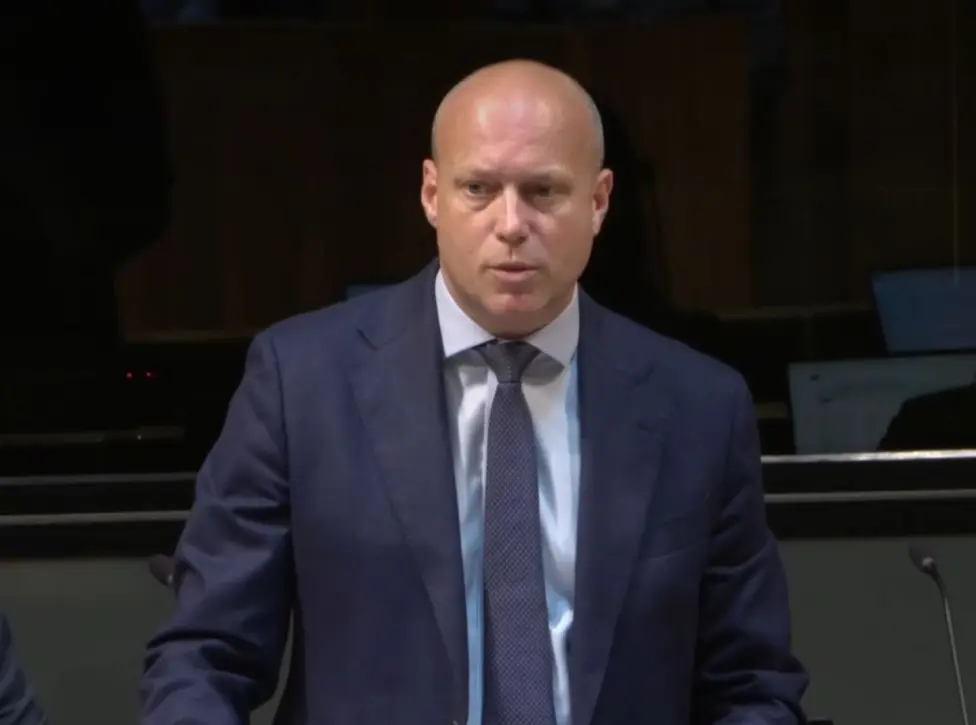
Mr ap Iorwerth said his government is “determined” to put in place their programme for government and recognises that to do so it will need cross-chamber support.
Leader of the opposition Dan Thomas began his questions to the First Minister by drawing attention to the “plight” of student nurses.
He called on Mr ap Iorwerth to share if any of the £145 million allocated to the NHS in the supplementary budget will be used to “guarantee student midwives and student nurses a job when they finish their training.”
Noting that there are “some things […] that money can’t buy”, the First Minister said the current problems facing graduates are due to “over-commissioning” in 2022.
He said: “There’s a specific problem that has arisen this year, which should not have arisen, but it has arisen because training numbers for this cohort who are looking for jobs in September this year were commissioned in 2022.

“Now, we are living now with the challenges posed by the over-commissioning back then.”
Acknowledging how “unsettling” the lack of jobs must be, the First Minister confirmed his health minister has started work on improving the outcomes for graduates.
Mr ap Iorwerth said: “We will help those graduating now to get jobs. They have careers in the NHS. We need them.
“But we have a problem that we face right now, which this government is working around to quite rightly support those who are worried in a way that they shouldn’t be, when they signed up to those courses in 2022.”
Funding for children with additional learning needs was once again at the forefront of discussions in the Siambr.
Interim Labour leader Ken Skates pressed the First Minister to say how much he expects to receive from the UK Government in additional learning needs consequentials between now and 2029.
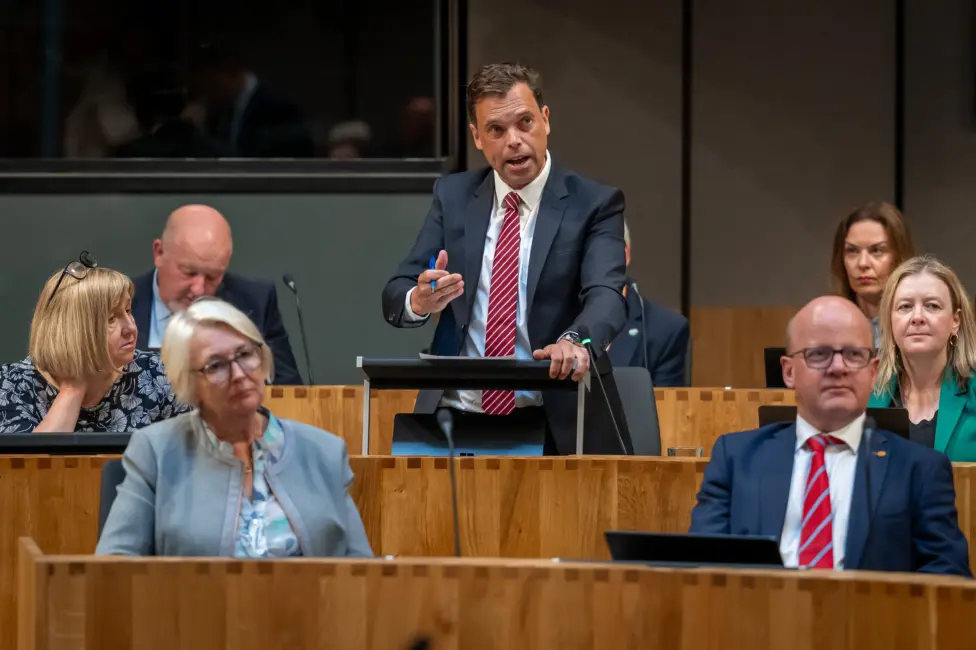
Noting the importance of the prioritisation of government money, the First Minister did not provide a specific figure in response to the Labour member.
Instead he pledged to concentrate on helping “children in education, patients in the health service and families who need support with childcare.”
Answering his own question, Mr Skates said: “The answer is more than £0.5 billion – more than £0.5 billion that will come to the Welsh Government as a result of increased spending by the UK Government on additional learning needs. That is a huge additional sum that your government will be receiving.
He added: “Every one of the 22 local authorities in Wales is calling for this year’s consequential to be passed to councils so that they can then pass it to schools for investment in children and in the teaching profession.”
He called on the First Minister share how much additional ALN funding he is willing to allocate in the supplementary budget.
Mr ap Iorwerth responded: “Those who have been in government will know that there are two sides of the ledger when it comes to budgets. There are consequentials, yes, from time to time, there are pressures, too.
“This government has inherited significant pressures, which have to be addressed – and we have inherited those pressures from previous governments – whilst taking a long-term and sustainable approach to the whole ALN system.”
The First Minister told the Siambr that the ALN pressures will be solved through “long-term thinking in developing policy” not by a one-off payment.

Natasha Asghar, the Conservative health spokesperson, pressed the First Minister to reveal what action the Welsh Government will be taking following the Supreme Court’s ruling on the “definition of biological sex”.
Ms Asghar told the Siambr she was recently contacted by Aneurin Bevan University Health Board staff who had received a presentation titled ‘transcending boundaries, celebrating transgender awareness week and how to be an ally’.
She said: “I’m all in favour of diversity, but I would much rather NHS staff focus on patients and delivering care, than them being distracted by training sessions that do not improve patient care and frontline services.”
Ms Asghar said the staff who contacted her said they felt extremely uncomfortable with the session, describing it as highly sexualised and inappropriate.
She added: “I can’t say I blame them when you hear some of the presentation’s content.
“Part of the presentation involved a man talking about his genitals, alongside a photo of a rocket, and he states, and I quote, ‘No Viagra needed’.
“The presentation also includes a photo of a man when he was naked as a child. The presentation also talks about transgender bathroom issues and supporting men in women’s spaces.”
Ms Asghar asked the First Minister how the Welsh Government will ensure public bodies are following the law and “protecting women’s spaces”.
Noting the Supreme Court decision was not “a victory of one side over another”, the First Minister expressed the need for political leadership.
He said: “She [Ms Asghar] mentions ‘concerned members of staff’. We hear from very concerned trans people who feel that they are being disempowered and put at risk, even, by the current debate.
“And that, I think, is where political leadership comes from. I can’t comment on the particular material that she mentioned because I’m not aware of what it is. But that Supreme Court ruling wasn’t a victory of one side over another.
“I was listening at the time when the judgment was given. What it did usher in was a new era of the need for greater understanding between people who have divergent views.
“All of us have to be aware of that in trying to cool down the temperature on what has become a heated debate but also a very painful debate for many individuals.”
The First Minister was also quizzed on his government’s position on puberty blockers for under-18s, by Reform MS Paul Marr.

Mr ap Iorwerth said: “Where clinically appropriate, puberty suppressing hormones can be prescribed for children in Wales who started treatment prior to the UK Government’s order restricting their prescribing other than through the NHS, and to children accessing NHS gender services, as part of the National Institute for Health and Care Excellence research study when that commences.”
The First Minister said gender identity services in Wales will continue to be “led by the evidence.”
Suggesting the Cass Review highlights “significant uncertainties” around the “long-term safety” of puberty blockers, Mr Marr pressed the First Minister on the “specific steps” his government will take to ensure that “vulnerable young people are not subject to avoidable harm”.
Mr ap Iorwerth informed the Reform MS that the author of the Cass review is supportive of that research.
Mr ap Iorwerth added: “This is a careful study, an academic study, that is about reducing harm to children and young people.
“I would have thought that that is something that, as a whole, we would eager to sign up to.”

More than 9,000 people in Wales are waiting for specialist psychological therapies, with almost half waiting longer than six months
MORE than 9,000 people with moderate to severe mental health conditions are waiting to access specialist psychological therapies in Wales, according to new figures obtained by Mind Cymru.
The charity says the number of people waiting for treatment is now at its highest level since the Covid-19 pandemic.
Freedom of Information data gathered from all seven local health boards shows that, as of December 2025, almost half of those waiting, around 47%, had been on the list for longer than 26 weeks.
Mind Cymru said more than 4,300 people had been waiting more than six and a half months for specialist psychological therapies by December 2025.
That figure has almost doubled since March 2024, when 2,305 people were waiting more than 26 weeks.
The charity is now calling on the Welsh Government to make mental health a priority during the next Senedd term, with a focus on reducing waiting times and improving early access to support.

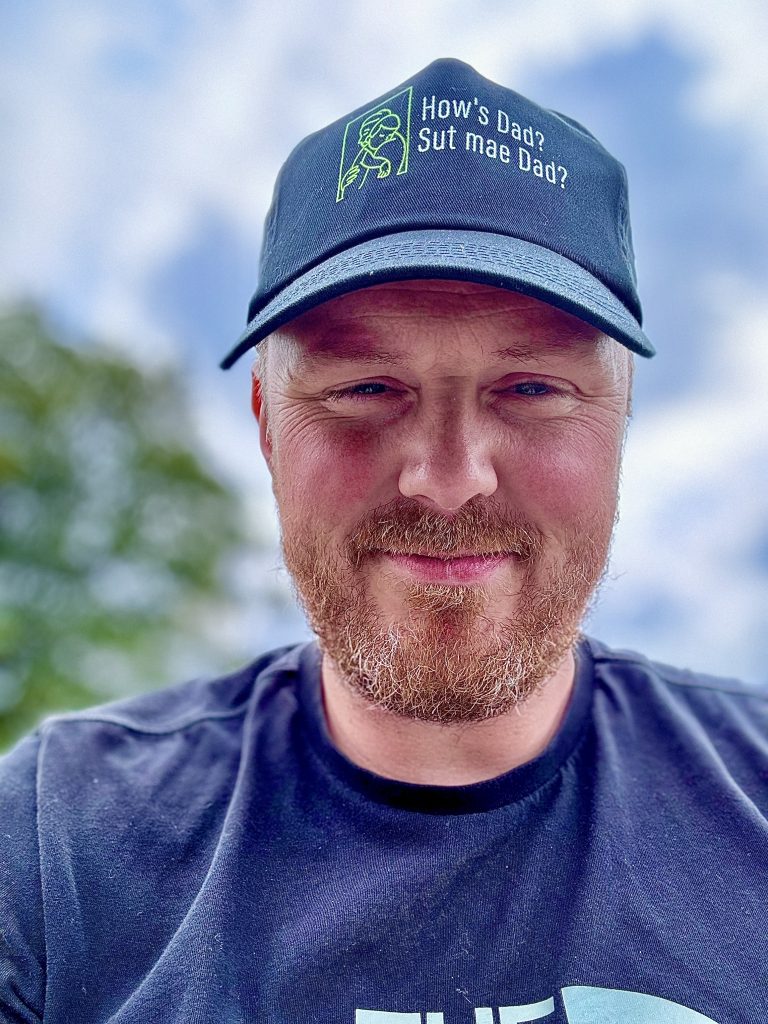
Aled Edwards, from Bangor, said he was told he faced a two-year wait to see a psychologist as an outpatient at a mental health hospital near his home, despite experiencing depression and suicidal thoughts.
The father-of-two was instead placed on a list to see a psychiatrist in the hope he could access support more quickly, but said it still took another 18 months before he finally received the help he needed.
Aled, who was later diagnosed with a male form of post-natal depression, said: “This was at a point in my life where I had already tried to take my own life and I was considering trying again, so this time I went to ask for help instead.
“I was experiencing some really dark thoughts and I was desperate for support.
“When I did get to see a psychiatrist, they left their job after three sessions and I went back into the system to wait for a further six months before starting trauma therapy with another doctor.
“Finding the skills to cope with the kind of intrusive thoughts I was having in the meantime was really hard, and I feel fortunate that I had the means to access private counselling support to keep me going during that period, where so many others might not.”

Mind Cymru has requested the same waiting list data from local health boards three times since 2020, as part of its campaign for improved access to specialist psychological therapies in Wales.
Its original Too Long To Wait report called for more investment in specialist psychological therapies, stronger governance around how local health boards collect and submit waiting time data, and for the figures to be made publicly available.
The charity says those recommendations remain relevant, but that urgent action is now also needed to transform the mental health system so people can access support earlier.
Simon Jones, Head of Policy and Campaigns at Mind Cymru, said the findings showed that mental health must be a central priority for the Welsh Government.
He said: “There’s clearly a very real and growing need for increasing numbers of people to receive specialist psychological support for their mental health in Wales.
“These are people living with moderate, severe and enduring mental health conditions, and those most in need of support.
“That so many are waiting too long to access therapies is placing further demand on a system already under pressure, and there’s a need for significant investment to be made at all levels to help people access the support they need, when they need it.
“With plans already in place to transform Wales’ mental health system and help deliver open access care, we need now to ensure these plans are prioritised and invested in so that we can start to see that positive impact as soon as possible.
“No one should be waiting longer than six months for support with a serious mental health issue. With this in mind, Mind Cymru is calling on the new Welsh Government to make mental health a priority across the next Senedd term.”
Specialist psychological therapies are structured, evidence-based treatments delivered by trained clinicians for specific mental health conditions or complex psychological needs.
They include therapies such as Cognitive Behavioural Therapy, Eye Movement Desensitisation and Reprocessing, Cognitive Analytic Therapy and Dynamic Interpersonal Therapy.

Ministers say health boards and councils must act now to ease pressure on hospitals, ambulances and social care before winter
THE WELSH GOVERNMENT has told NHS Wales and social care partners to start planning earlier for winter, after a difficult year for emergency care and recent heatwave pressure on ambulance services.
Health and Care Minister Mabon ap Gwynfor said the aim was to make ambulance, emergency department and hospital services safer and more resilient during the colder months, while also recognising that pressure on the NHS is no longer confined to winter.
The announcement will be closely watched in west Wales, where Hywel Dda University Health Board runs Withybush, Glangwili, Bronglais and Prince Philip hospitals.
Latest published figures show Hywel Dda performing better than the Wales average on emergency department waits in May, with 66.5% of patients admitted, transferred or discharged within four hours and 9.9% waiting more than 12 hours. However, the health board remains well short of the Welsh Government’s 95% four-hour target, and therapy waiting times in Hywel Dda were worse than the Wales average.
Across Wales, 64.4% of patients attending emergency departments in May spent less than four hours there, while 11,066 patients waited 12 hours or more. Official figures also showed more than 1,300 “pathway of care” delays on the day data was collected, meaning patients were clinically ready to leave hospital but were still waiting for the right care, support or accommodation.
The Welsh Government says this year’s winter plan will focus on five key areas: preventing illness through improved vaccination uptake, keeping more people well at home, freeing up hospital beds through better infection control and earlier discharge, helping patients leave hospital safely when they are ready, and keeping services running under pressure while supporting staff.
An expansion of the RSV vaccine to people aged over 65 who are clinically at risk will begin in September. Ministers also want stronger uptake of vaccination among people at greatest risk, NHS and care staff, and children.
A new communications campaign is also being developed to help people understand where to go for care, so that emergency departments and ambulances are preserved for those with the most serious needs.
Mr ap Gwynfor said: “Our fantastic NHS and social care staff worked incredibly hard last winter, and we are being clear with health boards and partners more needs to be done.
“Last winter was tough. Too many people waited too long for the care they needed, and that’s not good enough. Early planning and action are key, and I’ve also asked officials to begin planning now so we’re better prepared for the winters ahead.
“I am also clear that this is not just a winter challenge. The recent period of extreme heat is a clear reminder that pressures and risk can arise at any time of year.
“Our ambition is simple: safe services all year round that protect ambulance and hospital capacity for those who really need them, ensuring people get the right care, in the right place, at the right time.”
The statement follows renewed concern from emergency medicine doctors about long waits and so-called corridor care. The Royal College of Emergency Medicine has warned that poor patient flow, delayed discharges and a lack of inpatient beds are leaving too many patients stuck in emergency departments for long periods.
The British Medical Association in Wales has also called for clearer recording and reporting of corridor care, arguing that without better data it is harder to understand the scale of the problem and hold decision-makers to account.
There was a further warning last week when the Welsh Ambulance Service declared a critical incident during the extreme heat. The service said 999 call volumes had risen by 31% compared with two weeks earlier, with around 400 additional emergency calls a day. The critical incident was later stood down, but ambulance chiefs said demand remained high.
The political test for the Plaid-led Welsh Government will be whether early planning can translate into visible improvements by winter. Health boards and councils will be expected to work together more closely, but many of the problems ministers are trying to solve depend on social care capacity, staffing, available beds and community services.
For patients and families in Pembrokeshire, Carmarthenshire and Ceredigion, the key question will be whether the plan leads to shorter ambulance waits, fewer long delays in A&E, and quicker support for people well enough to return home from hospital.



Community11 hours ago
Saundersfoot Harbour regeneration project wins national planning award
SAUNDERSFOOT HARBOUR’S redevelopment has been named Best Project at the RTPI Cymru Awards for Planning Excellence 2026. The award recognises...


Business17 hours ago
Pembrokeshire-based Ascona Group expands UK portfolio with Truckhaven acquisition
PEMBROKESHIRE-BASED Ascona Group has completed the acquisition of Truckhaven (Carnforth) Ltd, a major trunk road services area in Lancashire. The...


Health2 days ago
Wales begins early NHS winter planning after long waits and ambulance pressure
Ministers say health boards and councils must act now to ease pressure on hospitals, ambulances and social care before winter...


Crime3 days ago
Judge calls pensioner a ‘dirty old man’ as he avoids jail for exposing himself to women
Judge says 75-year-old Stewart Laugharne behaved ‘disgracefully’ as he avoids jail but is ordered to sign sex offenders register A...
Health3 days ago
Stroke services consultation reaches halfway point as public urged to have say
HYWEL DDA University Health Board is urging people to take part in its consultation on the future of stroke services,...


Business3 days ago
Welsh firms eye share of £5bn defence drone boom
WELSH defence and aerospace firms could be in line for a share of billions of pounds in new military spending...


Community5 days ago
Thousands line Cardigan streets for Lord Rhys homecoming parade
THOUSANDS of people lined the streets and quayside in Cardigan on Saturday as the town marked 850 years since Lord...


Crime6 days ago
Dyfed-Powys Police rated only ‘Adequate’ in organised crime inspection
A WATCHDOG has rated Dyfed-Powys Police only “Adequate” in its response to serious and organised crime, despite praise for the...


News6 days ago
Two taken to hospital after aircraft ditches in Cardigan Bay
Coastguard helicopter spotted two casualties after light aircraft came down off west Wales coast TWO people were taken to hospital...


Sport7 days ago
Long Course Weekend gets underway in Tenby as thousands head for county
Three days of swimming, cycling and running begin with The Wales Swim at North Beach THOUSANDS of athletes and supporters...
-
Crime6 days ago
Dyfed-Powys Police rated only ‘Adequate’ in organised crime inspection
-

 Entertainment7 days ago
Torch cuts children’s cinema tickets to £5.25 for summer
-

 News4 days ago
Biker dies and woman seriously injured in Black Mountain crash
-

 Climate7 days ago
Welsh waters, Westminster profits: Crown Estate row reignited in Wales
-

 Crime7 days ago
Former Swansea Prison inmate died 48 hours after release
-
 News7 days ago
Reform MS: ‘I felt like shouting get out of the water’
-
 Crime6 days ago
Swansea man jailed for 16 years after attacking vulnerable woman
-

 Community7 days ago
Working-class young people ‘shut out’ of marine conservation careers in Wales