


Health
Ground breaking telehealth trial supports people with long term conditions in West Wales

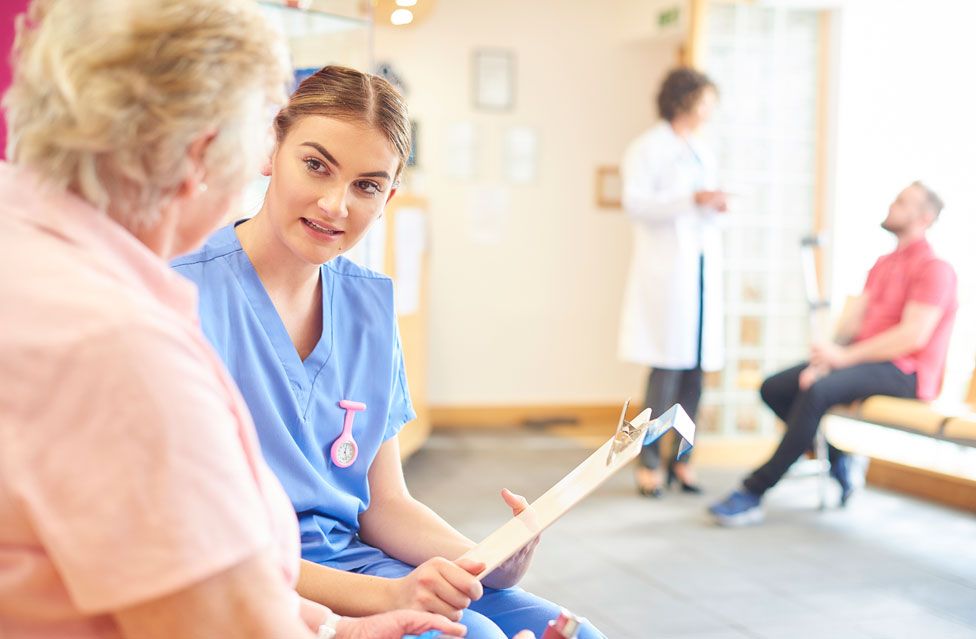
A GROUND breaking telehealth trial has been deployed across West Wales to support people living at home with long term health conditions. One third of adults in Wales, around 800,000 people, have a long term health condition.
Hywel Dda Local Health Board is working in partnership with Delta Wellbeing, global health and care technology solutions provider Tunstall Healthcare and local primary care services support patients across Carmarthenshire, Ceredigion and Pembrokeshire living with long term conditions, such as cardiac, lung and chronic disease, at home using pioneering telehealth equipment.
The initiative focuses on supporting wellbeing in the community using remote monitoring and is transforming the way that care services are delivered to people living with long term conditions. From a service perspective, telehealth means that patients can remain in their own homes, with the reduced need to travel to appointments, and decreasing the need for staff to see patients who can be supported remotely. This in turn reduces stress and expense, and improves the quality of life for patients and their families.
Commenting on the telehealth trial, Gavin Bashar, managing director at Tunstall Healthcare, said: “Long term health conditions account for approximately 50% of all GP appointments, and more than 70% of all inpatient bed days. Using telehealth can help to provide ongoing monitoring to these patients in their own homes, enabling early intervention and empowering them to feel more confident in managing their health.
“Patients in the trial use using telehealth equipment including a blood pressure cuff, weighing scales and a pulse oximeter. The readings from these devices are transmitted to the Tunstall myMobile app on their smartphone and all the information submitted by the patient can be viewed remotely by clinicians 24/7, allowing preventative action to be taken.

“The telehealth service means that changes to a patient’s health or any response to medication can be monitored in real time, ensuring help can be provided at the earliest opportunity. This can lead to a reduction in the need for more complex interventions. The service has protected the wellbeing of vulnerable patients, improved outcomes in patients living with long term conditions, enabled the faster discharge of patients from hospital and provided personalised monitoring of complex comorbidities.”
Clinicians use software that provides a dashboard which prioritises patients that are most in need of care, and allows specialist nurses and primary care to remotely monitor each patient’s symptoms and progress. Areas of concern will generate an email or text message to clinicians, enabling them to be addressed promptly. The technology also allows patients to have consultations by video helping to avoid unnecessary visits to clinics or hospitals. When required, face to face appointments will be arranged for further treatment and consultation.
So far around 300 patients have been supported through the service. Early assessment of patient reported outcome measures show improvement of quality of life and a change in behaviour with improved physical and psychological outcomes.
Speaking on the benefits of home monitoring, 79-year-old cardiac patient Pat , said: “My heart nurse asked me if I would try this new technology that they were bringing in. I’ve had absolutely no problems what-so-ever. It’s no more difficult than going into a GP surgery. It’s all connected to the iPad I have been given which then goes straight through to the heart clinic. It’s so easy! You can do everything from your own armchair no problem at all.”
Clare Marshall, heart failure specialist nurse for Hywel Dda Local Health Board, added: “Telehealth equipment allows me to manage medication changes from a distance, which patients really like. I have been able to prevent hospital admission and more complex care interventions for a patient whose heart rate had decreased following a change of medication.
“Overall, the service empowers patients to manage their own condition as they learn more about what impacts upon their health, and increases confidence in recognising their symptoms. The service builds upon the principles of shared decision making and co-production in healthcare, delivering improved outcomes.”
The trial follows Delta Wellbeing’s successful CONNECT proactive technology enabled care (TEC) programme which has been acknowledged as an exemplar in the UK, providing a good practice example of working across sectoral boundaries to deliver a radical, person-centred approach to wellbeing, care and support.

CONNECT focussed on supporting prevention and wellbeing through a technological and digital approach, and combining bespoke technology enabled care equipment with wellbeing calls, access to a 24/7 community response and digital support. Delta CONNECT is a pioneering national programme funded under the Welsh Government’s Transformation Fund through the West Wales Care Partnership Board.


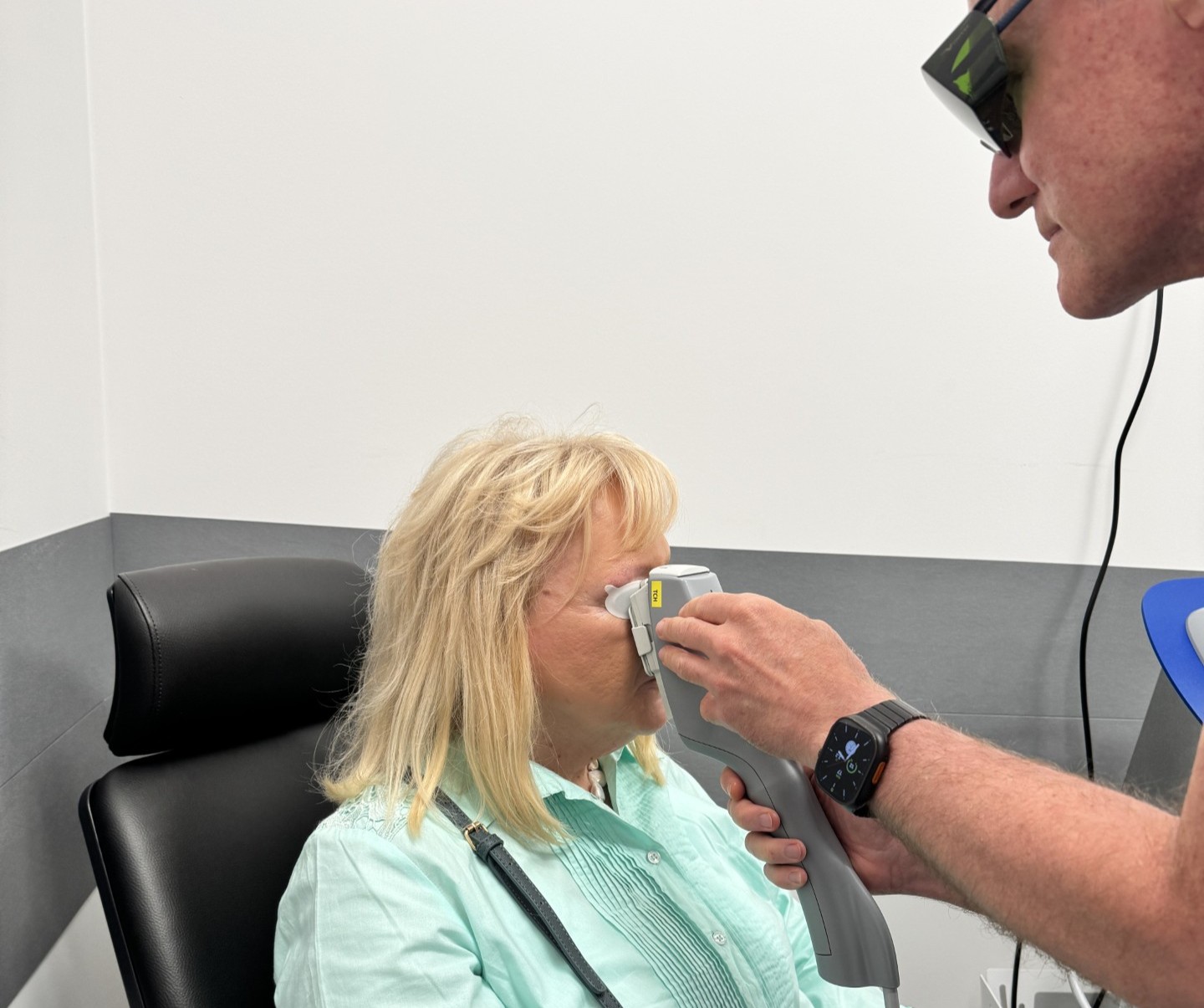
A HAVERFORDWEST opticians has launched a specialist clinic for dry eye disease, offering new support for people living with the common condition.
Specsavers Haverfordwest has introduced its Advanced Dry Eye Clinic to give customers access to in-depth diagnosis and targeted treatment for dry eye.
Dry eye is a common, but often misunderstood, condition where the eyes do not produce enough tears, or the tears evaporate too quickly, leading to discomfort, irritation and sometimes blurred vision.
It can be linked to a range of factors, including increased screen use, contact lens wear, ageing and environmental conditions. As many as one in three people suffer from dry eye and most causes can be treated.
Many people are surprised to learn that watery eyes can actually be a sign of dry eye, as the eyes produce poor-quality reflex tears in response to irritation. The new service provides an in-depth approach to diagnosing and managing the condition.
While many high street opticians now offer dry eye clinics, Specsavers Haverfordwest provides a wider range of specialist treatments and technology that are not commonly available.
Using advanced imaging to assess the eyes and tear glands, the team can identify the underlying cause of symptoms and create a personalised treatment plan for each customer.
Whilst there are a range of different treatments available, the major investment has been in the introduction of eye-light devices, bringing advanced IPL (Intense Pulsed Light) and LLLT (Low-Level Light Therapy) treatments to customers suffering from dry eye symptoms.
Designed to target the underlying causes of dry eye disease, the eye-light device combines clinically proven light-based therapies to help improve tear quality, reduce inflammation, and restore eye comfort. The treatment is safe, non-invasive, and suitable for many patients experiencing irritation, burning, watery eyes or discomfort linked to screen use and modern lifestyles.
The clinic also supports contact lens wearers experiencing discomfort, helping them return to comfortable, everyday use.
Some of the first customers to use the clinic have already noticed improvements in their symptoms.
Danielle Thomas says: ‘I honestly can’t believe the difference. I’d been struggling with sore, gritty eyes for years and had given up wearing my contact lenses altogether – they just became too uncomfortable. I was constantly using drops with very little relief.

‘From the moment I walked into the dry eye treatment room, it felt completely different to a normal appointment. The environment is calm, almost spa-like and the whole experience was surprisingly relaxing. The treatments were comfortable and the team explained everything so clearly. After just three sessions the improvement was notable – my eyes feel normal again.
‘The constant irritation and watering have gone and I’m now back in contact lenses comfortably, which I never thought would be possible. It’s genuinely been life changing. I wish I’d known about it sooner.’
Wayne Jones, optometrist and retail director at Specsavers Haverfordwest, adds: ‘Dry eye is something we see very frequently, yet it’s still widely dismissed as a minor irritation. In reality, it can have a real impact on comfort, vision and overall quality of life.
‘What many people don’t realise is that, in many cases, there is an underlying cause that can be identified and treated.
‘By launching this clinic, we’re able to offer a much more detailed and personalised level of care here in West Wales, helping us support more customers locally. We would encourage anyone experiencing persistent symptoms such as dryness, irritation or blurred vision to have their eyes checked, as there’s often a treatable cause.’
People interested in using the clinic should call Specsavers Haverfordwest on 01437 767788 to book an initial assessment and discuss treatment options.
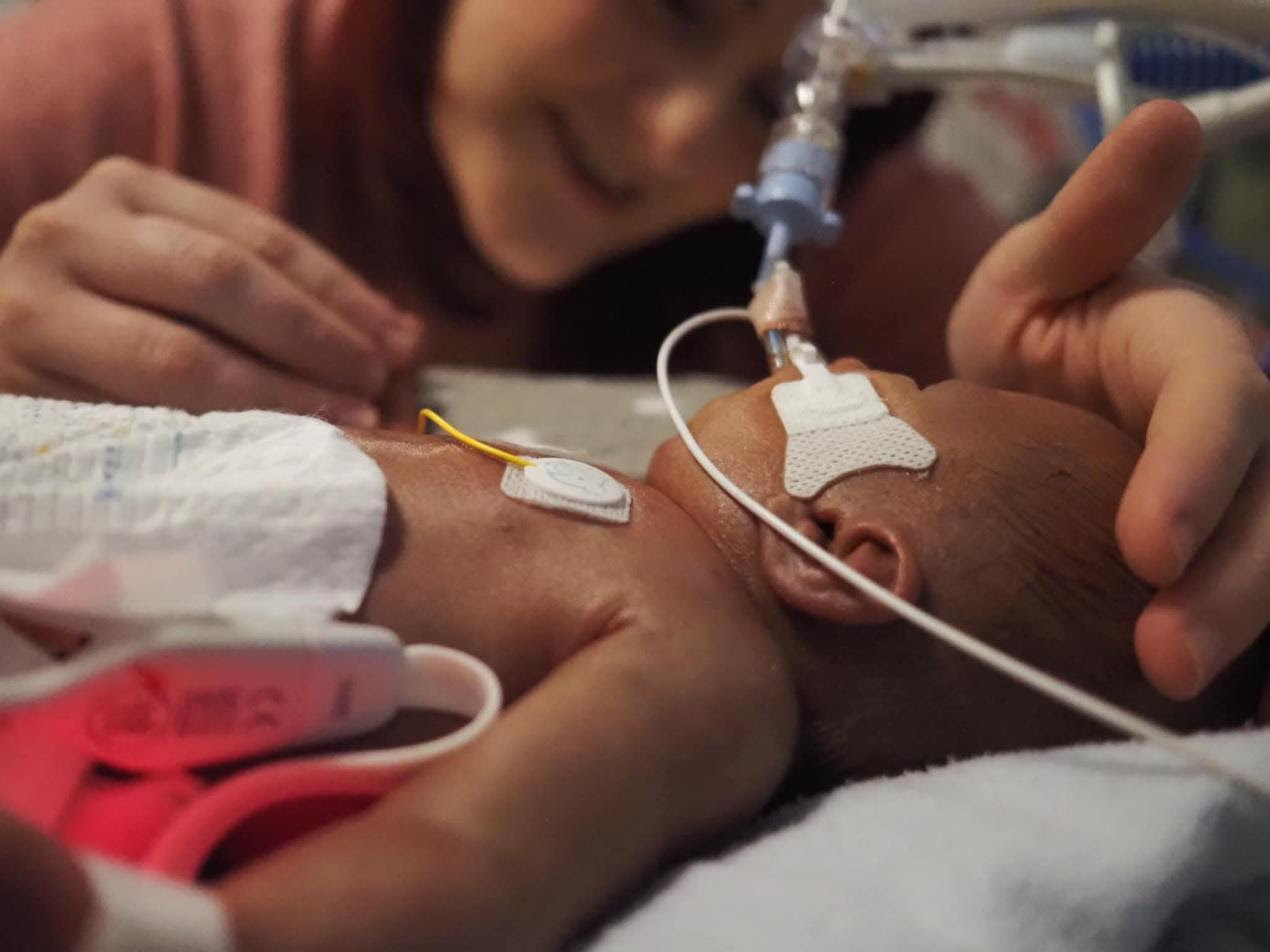
Sands calls for urgent targets to reduce baby deaths and improve mental health support for bereaved parents
WALES has recorded the highest stillbirth rate in the UK for the third year in a row, according to baby loss charity Sands.
The charity has called for urgent action from the Welsh Government following the publication of the latest MBRRACE-UK perinatal mortality surveillance report, which tracks stillbirths and neonatal deaths across the UK.
Sands says there has been a lack of political focus on maternity safety and saving babies’ lives in Wales, despite repeated reviews.
The charity is calling for clear national targets to reduce stillbirths and neonatal deaths, as well as action to eliminate inequalities linked to ethnicity and deprivation.
Aidan Smith, Wales campaign lead for Sands, said: “There has been a lack of political focus and attention on maternity safety and saving babies’ lives in Wales in recent years.
“There has been review after review, but little change. At Sands, we are supporting bereaved parents across Wales to campaign for targets to reduce stillbirths and neonatal deaths and eliminate inequalities by ethnicity and deprivation.
“Bereaved parents are calling for accountability. Targets to reduce stillbirths and neonatal deaths will help ensure that saving babies’ lives becomes the political priority it should be.”
Sands says England introduced targets to reduce baby deaths in 2015, helping focus political decision-making and transparency.
Mr Smith said analysis by the Sands and Tommy’s Joint Policy Unit suggested that more than 1,000 babies in Wales may have survived if stillbirth and neonatal mortality rates had matched the best performing countries in Europe between 2019 and 2023.
The charity wants the Welsh Government to introduce new targets running to 2035, including reducing the stillbirth rate to 2.0 stillbirths per 1,000 total births, and reducing neonatal mortality to 0.5 deaths per 1,000 live births for babies born at 24 weeks’ gestation and over.
It is also calling for inequalities in baby loss linked to ethnicity and deprivation to be eliminated.
Mr Smith said Wales also needed better monitoring of maternity outcomes, including a national data dashboard to track changes over time and identify differences between health boards and population groups.

He said more complete data was needed on ethnicity and social risk factors to understand which families were most at risk of pregnancy and baby loss.
Sands has also raised concern about a lack of specialist psychological support for bereaved parents in Wales.
Mr Smith said there was currently only one specialist NHS service providing mental health support to bereaved parents, the Onnen service in Cardiff and Vale.
He said: “The Welsh Government must evaluate the Onnen service in Cardiff and Vale and expand this to all health boards across Wales.
“All bereaved parents in Wales should have access to specialist psychological support regardless of where they live, the type of pregnancy or baby loss they experienced, or how long ago it was.”
The Welsh Government said support was available to families affected by pregnancy loss and pointed to work taking place across health boards.
A Welsh Government spokesperson said: “The loss of a baby at any stage of pregnancy is devastating. Families who experience pregnancy loss at maternity units in Wales are supported by bereavement midwives, in conjunction with Sands, and offered memory boxes, which include a certificate of birth.
“Since 2016, stillbirth rates in Wales have shown a downward trend. The latest Perinatal Mortality Surveillance report acknowledges that in Scotland, Wales, and Northern Ireland, year-to-year variation in rates is often more pronounced because of lower birth numbers.
“All health boards are committed to improving quality and safety in perinatal care – through enhanced clinical reviews, early warning surveillance, safer preterm birth care, and structured learning from incidents.”
Hywel Dda University Health Board said it recognised “how devastating the loss of a baby is for parents and their families” and said its maternity and neonatal teams worked to provide safe, compassionate and supportive care.
Dana Scott, Director of Midwifery and Professional Governance for Women and Children at Hywel Dda, said the health board had “robust safety measures and clear clinical processes” in place across its maternity services.
She said Hywel Dda’s review processes were aligned with MBRRACE-UK and the Perinatal Mortality Review Tool, ensuring the health board listened, learned and reflected on each baby loss.
Ms Scott added that every family affected by stillbirth or neonatal death had access to dedicated bereavement midwives and nurses, as well as psychological support, follow-up care and opportunities for memory-making.
She said the health board also worked closely with its local Sands group and remained committed to learning from national reports to improve maternity safety locally.
Sands said the new Welsh Government now had an opportunity to act.
Mr Smith added: “Bereaved parents across Wales are campaigning for accountability and change. The new Welsh Government has a chance to reset the narrative by implementing targets to save babies’ lives, eliminating inequalities in loss by ethnicity and deprivation, and rolling out specialist mental health support for bereaved parents across Wales.”
Sands provides support to anyone affected by pregnancy loss or the death of a baby, including a confidential helpline, email support, online groups and local peer-support networks.

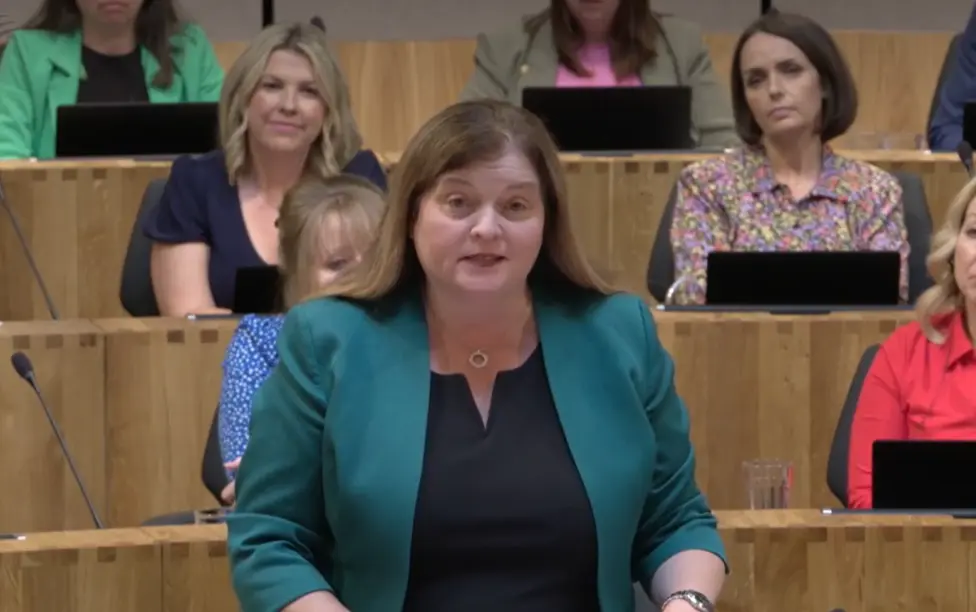
TRANSGENDER people “feel under siege”, Wales’ Deputy First Minister has said.
Sioned Williams faced questions on gender identity guidance in schools, and the implementation of single-sex spaces, during her first appearance at Questions to the Deputy First Minister.
Serving as both Deputy First Minister and cabinet secretary for social justice and equality, Ms Williams was questioned by opposition politicians on Wednesday June 10, about the Welsh Government’s response to the Cass Review, and the implementation of the Supreme Court’s ruling on single-sex spaces.
The session opened with questions from Blaenau Gwent Caerffili Rhymni’s Reform MS Catherine Cullen, who asked how the Welsh Government would work with education ministers to prioritise “objective, evidence-based safeguarding standards” in schools.
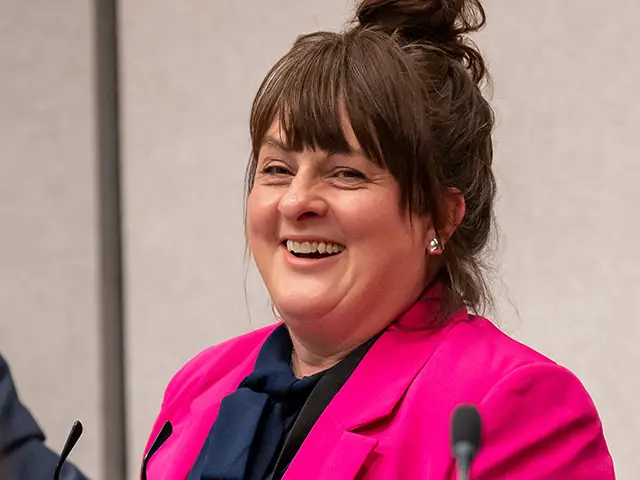
She said: “We sit here today with one non-negotiable duty: the absolute safety of Welsh children in schools.
“When the Cass review explicitly warned that social transition – that is, changing a child’s name, pronouns or uniform at school – is not a neutral act and carries severe psychological risks, Plaid Cymru voted against these recommendations.”
She continued: “[Plaid’s] manifesto demands a demedicalised self-declaration system that actively pushes gender identity theories through the school system.”
In response, Ms Williams said the Welsh Government remained committed to improving literacy and numeracy standards, and stressed the importance of creating a supportive environment in which all children can fulfil their potential.
She told members that education officials had developed draft guidance for schools on supporting transgender, non-binary and gender-questioning learners, and said the education minister recognised the need to proceed with “leadership and sensitivity”.
Questions then turned to the implementation of single-sex spaces following the Supreme Court’s ruling on the definition of sex under the Equality Act.
Reform UK MS Art Wright, of Casnewydd Islwyn, asked about the Welsh Government’s plans to implement single-sex spaces across Wales, while Conservative MS Natasha Asghar, of the same constituency, accused the previous Labour administration of “dragging its heels” in responding to the judgment.
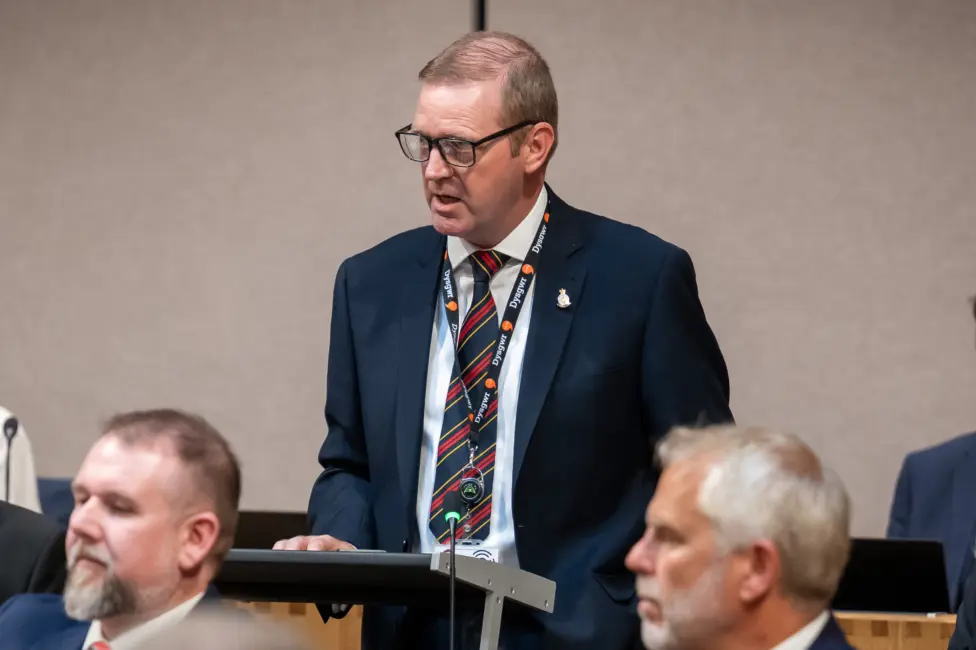
Ms Asghar said she had received correspondence from a Welsh Government employee claiming staff were still working under policies that allowed “men who identify as women to use women’s single-sex spaces from the first day of self-identification”.

Reading from the email that was sent to her, she said: “A government cannot pick and choose which laws it follows, yet that is exactly what seems to be happening within the Welsh Government itself.”
Responding, Ms Williams said the Welsh Government respected the Supreme Court ruling and was working to ensure devolved policies and practices complied with the law.
“This work has to be done carefully and consistently, and across a range of devolved areas,” she said.
However, the Deputy First Minister also emphasised that the Equality Act continues to protect people with the protected characteristic of gender reassignment from discrimination and harassment.
She added: “This is a community that feels under siege at the moment, and we must be sensitive to that.
“We need to look at the practical steps that we can take whilst complying with the Supreme Court ruling, and then, in seeing the code of practice that will come forward, if it is passed in Westminster, we will need to consider how we do that.”
Ms Williams said work was continuing across government departments to ensure Welsh Government policies comply with the law while maintaining protections for transgender people.
Ms Williams, who represents the Brycheiniog Tawe Nedd constituency, also reaffirmed her support for universal free school meals during the session, after Senedd Members raised concerns about food poverty and access to nutritious food for children.
Huw Thomas, Labour MS for Caerdydd Penarth, drew attention to the work of the previous Labour government in introducing universal free school meals for primary school children across Wales.
Mr Thomas said: “For too many of our pupils, this is the only proper meal of the day that they have every day – hugely important – and yet we know that food costs have risen dramatically in recent years.
“So, my question is: when councils tell Welsh Government what the cost of supplying these meals are, will you accept and respect their advice and fund it, or else risk affecting the quality and provenance of the food served to our young people?”
Ms Williams agreed that free school meals play a vital role in supporting children and families.
She said the scheme “really does help”, allowing children to receive the “nutritious hot meal that they so desperately need”.
While noting that responsibility for free school meals sits within the education portfolio, the Deputy First Minister said she would ensure the concerns raised within government.
The discussion also turned to nutrition during pregnancy and early childhood.
Welsh Liberal Democrat leader Jane Dodds said access to nutritious food in a child’s earliest years is critical to healthy development.
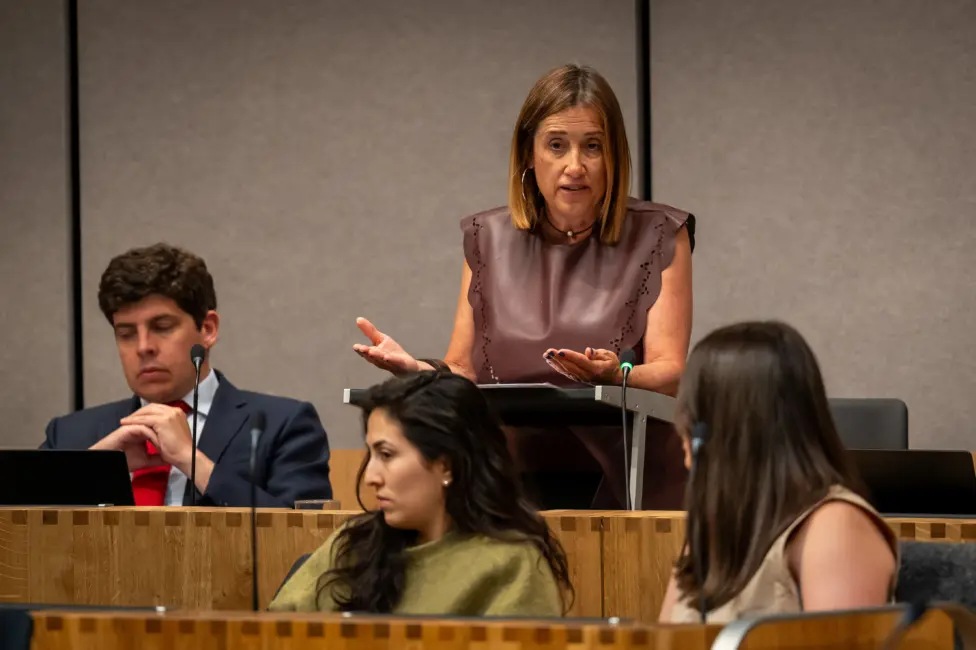
She said: “We know how important nutritious food is in brain development in babies, both in pregnancy and in those first 1,000 days.
“Key nutrients such as vitamin D are absolutely essential, and if you are poor and you are not able to afford a full range of nutritious food, then that hampers that child’s development from the very, very early point.”
Ms Dodds asked what steps the Welsh Government was taking to ensure babies and young children have access to healthy food during their first 1,000 days.
Responding, Ms Williams said she “wholeheartedly” agreed about the importance of nutrition in the early years.
She pointed to the Healthy Start scheme, which provides support for low-income pregnant women and families with young children, describing pregnancy as a “crucial part” of ensuring lifelong health.
The Deputy First Minister also highlighted the nursery milk scheme, which provides children under the age of five in approved childcare settings with a free daily portion of milk.
Ms Williams said ensuring children have access to nutritious food from pregnancy through early childhood remains an important part of tackling inequality and improving long-term health outcomes in Wales.


Community18 hours ago
Police officer hailed hero after midnight sea rescue in Milford Haven
PC swam 100 metres offshore to save distressed woman heard calling for help in darkness A DYFED-POWYS POLICE officer has...


Local Government24 hours ago
Security privately arranged by Mayor at Beating of the Bounds
HAVERFORDWEST TOWN COUNCIL has confirmed that security personnel seen at this year’s Beating of the Bounds were privately arranged and...


Business2 days ago
Celtic Freeport five-year plan puts Milford Haven at centre of green energy future
Strategy promises investment, skilled jobs and new supply chains, but major barriers remain over grid connections, planning and delivery THE...

Education2 days ago
Closure of Ysgol Clydau approved after emotional council debate
COUNCILLORS WARNED RURAL COMMUNITIES WILL REMEMBER DECISION PEMBROKESHIRE councillors have voted to close Ysgol Clydau following an emotional debate over...


Education2 days ago
Manorbier school closure process to continue after narrow council vote
Questions remain over insurance, rebuilding costs and possible legal action by Diocese PEMBROKESHIRE councillors have voted to press ahead with...

Community2 days ago
The father, son and daughter lifeguard trio saving lives in Pembrokeshire
A FATHER, son and daughter are preparing to help keep beachgoers safe on the Pembrokeshire coast this summer as part...


Community3 days ago
Beating of the Bounds brings music, boats and tradition to Haverfordwest
CENTURIES-OLD CEREMONY DRAWS FAMILIES TO THE RIVERSIDE HAVERFORDWEST’S historic Beating of the Bounds returned on Sunday (Jun 14), with boats,...

Community3 days ago
Milford Haven School pupil praised after stepping in during real-life emergency
A YEAR 11 pupil at Milford Haven School has been praised after putting his first aid training into action to...

Community3 days ago
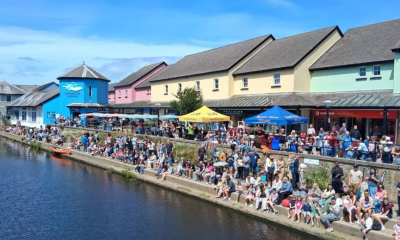
River festival brings crowds to Haverfordwest
A CELEBRATION of the River Cleddau brought crowds into Haverfordwest on Saturday (June 13) as the town’s River Festival returned...


Charity3 days ago
Voices at the Castle hailed as unforgettable night after weather setback
Russell Watson headlines spectacular charity concert at Pembroke Castle A SPECTACULAR evening of live music at Pembroke Castle has been...
-

 Community3 days ago
Pembrokeshire Chess Club crowned Welsh champions
-
Local Government24 hours ago
Security privately arranged by Mayor at Beating of the Bounds
-

 Crime6 days ago
Pembroke Dock teenager sentenced over train strangulation attack
-

 Education5 days ago
Diocese threatens legal action as Manorbier school closure battle intensifies
-

 Crime6 days ago
Man accused of six rapes including alleged Haverfordwest offence
-

 Local Government5 days ago
Taxi suspended after county-wide licensing checks
-

 Crime6 days ago
Brothers found guilty of causing death of Welsh dad in ‘reckless’ race
-

 Crime5 days ago
Currys worker denies stealing £2,500 of store stock