


News
Man who killed Lola James had ‘hair-trigger volatility’, judge told


By Bronwen Weatherby and Brian Farmer, PA
A DRUG addict given a life sentence after being convicted of murdering his two-year-old stepdaughter had “hair-trigger volatility” and threatened to kill his mother, a civil court judge has heard.
Mr Justice Mostyn, who is based in the Family Division of the High Court in London, said the picture Kyle Bevan’s mother painted of him was “truly disturbing”.
Bevan, 31, of Haverfordwest, Pembrokeshire, was jailed in April after being found guilty following a trial at Swansea Crown Court of murdering Lola James in July 2020.
Trial judge Mr Justice Griffiths ruled that Bevan must spend at least 28 years in prison before being considered for release on licence.

Lola’s mother, Sinead James, 30, also of Haverfordwest, was found guilty of causing or allowing the youngster’s death and given a six-year jail term.
Mr Justice Mostyn had separately considered the case, at private hearings, and made findings of fact.
Social services bosses at Pembrokeshire County Council had asked Mr Justice Mostyn to make decisions relating to the welfare of other children.

He had overseen a behind-closed-doors trial, in the summer of 2021, at a family court in Swansea.

Mr Justice Mostyn’s ruling was kept under wraps until criminal proceedings had ended – to prevent jurors being influenced – but has now been published.
The judge concluded that Bevan “abusively inflicted Lola’s injuries” early on Friday July 17 2020, and had previously inflicted “gratuitous violence” on the little girl.
Lola’s mother was asleep when the little girl suffered her injuries which caused her death, Mr Justice Mostyn concluded.

But he said he was satisfied, “to a level appreciably higher than a balance of probability”, that James was aware that Bevan had been abusing Lola, “yet did nothing” to protect her.
Mr Justice Mostyn also heard how Bevan had threatened to kill his mother, Alison Bevan, who had worked on a nursing ward.
She had described her son’s “hair-trigger volatility” and painted a “truly disturbing” picture, Mr Justice Mostyn said.
“Alison Bevan explained in disarmingly frank evidence that her son had a history of drug abuse going back to his teenage years,” said Mr Justice Mostyn in a ruling which has now been published online.
“Alison Bevan explained to me that her son had always had an anger problem with her.
“Fury would erupt when she would not provide him with money or with prescription drugs which he expected her to steal for him from the nursing ward on which she worked.
“This had been going on for years.”
Mr Justice Mostyn added: “She explained that when he loses his temper there is shouting and screaming, intimidation and loss of control.
“When out of control and raging he had threatened to kill her.
“This had happened on four or five occasions.”
Mr Justice Mostyn went on: “The picture that she painted of her own son treating her with such contempt and malevolence was truly disturbing.”
Bevan had denied murdering Lola.
He blamed the family’s pet dog for pushing Lola down the stairs of the home he shared with James, in Haverfordwest.
Judges heard that Bevan had moved in soon after connecting with James on Facebook.
Lola was killed months later.
Mr Justice Mostyn said: “By any objective standards the formation of her relationship with Mr Bevan on 18 February 2020, moving from being strangers to cohabitants in the space of a few hours, is almost impossible to comprehend.
“It does demonstrate an extreme neediness on the part of the mother and a readiness to surrender basic responsibility in order to fill her needs.”
He said James, who had also pleaded not guilty, had been assessed as having a low IQ.
READ THIS WEEK’S PEMBROKESHIRE HERALD HERE:












Two Welsh patients say free online programmes helped them manage anxiety and stress
TWO people who transformed their mental wellbeing with the help of NHS Wales’ online support services are encouraging others to seek help during Mental Health Awareness Week.
Kate, 39, from Cardiff, and George Ryley, 27, from Aberystwyth, both say free online self-help programmes helped them regain control during difficult periods in their lives.
The pair were supported through SilverCloud Wales, a suite of digital mental health programmes based on Cognitive Behavioural Therapy, managed by Powys Teaching Health Board.
The stories are being highlighted as part of Mental Health Awareness Week, which this year focuses on the theme of “Action”.
Parental anxiety
Kate sought help after her young son began suffering febrile seizures, triggering severe anxiety that quickly escalated.
“My chest would tighten and I’d get this feeling like a wave of nausea,” she said. “I couldn’t eat, couldn’t focus.”
She described becoming consumed by fear, constantly checking on her son and worrying about possible seizure triggers.
“I was so distracted at work that I had to stay behind after hours, and at home I didn’t feel I was always present with my son in the right way,” she said.
After speaking with her GP, Kate was diagnosed with parental anxiety and referred to SilverCloud’s “Space from Anxiety” programme.
She said the flexibility of the online course made it easier to fit around family life.
“I could do it in the evening when my son had gone to sleep, or during breaks in the day. It worked around me,” she said.
Kate says she still regularly uses mindfulness, breathing exercises and writing techniques she learned through the programme.
“I haven’t had a single anxiety attack since I started it,” she added. “I’ve not looked back.”
Stress and illness
Meanwhile, Aberystwyth resident George Ryley turned to the service after work pressures and illness left him physically and mentally exhausted.
“I was used to being busy and active,” he said. “Then suddenly, even having a shower would sap all my energy for the day.”
George said a period of poor health linked to mould toxicity left him bed-bound for several weeks and badly affected his mental wellbeing.
After contacting his GP, he was referred for counselling and encouraged to try SilverCloud’s “Space from Stress” programme.
“I didn’t have the most positive mindset at first,” he said. “But as I worked through it, I was amazed at how effective it was.”
Each SilverCloud user is assigned a dedicated supporter who provides encouragement and advice throughout the course.
“Having such lovely feedback on my progress was really motivating,” George said.
“I’ve recommended SilverCloud to so many people who I know have been struggling with stress.”
Taking the first step
Fionnuala Clayton, project manager for NHS Wales’ Online CBT Service, said the stories showed how small actions could make a major difference.
“This Mental Health Awareness Week reminds us that action doesn’t have to be dramatic or overwhelming – sometimes it’s simply about taking that first step to seek support,” she said.
“SilverCloud Wales gives people the tools to understand their thoughts, manage anxiety and stress, and build resilience in a way that fits around busy working and family lives.”
SilverCloud Wales is free to access through NHS Wales and can be used on phones, tablets or laptops.
The service is not intended as a crisis support platform or for those requiring high levels of intervention.
People can sign up at nhswales.silvercloudhealth.com/signup.

SOLO SAILOR HELPED TO SAFETY BY COASTGUARD CREWS
FISHGUARD RNLI volunteers were paged on Saturday evening (May 9) after a 26ft yacht broke free from its mooring and ran aground near Fishguard Lower Town quay.
The charity’s D-class inshore lifeboat, Edward Arthur Richardson, was launched at 7:56pm following a request from HM Coastguard.
Information received was that the yacht, with one person on board, had grounded on the seaward side of the quay.
When the lifeboat arrived, the helm assessed the situation and sea conditions. Swells were lifting the yacht before dropping it back onto rocks below the surface.
Because of the yacht’s position and the weather conditions, it was decided that the safest way to assist the sailor was from the shore. Fishguard Coastguard officers, who were already on the quay side, helped the casualty from the vessel and back up the steps on the quay wall.
The lifeboat remained on standby while coastguard crews assessed the situation. During that time, the helm kept the inshore lifeboat facing into the conditions to ensure the safety of those on board.
Once it was confirmed that the sailor, members of the public and coastguard officers were safely away from the water, the lifeboat was stood down and returned to station.
‘Not viable to tow’
Fishguard RNLI volunteer Lifeboat Press Officer, Cedwyn Rogers said: “Fishguard’s volunteer crew responded to a request from HM Coastguard to attend a yacht with one person on board that was being pushed onto rocks by the weather.
“Once on scene, the helm made an assessment and it was determined that, given the proximity to the quay and accessibility of the casualty vessel from shore, the most appropriate way in which to preserve life was for the casualty to be assisted from the yacht by coastguards.
“With the vessel already aground and the nature of the surf due to the northerly winds, it was not viable to attempt a tow without presenting further unnecessary risks to the lifeboat crew and casualty.
“Once a vessel has grounded, the structural integrity and stability of a vessel is unknown, and to tow it off could compromise that further. In these situations, other means of assisting a casualty will be utilised.
“With the casualty sailor safe with HM Coastguard and no further persons near the water’s edge, the lifeboat returned to station.”

The RNLI added that anyone who is in trouble at sea, or who believes someone else may be in difficulty, should call 999 or 112 and ask for the Coastguard.
Pic: RNLI/Rhodri Pugh-Dungey.

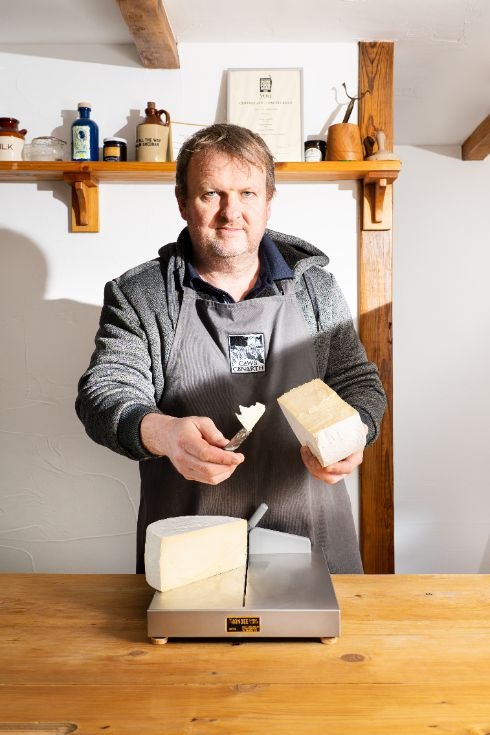
WEST WALES cheesemaker Caws Cenarth is celebrating a successful first few months in Tesco stores after its artisan cheeses were launched into the retailer’s Grab and Go range.
The award-winning family business, based in Carmarthenshire, says strong customer demand has followed the launch in selected large Tesco stores across Wales.
The range includes Thelma’s Original Caerffili PGI, Perl Wen, Cenarth Brie and Perl Las, which have proved popular with shoppers looking for high-quality Welsh produce in a convenient format.
Business growth
The success has marked a significant step forward for Caws Cenarth, which has expanded its team and appointed Paul Garnish as Commercial Director to support continued growth.
He will work on strengthening retail partnerships, identifying new opportunities and building on the momentum created by the Tesco launch.
Founded in West Wales, Caws Cenarth has built a reputation for producing artisan cheeses using locally sourced milk and traditional cheesemaking techniques.
The company says the Tesco partnership reflects growing appetite among customers for premium Welsh produce that combines quality, convenience and strong local provenance.
Tesco praise
Tesco Wales buyer Nathan Edwards said: “We’re delighted to see Caws Cenarth go from strength to strength with their artisan cheeses in our Grab and Go range.
“Customers are increasingly looking for high-quality, locally sourced options, and this success is a fantastic example of how Welsh suppliers like Caws Cenarth are meeting these needs.
“Caws Cenarth’s commitment to craftsmanship and quality really stands out, and we’re proud to support their continued growth.”

‘Just the beginning’
Caws Cenarth Managing Director Carwyn Adams said: “We’re absolutely delighted with how our cheeses have been received by Tesco customers.
“It’s incredibly rewarding to see more people enjoying what we do, especially as a family business rooted in West Wales.

“We’ve always believed in making cheese the right way – with care, quality ingredients and respect for tradition – and it’s exciting to be able to share that with a wider audience.
“This is just the beginning, and we’re looking forward to building on this momentum.”
The partnership forms part of Tesco’s wider commitment to supporting local suppliers and bringing regional produce to customers across the UK.




News8 hours ago
Starmer accused of ignoring Wales in major ‘reset’ speech
Prime Minister pledges EU reset, British Steel nationalisation and youth jobs guarantee — but critics say Wales was left out...


Community20 hours ago
Concern grows after child hospitalised following Tenby sea swim
PARENT SAYS BOY BECAME SERIOUSLY ILL AFTER SWIMMING DURING FAMILY VISIT CONCERN is growing in Pembrokeshire after a parent claimed...


News1 day ago
Rhun prepares for clash with Starmer as Plaid eyes power in Cardiff Bay
PLAID CYMRU leader Rhun ap Iorwerth has signalled he is ready for confrontation with Prime Minister Keir Starmer after the...


News2 days ago
Plaid Cymru celebrates historic victory as Rhun ap Iorwerth arrives at Cardiff Bay
CROWDS gathered outside the Senedd as Plaid Cymru leader Rhun ap Iorwerth arrived in Cardiff Bay following his party’s historic...


Crime2 days ago
Police standoff ends after four-hour incident in Pembroke Dock
ELIZABETH COURT SCENE STOOD DOWN AFTER DOMESTIC INCIDENT A FOUR-HOUR police standoff in Pembroke Dock has ended with a 21-year-old...


Crime2 days ago
Teen denies attempted murder of Milford Haven teacher
TEENAGER REMANDED AHEAD OF JULY TRIAL A 15-YEAR-old boy has denied attempting to murder a teacher during a stabbing incident...


News3 days ago
Catastrophe for Labour as Plaid and Reform reshape Welsh politics
ELUNED MORGAN LOSES SEAT AS OLD CERTAINTIES ARE SWEPT AWAY THE VOTERS of Wales have delivered one of the most...


News3 days ago
Labour wiped out in Ceredigion Penfro as Plaid tops poll and First Minister loses seat
Shock result sends political shockwaves across Wales as Reform also surges in historic Senedd count LABOUR suffered one of the...


News3 days ago
Labour deputy says party ‘will not form next Welsh Government’
LABOUR FACES HISTORIC DEFEAT AS COUNTING CONTINUES ACROSS WALES LABOUR’S Deputy Leader in Wales has effectively conceded the Senedd election,...

News3 days ago
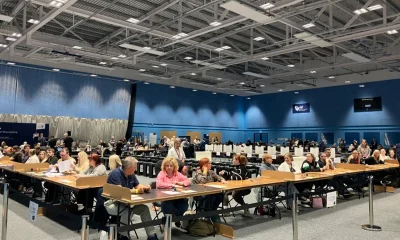
Counts underway in historic Senedd election
Wales waits for results as first election under new voting system reaches count stage COUNTING is underway across Wales today...
-

 News6 days ago
Baby in critical condition after Fishguard emergency
-

 News5 days ago
Former housing officer admits drink-driving in Pembrokeshire retail park
-
 Crime5 days ago
Job loss threat for convicted Pembrokeshire drug-driver
-

 Crime5 days ago
Milford motorist disqualified for drug-driving
-

 Crime5 days ago
Police tip-off leads to driving ban for Milford motorist
-

 Crime4 days ago
Racial abuse suspect barricaded himself inside Johnston lodge
-

 Community5 days ago
Sixth-former firefighter balances schoolwork with saving lives
-
 Crime5 days ago
Delivery driver caught twice over legal drink-drive limit