


Business
‘First of its kind’ financial support scheme for working households across wales


WELSH WATER, the only not-for-profit water company in England and Wales, has launched a new scheme aimed at providing working household customers with vital support to pay their water bills as the cost-of-living crisis continues.
Until now, Welsh Water’s financial assistance schemes have mostly targeted households on means tested benefits and working households typically do not qualify for this support. The company’s newly established ‘Cymuned’ (Community) Support Fund offers short term support to working households who find themselves in a situation where their bills exceed their income.
Under this scheme, households that qualify will receive a three month ‘charge free’ period, equating to a discount of around £100-£120 on the average bill. Those who think they are eligible should apply to one of three partner organisations, Citizens Advice, StepChange Debt Charity, or Warm Wales, that in turn will carry out an income and expenditure assessment to understand if they are eligible, before applying to Welsh Water on their behalf.
The launch follows a successful pilot of the scheme in Rhondda Cynon Taf and Denbighshire over the last six months, which has supported eligible customers to save a total of almost 25% off their annual water bills.
Maria is a Welsh Water Customer from Rhyl who was one of the first to access the Cymuned Fund support. She said: “I work for a homeless shelter so there’s not usually much financial support available to me as I have a small income. I was told about the Cymuned Fund by my local Citizens Advice team, as I was feeling a lot of pressure making monthly payments on my essentials.

“I applied for Cymuned and was successful after an income and expenditure assessment – it’s helped massively and took a lot of pressure off me. I’m so glad to see this much needed support for working people who are finding rising costs so hard to keep up with.”
The company already offers a range of financial support to over 147,000 household customers to help them pay their bills – the highest number it has ever supported. From April 2023 customers on its HelpU tariff will have their annual bill capped at £291, a significant reduction on the average household bill of £499.
Welsh Water is urging any customer who may be facing difficulties to contact them as soon as possible, so that they can discuss the range of available options including flexible payment schemes or installing a water meter which could benefit households as they reduce their use of water. By doing this, customers can get practical advice on how to prevent building up debts which could become a problem in the future.
Sam James, Welsh Water’s Managing Director of Household Customer Services, said: “We know that many working customers in the communities we serve are struggling as they face increased pressure from the cost-of-living. Our Cymuned scheme is the first of its kind, designed to provide eligible working households with financial support.

“I’d like to thank our partner organisations, Citizens Advice, StepChange and Warm Wales, for working with us to offer this support and urge any customer who is working but struggling financially to reach out to one of these organisations; we’re here for you.”



A DEVELOPMENT call for a Pembrokeshire holiday park has been turned down by Pembrokeshire Coast National Park.
In an application to park planners, Broad Haven Holiday Park, through agent Gerald Blain Associates, sought permission for the relocation of a boat storage area, vehicle shed and play area along with rewilding of adjoining fields at Broad Haven Holiday Park, Broad Haven, near Haverfordwest.
The application was supported by local community council The Havens.

However, an officer report recommended refusal.
Detailing the application, it said: “The proposal relates to the extension of an existing static caravan holiday site into adjacent undeveloped woodland to accommodate the relocation of boat storage, a vehicle shed, and a children’s play area, together with associated ecological mitigation measures. No increased pitch numbers are proposed.

“The development site has already undergone some site clearance, resulting in the removal of approximately 1,000 square metres of woodland.”
It went on to say: “The existing site is already intervisible with the coast, and the proposed relocation of boat storage would likely increase its visibility rather than reduce it. Without supporting evidence in the form of a Landscape and Visual Impact Assessment (LVIA) or Zone of Theoretical Visibility (ZTV) demonstrating that the development would be visually contained, the proposal appears contrary to the guidance contained within the SPG and the objectives of Policy 41.
“As a result, the proposed development is considered to detract from the special qualities of the National Park in this location and would be detrimental to the quality and character of the landscape character area in which the site sits, and as such does not comply [with policies].”
The application was refused on grounds including it being sited within previously undeveloped land within a flood zone, a lack of information on potential impacts on biodiversity, and it is “considered to detract from the special qualities of the national park in this location and would be detrimental to the quality and character of the landscape character area in which the site sits”.

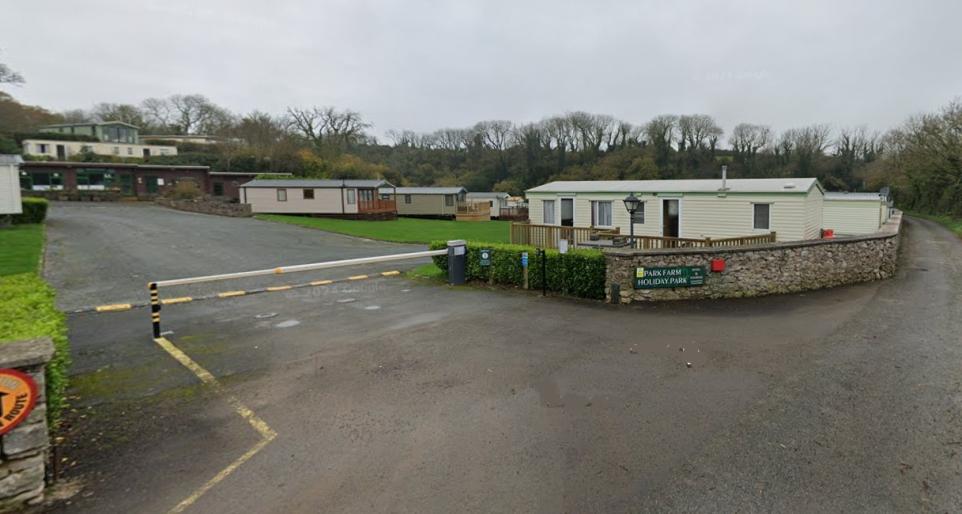
A CALL to allow a Pembrokeshire caravan park to change part of its site from touring vans to static units without a formal planning application has been refused.
In an application to Pembrokeshire Coast National Park, Norfolk-based Park Farm Opco Ltd, through Chipping Norton-based agent Laister Planning Limited, sought a Lawful Development Certificate for the proposed stationing of static caravans in lieu of touring caravans, year-round, at Park Farm Holiday Park, Manorbier.
A supporting statement accompanying the application said: “The purpose of this application is to confirm that the touring caravans so permitted for year-round occupation on the western field at Park Farm, are capable of being replaced by static caravan pitches without effecting a material change of use. There is no specific number of touring or static caravans which is being sought at this juncture.”
It says Park Farm Holiday Park comprises of two areas, area A having some 61 owner-occupied static caravans, and area B used for touring caravan pitches and tents.
Planning permission was originally granted way back in 1956 for the caravan site, on a temporary basis, a Lawful Development Certificate for an existing use for the use of the site for up to 70 static caravans granted in December 1998, mainly covering area A.

The statement said the lawfulness of siting caravans year-round was previously confirmed by the park in 2024 “use as a campsite for touring caravans (not including twin-unit static caravans) and tents which shall be occupied for holiday use only and used as temporary, non-permanent units on a year-round basis”.
Of the proposals, it said: “The site is currently used for the stationing of touring caravans all year round. Most of the caravans on the site are stationed on what is called a ‘seasonal’ basis, where the owners leave them permanently stationed on the site and use them as holiday homes, paying an annual ‘seasonal’ fee.
“The proposed use of the site is to replace the permanently stationed touring caravans with permanently stationed static caravans. No specific number is provided, as no number is provided in any of the existing certificates, but it is anticipated that the total number of caravans in the application site will inevitably be reduced as the caravans are generally larger.
“There would be no other change in the way the site is operated, and the intention is to use the caravans for holiday purposes.”

An officer report recommending the certificate of lawfulness for the change be refused, saying it was “not satisfied that the evidence accompanying the application is sufficient to establish that the proposed use would be lawful”.
It said that while lawfulness certificates for tourers had been granted “it is considered that the siting of single-unit statics in lieu of those tourers, as now proposed, would be inconsistent with the lawful use of the site, and cannot be considered lawful in the same way,” adding “the changes proposed would result in a definable character change to the site of a magnitude that would be sufficient to amount to a material change of use requiring planning permission”.
The application for a certificate of lawfulness was refused on the grounds “the proposed use of the site would represent a material change of use requiring planning permission for which no permitted development rights exist, meaning a specific grant of planning permission is needed in order for the scheme to proceed”.

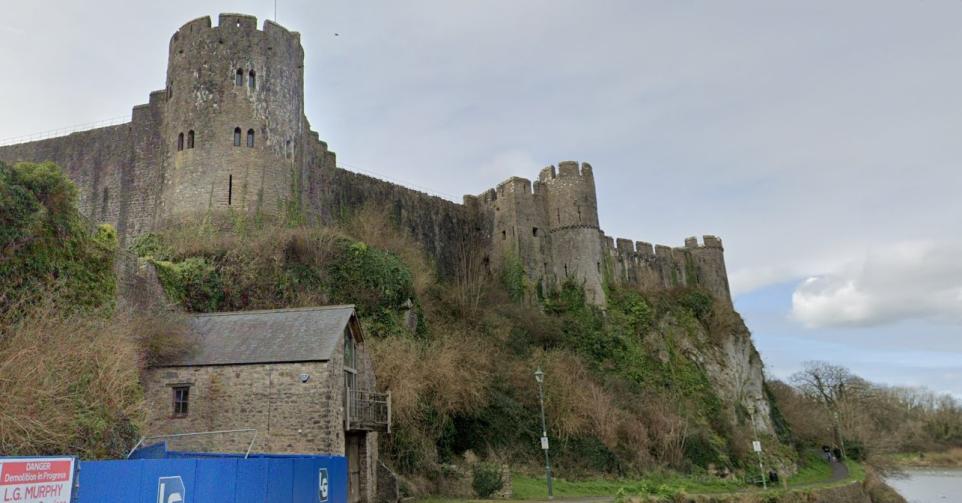
A PADDLEBOARDING and canoeing company’s call for an extension to a boat shed at Pembroke’s South Quay, below its historic castle, has been given the go-ahead by county planners.
In an application to Pembrokeshire County Council, G Booth of Paddle West CIC, through agent James Dwyer Associates, sought permission for an extension to the stone-built boathouse, adjacent to the cliff on South Quay fronting the Mill Pond, Pembroke.
A supporting statement said: “It is intended to erect a single storey ‘lean-to’ building, or ‘shed’ for the storage of boats, such as canoes and kayaks, and related equipment, on a vacant space adjacent to the existing stone-built boathouse.”
It added: “The boathouse and the intended adjacent boat storage shed is located, as is to be expected, in close proximity to water, the Mill Pond. The Mill Pond is the main area of activity for Paddle West, a Community Interest Company, providing boating activities, kayaking, canoeing and paddle boarding, frequently for young people and families.”
It went on to say: “It is intended that the structure would be lightweight, erected on the exiting hard standing. The ‘shed’ would be used for the storage of boats and related equipment.”
With regard to the historic setting, it added: “Although the stone-built boathouse appears not to be listed, it is recognised that the walls above are listed and together they are a piece.
“Accordingly, through form and external materials proposed, timber cladding and profile sheet roofing, the aim is to ensure that the structure would be subservient and muted and not detract or compete with the visual aesthetic of the boathouse or historic walls. In effect the addition would blend into the background.”
The application, supported by Pembroke Town Council, was conditionally approved by county planners.
The boathouse is sited near to the new Henry Tudor Centre in South Quay, which is due to open in Spring 2027.
The centre, expected to receive around 30,000 visitors a year, will tell the story of Henry Tudor, son of Pembroke, his Welsh ancestry and his impact on our national story, Welsh culture and our wider British heritage.
The restored derelict South Quay buildings will also house a new library and community café, and a healthcare, social services and supported employment facility in the adjoining premises.



News2 hours ago
Plaid Cymru projected to lead Senedd as Labour faces historic collapse
Final poll suggests Welsh politics could be on the brink of a major realignment PLAID CYMRU is on course to...


Community10 hours ago
Rescue bid planned for lambs stranded below Stack Rocks cliffs
Tree surgeon preparing 150ft descent after live firing delayed rescue attempt A MAJOR rescue operation is being planned this afternoon...


News13 hours ago
Bishop’s report reveals major renewal challenge at St Davids Cathedral
Formal Visitation highlights financial, structural, leadership and spiritual pressures at one of Wales’ most important religious sites ST DAVIDS CATHEDRAL...


Crime1 day ago
Farming company fined £19,000 for damaging protected wildlife site
A CARDIGAN farming company has been ordered to pay almost £20,000 after recklessly damaging a Site of Special Scientific Interest....


News1 day ago
Baby in critical condition after Fishguard emergency
Teenagers arrested as police investigate circumstances A BABY remains in hospital in a critical but stable condition after being taken...


Community2 days ago
Tenby phone signal crisis goes national as businesses warn of summer disruption
TRADERS SAY CARD PAYMENTS, TAXIS AND VISITOR SAFETY ARE BEING HIT BY ‘DEAD ZONE’ COVERAGE TENBY’S long-running mobile phone signal...


News2 days ago
Final poll puts Plaid and Reform level ahead of Senedd vote
Labour faces historic setback as new modelling points to a hung Senedd PLAID CYMRU and Reform UK are projected to...


News3 days ago
West Wales coracle fishermen raise alarm over suspected sewage pollution
A CENTURIES-old fishing tradition on the River Towy could be under threat after coracle fishermen reported suspected sewage pollution entering...


Community4 days ago
Scooter rally brings colour and nostalgia to Tenby
TENBY is buzzing with the sights and sounds of classic scooters this Bank Holiday weekend as the Welsh National Scooter...


Entertainment4 days ago
Haverfoodfest returns to Haverfordwest town centre today
HAVERFORDWEST town centre is expected to be busy today as Haverfoodfest 2026 returns for a full day of food, drink,...
-
News1 day ago
Baby in critical condition after Fishguard emergency
-

 News13 hours ago
Former housing officer admits drink-driving in Pembrokeshire retail park
-

 Crime13 hours ago
Job loss threat for convicted Pembrokeshire drug-driver
-

 Crime13 hours ago
Milford motorist disqualified for drug-driving
-

 Community6 days ago
Dogs removed after welfare concerns at Milford Haven property
-

 Crime13 hours ago
Police tip-off leads to driving ban for Milford motorist
-

 Crime12 hours ago
Delivery driver caught twice over legal drink-drive limit
-
Crime1 day ago
Farming company fined £19,000 for damaging protected wildlife site