


News
Tata Steel to close Port Talbot’s two blast furnaces: 3000 jobs to go

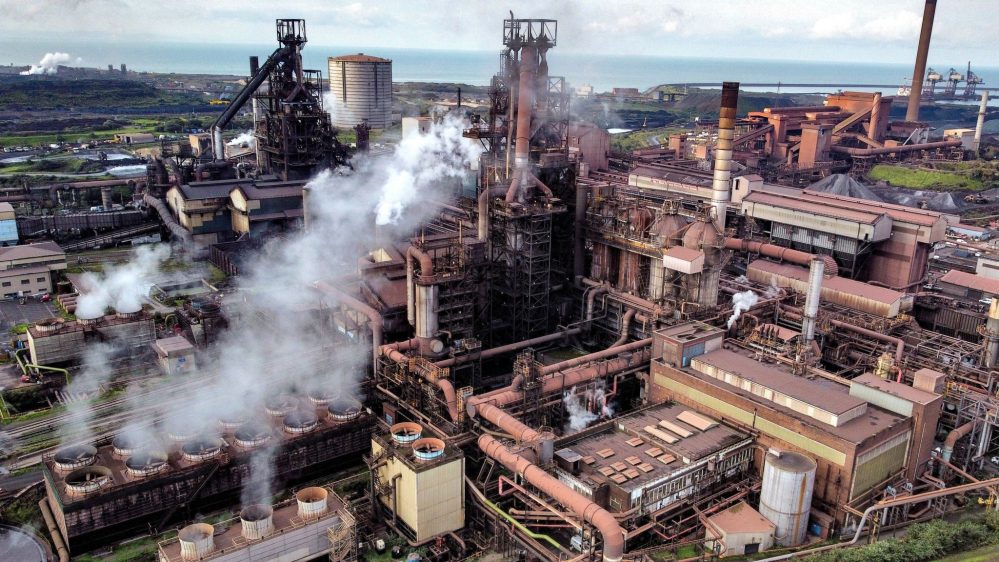
TATA STEEL, the Indian-owned parent company of Port Talbot steelworks, has confirmed the closure of the plant’s two blast furnaces. This decision, described as a “crushing blow” by unions, is poised to cost about 3,000 jobs directly, casting a long shadow over the South Wales community.
The announcement came after a critical meeting with workers’ representatives on Thursday, where Tata Steel conveyed its inability to sustain the loss-making plant during its transition to greener production. On Friday, following the close of trading in Mumbai, the company officially confirmed its plans. The closure will lead to most of the plant’s 4,000 workers facing redundancy.
Despite the severe job cuts, around 200 jobs will be preserved in operations at the site’s hot strip mill, which rolls steel slab. This comes in the backdrop of the UK government providing £500m in financial support for Tata’s four-year plan to construct more sustainable and cost-effective electric arc furnaces. These furnaces are designed to produce steel from scrap metal rather than from iron ore, marking a significant shift towards environmentally friendly practices.
The government’s intervention, however, has been met with criticism. Labour’s shadow business minister, Jonathan Reynolds, has pointedly described the strategy as “£500m for 3,000 job losses”. This sentiment underscores the deep unease about the government’s role and the future of the British steel industry.
Notably, Tata Steel rejected a proposal from the Community and GMB unions that aimed to keep the blast furnaces operational and protect jobs during the transition period. The company’s decision, mirroring similar moves at the Chinese-owned Scunthorpe plant, indicates a seismic shift in the UK steel industry. The closure of these facilities is set to position the UK as the only G20 economy lacking the capability to produce virgin steel, a significant reduction in its industrial capabilities.

In response to the Port Talbot announcement, UK Prime Minister Rishi Sunak affirmed the government’s commitment to British steelmaking but acknowledged the limitations in discussing this “commercially sensitive matter.” He expressed understanding of the concerns faced by those affected, indicating a period of uncertainty and adjustment for the workforce and the wider community.
Economy Minister, Vaughan Gething said: “We are in discussion with Tata Steel UK and the recognised trades unions and have approached the UK Government regarding proposals concerning the future of the company’s operations in Wales.
“This is not just an issue for Wales, steel is a sovereign asset and should be treated as such by the UK Government.”
Jeremy Miles, MS for Neath which is home for many steelworkers and their families – and candidate for Welsh Labour leader and First Minister said: “This is an announcement which tears at the heart of our local community, and of the Welsh economy. I really feel for the families who are affected by this news and we will do all we can to support them.

“There is a future for steelmaking in Port Talbot which we must work for, together. I stand with the workforce, and their trade unions, as they oppose this devastating decision.
“The UK Government has proven incapable of taking the action needed to protect jobs in Wales and has continued its dismissive attitude towards the Welsh Government’s attempts find a way through. Both the UK Government and TATA Steel must explore and consider the alternative proposals the unions have put forward.
“Wales and the UK needs a sustainable, strategic steel making capacity for our economic security, our growing infrastructure needs, and for the thousands of good jobs it provides.”

Commenting on the Tata Steel announcement, Andrew RT Davies MS, Leader of the Welsh Conservatives said: “Today is an incredibly difficult day for Wales, my thoughts are with those steel workers and subcontractors who will be losing their jobs in the coming months and their families. This situation must be handled with care by all decision makers involved – I’m confident that the transition board will achieve this.
“I remain unconvinced that a blast furnace could not be kept open during the transition to the arc furnaces that Tata have agreed to, protecting many jobs in the short to medium term – this needs to be explained fully as to why this hasn’t been done by the company.
“Many thousands of jobs have been protected, with record investment from the UK Conservative Government, the story of Port Talbot Steel is far from over with its sustainable future secured.”
In a joint statement, local Senedd Members for South Wales West, Dr Altaf Hussain MS and Tom Giffard MS said: “This news is devastating for our community and for those losing their jobs as a result of this news.
“We welcome the introduction of a UK Government-funded £100m transition fund to help workers and the wider community bounce back from today’s announcement. We will be working to ensure that the fund supports those workers and the community over the coming months and years.”
UNITE WANTS TO PRESERVE LARGE SCALE STEELMAKING
Unite, the UK’s leading union, has warned that the government needs to take immediate action to preserve large scale steelmaking in the UK. The union made its call after Tata steel announced plans to close both its blast furnaces with the proposed loss of approximately 2,500 jobs, principally at Port Talbot in South Wales.
Unite general secretary Sharon Graham said: “Unite is ready to use everything in its armoury to defend steel workers and our steel industry. We have detailed research demonstrating how and why Tata should be expanding UK steel production in line with growing demand, not slashing its workforce. We have secured funding from a future Labour government that could do this. Tata’s plan to close the blast furnaces is simply industrial vandalism on a grand scale.”
“The government needs to invest in British industry in order to defend workers and communities as well as our industrial base and our national security. Instead, they are giving Tata hundreds of millions of pounds to fund their plan to cut jobs, cut capacity and give more business to their plants in other countries, like India and the Netherlands. How is that acceptable?”
Statement from Community and GMB – 19 January 2024

The steel unions – Community, Unite and GMB – met yesterday with senior representatives of Tata Steel, who formally responded to reject the Multi-Union Plan that the unions presented to the company on the 17th of November.
This is of course extremely disappointing. In one area the company did accept the Multi-Union recommendation, which is to keep the Hot Strip Mill open to roll slab over a transition period, supporting hundreds of jobs there, but Tata have rejected our broader proposals to safeguard production capacity and protect jobs
Since Tata Steel and the UK Government announced their bad deal for steel on the 15th of September, the unions have been clear that proposals to install a 3mt Electric Arc Furnace (EAF) are completely unacceptable. As Community and the GMB, our experts and Tata Steel all understand, the installation of a 3mt EAF Port Talbot inevitably means the end of the blast furnaces, major production cuts and thousands of job losses before 2027.
It is extremely regretful that despite the incontrovertible evidence one union has refused to accept the facts, and continues to undermine the Multi-Union through their support for a 3mt EAF and unilaterally campaigning for discredited fantasy solutions. We urge them, once again, to get back on board and work with us to deliver the best possible outcomes for all of our members.
The Multi-Union Plan was developed in line with the steel unions’ red lines agreed three years ago, which are to secure the future of Port Talbot steelmaking, to protect production capacity and the future of all the downstream plants, and to avoid any compulsory redundancies. The Multi-Union Plan was previously endorsed by all the steel unions and, as the company has acknowledged, proposes a credible alternative strategy for the decarbonisation of Tata Steel UK.
More than 3,000 jobs and the future of British steelmaking is at stake. It is an absolute disgrace that Tata Steel, and the UK Government, appear intent on pursuing the cheapest instead of the best plan for our industry, our steelworkers and our country. It’s unbelievable any Government would give a company £500m to throw 3,000 workers on the scrapheap, and our Government must reevaluate its miserly offer to support investment at Tata Steel.
The German, French and Spanish Governments are all committing billions to secure the future of their strategically important steel industries, and our Government must show similar ambition. It is encouraging that the Labour Party have reaffirmed their commitment to the £3bn Green Steel Fund, and using it to supporting a just transition at Tata Steel UK. Tata must think again, and work with the UK Government and Labour to unlock the investment our industry needs and deserves.
Community and GMB do not accept Tata Steel’s rejection of the Multi-Union Plan and confirmation they intend to press forward with their original devastating proposals. We will now consult our members on next steps and all options to protect jobs are on the table, including industrial action.
Tata Steel and the UK Government must reconsider their positions in order to safeguard the future of British steelmaking, and head off a major industrial dispute. Since Tata acquired our business in 2007 they have been a responsible owner, and we recognise they have taken a long-term view where others might not have done. The coming weeks will put Tata’s values to the test.
Full statement from Vaughan Gething MS, Minister for Economy

TODAY’S announcement by Tata Steel UK (TSUK) leaves thousands of workers and their families, in Tata Steel and across the wider supply chain, facing an uncertain future.
TSUK currently employs directly more than 6500 employees in Wales and a further 1500 in the rest of the UK.
The Welsh Government has worked closely with TSUK and the recognised steel trades unions for many years to safeguard these vital jobs and the long-term future of steel production in Wales.
Steel is one of the most important materials in any modern economy and Wales and the rest of the UK are better off and more secure with significant, sovereign steelmaking capabilities.
The Welsh contribution to the UK steel sector is decisive and the industry is part of our nation’s story. It represents an economic strength with global reach and serves as a marker of Welsh excellence.
The scale of the operation at Port Talbot brings together a vibrant mix of cutting-edge skills and specialisms that ought to be understood, promoted and respected at every level of government. The workforce boasts the skills, experience and know-how to unlock an ambitious green transition that exploits new technologies and the enormous demand a low carbon economy will command. Our rapidly changing economy will need more steel and unless UK Ministers and TSUK act together with urgency, less of that steel will be produced in Wales as we become increasingly reliant upon imports.
In choosing not to pursue a modern industrial strategy with steel at its core, the UK Government has damaged our ability to create the long term, reliable growth that would turn net zero measures into more sustainable, green jobs in Wales.
We have repeatedly urged the UK Government to act at scale with the investment needed to support the move to greener methods of steel production and for the Company to lead on a fair and just transition for its workers and those UK companies within its extensive supply chain.
Today’s announcement presents a social and economic body-blow with profound and far-reaching implications for Wales. It is our firm view that the Prime Minister and his cabinet do have levers at their disposal that could prevent the worst case scenario and the scale of economic loss we now face. UK Ministers must now work rapidly in the coming hours and days to convene talks that explore all avenues to bring about a longer, fairer transition that supports a larger, more secure steel industry.
I have raised my concern on the need to act at this level with the Secretary of State for Business and Trade, Kemi Badenoch MP and Minister of State, Nusrat Ghani MP.
It is a matter of deep regret that the UK Government – and in particular the Department for Business and Trade – has to date demonstrated no recognition of the strategic importance of the sector. Unlike previous Business Secretaries, the current UK Secretary of State for Business and Trade has refused to meet with Welsh Ministers at a time of unrivalled uncertainty and risk for the sector. This has allowed opportunities for earlier shared action that could have prevented today’s announcement to be missed.
In September 2023, TSUK and the UK Government finally announced a joint agreement on a proposal to invest in state-of-the-art electric arc furnace steelmaking at the Port Talbot site, with a capital investment of £1.25bn including a grant from the UK Government of up to £500m. The proposals included a restructuring of the existing TSUK business followed by an investment in electric arc technology. The Welsh Government was not party to any discussions around this agreement.
Whilst the announcement contained significant investment for the longer term, it was inevitable that TSUK employees, and their families, became extremely anxious for their jobs and the social impact they and their communities would have to bear should workers lose the dignity of employment. In both direct meetings and public statements, I have cautioned against UK Government Ministers basing assumptions on the worst case scenario because such actions actively undermine negotiations that require space, time and expertise. These requests were not heeded, and I am deeply concerned at the confused and, at times, indifferent approach adopted by the UK Government on this matter.
Today’s announcement has realised the workforce’s fears with the news that around 2,500 jobs could be lost across Tata’s Welsh sites, and this is before the impact on the Company’s supply chain is fully understood.
It is by now clear that the case set out for a future that does not require the scaling back covered in today’s announcement has not been fully explored. A key recommendation, that of operating one blast furnace for a significantly longer period was both economically convincing and underpinned a fair and just transition for TSUK. This proposal highlighted that the Company could have maintained a significant workforce whilst remaining commercially viable. Both TSUK and the UK Government must fully consider the options that exist to maximise the jobs the Port Talbot site can support with a sustainable plan for the future. We are yet to see a compelling account from UK Ministers or the Company that sets out why alternative options are not deliverable.
It is essential that TSUK conducts a meaningful consultation with its employees and the trade unions about their chosen transition course. As Tata Steel has stated, any agreement is subject to relevant regulatory approvals, information and consultation processes, and the finalisation of detailed terms and conditions. We urge the Company not to make any irreversible choices based on the current levels of UK Government support.
Any decision will have a profound impact on TSUK’s supply chain and the wider region, particularly across a manufacturing sector with ambitious plans for maximising the net zero opportunities presented around the Celtic Freeport.
I spoke with trade union representatives and senior management from the Company yesterday. The First Minister requested an urgent call with the Prime Minister to discuss the action that could still be taken to secure a more ambitious future for this important sovereign asset.
The Welsh Government will continue to work closely with the trade unions and the Company to do everything we can to minimise job losses.
I plan to make an Oral Statement regarding this matter on Tuesday 23rd January.












THOUSANDS of visitors are expected to travel to Eisteddfod y Garreg Las from communities across Wales and beyond.
Whether you are arriving by car, bus, train, coach or taxi, planning your journey in advance will help ensure you reach the Maes safely and in good time.
Travelling by car
Drivers should follow the yellow ‘Eisteddfod’ signs, which will direct traffic to the Maes and the free visitor car parks.
The Eisteddfod site at Llantwd is situated a few miles south of Cardigan.
From Fishguard
Follow the A487 north through Newport and continue towards the Maes entrance, following the yellow Eisteddfod signs as you approach the site.
From Narberth or Carmarthen
Leave the A40 at the Penblewin roundabout and take the A478 towards Cardigan.
Continue to the junction with the B4332 at Postgwyn, turn left and travel west for approximately two miles. Follow the Eisteddfod signs, which will direct traffic north from the B4332 before reaching Eglwyswrw.
From Crymych and Boncath
Travel to the junction of the B4332 and A478 at Postgwyn, then continue west and follow the Eisteddfod signs.
From Cardigan and the north
Travel south from Cardigan and follow the yellow Eisteddfod signs to the Maes.
Visitors should use the designated free car parks and must not park on the roadside. Parking restrictions will be in place around the site.
Travelling by bus
Additional bus services will make it easier for visitors to leave the car at home during the Eisteddfod.
TrawsCymru T5
The TrawsCymru T5 service will take passengers directly to the Maes at Llantwd, with regular services operating between Haverfordwest and Cardigan via Fishguard and Newport.

More frequent buses and late-evening services will operate between Fishguard and Cardigan throughout Eisteddfod week.
Service 430
The 430 bus provides a link between Narberth and Cardigan via Crymych.
Thanks to support from Pembrokeshire County Council, the service will operate every day during the Eisteddfod, with all journeys running to and from Narberth.
An additional late-evening bus will leave directly from the Maes at 11.15pm. Passengers travelling onwards will need to change at Cardigan.
The special T5 and 430 timetables can be downloaded from:
https://www.pembrokeshire.gov.uk/bus-routes-and-timetables/planned-bus-service-changes
Travel is free for passengers with an All-Wales Concessionary Bus Pass.
Young people aged 21 and under can travel for £1 per journey, with a maximum daily fare of £3. Passengers aged between 16 and 21 will need a MyTravelPass.
Special Eisteddfod fares are also available from Transport for Wales:
https://traws.cymru/en/catch-the-t5-bus-straight-to-the-eisteddfod
Free shuttle from Cardigan
Visitors can also use Bws yr Arglwydd Rhys, a free shuttle bus operating between Finch Square in Cardigan and the Maes.
The service will run every hour, on the hour, from 7am until midnight.
Travelling by train
Transport for Wales will operate regular free shuttle buses between Carmarthen railway station and the Maes.
Further information about rail services is available at:
https://tfw.wales/ways-to-travel
Visitors can also plan their journeys through Traveline Cymru:
Special coach excursions
Several operators are organising dedicated trips to the Eisteddfod.
Jones Login
Jones Login will operate excursions on Monday, Wednesday and Friday.
The coach will leave Carmarthen at 7.35am, with pick-up points in St Clears, Whitland, Penblewin, Narberth and along the A478.
Information and booking:
https://www.joneslogin.co.uk/Tour/Eisteddfod-Genedlaethol-Cymru
Windy Corner Coaches
Windy Corner Coaches will operate trips on Monday and Friday, as well as a special excursion on the first Saturday for the Super Furry Animals concert.
Information and booking:
https://windycornercoaches.co.uk/day-trips
Midway Motors
Midway Motors will operate services to the Maes every day throughout the Eisteddfod.
The daytime service will depart from:
- Tegryn at 10am
- Llanfyrnach at 10.05am
- Hermon at 10.10am
- Crymych at 10.15am
- Blaenffos at 10.20am
- Boncath at 10.25am
- Eglwyswrw at 10.35am
The return journey will leave the Maes at 6pm.
An evening service will also operate, departing from:
- Tegryn at 5.15pm
- Llanfyrnach at 5.20pm
- Hermon at 5.25pm
- Crymych at 5.30pm
- Blaenffos at 5.40pm
- Boncath at 5.45pm
- Eglwyswrw at 5.50pm
The evening return journey will leave the Maes at 11pm.
Fares are £5 for adults and £1 for children.
To book, call 01239 831267.
Travelling by taxi
Local taxi and private-hire firms serving the Maes include:
Kyle’s Taxis, H J Taxis Ltd, Tony’s Taxis, Fishguard Taxis, Morgans Private Hire, Letterston Taxi Service, Frank’s Cabs and St David’s Taxis, A2B Minibuses and Taxis, H&S Cab Service, Robins Taxis and Home James.
Visitors are advised to book taxis and coach seats in advance, particularly for late-evening journeys and major Eisteddfod events.

MUSIC lovers are invited to take a journey through the golden age of swing when SOS Big Band – The Story of Swing arrives at the Torch Theatre this August.
Presented by award-winning vocalist and world-class trumpet player Gareth John, alongside the acclaimed SOS Big Band, the show celebrates decades of iconic swing and big band music.
Audiences can expect much-loved classics made famous by Bobby Darin, Frank Sinatra, Dean Martin and Sammy Davis Jr, as well as more modern hits associated with Michael Bublé, Robbie Williams, Matt Goss, Paul Anka and Harry Connick Jr.
Renowned for his showmanship and passion for the genre, Gareth brings a natural warmth and energy to the stage, building an easy rapport with audiences wherever he performs.
During his career, he has shared the stage with a number of household names, including The Beautiful South and The Specials.
The production has already received enthusiastic reviews during its tour, with one audience member at the Core Theatre in Solihull describing it as “a brilliant show”.
SOS Big Band – The Story of Swing will be performed at the Torch Theatre, Milford Haven, on Saturday, August 1, at 7.30pm.
Tickets cost £28.50 and can be booked through the Torch Theatre website or by calling the box office on 01646 695267.

Henry Tufnell has called for urgent government action, saying unreliable mobile coverage is damaging businesses, tourism and access to essential services
ONLY one per cent of premises in Mid and South Pembrokeshire can access the highest-quality form of 5G from at least one mobile network, according to figures highlighted by the constituency’s MP.
Henry Tufnell has written to the Minister for the Digital Economy calling for an urgent meeting over what he described as a serious lack of investment in mobile infrastructure across West Wales.
In his letter, the Labour MP said the constituency remained far behind the rest of the country in both the availability and reliability of mobile services.

According to Ofcom figures cited by Mr Tufnell, 12 per cent of premises in Mid and South Pembrokeshire cannot receive a usable high-quality 5G signal from any network. That is six times the national average of two per cent.
He also said that only one per cent of premises locally could access “5G Standalone”, the highest-quality version of the technology, from at least one operator. Nationally, the equivalent figure is said to be 86 per cent.
Mr Tufnell said surveys carried out among his constituents showed the effect poor coverage was having on everyday life.
Some 98 per cent of respondents said a lack of mobile signal negatively affected them, while more than three-quarters reported having a poor signal or no signal where they lived.
The MP said unreliable connectivity was affecting residents, businesses and visitors, as well as schools, transport services and healthcare workers such as community nurses.
Mobile coverage problems were not limited to isolated rural areas, he said, with unreliable service frequently reported in Haverfordwest and persistent “not-spots” affecting Tenby during the busy tourist season.
Poor coverage can also prevent people from using banking, payment and parking applications, creating particular difficulties for visitors and businesses during peak periods.
Mr Tufnell has separately contacted VodafoneThree UK and EE about infrastructure in the Tenby and Penally areas.
VodafoneThree has advised him that it plans to upgrade the mast at Slippery Back Lane in Tenby, although the work is not currently expected to be delivered until 2028.

He has also raised concerns about a proposed 20-metre 4G telecommunications mast at Strawberry Lane, Penally.
Planning permission has been granted for the replacement mast, but the previous structure has already been removed and work on the new installation has yet to begin.
Mr Tufnell said he had written to EE in April seeking clarification about when the mast would be installed, but had not received a response by the time of his latest correspondence.
He has now asked the Government to discuss what support can be provided to accelerate the delivery of reliable mobile infrastructure across the constituency.
Mr Tufnell said: “West Wales cannot continue to be left behind. We need high-quality, reliable digital infrastructure across the whole of Pembrokeshire.
“This is not simply an inconvenience. Poor mobile coverage is affecting residents, local businesses, public services and the tourism industry.”



News23 hours ago
Princess Royal celebrates Pembrokeshire craftsmanship at family-run weaving mill
A Pembrokeshire business that began after a mother grew tired of waiting three weeks for her children’s name tapes has...


Local Government24 hours ago
Burger King could be coming to Haverfordwest as plans submitted
Plans have been lodged for a Burger King outlet at the Morrisons petrol station on Bridge Meadow Lane BURGER KING...


Crime2 days ago
Murder investigation launched into death of Pembrokeshire man in 1991
A 67-YEAR-OLD man has been arrested on suspicion of murder after new potential evidence emerged in connection with a death...


Community2 days ago
‘Paying £29 to reach a cashpoint is absurd’: Narberth’s urgent ATM appeal
Residents, businesses and visitors are being urged to provide evidence after two High Street cash machines were removed, leaving the...


Crime3 days ago
Haverfordwest man jailed for seven years for historic rape and sexual assault of girl
A HAVERFORDWEST man has been jailed for seven years after being convicted of raping and indecently assaulting a girl during...


News3 days ago
Burnham more willing to listen on Welsh devolution, says First Minister
Rhun ap Iorwerth says he will press the new Prime Minister for powers over policing, railways and Wales’ natural resources...


Crime3 days ago
Women jailed after man chased through Milford home and attacked with knives
Kelly Rees receives further 27-month sentence while already serving prison term for notorious taxi robbery TWO women have been jailed...


Crime3 days ago
Mother headbutted and clawed police officers after threatening social worker
Court shown body-worn footage of violent confrontation at Goodwick property A COURT has been shown police body-worn footage capturing the...


Crime4 days ago
Man, 37, found dead following major police response in Pembroke Dock
Death not being treated as suspicious as police make statutory referral to IOPC following active investigation A 37-YEAR-OLD man has...


Community4 days ago
Household Cavalry drum horse returns home to Pembrokeshire for final farewell
Dyfed Willa Rose, who became Major Juno and the first mare to serve as a Household Cavalry Drum Horse, was...
-
Crime2 days ago
Murder investigation launched into death of Pembrokeshire man in 1991
-

 News21 hours ago
Burnham’s first week – what it means for Wales
-
Community2 days ago
‘Paying £29 to reach a cashpoint is absurd’: Narberth’s urgent ATM appeal
-

 Business2 days ago
Port of Milford Haven named among UK’s best workplaces for women
-

 Health2 days ago
Record summer waits expose deepening crisis in Wales’ A&E departments
-

 Community2 days ago
Green Flag flies at Manorbier Community Garden for first time
-

 Business15 hours ago
Certificate of lawfulness granted for Whitesands overflow campsite
-

 Community2 days ago
New women’s support hub opens at Parc Dewi Sant