
Business
Exploring the rise of casino tourism in the UK: A comprehensive market outlook


DUE to its unique mix of diversion, history, and technology, the UK’s casino tourism has turned into a dominant power. This market is expected to be worth $6,223 million by 2022 with the projection of 5.8% CAGR according to the present circumstances. This entertainment business offers more than the usual casino games. With people looking for immersive and total experiences, casinos have set in motion strategies for meeting these demands and this has resulted in a significant rise in the strength of tourism in the scene. This publication is a journey of revealing the profound veil of this phenomenon featuring the levers that contribute to its popularity as well as the vast business and traveler opportunities it offers. From the constantly changing market trends to the magnetic spell created by the casinos in UK, this article will indeed take you through an exciting trip into the growing landscape of UK casino tourism.
United Kingdom Casino Tourism Market
The country of the United Kingdom is a gambling empire that has an ancient gambling culture tied with traditions. In a revolutionary decision, the creation of almost a dozen Super Casinos, comparable to Las Vegas, is going to set off a new era of expansion in Britain’s gambling industry. Year after year the wave has been reaching its crescendo, the climax of which was the announcement in 2011 of the opening of Aspers Casino in London, the largest one in the city, holding 70 gaming tables and over 12 poker tables plus 150 electronic gambling machines. The United Kingdom has a diversified gambling scene with more than 100 land-based casinos, sportsbooks, and online gaming platforms and one of the most different gambling environments in Europe. Classic games such as Blackjack, Roulette, and Craps which are well-known and some not commonly known games like Mahjong, Kalooki, Casino War, and Wheel of Fortune, the array of exciting and interesting casino games available in UK facilities is really astonishing and incredible. Furthermore, poker remains as a favorite game among the British casino goers even if the Rake system is used in poker rooms and casinos to generate revenue.
What draws tourists to the casinos in the United Kingdom?
Spending on multiple occasions is a perceptible and recognizable characteristic of the main portion of the population during the journey, when they are inclined to spend money on every opportunity to enjoy themselves and enhance their cash surplus. As clear as it is, gambling turns out to be, by far, the most popular attraction that draws numerous tourists to England giving an opportunity to see more than just the common sightseeing. Due to the increasing spending power of the affluent tourists, casinos come into prominence offering luxury lodging and entertainment that of a high standard, designed to satisfy wealthy travelers. Subsequently, the British casinos are reported to derive up to 40% of their revenue from tourists giving an illustration of the strong allure and popularity of casinos in the United Kingdom.
United Kingdom government promotes casino tourism
Gaming earning is both good for the state and the operators as they receive a large budget support through taxes and other expenses. In addition, the hospitality industry enjoys the benefits of gaming tourism manifesting in numerous business ties between recreation and places like restaurants, hotels, retail to name a few. On the other hand, this symbiotic relationship has an only successful condition of governmental regulations of the casinos activities and the licensing granted to casinos to operate in the UK. In short, the UK government is not just enabling the casino market but it is trying to make this market work for it because this aligns with the government’s interests in the overall economic growth, brand recognition of the country, and capitalizing the spending power of wealthy visitors in the country.
Laws and regulations governing gambling in the United Kingdom, and the history behind their establishment
The British laws and regulations related to gambling are dynamic and have changed during the time to influence the Market pattern. Firstly, the first version of the commercial bingo halls were allowed by the Betting and Gaming Act of 1960 but was subject to stringent restrictions that included only membership and the revenue that were from local government. Much as early casinos had limits on the number of machines and were licensed by the Gaming Board of Great Britain, they struggled with operations as a member-only establishment. Regulatory measures started to ease up in 1968 when the Gaming Act came in effect, which brought more considerable scale to privately established casinos.
The standout piece of Gambling Act of 2005 helped to introduce the idea of larger resort-style casinos that had tough supervision. The competition for the city that would win the title of the first “super casino”, began, and this task was initially awarded to the city of Manchester. However, the government did not fall short to reconsider and later it was decided that this casino would be in a different city. However, unlike the original proposal for no new casinos, the support for different-sized casinos at multiple sites, Wolverhampton and Solihull, was given. As well, the Act established several categories of gaming machines with different stake limits, payouts, and amount of particular the skill element of the game.
Insights
London boasts the highest quantity of casinos
The capital, which happens to be the most significant cities of the United Kingdom, definitely deserves to be on this list. London is one of the countries that adorns top casinos with about thirty booming casino establishments, where you can play poker tournaments, table games, and slots. In general, size is the factor that differentiates casinos; here you have casinos of various sizes such as multistoried ones that cover many floors and single floor ones. On the one hand, some bookmakers are open to everyone; on the other hand, some bookmakers can only be accessed by specified members.
The top three gambling companies in the United Kingdom are Gala Coral Group, Grosvenor, and Genting Casinos
Around 40 casinos in the UK belong to 3 major operators—Gala Coral Group, Grosvenor, and Genting Casinos, which run many well-known casinos in the UK including so-called “SuperCasinos”. These three operators have a total stake of about 75% of all the land-based casinos in the country even in the presence of other competitors. The first Genting dominated the market back in the 1970s when it commenced acquiring and refurbishing casinos all around the world.
Slots are the most played casino games
Slot machines grab the main audience of gamers. They prove to be one of the most commonly seen sites in almost all the UK’s casinos, thus attracting a whole bunch of novices to try out their luck. People typically place bets on slot machines because of their simplicity, and lower capitals required, then table games. Moreover, the prevalence of the slot machines is nowadays in vogue as such devices are provided by the online casinos on the web as well.
Individuals who enjoy gambling are inclined to visit casinos more frequently
Gambling visits are rather popular among gamblers of the UK as almost fifty percent of Britons confine gambling as an entertainment pursuit. Regardless of the increasing number of fans of online gambling, traditional walk-in casinos still win lots of the market due to the presence of many dedicated players across the country.
Casinos are most frequently visited by middle-aged travelers and seniors
Gambling has been present among the European citizens for many years, especially during the times of the kings. Its fame remains unchanged and carries along with itself both old and young from one generation to another. The direction of casino visitation is mostly potent from the age-group of 35-50 years, which is then aged with that ranging 50-65 years visiting casinos in the UK more frequently.
United Kingdom Casino Tourism Market by Category
The classification by game type is made up of most liked options like American Roulette, 3 Card Poker, Blackjack, Casino Stud Poker, Dice, Punto Banco and other games everyone will enjoy.
Classification of gambling by type encompasses commercial or recreational types, those operated by tribal Indians, venues that have limited bets, and the fast growing market of online gambling. The various types of casinos target different niches of the market and they offer diverse choices for the casino tourists. Segmentation by end users embraces a multitude of consumer groups such as avid players, excitable people, dabblers, lottery diehard fans and the uninvolved ones. These divisions were for a different level of segments that would represent the emerging trend of consumer behavior within this trending sector of casino tourism.
The segmentation by age group runs through a coffer of people, such as those aged 18 – 24 years, those in the age group of 25 – 35 years, 35 – 50 years, 50 – 65 years, and those senior citizens that are sixty five and above. It is this extremely multi class since each age groups from under 18 to 65 as above merge to form a very dynamic scenery in casino tourism. Segmentation of casino tourists by tourist type is aimed at revealing the dichotomy of the local and international casino visitors who contribute to the kaleidoscopic nature of UK casino tourism.
Segmentation of the United Kingdom Casino Tourism Market by consumer orientation encompasses two primary categories: males and females. This consumer orientation acceptance shows the multi-niche targeting of the casino tourism industry, so that they can suit the preferences and tastes of all male and female visitors in the UK market.
Segmentation of the United Kingdom Casino Tourism Market into three types of travelers includes independent travelers, package travelers, and tour groups. Such sorting is representative of different approaches to the UK’s casino tourism venues, ranging from individual exploration to organized trips with packages and group outings visits. These spots are reflecting varying interests and ways of traveling in the UK which is a dynamic country of casino tourism.
Image Credit – https://www.pexels.com


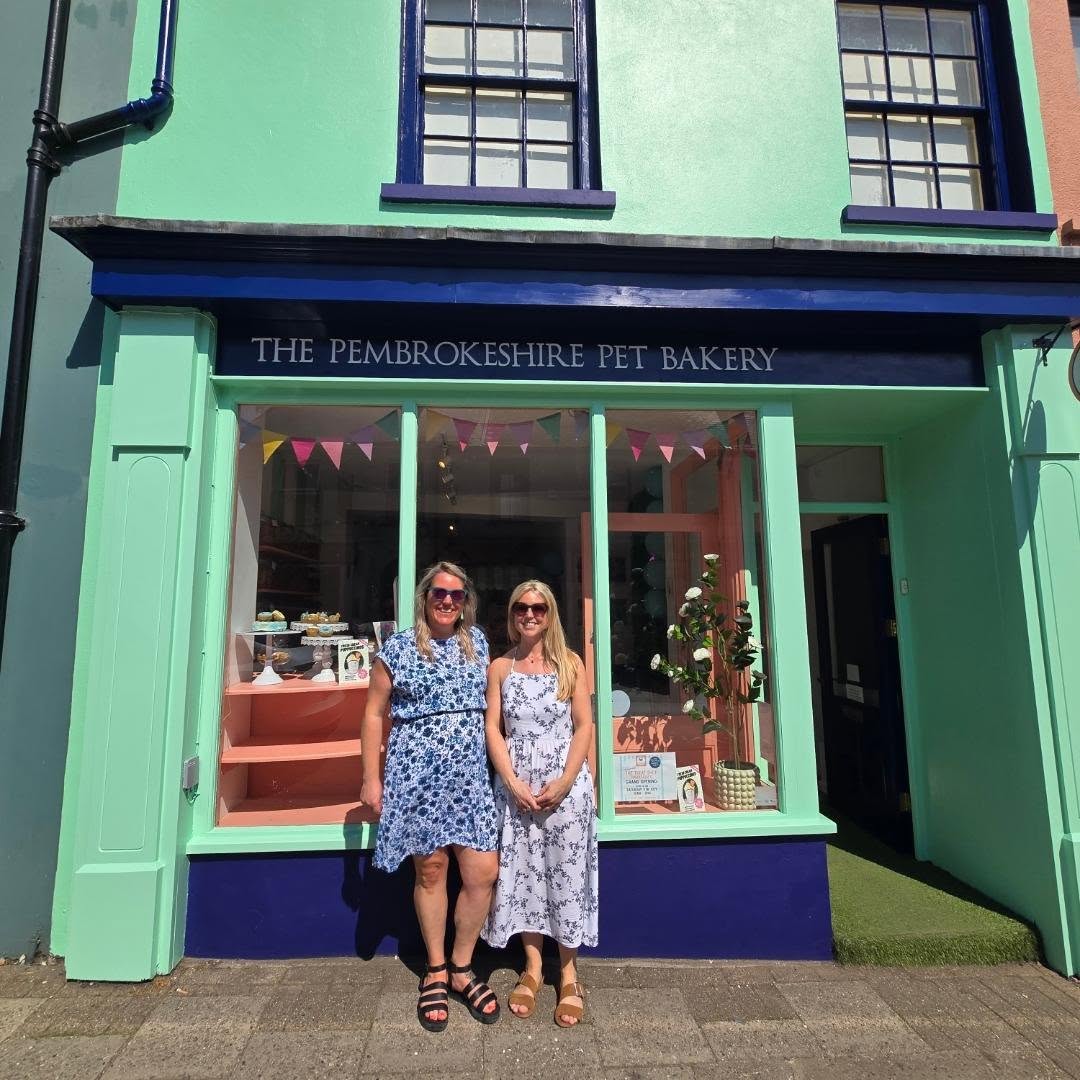
A LOCAL pet treat business has celebrated a major milestone after opening its second shop on Narberth High Street.
The Pembrokeshire Pet Bakery welcomed customers through the doors of its new Narberth store on Saturday, marking the latest stage in the growth of the independent business founded by Ali and Kelly.
Despite the hot weather, the opening attracted a strong turnout, with customers visiting to explore the bakery’s range of nutritious and colourful treats for dogs, cats and other much-loved pets.
The new premises joins the company’s established Haverfordwest store, allowing the team to serve customers from two Pembrokeshire town centres.
Ali and Kelly said the opening had been the result of years of hard work, determination and belief in their business.
They said: “What started as a big dream is now a reality, and seeing everyone flock through the doors on Saturday, despite the heat, has been one of our proudest moments to date.
“We are still pinching ourselves, to be honest, and it probably won’t sink in for a while yet.”
The pair also thanked residents and neighbouring businesses for the warm welcome they had received since arriving in Narberth.
They added: “The response and support from our friends, followers, customers and visitors has been absolutely incredible.
“Thank you doesn’t seem to cut it, but thank you all so very much. We are a little overwhelmed.”
The Pembrokeshire Pet Bakery specialises in fun and nutritious handmade treats, with products available for a range of animals including dogs, cats, rabbits, horses, birds and small pets.
The owners said they were now looking forward to building on the success of the opening weekend and continuing to serve customers in both Narberth and Haverfordwest.
The new shop adds another independent name to Narberth’s busy High Street, which is widely known for its mix of locally owned shops, cafés and specialist businesses.
Picture caption: Ali and Kelly outside the new Pembrokeshire Pet Bakery shop on Narberth High Street.

ONE of west Wales’ most recognisable independent music retailers has expanded into Carmarthen with the opening of a brand-new Dales Music Store.
The family-run business, which first opened in Tenby in 1947, has become a favourite destination for generations of music lovers, known for its extensive range of vinyl records, musical instruments, guitars, music accessories and merchandise.
Now, after almost 80 years in business, Dales has opened a second branch on Blue Street in Carmarthen, bringing its distinctive yellow-and-blue branding and passion for music to the county town.
The new store offers a wide selection of new and pre-owned vinyl, guitars, musical instruments, equipment, accessories, gifts and official band merchandise, catering for everyone from experienced musicians to collectors and casual music fans.
The expansion represents a significant milestone for the long-established business, which has evolved from its roots as a piano retailer into one of Wales’ best-known independent music stores while remaining family owned.
Owners say they are excited to welcome customers through the doors of the new Carmarthen branch and hope it will become a hub for the local music community, offering the same friendly service and specialist knowledge that has made the Tenby store a trusted name for decades.
The arrival of Dales also provides a welcome boost to Carmarthen’s independent retail scene, giving shoppers another reason to visit the town centre and supporting the area’s growing reputation as a destination for independent businesses.
Photo caption: The Dales team outside the new Carmarthen store on Blue Street, marking the opening of the iconic Tenby music retailer’s second branch.
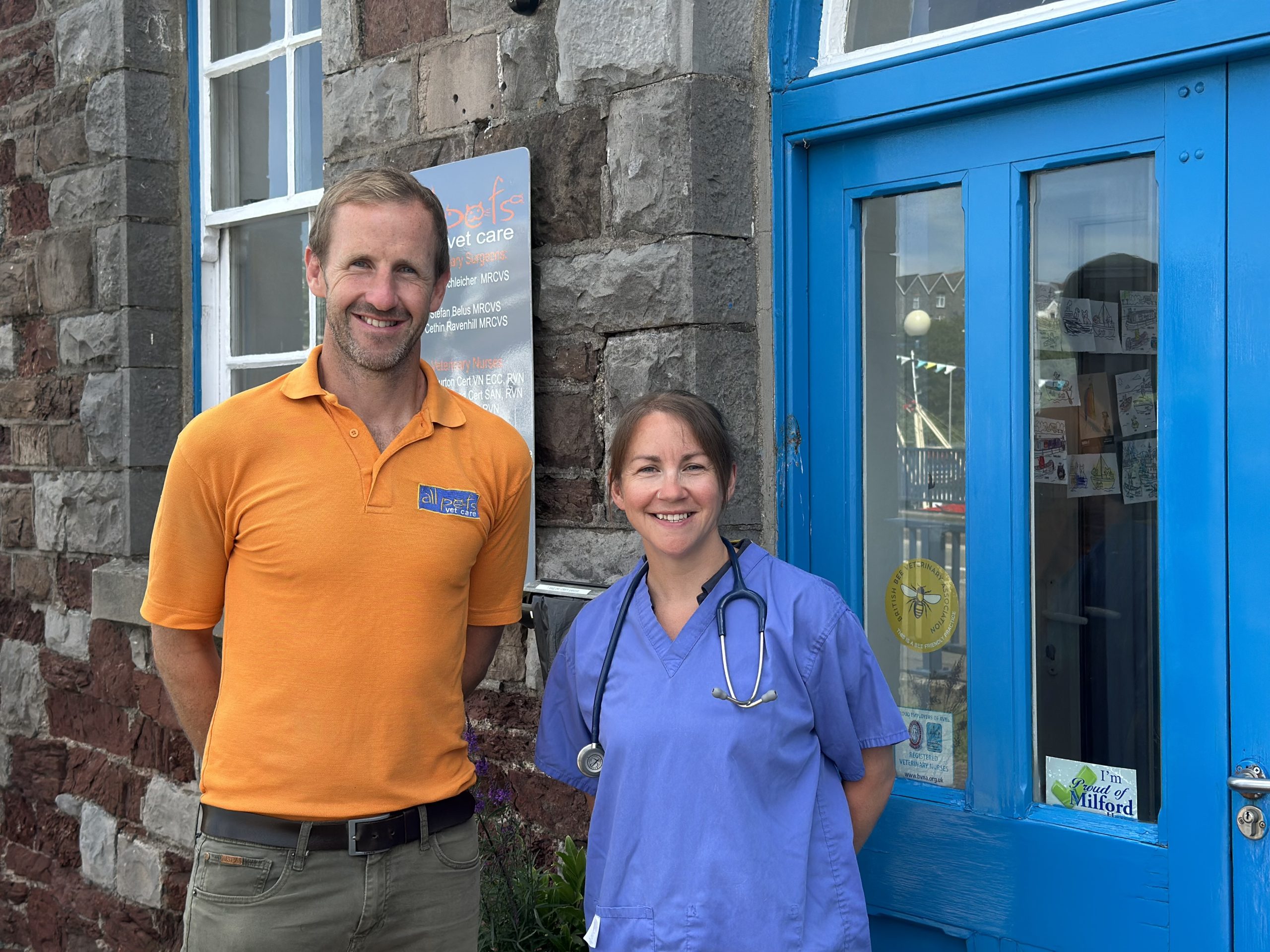
ALL PETS VET CARE is beginning a new chapter as ownership of the practice passes from founder Billa Schleicher to experienced local vets Alice Richards and Pete Howe.
The change will ensure the practice remains independently owned and firmly rooted in the Pembrokeshire community.
Alice and Pete have both worked as small animal vets in Pembrokeshire for more than a decade and say they are proud to build on the strong foundations already established at the practice.
They have pledged to continue providing compassionate, gentle and fairly priced veterinary care, with every animal treated as a valued member of the family.
The existing All Pets Vet Care team will remain in place, meaning clients will continue to see the same familiar faces and receive consistent, high-quality care.
Alice and Pete said the team’s longstanding relationships with clients were central to the practice’s success and that they intended to support and invest in staff as the business develops.
Alice said: “It is a privilege to take on All Pets Vet Care. There is a wonderful team here, and we are committed to maintaining the same personal and caring approach that clients and their pets know and trust.
“Remaining independent means we can stay close to the needs of our clients and the local community.”
Pete added: “We both care deeply about Pembrokeshire and the people and pets who live here.
“We want every client to feel supported, listened to and confident that their pets are in safe hands.
“That includes continuing to provide our own out-of-hours care for registered clients, so pets can be seen close to home by a familiar and trusted team when it matters most.”
All Pets Vet Care is one of only a small number of practices in Pembrokeshire to provide its own out-of-hours service for registered clients, offering continuity of care during evenings, nights and weekends.
The practice will also continue supporting local wildlife charities Tinkers Hill Bird Rescue and The Hogspital, which cares for sick and injured hedgehogs.
The partnerships have formed an important part of Billa’s legacy at the practice and will continue under the new owners.
Alice and Pete said All Pets Vet Care would remain an active part of the community, providing trusted advice, continuity of care and a genuinely personal service to pet owners across Pembrokeshire.
As the practice looks to the future, its commitment remains unchanged: providing trusted, compassionate and independent care for local pets and the people who love them.


Calls grow for independent investigation into Manorbier school closure
Councillor alleges misleading figures, inadequate insurance and poor treatment of staff CALLS for an independent investigation into the controversial closure...

Neyland Carnival hailed a huge success after streets fill with colour and crowds
NEYLAND CARNIVAL organisers have thanked the community, volunteers and local businesses who helped make this year’s event a memorable success....

Tenby Summer Spectacular: Anger grows over ‘disaster waiting to happen’ warning
A growing backlash has followed police calls for the event’s licence to be revoked, with supporters questioning why authorities failed...

RSPB secures ‘missing link’ to reconnect wildlife habitats in Carmarthenshire
RSPB CYMRU has purchased a 96-hectare upland site in Carmarthenshire, describing it as a vital step towards reconnecting one of...


Ann Widdecombe: Welsh politicians pay tribute as murder probe launched
Prime Minister Sir Keir Starmer has praised the former minister’s “conviction and dedication”, while political figures in Wales remembered her...


Solardo pulls out of Haverfordwest show as organisers offer full refunds
Headline act confirms non-appearance as Park House Series announces major event changes DANCE music duo Solardo will no longer perform...


Conservatives win Pembroke Dock seat as Reform stalls and Dowson polls just 11
Jamie Street takes Market ward with a 43-vote majority as Reform finishes fourth despite its major Senedd breakthrough two months...


Hospital ward closed after highly contagious scabies outbreak
Hywel Dda confirms wider rise in cases across Carmarthenshire, Pembrokeshire and Ceredigion as patients and staff are offered treatment A...


Teacher stabbing trial: The first week of evidence
Jury hears accounts of alleged planned classroom attack, teacher’s fear she was dying, and boy’s words after leaving school A...


Haverfordwest Castle refurbishment reaches new heights as roof goes on
Major milestone reached in project to transform historic gaol building into flagship visitor attraction A MAJOR milestone has been reached...
-

 Farming6 days ago
Pembrokeshire slaughterhouse given urgent improvement rating after audit failure
-

 News6 days ago
From boccia to boxing: ALN multisport events give youngsters chance to try activities
-

 News6 days ago
Large fire breaks out at Impala Terminal in Milford Haven
-

 Entertainment5 days ago
Swing and big band classics heading to Torch Theatre
-

 News5 days ago
Questions raised over Hamilton Accies finances after club’s Haverfordwest friendly
-
 Education7 days ago
Council failed Welsh language standards over school closure
-
 Entertainment7 days ago
Crymych Arms to host weekend of local music, food and drink
-

 Farming4 days ago
Working Carmarthenshire farm opens gates to visitors with new holiday cottages