


News
Should mobile phones be banned in schools?


THREE young people helped a Senedd member pen a speech questioning whether mobile phones should be banned in Wales’ schools.
Reggie Dovener, Nia Parsons and Kaia Wells – Year 9 pupils at Bedwas High School – helped Caerphilly MS Hefin David craft the short debate on March 13.
Dr David told the Senedd the school’s digital leaders are calling for Welsh Government guidance on acceptable use of mobile phones to ensure consistency across Wales.
The Labour backbencher raised concerns about cyberbullying, warning a 13-year-old girl was recently attacked on school premises.
He said: “The attack was premeditated. Mobile technology was used to plan the attack by fellow learners, inside and outside the school premises.

“The attack was recorded by several pupils, and shared throughout the school and others in the area. They were plotting to do it again and put it on Snapchat.”
Dr David said schools in Wales have their own policies, pointing out that guidance on prohibiting mobile phones during the school day has been issued in England.
He told the chamber Llanidloes High School, which has banned mobile phones during the school day, has reported a dramatic drop in cases of cyberbullying.
Dr David quoted Dan Owen, the school’s headteacher, as saying: “I used to go into the canteen and there was an eerie silence because they were all on their phones.

“Now they talk to each other more.”
Dr David said Ysgol Aberconwy, which locks phones away for the school day, has reported children are concentrating better as they cannot play on their phones during lessons.
The former university lecturer said some pupils feel mobile phones are needed to contact parents but this is not necessary as family emergencies can be dealt with by the school.

Dr David cautioned that pupils may need their mobile phones to pay for lunch in contactless canteens or to monitor medical conditions such as diabetes.
He said: “Another issue that was raised was that of learners who are also young carers. An individual who works with young carers told us that a ban would be horrific for them.
“They would be anxious about how their relative was throughout the day, and that worry would hinder their learning.”
Dr David added that pupils can use personal devices to access platforms such as Google Classroom and technology can aid pupils with additional learning needs.
Reggie, Nia and Kaia – who visited the Senedd with their teacher Suzanne John to watch first minister’s questions on March 12 – said: “Mobile phone use in a school is a minefield.
“Many learners feel mobile phones shouldn’t be banned. Many school leaders feel they should be banned to improve behaviour.
“Many teachers feel that they are a help and a hindrance. We feel that the education minister needs to give guidance to schools in Wales on acceptable use of mobile phones in school.
“He needs to give guidance on how schools should manage this from classroom level up to senior management level. The guidance should include young people’s views and teachers and school leaders should also be consulted.
“We would like to see consistency across Wales, and we would like to see cyberbullying eradicated from schools.”
Jeremy Miles, Wales’ education minister, heaped praise on Reggie, Nia and Kaia, who were watching from the public gallery.
He said: “I think we should maybe ask you to write more speeches that are delivered in this chamber. I hope Hefin won’t mind me saying but I saw a marked improvement in quality.”
Mr Miles argued against a blanket approach. He said schools are best placed to set local policies, with guidance to support them on the Hwb platform.
The would-be first minister told the chamber: “We need to ensure, though, that we teach our learners healthy habits and provide them with the skills to navigate the digital and online world, but also how to take breaks and move back into the real world again.
“That’s not just lessons at school; those are lessons for life.”



A HAKIN motorist has been banned from driving for three years after being caught behind the wheel with cocaine and benzoylecgonine in his system.
Mark Briskham, 53, of Waterloo Square, Wellington Road, Hakin, was stopped by police on January 5 as he drove a Ford Kuga along Steynton Road, near Milford Haven.
Blood tests carried out at the police station showed he had 800mcg of benzoylecgonine in his system. The legal limit is 50mcg.
He also had 64mcg of cocaine in his system. The legal limit is 10mcg.
Briskham pleaded guilty to two drug-driving charges when he appeared before Haverfordwest Magistrates’ Court this week.
Magistrates disqualified him from driving for three years, taking into account a previous drug-drive conviction from 2020.
He was also fined £120 and ordered to pay £85 costs and a £48 surcharge.cr
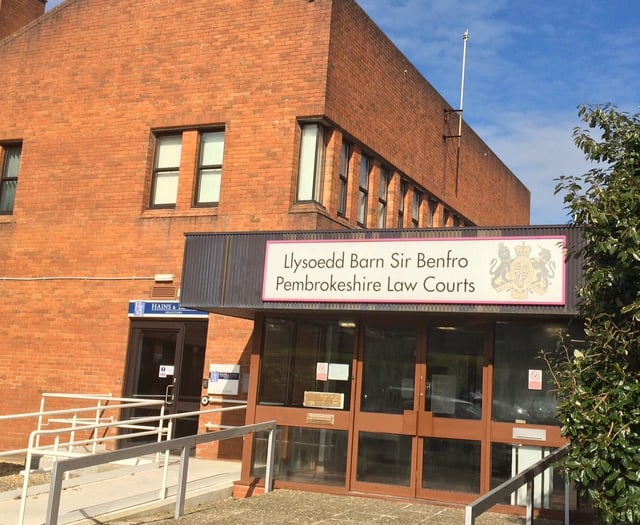
A PEMBROKESHIRE man has been remanded in custody following an alleged May Day assault against a woman in Begelly.
Tomas Baker, 34, of Ty Dee, New Road, Begelly, is accused of assaulting the woman, causing actual bodily harm, at an undisclosed location in Begelly on May 1.
Baker appeared before Haverfordwest Magistrates’ Court this week by video link from Swansea Prison.
He pleaded not guilty to the charge.
His trial will take place at Haverfordwest Magistrates’ Court on June 22.


A WATERSTON man has appeared before magistrates charged with 13 sexual offences against children, including three allegations of raping a girl under the age of 13.
Chaisee Price, 25, of Biggins Hill, Waterston, Milford Haven, appeared before Haverfordwest Magistrates’ Court this week.
He faces three charges of raping a girl under 13, eight charges of sexually assaulting girls aged between five and eight, and two charges of intentionally inciting girls under 13 to engage in sexual activity.
The offences are alleged to have taken place between 2014 and 2019.
Price denied all charges.
Because of the seriousness of the allegations, magistrates declined jurisdiction and the case will now proceed to Swansea Crown Court on July 10.
Price was released on conditional bail.
The conditions include a daily electronically monitored curfew between 6:00pm and 6:00am, no contact with the prosecution witness, no unsupervised contact with children under 18, and a requirement to surrender his passport to police.



News18 hours ago
First Minister challenged over jobs for student nurses
REFORM WALES has accused the First Minister of failing to guarantee jobs for student nurses in Wales, despite continuing pressure...

Crime20 hours ago
Knife blankets call as school staff face rising violence fears
GMB says protective equipment should be considered where risk assessments show staff could face blades SCHOOL staff should be given...


News21 hours ago
Claire Archibald secures review of Milford Haven train times
RURAL TRANSPORT CONCERNS RAISED WITH TFW CLAIRE ARCHIBALD MS has secured a review of train times between Milford Haven and...


Crime21 hours ago
PCC review calls for stronger youth crime prevention work
REPORT MAKES 13 RECOMMENDATIONS A REVIEW into crime and anti-social behaviour services for young adults has called for stronger prevention...


Crime24 hours ago
Families condemn failed appeal by paddleboard boss jailed over Haverfordwest tragedy
RELATIVES SAY LATEST COURT BID HAS REOPENED PAIN AFTER FOUR DEATHS ON WESTERN CLEDDAU THE FAMILIES of victims of the...

Community2 days ago
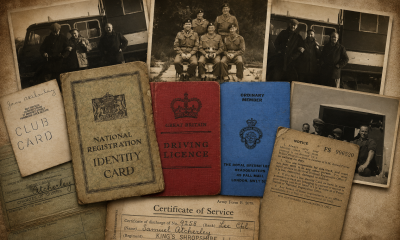
Forgotten wartime archive found in Pembroke Dock attic after 80 years
Remarkable family collection reveals story of father and son who served through two world wars A REMARKABLE untouched family archive...


Crime2 days ago
Milford Haven woman left with facial fractures after drunken attack
A WOMAN in her late fifties suffered facial fractures after being repeatedly punched through the window of her car during...


Crime2 days ago
Sex offender in senior role at Tenby family hotel
CREST HOTEL GROUP says it is investigating safeguarding concerns after staff at the Imperial Hotel in Tenby raised alarm over...

Sport2 days ago
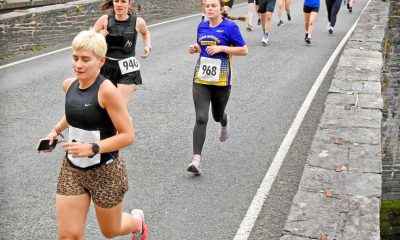
Runners tackle new route in Ras Y Castell 10k
MORE than 90 runners took to the streets and paths around Cardigan on Friday evening (June 5) for the annual...


Business3 days ago
Turkish Kitchen reaches Welsh restaurant award semi-finals
Haverfordwest café praised as small independent business flies flag for Pembrokeshire A HAVERFORDWEST café has been named as a semi-finalist...
-
Crime5 days ago
Paddleboard company owner loses bid to cut sentence over Haverfordwest tragedy
-

 Crime4 days ago
Milford Haven man admits harassment and assault
-

 Crime7 days ago
Milford Haven man bit neighbour’s neck near cashpoint
-

 News4 days ago
Community appeal for privacy after serious emergency in Pendine
-

 Crime7 days ago
Pembroke Dock driver avoided jail after drug-drive crash
-

 Crime7 days ago
Dinas Cross man jailed over shop thefts
-
Crime2 days ago
Sex offender in senior role at Tenby family hotel
-
Community2 days ago
Forgotten wartime archive found in Pembroke Dock attic after 80 years