

Community
Tackling child abuse with NSPCC’s bilingual workshops


NEARLY one-third of adults in Wales have been troubled by suspicions of child abuse or neglect within their communities.
This alarming statistic underscores a pressing need for awareness and action—a need the NSPCC is addressing head-on with its innovative, bilingual workshops.
A YouGov survey, canvassing 3,999 adults across the UK with 181 respondents from Wales, exposes a disturbing inertia: 20% of UK adults hesitated to act on their concerns about child abuse. In Wales alone, 29% of adults have encountered potential cases of mistreatment, spotlighting a critical gap in intervention.
Participants cited significant hurdles to action, including uncertainty (‘I wasn’t sure it was abuse’), fear of exacerbating the situation (‘I worried I might make things worse’), and a lack of tangible evidence (‘I couldn’t prove abuse was happening’).
The NSPCC’s ‘Listen Up, Speak Up’ initiative is not just another campaign; it’s a clarion call for community involvement. With its roots in a successful pilot in Newport, this campaign now offers comprehensive, bilingual resources aimed at equipping Welsh and English speakers alike with the tools to support vulnerable children.

Diving deeper, the survey reveals the private struggles of Welsh parents: over half grapple with challenges they feel ill-equipped to manage alone. A significant number fear judgment, yet many express openness to unsolicited support, indicating a community ready to embrace help.
The power of community intervention is vividly illustrated in the story of Gareth*, a Welsh resident whose early life was transformed by the kindness of neighbors. This personal account not only humanises the statistics but also exemplifies the profound impact of community action.
Sir Peter Wanless, NSPCC CEO, emphasises the universal nature of this challenge: “Every day, we cross paths with children—each encounter an opportunity to make a difference. With 73% of UK adults feeling unprepared to address child welfare concerns, our ‘Listen Up, Speak Up’ program offers essential, accessible training for everyone.”
The journey to safer communities begins with awareness and education. The NSPCC invites individuals and organisations alike to join the ‘Listen Up, Speak Up’ movement. Whether through hosting a workshop or signing up for digital training, every effort counts towards protecting our children. To learn more, visit the NSPCC website or contact their local campaigns team.
Through workshops and online training, ‘Listen Up, Speak Up’ aims to inspire adults across the UK to play their part in keeping children safe, by taking action to support children and families. The campaign, now fully bilingual and including workshops and online resources in Welsh, recognises the challenges of parenting and the benefits of communal support.
The ‘Listen Up, Speak Up’ workshops, led by the NSPCC and available to schools, businesses, organisations, and community groups, advise on recognising signs of risk, approaching difficult conversations, and where to turn when concerned about a child or their family.
Lili Dunn, Local Campaigns Manager for Wales, emphasises the collective responsibility: “We believe everyone can play a part in keeping children safe, equipped with the knowledge of what to do when concerned a child is at risk.”

A series of follow-up emails to the online training will share more advice on how to listen to and support children and families, introducing helpful services and resources, including advice on everyday challenges families may face.
So far, more than 25,000 people have signed up to ‘Listen Up, Speak Up’ digital training. The charity aims to reach one million people and organisations across the UK over the next 10 years, inspiring them to take actions in their community.
Gareth’s testimony and the NSPCC’s efforts underscore the critical role of individual and collective action in safeguarding children’s well-being. By raising awareness, offering practical tools, and encouraging community engagement, the ‘Listen Up, Speak Up’ campaign seeks to make a lasting difference in the lives of children across Wales and beyond.


MID AND WEST WALES FIRE AND RESCUE SERVICE is urging residents and visitors to take extra care as extreme heat and prolonged dry conditions increase the risk of wildfires and water-related emergencies.
The warning follows the issuing of a red extreme heat alert for parts of Wales, with exceptionally high temperatures forecast and emergency services preparing for added pressure in the days ahead.
Fire chiefs say the hot, dry weather has left grassland and vegetation particularly vulnerable, meaning even a small spark could develop into a fast-moving countryside fire.
Aled Griffiths, Head of Community Safety for Mid and West Wales Fire and Rescue Service, said: “With very high temperatures forecast across Wales this week, it’s important that we all take extra care to stay safe and reduce avoidable risks.
“We want everyone to enjoy the sunshine, but these conditions can increase the likelihood of incidents, including fires and water-related emergencies.
“Small actions can make a big difference, whether that’s using barbecues safely, disposing of smoking materials responsibly or taking extra care around open water.”

Barbecue and outdoor fire safety
Anyone using a barbecue is being advised to place it on a flat, non-combustible surface, well away from buildings, fences, dry grass and shrubs.
Barbecues should never be left unattended and must be completely extinguished and allowed to cool before ashes are disposed of.
The public is also being asked not to light campfires or other open fires, particularly in rural areas where dry vegetation can allow flames to spread rapidly.
Cigarettes, matches and glass bottles should never be discarded in the countryside.
The fire service has also reminded residents that burning grass or garden waste is prohibited at this time of year.
Open water warning
The hot weather is also expected to encourage more people to swim in lakes, rivers, reservoirs and other open water.
However, the fire service warned that water temperatures can remain dangerously cold even during periods of extreme heat.
Cold water shock can cause an involuntary gasp, rapid breathing, panic and a sudden loss of swimming ability, significantly increasing the risk of drowning.
People are advised never to jump or dive into unfamiliar water and not to enter open water after drinking alcohol.
Float to Live
Anyone who gets into difficulty in the water should:
- Tilt their head back, keeping their ears submerged
- Relax and try to breathe normally
- Move their hands and legs gently to remain afloat
- Avoid panicking if their legs begin to sink
Once breathing is under control, they should call for help or attempt to swim to safety.
The fire service recommends practising floating in a supervised environment, such as a swimming pool.
Phone, Float, Throw
Anyone who sees another person in difficulty should remain on land and follow the Phone, Float, Throw advice:
- Phone 999 and ask for the emergency services
- Encourage the person to remain calm and float on their back
- Throw rescue equipment or another floating object towards them
Members of the public should not enter the water themselves, as this can place both people in danger.
Further wildfire and water safety advice is available through Mid and West Wales Fire and Rescue Service’s website and social media channels.
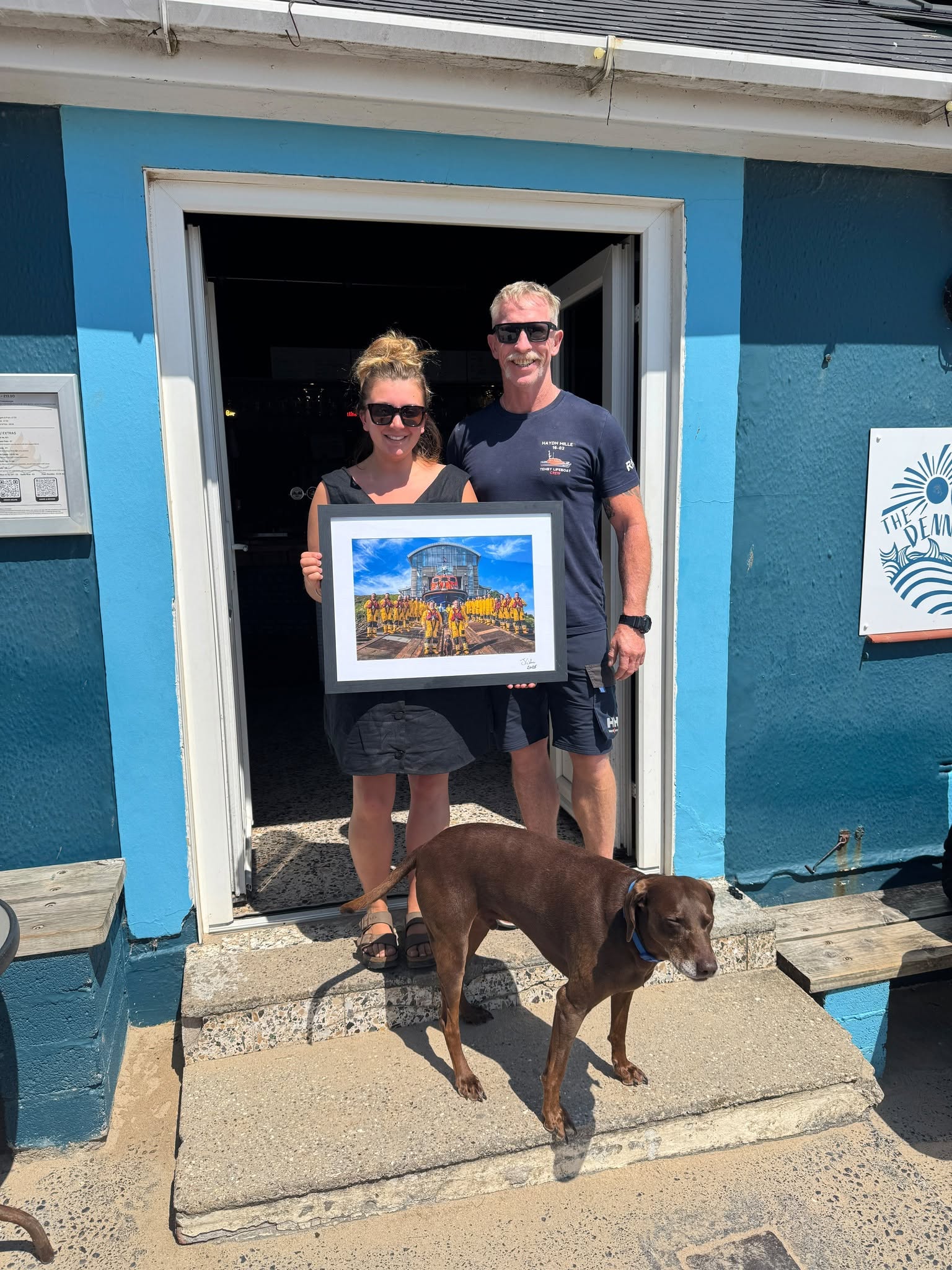
TENBY Lifeboats RNLI has presented a framed crew photograph to The Dennis Café on Castle Beach in recognition of the support it provides throughout the year.
The café has become a valued friend of the lifeboat station, regularly helping with crew social events and barbecues, as well as providing a convenient venue for meetings.
Members of the crew visited the café to hand over the photograph, which shows the Tenby lifeboat team gathered outside the town’s distinctive lifeboat station.
A spokesperson for Tenby Lifeboats RNLI said: “From crew socials and barbecues to providing us with a place for crew meetings, they have always got our backs.
“Thanks a lot. It’s much appreciated.”
The framed picture will now be displayed at the popular Castle Beach café as a lasting reminder of the close relationship between the business and Tenby’s volunteer lifeboat crew.
PHOTO: Tenby Lifeboats RNLI presents a framed crew photograph to The Dennis Café on Castle Beach.

MORE than half of older people in Wales have struggled with the cost of living during the past year, while one in six say they or a relative have experienced treatment in hospital corridors or other unsuitable spaces.
The findings are contained in Age Cymru’s seventh annual survey, which gathered responses from 1,448 people aged over 50 across all 22 Welsh local authority areas.
Respondents ranged in age from their early fifties to more than 100 years old.
The survey found that 52 per cent had found the cost of living challenging, up from 46 per cent in 2025 and just nine per cent when the survey began in 2020.
Fuel prices, water bills and council tax were among the main pressures reported.
More than a third of respondents said they had changed their lives to cope with rising costs. Of those, 52 per cent had reduced their use of energy or heating, around a third had cut their food spending and 30 per cent were socialising less.
Confidence about the coming year has also fallen. Just 53 per cent said they were confident they could meet their living costs over the next 12 months, dropping to 48 per cent among those living alone and 43 per cent among people with a disability.
Only six per cent of those surveyed were receiving Pension Credit, although the proportion claiming Attendance Allowance had more than doubled since last year.
Health concerns
Maintaining physical health was the most commonly reported challenge, affecting 53 per cent of respondents.
A third said their health had worsened during the past year, while only six per cent reported an improvement.
Almost half, 49 per cent, said it was difficult or very difficult to secure a GP appointment, and 23 per cent struggled to travel to hospital appointments.
For the first time, Age Cymru also asked respondents about “corridor care”, where patients wait for or receive treatment in hospital corridors, waiting rooms or other areas not designed for clinical care.

Seventeen per cent said they or someone close to them had experienced corridor care during the previous year.
Five per cent had experienced it personally, while 12 per cent were reporting the experiences of a relative or loved one.
The longest reported case lasted three weeks, with five people describing periods of at least seven days.
One respondent said a relative had been left sitting in a chair for four days in a corridor “packed with people being treated”, with one toilet shared between dozens of patients and no washing facilities.
Another said a dying relative waited 20 hours for an ambulance, spent a further 18 hours outside hospital in the ambulance and then almost a week in an A&E bed before being moved to a clinical decisions unit.
The patient was suffering from prostate cancer, lung cancer and end-stage heart failure.
Those who had experienced corridor care were also more likely to report serious health problems. Sixteen per cent described their physical health as very poor, compared with four per cent across the survey as a whole.
Almost three-quarters said their health was significantly worse than a year earlier.
Overnight waits in hospital chairs
Geoffrey, 79, from Conwy, cares for his wife, who has cancer and requires frequent hospital treatment.
He said the couple had visited A&E four times during the past year, with each visit involving waits of between six and 13 hours overnight.
He said: “My wife has cancer, which gives her constant pain. She works hard to get through the day. She cooks, tidies up and does a little gardening.
“I have Myasthenia Gravis, which does limit my activities. I do not have the same energy as before, but I work hard to try to keep well.”
He also criticised difficulties accessing NHS services by telephone, describing the 111 system as “hopeless” when automated options fail and callers are forced to begin again.
Marie, 76, from Denbighshire, said she had reduced her use of heating, electricity and water to manage rising costs.
She lives alone and said older people, particularly those aged over 75, were often made to feel “invisible”.
“Although I have very good friends and family, I miss the companionship of having a spouse,” she said.
Carers providing more support
The survey found that 29 per cent of older people were providing unpaid care for at least one person, with more than half saying their caring responsibilities had increased since last year.
Women accounted for 63 per cent of unpaid carers responding to the survey, while 77 per cent were aged 65 or over.
Only five per cent of those identifying themselves as carers were receiving Carer’s Allowance.
Access to social care showed some improvement, with 62 per cent of those seeking support saying they received the help they needed, compared with 52 per cent in 2025.
However, 46 per cent still said accessing support was difficult or very difficult, and 40 per cent were contributing towards the cost of their care.
Transport remained another major concern, particularly in rural and former industrial communities.
Almost a quarter of respondents blamed a lack of public transport for difficulties getting out and about, while 23 per cent cited the cost of travel.
Problems with bus services were reported in every Welsh local authority area.
Fall in optimism
Only a third of respondents said they felt optimistic about the coming year, down from 42 per cent in 2025.
Forty per cent said they were not optimistic, the highest level recorded since the survey began.
Age Cymru chief executive Victoria Lloyd said the findings presented a striking picture of the pressures facing older people.
She said: “It’s perhaps no surprise that cost of living and physical health are at the top of their concerns.
“This was the first year we asked respondents about corridor care, and the results are a stark image of the difficulties facing some of the most vulnerable people during some of their most challenging times.
“Respondents often said that frontline staff were doing all they could, but that the facilities were simply struggling to cope with the number of people needing care.”
There were some positive findings.
The proportion reporting loneliness or isolation fell to 16 per cent, while 19 per cent said their mental or emotional health had been a challenge, down from 26 per cent last year and 30 per cent in 2024.
Ms Lloyd warned that those improvements could be reversed unless the underlying pressures were addressed.
She said: “The fall in loneliness and improvements to mental health are real positives, but there is a real risk of losing these gains if we don’t address the fundamental issues of cost of living and physical health.
“By investing in the organisations and people working to make positive change, we can help people live longer with a better quality of life.”



Local Government3 hours ago
Calls grow for independent investigation into Manorbier school closure
Councillor alleges misleading figures, inadequate insurance and poor treatment of staff CALLS for an independent investigation into the controversial closure...


Community9 hours ago
Neyland Carnival hailed a huge success after streets fill with colour and crowds
NEYLAND CARNIVAL organisers have thanked the community, volunteers and local businesses who helped make this year’s event a memorable success....


Community12 hours ago
Tenby Summer Spectacular: Anger grows over ‘disaster waiting to happen’ warning
A growing backlash has followed police calls for the event’s licence to be revoked, with supporters questioning why authorities failed...


Charity1 day ago
RSPB secures ‘missing link’ to reconnect wildlife habitats in Carmarthenshire
RSPB CYMRU has purchased a 96-hectare upland site in Carmarthenshire, describing it as a vital step towards reconnecting one of...


Crime2 days ago
Ann Widdecombe: Welsh politicians pay tribute as murder probe launched
Prime Minister Sir Keir Starmer has praised the former minister’s “conviction and dedication”, while political figures in Wales remembered her...


News3 days ago
Solardo pulls out of Haverfordwest show as organisers offer full refunds
Headline act confirms non-appearance as Park House Series announces major event changes DANCE music duo Solardo will no longer perform...


Local Government3 days ago
Conservatives win Pembroke Dock seat as Reform stalls and Dowson polls just 11
Jamie Street takes Market ward with a 43-vote majority as Reform finishes fourth despite its major Senedd breakthrough two months...


Health3 days ago
Hospital ward closed after highly contagious scabies outbreak
Hywel Dda confirms wider rise in cases across Carmarthenshire, Pembrokeshire and Ceredigion as patients and staff are offered treatment A...


Crime4 days ago
Teacher stabbing trial: The first week of evidence
Jury hears accounts of alleged planned classroom attack, teacher’s fear she was dying, and boy’s words after leaving school A...


Community4 days ago
Haverfordwest Castle refurbishment reaches new heights as roof goes on
Major milestone reached in project to transform historic gaol building into flagship visitor attraction A MAJOR milestone has been reached...
-

 Farming6 days ago
Pembrokeshire slaughterhouse given urgent improvement rating after audit failure
-

 News6 days ago
From boccia to boxing: ALN multisport events give youngsters chance to try activities
-
 News6 days ago
Large fire breaks out at Impala Terminal in Milford Haven
-

 News5 days ago
Questions raised over Hamilton Accies finances after club’s Haverfordwest friendly
-

 Education7 days ago
Council failed Welsh language standards over school closure
-

 Entertainment5 days ago
Swing and big band classics heading to Torch Theatre
-

 Entertainment7 days ago
Crymych Arms to host weekend of local music, food and drink
-

 Farming3 days ago
Working Carmarthenshire farm opens gates to visitors with new holiday cottages