

Politics
Senedd plan to ban lying politicians ‘unworkable’


PLANS to ban Senedd Members for deliberately lying may be unworkable, according to the Welsh Government’s chief legal adviser.
Mick Antoniw, Wales’ counsel general, raised concerns about Adam Price’s proposals to disqualify politicians from the Senedd for deliberate deception.
The ex-Plaid Cymru leader’s amendment to the elections and elected bodies bill, which would create the offence of deception, was agreed after Labour’s Lee Waters abstained.
Giving evidence to an inquiry on accountability, Mr Antoniw said: “I’ll put my neck on the line at the moment and say I don’t think criminalisation is the way that it actually works.
“I think it’s actually unworkable probably.”

He said the issue would be best considered by the standards committee inquiry, suggesting Welsh ministers will try to delete the clause during the next amending stage set for July 2.
Vikki Howells, the Labour backbencher who chairs the standards committee, asked whether Wales should adopt Westminster’s approach to removing MPs between elections.
In the House of Commons, a recall petition can be triggered by a custodial sentence for 12 months or less, a suspension of ten sitting days or more, or an expenses offence conviction.
Mr Antoniw broadly agreed with the criteria, emphasising the importance of consistency across parliaments while accounting for Wales-specific circumstances.
He said the 12-month threshold – above which Senedd members are already automatically disqualified – seems “rather high”, suggesting six months may be more appropriate.
Plaid Cymru’s Peredur Owen Griffiths pointed out people could be imprisoned over a matter of conscience such as protesting about the environment, nuclear or the Welsh language.
Mr Antoniw recognised the concern, saying peaceful protest is part of a democratic society, but he said a six-month threshold would exclude “nearly all of those sorts of circumstances”.

He cautioned: “Discretions are always very difficult in terms of things like disqualification.”
Asked whether a recall system should apply to members who change their political allegiance after an election, Mr Antoniw warned it may be a step too far.
The counsel general said politicians defecting to another party risks inappropriately changing the balance of the Senedd and the outcome of an election.
But he told the committee a politician could leave a party over a matter of conscience, such as a group changing its position on an issue post-election.
Mr Antoniw argued the most effective way forward would be to ensure Senedd members cannot form or join another political party, with a requirement to sit as an independent.
He made the case for an appeals process as part of any recall system, warning the absence of one could throw up “all sorts of human rights issues” and lead to legal challenge.
But Mr Antoniw stressed the importance of proceeding at pace as he raised concerns about previous standards committee processes going on for a “very, very prolonged period”.
He argued a simple majority vote of the whole Senedd should be required to sign off on recall processes, rather than a two-thirds supermajority.
“Whips can’t apply,” he said. “I don’t think that would be appropriate in any circumstances.”
Responding to Mark Drakeford’s concerns about the risk of a minority blocking recall, Mr Antoniw agreed with the ex-First Minister that a supermajority risks over-politicisation.
Mr Owen Griffiths asked how the counsel general would envisage the process working in light of the complexities of Wales’ new fully proportional “closed-list” electoral system.
Under the members and elections bill, which is set to receive Royal Assent, people will vote for parties rather than individual candidates in future Senedd elections.
Mr Antoniw suggested a simple retain-or-replace public vote, saying it would effectively be a referendum on whether an MS should be removed.
“It’s not so much a petition because a petition is to ask permission to do something,” he explained. “And it’s not a byelection because there are no other candidates.”
He said the next person on a party’s initial list, which can include up to 12 candidates, would replace an unseated MS, retaining the make-up of the Senedd determined at the ballot box.
Asked whether parties should have discretion to later reorder lists, based on factors such as gender balance, Mr Antoniw cautioned against the added complexity.
Mr Drakeford highlighted that the 32 constituencies in Wales that will be used in the July 4 general election will be paired to create 16 for the next Senedd poll.
The Cardiff West MS suggested a threshold should be required in each constituency rather than across both, saying: “Fairness should trump anxieties about complexity.”
He said it is possible constituencies such as Blaenau Gwent and Monmouth, which have a different character, could be paired by the Electoral Commission.
Mr Drakeford warned: “Unless you have a threshold that applies to both, one half could actually determine the outcome for the other.”
Mr Antoniw accepted issues could arise, such as between industrial and rural constituencies, but his “gut feeling” favoured the simplicity of a combined threshold.
Asked whether polls should be open for a single day or longer as in Westminster’s system, Mr Antoniw preferred the latter as he argued it would best maximise participation.
The Conservatives’ Natasha Asghar asked about the chances of a recall bill being passed before the next election, and said having 96 more MSs will raise the risk of misbehaviour.
Mr Antoniw told the June 17 meeting: “The commitment given from the Welsh Government – from the First Minister – is that we would like to see this legislation in place by 2026.
“I think that is the public expectation as well.”



A CALL to extend a Pembrokeshire “boutique nature retreat destination” previously featured in the Sunday Times with further holiday cabins, a mobile sauna and padel courts has been lodged with county planners.
In an application submitted to Pembrokeshire County Council, Paul Cleaver of Wilder Retreats, through agent Hayston Developments & Planning Ltd, seeks permission for two holiday cabins, a mobile sauna and the conversion and extension of an existing building to padel courts and changing rooms to form phase 2 of the existing Wilder Retreats holiday cabins and complex, on land at the former agricultural/ forestry works depot, Solbury Road, Tiers Cross.
Padel is a racquet sport that combines elements of tennis and squash.
A supporting statement said of Wilder Retreats, an ecotourism destination located on 20 acres of rewilded land: “Since opening, the business has established itself as one of Wales’ leading boutique nature retreat destinations — demonstrating how sensitive, high-quality tourism development can work in harmony with landscape, ecology and local economy.
“The business has attracted national press coverage from publications including the Sunday Times and Coast Magazine.”
It said the existing business “was conceived from the outset as an ecotourism model — one that funds and enables genuine environmental restoration through sustainable commercial activity, working towards ecological targets set by Kite Ecology including native woodland planting, wildflower meadow creation and habitat corridor development”.
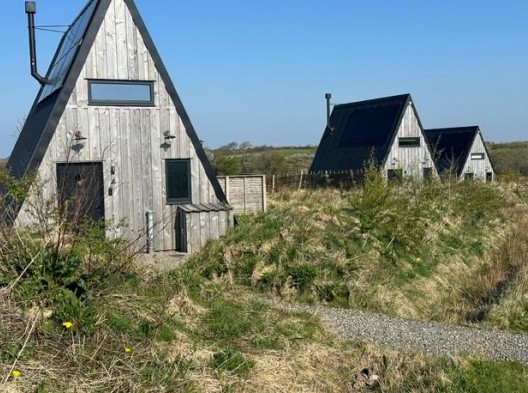
The Phase 2 developments proposed are: two additional A-frame cabins in addition to the existing six; Wilder Woodland Sauna, a commercial woodland sauna; and Wilder Padel Club, two covered LTA (Lawn Tennis Association) compliant padel courts with associated clubhouse facilities, that re-uses a redundant shed and yard in the client’s ownership.
The two additional A-frame cabins will be operated by Wilder Retreats Ltd as an extension of the existing accommodation business. Wilder Woodland Sauna and Wilder Padel Club will each operate as independent businesses under separate limited companies.
“Together, the three proposals reinforce one another: the cabins bring more guests to the site; the sauna and padel give those guests — and local residents — more reasons to visit and to stay longer,” the statement says, adding: “All three operate independently but collectively strengthen the economic, social and environmental case for this site as a model of sustainable rural tourism.”
The site was previously lawfully occupied by the applicant’s tree works consultancy and land management business until this subsequently relocated a few years ago.
Although the site has since been occupied by a motorcycle business, that business has been given notice to vacate but will trade until early 2027.
The application proposal is supported by a letter from Tennis Wales, the national governing body for Padel, one of the fastest growing sports in the country, which fully supports the principle of creating two padel courts, saying: “Creating more Padel courts, which can be used throughout the year, is critical to sustaining this growth.

“These new facilities will enable more adults and juniors to enjoy, compete and experience the game of Padel in line with Tennis Wales Vision and Mission which is to see ‘Padel opened up’.”
The application will be considered by county planners at a later date.
AN INDEPENDENT inquiry into grooming gangs across England and Wales has failed to identify a single location in Wales for local investigation, the Senedd has been told.
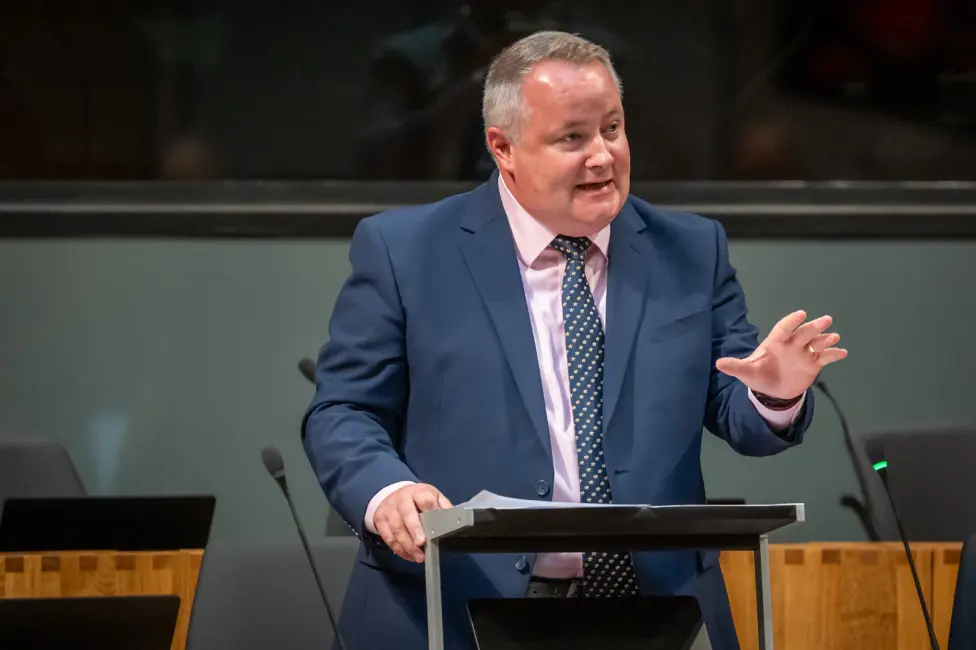
Welsh Conservative leader Darren Millar raised the issue in the Siambr on Wednesday July 8, warning that known victims of child sexual exploitation in Wales are being overlooked.
Mr Millar said independent investigations had already cited Swansea, Rhyl and parts of mid Wales as areas where grooming gangs operate, with victims being trafficked to other parts of the UK.
Addressing Deputy First Minister Sioned Williams, Mr Millar asked for assurances that she would commit to a standalone, Wales-wide inquiry if the current cross-border investigation continues to bypass Welsh locations.
Ms Williams, who also serves as social justice and equality minister, said the Welsh Government had consulted on the terms of reference to ensure the “unique Welsh context” is captured.
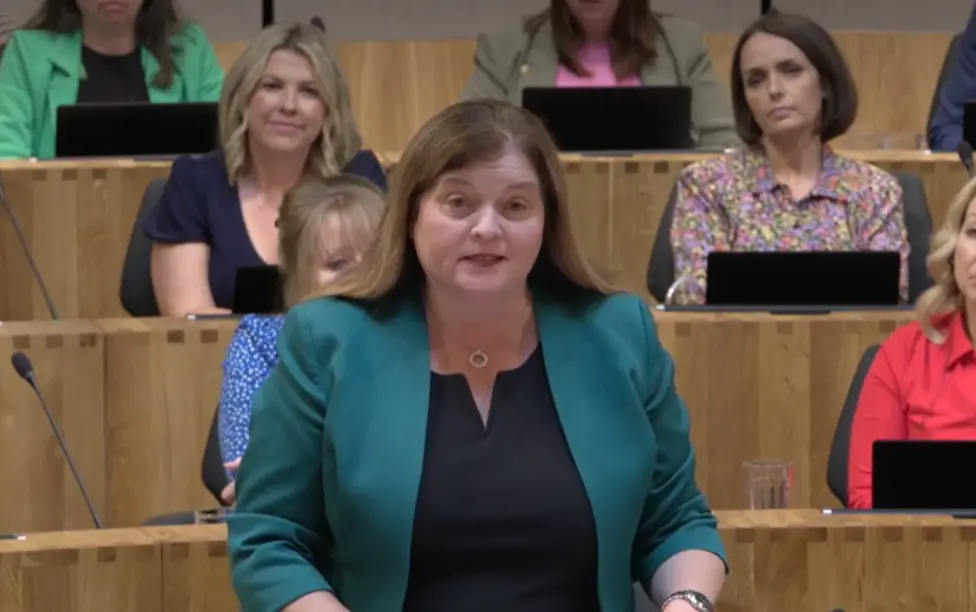
She confirmed that Welsh officials meet monthly with the inquiry team and have been assured that Welsh survivors will be able to contribute fully.
Ms Williams added that her government would take further action if it believes it is required.
The debate followed figures highlighted in the Senedd by Plaid Cymru’s Beca Brown on Wednesday July 2, showing an estimated 25,000 children and young people are sexually abused in Wales every year.
Labour’s spokesperson for equalities, Shav Taj, called for ring-fenced funding to train teachers to identify sophisticated online AI deepfake networks and “sextortion” rings.

Ms Taj warned that relying on a central website without specific funding was a “passive strategy” for exhausted school staff.
Ms Williams said the government’s ten-year strategy focuses on prevention, effective protection, and supporting affected families alongside the NSPCC and the Centre of Expertise on Child Sexual Abuse.
AN “EXPERT GROUP” has been set up as the Welsh Government looks to pilot its proposed child payment.
Wales’ Deputy First Minister faced questions on Cynnal – a Plaid Cymru manifesto pledge to deliver a £10 payment to to low income households.
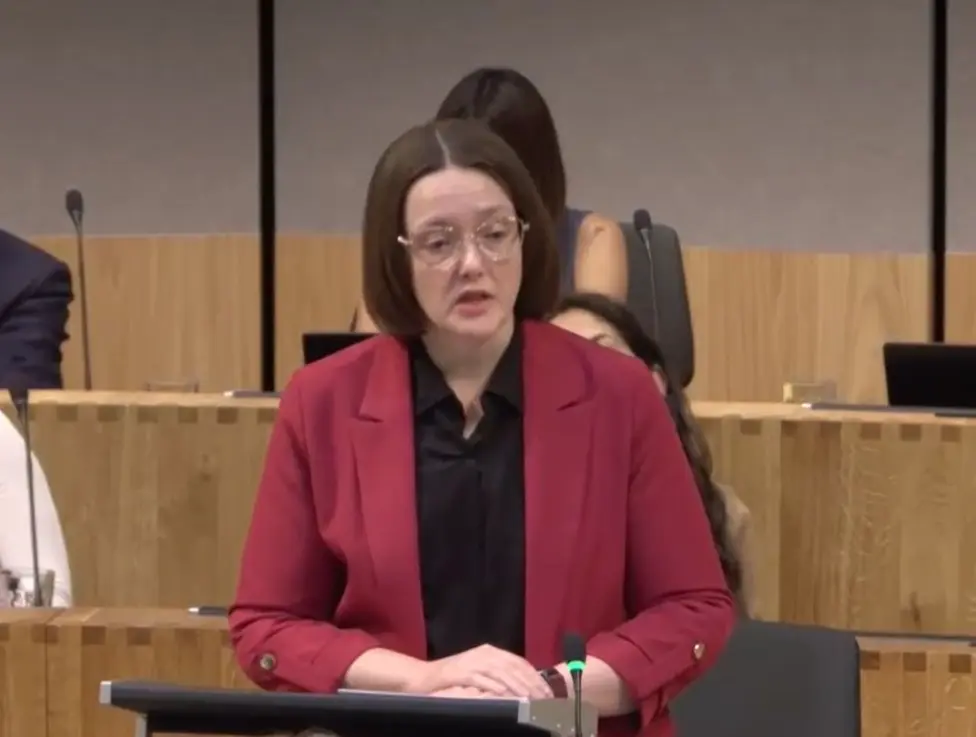
Sioned Williams said the group will support the “design, delivery, monitoring, and evaluation of the Cynnal pilot” – which could benefit up to 15,000 children aged six and below.
Answering a question from Plaid Cymru colleague Elyn Stephens, Ms Williams the group brings together “expertise from across the sector” to ensure the scheme is “evidence-led, is robustly evaluated, and is grounded in the realities of families’ lives.”
Drawing on experiences from her own constituency of Afan Ogwr Rhondda, Ms Stephens noted the “real difference” the Cynnal payment could make to families facing the “sharpest end of child poverty”.
However, she said potential recipients need clarity that the support will reach them directly.
She said: “We know there are clear precedents for additional payments being disregarded within the benefits system, including the Scottish child payment and local welfare provision.
“But the Welsh NHS and social care bonus show that without Department for Work and Pensions protection, the value of a government payment can be reduced through the Universal Credit system as it’s then classed as earnings.”
Ms Stephens said the Cynnal payment needs to be “simple to access and protected in full”.
Ms Williams confirmed negotiations have begun with the UK Government to look at the links between benefits, taxation, and the Cynnal payment.
She said: “I’ve already started discussing this with Andrew Western MP, the minister for transformation, and further meetings are in the diary.”
Reform’s Gareth Thomas asked Ms Williams how many families in his constituency of Pen-y-Bont Bro Morgannwg are expected to benefit from the payment, and whether his area will be included in the original rollout.

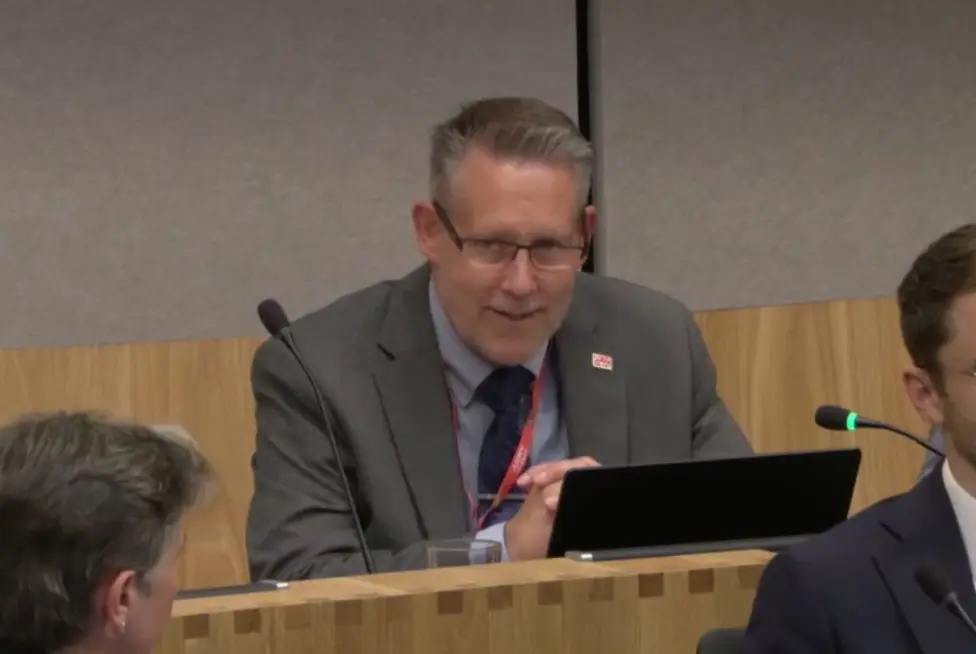
He also pushed for the Welsh Government to publish local figures so MSs can assess “whether Cynnal is delivering real benefits for families and value for public money”.
In response, Ms Williams said: “The task of the expert group will be to ensure that we plan this payment carefully. It is a pilot programme, so it won’t reach every family in need in Wales, because that’s the nature of a pilot, clearly.”
She continued: “We need to think how we can assess how this child payment can support families in the best way possible, and then build those strong foundations of robust evidence in order to steer future decisions.”
Labour’s Jane Bryant emphasised the importance of working with both the UK Government and local authorities in Wales on the scheme’s rollout.

She asked when the child payments will start, and urged the minister to ensure it will not affect families’ eligibility for other financial support.
On the involvement of local authorities, Ms Williams said: “We know we have key partners in this work as regards delivery and interaction with other Welsh benefits.
“So that is, again, what will be completely under the consideration of the expert steering group which will be meeting next week.”



News1 hour ago
Solardo pulls out of Haverfordwest show as organisers offer full refunds
Headline act confirms non-appearance as Park House Series announces major event changes DANCE music duo Solardo will no longer perform...


Local Government3 hours ago
Conservatives win Pembroke Dock seat as Reform stalls and Dowson polls just 11
Jamie Street takes Market ward with a 43-vote majority as Reform finishes fourth despite its major Senedd breakthrough two months...


Health3 hours ago
Hospital ward closed after highly contagious scabies outbreak
Hywel Dda confirms wider rise in cases across Carmarthenshire, Pembrokeshire and Ceredigion as patients and staff are offered treatment A...


Crime23 hours ago
Teacher stabbing trial: The first week of evidence
Jury hears accounts of alleged planned classroom attack, teacher’s fear she was dying, and boy’s words after leaving school A...


Community1 day ago
Haverfordwest Castle refurbishment reaches new heights as roof goes on
Major milestone reached in project to transform historic gaol building into flagship visitor attraction A MAJOR milestone has been reached...


Business2 days ago
Pembrokeshire lands £98m share of Wales marine energy boom
New industry report says county has received the second highest level of marine energy investment in Wales, supporting more than...
Crime2 days ago
First aider tells jury teacher was “crying, shaking” after classroom stabbing
A SCHOOL first aider has told a jury that teacher Vicki Williams was “crying, shaking” and in “complete shock” after...


Crime3 days ago
Teacher feared she was dying after Milford Haven classroom stabbing
A TEACHER allegedly stabbed in the head at Milford Haven Comprehensive School told a jury she feared she was dying...


News3 days ago
Farage to resign as MP and fight Clacton by-election amid finance row
NIGEL FARAGE has announced he will resign as MP for Clacton and stand again in the by-election he intends to...
Crime3 days ago
Teacher tells jury there were ‘no issues’ with accused pupil hours before ‘stabbing’
Milford Haven teacher gives evidence as trial of 15-year-old continues at Swansea Crown Court A TEACHER allegedly stabbed at Milford...
-

 Education7 days ago
Ysgol Glannau Gwaun celebrates prestigious Gold Active Travel award
-

 Farming3 days ago
Pembrokeshire slaughterhouse given urgent improvement rating after audit failure
-

 Entertainment2 days ago
Swing and big band classics heading to Torch Theatre
-

 News4 days ago
Large fire breaks out at Impala Terminal in Milford Haven
-

 Education4 days ago
Council failed Welsh language standards over school closure
-

 News3 days ago
From boccia to boxing: ALN multisport events give youngsters chance to try activities
-

 Community6 days ago
Milford Haven Carnival brings colour, music and crowds to the town
-

 Health7 days ago
NHS at 78: A moment to give back to the service Wales helped create