


Business
‘Absolute chaos’ in food security presents high risk to consumers


THE NEXT government must prioritise food safety, says expert who investigated horse meat scandal
The UK is desperately in need of a food security policy to protect consumers and safeguard legitimate businesses, says a leading food expert.
According to Chris Elliott, Professor of Food Safety and Microbiology at Queen’s University Belfast and founder of the Institute for Global Food Security, a series of threats to food security are converging to create “absolute chaos”.
Professor Elliott – who authored the government-commissioned report into the 2013 horse meat scandal – told the Chartered Trading Standards Institute (CTSI) Conference on 19 June that there is an urgent need for the UK’s next government to appoint a dedicated Food Minister and to implement a robust food security policy.
He also slammed “scandalous” cuts to Trading Standards resources as a major threat to food safety.

Regulatory divergence in the wake of Brexit, disruption to global supply chains caused by the war in Ukraine, the climate crisis and the rise of online food retail have created a challenging environment for businesses and an increasingly risky state of play for consumers.
Among Elliott’s concerns are the withdrawal of legitimate importers from the UK market – as a result of the increased costs and paperwork brought about Brexit – which is creating new opportunities for unscrupulous businesses and rogue traders to bring non-compliant and potentially unsafe foods into the country.
Elliott cited the disjointed approach to food regulation and monitoring as a key risk to consumers and legitimate businesses. He added that the government’s decision to scrap the LACoRS (Local Authorities Coordinators of Regulatory Services) system in 2010, combined with sweeping cuts to Trading Standards services, has dramatically undermined the UK’s ability to ensure that food entering the country, being sold in shops and online, and reaching consumers’ tables, is accurately described and safe to eat.
Professor Chris Elliott said: “I think the cutbacks in the Trading Standards workforce are the first problem; those people are really at the coalface and understand the problems that are going on. That, and the disjointed nature of food monitoring surveillance governance in the UK, is scandalous to be honest.

“For the last 14 years, the Conservative government has basically said, it’s a free market, don’t worry about it, because the food industry will take care of everything. Don’t worry if we import more, because imports are cheaper. So there has been no policy whatsoever. The UK currently imports nearly 50% of all the food that we eat, so everything that happens in other parts of the world will impact us.
“I know a company based in Spain who have taken the decision not to import anything into the UK anymore because it’s not a big enough market for them to deal with the amount of paperwork. If the good guys stop wanting to import stuff, the bad guys will step in, because the UK will be a much easier touch than Europe.
“People are realising it’s now much easier to get food that is not of the same quality and standards into the UK, because we don’t have the same checks and measures, or the same network of exchange of information. There are lots of reports about dodgy meat turning up in Felixstowe, for example – and that’s just one of the consequences of becoming very isolated.

“There are also massive challenges out there because of our changing climate. That’s really driving some bad behaviours, even with good businesses. The overuse of pesticides and illegal pesticides, for example, is on the rise because producers are trying to deal with climate crisis situations and crop failures.
“Ten years on from the horse meat scandal, the large mainstream food manufacturers and retailers are much better in terms of the monitoring processes and defence mechanisms they have in place. But in our food system, there are the large players, and then there are the small players, and then there’s online – which is the Wild West. We have found a huge amount of food fraud online. They can basically sell whatever they want. That’s what we’re up against.”
Jessica Merryfield, Head of Policy and Campaigns at CTSI, said: “Having safe food and a secure food supply chain is something we risk taking for granted but is fundamental to our health; we need safe food to survive as humans. The food supply chain and landscape has changed significantly, and will continue to do so, and those regulating the food chain need the resources to do so. This means having the legislative backing to allow officers to effectively deal with the challenges arising, but the rules are only as good as they are enforced; the decimation of qualified, skilled officers in this area needs to be reversed to allow this to happen.
“Without sufficient levels of officers working to ensure our food is produced and supplied to the highest levels of safety, effectively we are allowing decriminalisation by the back door. At CTSI, we are calling for the building back of Trading Standards services over the next four years, through funding of extra posts and apprenticeships. CTSI are also proud to announce that we are producing standalone module qualifications in feed and animal health, with a food one coming soon, to give local authorities and other stakeholders the opportunity to get staff trained quicker in these areas.”
Louise Hosking, Executive Director at the Chartered Institute for Environmental Health (CIEH), said: “Food security, standards and sustainability are interconnected. The vastly evolving UK landscape from Covid-19 to climate change has created new emerging risks that have created fragility within the food system.
“CIEH’s 2024 manifesto outlines the need for the UK government to strategically deliver the National Food Strategy, with a mandate to ensure all policies related to food work together to deliver health and environmental benefits. At each stage of the food supply system, from food handling, preparation and delivery, environmental health professionals work to ensure that the UK’s has a stable and safe supply of food.
“In the lead up to the next general we urge the next UK government to create a fairer, more sustainable food system.”



A CALL for an extra sign advertising a Pembrokeshire holiday park, adding to exiting unauthorised ones, which planners say would create “visual clutter and intrusion” and a distraction to drivers, has been refused.
In an application to Pembrokeshire Coast National Park, permission was sought, through Lakeside Signs Limited, for an additional sign advertising Haven’s Lydstep Beach Village, near Tenby, the sign proposed for North Lodge where the holiday park joins the main road.
Pembrokeshire County Council’s highways authority raised no concerns regarding the specific location of the sign, but said “there remains a broader concern regarding the cumulative impact of signage along this section of highway,” adding: “The increasing proliferation of signs in this location has the potential to create a visually cluttered environment, which may distract drivers and, in turn, give rise to road safety implications.”
A Park officer report recommending refusal said: “Currently, there are eight flagpoles, one A-frame banner type sign, one pole mounted panel sign, and a further panel sign, located behind the stone wall on the western side of the park’s entrance. None of these advertisements have the benefit of advertisement consent.”
It added: “The increasing number of signs in this location has the potential to create a distraction to drivers, which may result in road safety implications. In addition, the proliferation of signage would create clutter that would result in visual intrusion in this countryside location affecting amenity. As such, the recommendation is to refuse.”
It went on to say: “Whilst it is not deemed that the proposed advertisement would result in harm being caused to the specific special qualities of this area, there are concerns that the display of this advertisement would, along with the remainder of the advertisements, which are unauthorised, result in a proliferation of advertisements, which in turn would cause visual clutter and intrusion.
“This is especially problematic in a countryside location where development is strictly controlled. Should the existing signage be consolidated and rationalised, the Authority may support the proposed sign, however, currently, any additional signage would not be deemed appropriate.”
The application was refused on the grounds that it would, along with the exiting signage, “result in visual clutter and intrusion which would detract from the visual amenity of this countryside location, and would result in potential distraction to drivers, which in turn would rise to road safety implications”.

SAUNDERSFOOT’S Coal Building interpretation centre could soon host the third store for Welsh cheesecake business The Cheesecake Guy Ltd, in plans before the national park.
In an application to Pembrokeshire Coast National Park, Craig Taylor of Merthyr Tydfil-based The Cheesecake Guy Ltd seeks a change of use of part of Saundersfoot’s Cambrian Terrace Coal Building interpretation centre to create a small retail unit.
On its website, The Cheesecake Guy says of its business and products: “Established in 2019, The Cheesecake Guy is all about delivering indulgent, handcrafted cheesecake desserts with a twist. While we offer a range of sweet treats, our specialty — and customer favourite — is the signature cheesecake jar.
“Made with quality ingredients and packed with rich, creamy layers, our jars are the perfect dessert for any occasion. Whether you’re treating yourself or sharing with others, The Cheesecake Guy brings a spoonful of happiness to every bite.”
While no supporting statement has yet been published for the Saundersfoot proposal, the application says the scheme would employ two full-time members of staff, operating 10am-6pm Mon-Sat, and 10-5 on Sundays and bank holidays.
It says the proposed site is currently a mixed-use retail and gift shop, having previously been used as office space.
It adds: “This is a space within a building that is still trading, the space we are wanting a change of use was last used by Persimmon Homes as an office space.”
Of the scheme itself it says it will involve “retail sales of pre-prepared desserts and merchandise,” adding there will be “no on-site manufacturing or heavy processing,” with “equipment limited to display fridges and freezers”.
If approved, the Saundersfoot site would be the third outlet for The Cheesecake Guy, with sites in Merthyr, and, more recently, Newport Market.
After that store opened following redevelopment of Newport’s Victorian market, Craig Taylor, of The Cheesecake Guy, said: “We are very excited to be part of the new development in Newport Market alongside some other amazing small businesses.
“We feel this is definitely the next step in the right direction after our Merthyr Tydfil store taking off so well.”
For its Newport site, The Cheesecake Guy says: “We specialise in creating a wide variety of cheesecake desserts that cater to all tastes. Our menu features popular favourites that have won the hearts of many, alongside exciting new creations designed to keep your taste buds satisfied.

“Whether you’re a classic cheesecake lover or an adventurous foodie, we promise a cheesecake experience like no other. Each cheesecake is made with the utmost care, ensuring a rich, creamy texture and a burst of flavour in every slice (or jar!).”
The Saundersfoot proposal will be considered by park planners at a later date.

A DEVELOPMENT call for a Pembrokeshire holiday park has been turned down by Pembrokeshire Coast National Park.
In an application to park planners, Broad Haven Holiday Park, through agent Gerald Blain Associates, sought permission for the relocation of a boat storage area, vehicle shed and play area along with rewilding of adjoining fields at Broad Haven Holiday Park, Broad Haven, near Haverfordwest.
The application was supported by local community council The Havens.

However, an officer report recommended refusal.
Detailing the application, it said: “The proposal relates to the extension of an existing static caravan holiday site into adjacent undeveloped woodland to accommodate the relocation of boat storage, a vehicle shed, and a children’s play area, together with associated ecological mitigation measures. No increased pitch numbers are proposed.
“The development site has already undergone some site clearance, resulting in the removal of approximately 1,000 square metres of woodland.”
It went on to say: “The existing site is already intervisible with the coast, and the proposed relocation of boat storage would likely increase its visibility rather than reduce it. Without supporting evidence in the form of a Landscape and Visual Impact Assessment (LVIA) or Zone of Theoretical Visibility (ZTV) demonstrating that the development would be visually contained, the proposal appears contrary to the guidance contained within the SPG and the objectives of Policy 41.
“As a result, the proposed development is considered to detract from the special qualities of the National Park in this location and would be detrimental to the quality and character of the landscape character area in which the site sits, and as such does not comply [with policies].”
The application was refused on grounds including it being sited within previously undeveloped land within a flood zone, a lack of information on potential impacts on biodiversity, and it is “considered to detract from the special qualities of the national park in this location and would be detrimental to the quality and character of the landscape character area in which the site sits”.



News10 hours ago
Plaid Cymru celebrates historic victory as Rhun ap Iorwerth arrives at Cardiff Bay
CROWDS gathered outside the Senedd as Plaid Cymru leader Rhun ap Iorwerth arrived in Cardiff Bay following his party’s historic...


Crime11 hours ago
Police standoff ends after four-hour incident in Pembroke Dock
ELIZABETH COURT SCENE STOOD DOWN AFTER DOMESTIC INCIDENT A FOUR-HOUR police standoff in Pembroke Dock has ended with a 21-year-old...


Crime15 hours ago
Teen denies attempted murder of Milford Haven teacher
TEENAGER REMANDED AHEAD OF JULY TRIAL A 15-YEAR-old boy has denied attempting to murder a teacher during a stabbing incident...


News1 day ago
Catastrophe for Labour as Plaid and Reform reshape Welsh politics
ELUNED MORGAN LOSES SEAT AS OLD CERTAINTIES ARE SWEPT AWAY THE VOTERS of Wales have delivered one of the most...


News1 day ago
Labour wiped out in Ceredigion Penfro as Plaid tops poll and First Minister loses seat
Shock result sends political shockwaves across Wales as Reform also surges in historic Senedd count LABOUR suffered one of the...


News2 days ago
Labour deputy says party ‘will not form next Welsh Government’
LABOUR FACES HISTORIC DEFEAT AS COUNTING CONTINUES ACROSS WALES LABOUR’S Deputy Leader in Wales has effectively conceded the Senedd election,...

News2 days ago
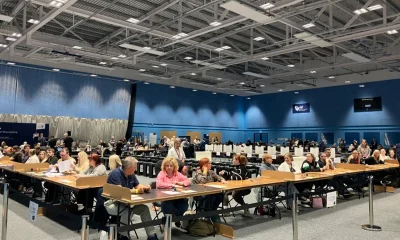
Counts underway in historic Senedd election
Wales waits for results as first election under new voting system reaches count stage COUNTING is underway across Wales today...


Charity2 days ago
Chief’s Tour honours fallen officers with 75-mile Pembrokeshire ride
Dyfed-Powys Police team raises thousands for bereaved police families charity A TEAM of officers and staff from Dyfed-Powys Police cycled...


Crime2 days ago
Racial abuse suspect barricaded himself inside Johnston lodge
ARMED police were called to a supported accommodation building in Johnston after a man allegedly barricaded himself inside a room...


Crime3 days ago
Milford Haven woman denies causing suffering to cat
Jury hears evidence over alleged failure to seek treatment for tumour A MILFORD HAVEN woman has denied causing unnecessary suffering...
-

 News5 days ago
Baby in critical condition after Fishguard emergency
-

 News4 days ago
Former housing officer admits drink-driving in Pembrokeshire retail park
-

 Crime4 days ago
Job loss threat for convicted Pembrokeshire drug-driver
-
 Crime4 days ago
Milford motorist disqualified for drug-driving
-

 Crime4 days ago
Police tip-off leads to driving ban for Milford motorist
-
Crime2 days ago
Racial abuse suspect barricaded himself inside Johnston lodge
-

 Crime4 days ago
Delivery driver caught twice over legal drink-drive limit
-

 Community4 days ago
Sixth-former firefighter balances schoolwork with saving lives