


News
Thousands of Welsh drivers fined due to ‘misleading’ bus gate signage


A DETAILED investigation into the signage of bus gates in Cardiff has revealed significant issues leading to an exorbitant number of Penalty Charge Notices (PCNs) being issued, totalling over £500,000 annually. The Kingsway bus gate, in particular, has become a notorious hotspot for fines, averaging one £70 PCN every 20 minutes during its operational hours.
The root of the problem appears to be the inadequate and misleading signage that fails to meet the legal standards set out in the Traffic Signs and General Directions 2016 and the Traffic Signs Manual. According to the reports, many of the drivers fined were likely unfamiliar with the area, relying on the insufficient signage to guide them. This issue is not unique to Cardiff, with similar complaints being echoed across various UK towns and cities.
The reports highlight that the signage at Kingsway does not comply with the necessary legal requirements. Common problems include signs that are too small, poorly placed, and lacking necessary supplementary plates such as “and authorised vehicles” for Private Hire Vehicles. This oversight questions the legality of the bus lane and gate enforcement in Cardiff and other regions.

An extensive review of bus gate penalties across the UK shows a troubling pattern of inadequate signage and excessive PCNs. Cities such as Leeds, Bristol, Brighton, and Aberdeen have similarly high rates of fines, with some councils issuing up to 132,000 PCNs annually. These penalties generate millions of pounds in revenue but have sparked widespread criticism regarding their fairness and the adequacy of the signage.
Traffic experts and campaigners, including Matt Sanders who authored a comprehensive 150-page report on Bristol’s bus gates, urge immediate corrective measures. Recommendations include halting the issuance of PCNs until signage is corrected, refunding unjustly fined drivers, and ensuring that all traffic signs meet current legal standards and are conspicuously placed.

Local authorities, such as Cardiff City Council, maintain that their signage complies with legislation. However, this has been disputed by adjudicators at the Traffic Penalty Tribunal who have frequently upheld appeals based on inadequate signage. The reports call into question the competence of the officers responsible for installing and maintaining these signs, suggesting a lack of up-to-date knowledge and training.
For Cardiff and other affected cities, the path forward involves a comprehensive review and overhaul of bus gate signage to ensure legal compliance and clarity for drivers. Authorities are urged to adopt the Institute of Highway Engineers’ recommendations and ensure all signage is designed and checked by qualified professionals.
The current state of bus gate signage in Cardiff and across the UK is leading to an unreasonable number of fines, disproportionately affecting unfamiliar drivers. This issue necessitates urgent national attention and reform to ensure fairness and legal compliance in traffic enforcement.


YOUNG people have helped bring new colour and creativity to Haverfordwest Railway Station as part of a wider project to improve one of the town’s key gateways.
A partnership involving local services, transport organisations and community groups has worked together to refurbish parts of the station and install new artwork, with a strong focus on youth engagement and creative participation.
The project involved South West Wales Connected, Pembrokeshire County Council Youth Justice, The Edge Youth Centre and Regeneration Teams, Kier, Transport for Wales, Dyfed-Powys Police, The VC Gallery, Haverfordwest Action Forum and local artists.
As part of the Welsh Government-funded Haverfordwest Public Transport Interchange scheme, Kier carried out refurbishment works at the station, including cleaning and improvements to the waiting area and public facilities.
An unused building on Platform 2 was also cleaned and prepared for the display of artwork. The art installations were funded through the UK Government Shared Prosperity Fund.
Young people supported through Pembrokeshire County Council services produced a series of artworks which are now on display in the station waiting area and on the Platform 2 building. Additional pieces created by local artists have also been installed.
The scheme is intended to create a more welcoming environment for passengers and visitors, while giving young people the chance to take part in meaningful creative activity.
The improvements form part of wider efforts to enhance key gateways into Haverfordwest, from the railway station to the new Haverfordwest Public Transport Interchange, and support town centre regeneration.
Cllr Rhys Sinnett, Cabinet Member for Residents’ Services, said: “It’s great to see art and culture brought to people as opposed to them actively seeking it out and we have a great tradition in Pembrokeshire of young people producing public art in this form.
“The fact that this is a wide-ranging partnership of groups only adds to the value of the project. I hope people take an opportunity to have a look at what has been created.”
Ian Rees, Regional Director for Kier Construction Western and Wales, said: “We’re proud to have supported improvements at Haverfordwest Railway Station through our work on the wider public transport interchange project, and to be leaving such a positive legacy for the local community.
“It’s been fantastic to see so many stakeholders come together to support and celebrate the creative young people involved in this project, providing a more welcoming space for passengers and visitors.”

Philip Merchant, Project Manager for South West Wales Connected, said: “As South West Wales Connected, we took on this project as a response to community feedback that the station was not a welcoming place, in its environment and for passenger wellbeing.
“It was a challenge and an opportunity to take this on as a blank canvas and it was so enjoyable to work with many partners who all had the same vision and reasons to upgrade this important railway station.”
Nathaniel Owen, Senior Customer Operations Manager for Transport for Wales, said: “Transport for Wales are delighted to have worked closely with Pembrokeshire County Council, Kier Construction, South West Wales Connected and local artists and stakeholders to deliver some small but important improvements to the station environment at Haverfordwest.
“We hope customers will enjoy looking at the artwork done by local people for local people when they travel with us.”
The partners said the initiative reflects a shared commitment to supporting young people, improving public spaces and making Haverfordwest railway station a more attractive and welcoming place for the wider community.
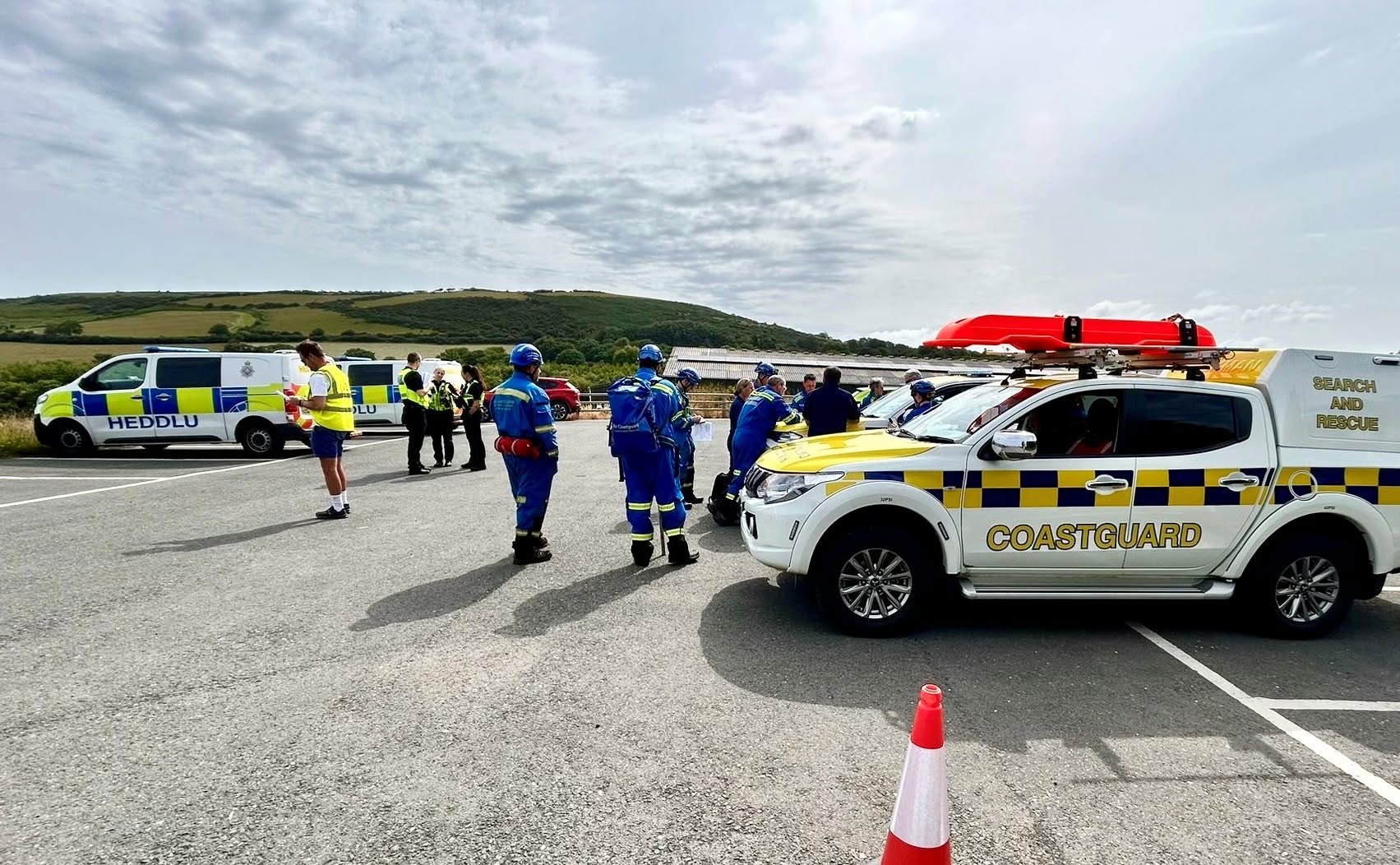
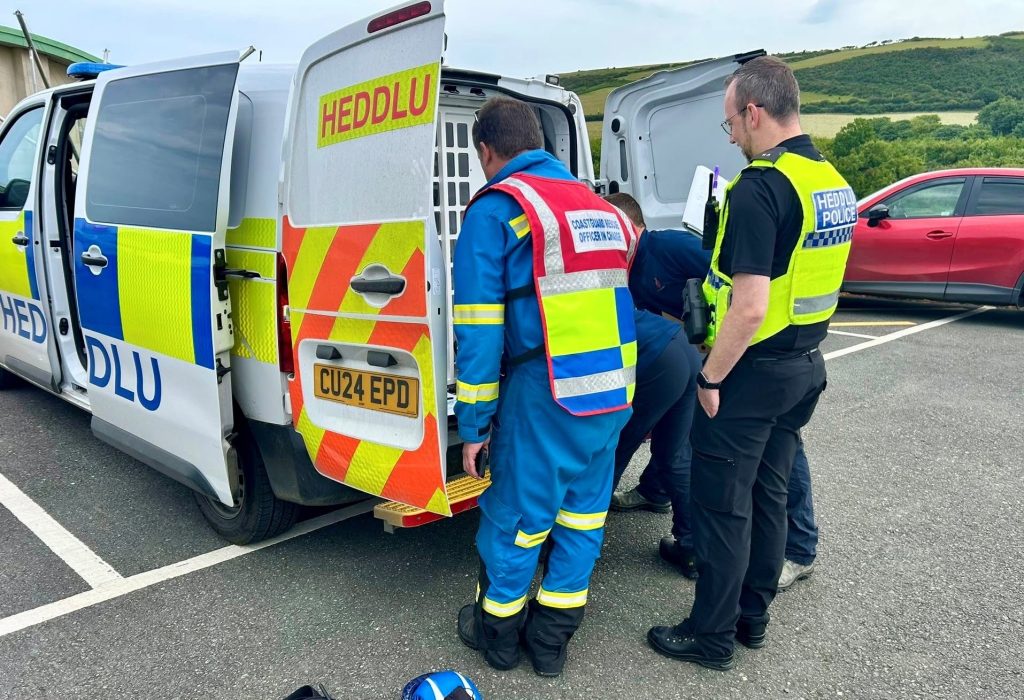
MULTIPLE emergency services took part in a major missing person exercise at Ynys Lochtyn, Llangrannog, earlier this week.
The exercise was organised by New Quay Coastguard and involved HM Coastguard Teifi (Cardigan), the Area 13 Coastguard Drone Team, Dyfed-Powys Police, and both the inshore and all-weather lifeboats from New Quay Lifeboat Station.
Llangrannog Urdd Camp hosted the exercise, which was designed to test and improve joint working between agencies during coastal emergencies.
New Quay Coastguard thanked the camp, the local community and all emergency services involved.
A spokesperson said exercises of this kind were “critical” for testing and improving partnership working during emergencies along the coastline.

New plans aim to cut delays, reduce costs and stop house sales collapsing
THOUSANDS of homebuyers across Wales could save time and money under a major overhaul of the property-buying process announced by the UK Government.
The reforms are designed to tackle long-standing problems in the housing market, including lengthy delays, failed transactions and unexpected costs which can leave buyers and sellers out of pocket.
Ministers say the changes could reduce the average time taken to buy a home by around four weeks and save first-time buyers an average of £650.
Under the proposals, sellers and estate agents would be required to provide key information about a property when it is listed for sale. New “sales packs” would include details about a home’s condition, leasehold charges and the status of any buying chain.
The Government also plans to introduce earlier legally binding agreements between buyers and sellers to reduce the number of transactions which collapse late in the process.
A major part of the reforms will focus on replacing paper-based systems with digital property logbooks, electronic signatures, online identity checks and AI-assisted conveyancing.
Welsh Secretary Jo Stevens said: “Thousands of people across Wales will benefit from these reforms which will make buying a home faster, simpler and fairer.
“For too long the system has been difficult and complex. This government’s changes will save working people and families valuable time and money when they are buying their new home.”
Prime Minister Sir Keir Starmer said the current system leaves many families “in limbo” and makes home ownership more difficult than it should be.
Housing Secretary Steve Reed said buying or selling a home should not be “a drawn-out nightmare of delays, hidden costs, and failed deals.”
The Government says the reforms will be introduced in stages, with a new Code of Practice for property agents expected later this year.
From 2027, ministers plan to consult on mandatory qualifications for estate agents and the wider use of digital tools.

Legislation requiring sales packs, binding contracts and digital property information systems is expected before the end of the current Parliament.



Crime52 minutes ago
Prisons at breaking point: MPs warn Wales is paying the price of a failing system
Frozen healthcare budgets, overcrowded jails, homelessness on release and mounting pressure on staff are undermining rehabilitation across Wales, according to...


News15 hours ago
Brexit at 10: How Britain was sold a dream that cost us dearly
A decade after the referendum, the promised benefits remain hard to find while the economic costs are increasingly difficult to...


Crime16 hours ago
Worcestershire man jailed after violent attack on woman in Tenby
Defendant was already serving a suspended sentence when serious assault took place A WORCESTERSHIRE man has been jailed for more...


Climate18 hours ago
Offshore wind ‘could bring new generation of jobs to Milford Haven’
Pembrokeshire ports and Celtic Sea projects placed at centre of Wales’ green energy ambitions MILFORD HAVEN and Pembroke Dock could...

Community2 days ago
Police officer hailed hero after midnight sea rescue in Milford Haven
PC swam 100 metres offshore to save distressed woman heard calling for help in darkness A DYFED-POWYS POLICE officer has...


Local Government2 days ago
Security privately arranged by Mayor at Beating of the Bounds
HAVERFORDWEST TOWN COUNCIL has confirmed that security personnel seen at this year’s Beating of the Bounds were privately arranged and...


Business3 days ago
Celtic Freeport five-year plan puts Milford Haven at centre of green energy future
Strategy promises investment, skilled jobs and new supply chains, but major barriers remain over grid connections, planning and delivery THE...


Education3 days ago
Closure of Ysgol Clydau approved after emotional council debate
COUNCILLORS WARNED RURAL COMMUNITIES WILL REMEMBER DECISION PEMBROKESHIRE councillors have voted to close Ysgol Clydau following an emotional debate over...


Education3 days ago
Manorbier school closure process to continue after narrow council vote
Questions remain over insurance, rebuilding costs and possible legal action by Diocese PEMBROKESHIRE councillors have voted to press ahead with...


Community3 days ago
The father, son and daughter lifeguard trio saving lives in Pembrokeshire
A FATHER, son and daughter are preparing to help keep beachgoers safe on the Pembrokeshire coast this summer as part...
-

 Community4 days ago
Pembrokeshire Chess Club crowned Welsh champions
-
Local Government2 days ago
Security privately arranged by Mayor at Beating of the Bounds
-

 Crime7 days ago
Pembroke Dock teenager sentenced over train strangulation attack
-

 Education6 days ago
Diocese threatens legal action as Manorbier school closure battle intensifies
-

 Crime7 days ago
Man accused of six rapes including alleged Haverfordwest offence
-

 Crime2 days ago
Man wanted by court after failing to attend hearing over alleged shop thefts
-

 Local Government6 days ago
Taxi suspended after county-wide licensing checks
-
 Crime2 days ago
Man banned from roads after drink-driving offence