


Community
Share your views about Haverfordwest town centre signage

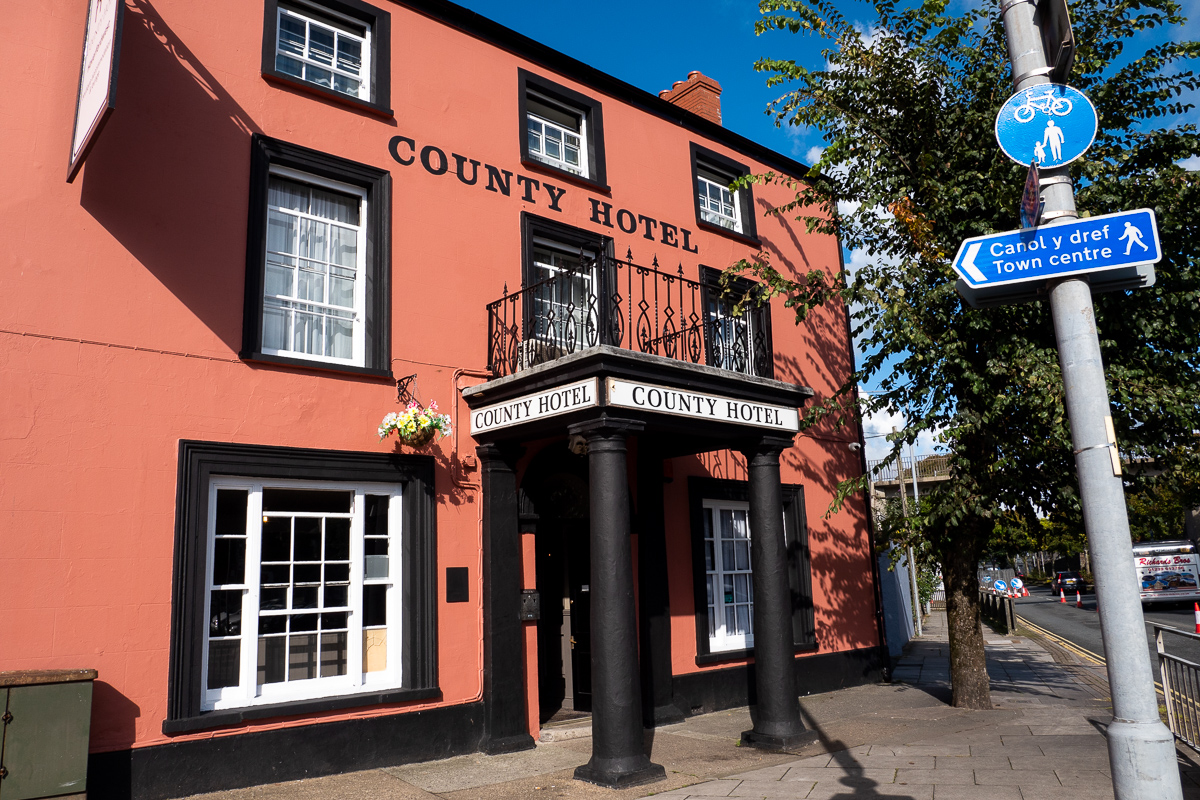
LAST weekend Pembrokeshire County Council’s Regeneration Team held a successful engagement event at Haverhub where around 200 people attended and shared their views on current and future developments in Haverfordwest. In addition, over 130 online survey responses have been received and there’s still time to have your say – head over to www.pembrokeshire.gov.uk/futureofhaverfordwest
As part of these wider plans, Pembrokeshire County Council is improving town centre wayfinding in our county town with funding from UK Government. As well as more traditional signage, such as finger posts, the designs will include creative signposting across the town so that you can easily find your way to your destination, discover places you didn’t know before, learn about our rich heritage and enjoy spending more time in Haverfordwest.
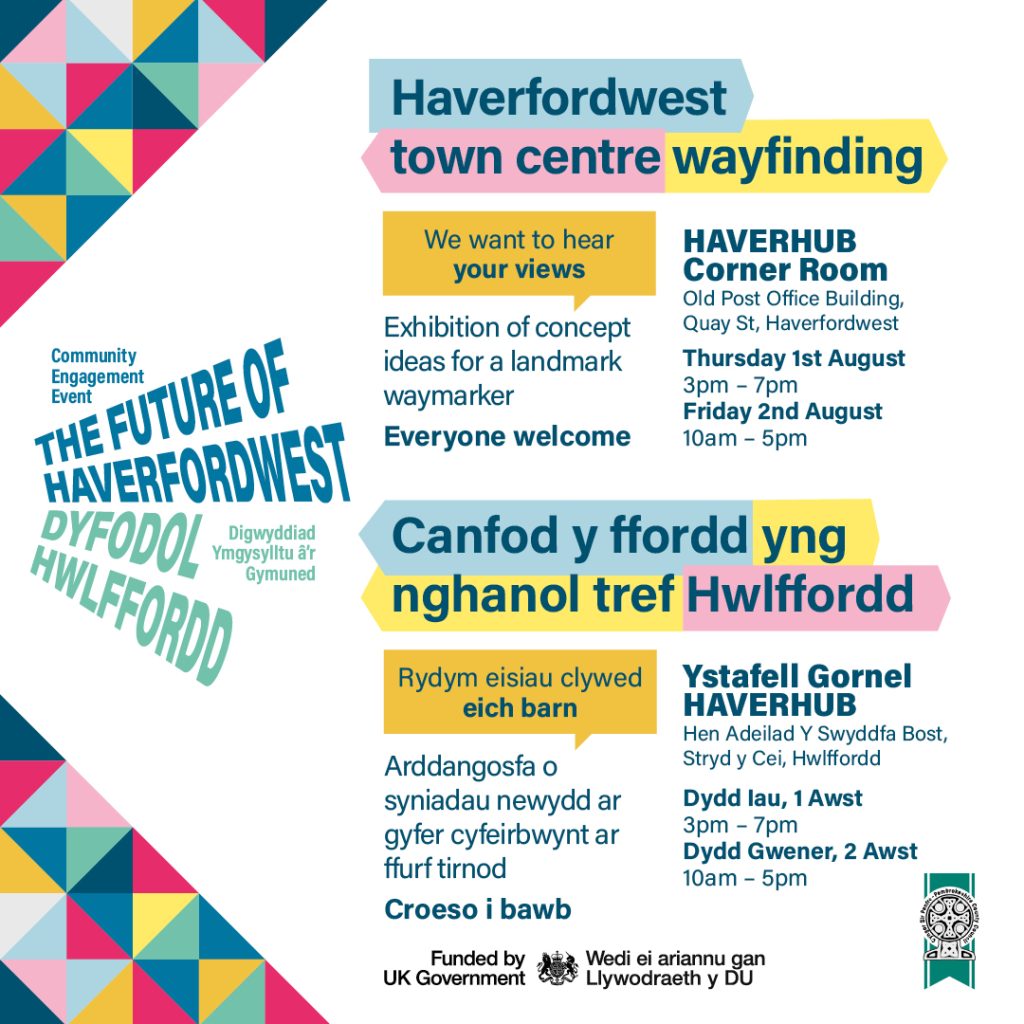
We are working with landscape architects, wayfinding, and other specialists on new designs for Castle Square, Castle Link and wayfinding across the town. We are hosting an engagement event to seek public feedback on three creative design ideas, which have been produced for a landmark town centre waymarker. This will be a key signpost to aid navigation across Haverfordwest and will tell one or more stories about our unique town heritage.
A public exhibition will take place in the Corner Room at Haverhub Thursday 1st 3 pm – 7 pm and Friday 2nd August 10 am -5 pm. The exhibition will give the people of Pembrokeshire a chance to view, score and comment on these three designs and understand how they fit into the overall developing wayfinding plans. Pembrokeshire County Council officers will be available to discuss the project and answer your questions. Later in the year, there will be further opportunities to engage on the rest of the wayfinding designs, and ideas for Castle Square and Castle Link, as they emerge.
This is an in person event. If you are unable to attend but are keen to express your views, please email [email protected] and a copy of the exhibition boards and the survey can be emailed to you. The survey must be returned by 15th August for your scores to count.

One of the designs will be selected in August, using a combination of public survey scores and those of an expert panel. We will then engage further with the local community to refine the favoured design during September and October 2024, and aim to agree a final design and site location by November, with installation planned for late spring 2025.


As Henry Tufnell MP joins calls for a solution, questions remain over harbour access, pedestrian safety and who can legally authorise the event
WITH Tenby Summer Spectacular still at risk, attention is now turning to a simple but crucial question: who actually has the power to save it?
The much-loved charity event, run by Tenby Round Table, has become one of the town’s biggest summer attractions, bringing thousands of people into the harbour area and raising money for local good causes.

But organisers have warned that the event may not be able to go ahead unless outstanding concerns over pedestrian safety and access around the harbour are resolved.
Henry Tufnell MP has now added his voice to calls for a solution, saying he is “very concerned” that the event is at risk.
The local MP said he had written several times to Pembrokeshire County Council over the past few months to help resolve the outstanding issues, and that his office met with the council this week to press for progress.
Mr Tufnell said he welcomed the council’s public statement confirming its support for the Spectacular, and said he would continue speaking to the council, Tenby Round Table and police.
At the heart of the row is a practical but important issue: how the harbour area can be made safe for thousands of visitors while still allowing access for residents, businesses and emergency services.
Pembrokeshire County Council has said it supports the event and wants it to go ahead. It has also said it has not directed organisers to cancel.
However, Tenby Round Table has said one key legal question remains unanswered after months of discussions.
That question appears to be whether the organisers can legally control or restrict access in the harbour area in the way required to satisfy safety concerns.
For an event of this size, the issue is not simply whether the council, police or organisers want it to happen. The question is whether the right legal powers, safety plans and permissions are in place.
The council has a role through licensing and public safety. The police may advise on safety, traffic and crowd management. The organisers are responsible for putting forward an event plan that can be safely delivered.

That means no single person can simply “save” the Spectacular by saying it should go ahead.
Instead, the event now appears to depend on whether the council, police and Tenby Round Table can agree a workable solution over harbour access, crowd control and emergency arrangements.
The row has also sparked strong reaction online, with many residents frustrated at the possibility of losing one of Tenby’s best-known summer events.
Supporters say the Spectacular is not only a family night out, but an important boost for traders and a major charity fundraiser.
Others have argued that safety concerns cannot simply be brushed aside, particularly when large crowds gather in a confined harbour setting.
Mr Tufnell said: “The Tenby Summer Spectacular is an incredible event run by the Tenby Round Table for our community, supporting local businesses and raising hundreds of thousands of pounds for charity.
“Like many of you, I am very concerned to see that the event is at risk of not going ahead.
“I have written several times to Pembrokeshire County Council to help resolve the outstanding issues regarding pedestrian safety and access around the harbour.
“I welcome the statement published by the council reinforcing their support for the Spectacular. I am reassured by their public commitment to finding a path forward.”
The coming days are now likely to be crucial.
For the event to be rescued, the key question is whether a legally sound and practical access plan can be agreed quickly enough for organisers to proceed with confidence.
Until then, the future of Tenby Summer Spectacular remains uncertain — not because there is a lack of public support, but because no one has yet produced a final answer to the question of who can lawfully control the harbour when thousands of people arrive.

HOMELESS people in Pembrokeshire are being offered extra support as Wales continues to face extreme heat.
The Wallich, which runs rough sleeping outreach and drop-in support in Haverfordwest, said people sleeping rough, living in cars, or staying in poor quality temporary accommodation are among those most at risk during the heatwave.
Outreach teams are helping people stay safe by offering water, sun cream, hats, wet wipes and other essentials.
Jamie-Lee Cole, Strategic Communications Lead for The Wallich, said: “People on the streets and living in poor quality or temporary housing are the most affected by climate change.
“They are the most exposed to extreme weather events like a heatwave, as well as heavy rain and cold in the winter.”
The charity said it is also offering advice on dehydration, sunstroke, worsening health conditions, wounds, and the added risks of drug and alcohol use during hot weather.
People are being encouraged to use cooler public spaces, such as libraries and support centres, during the hottest parts of the day.
The Wallich said some councils in Wales have activated Severe Weather Emergency Protocol, but called for all local authorities to include specific heatwave plans.
Ms Cole added: “It’s a sign of the times unfortunately that extreme heat will feature year on year, and we must make sure there are adequate and cool daytime spaces for people experiencing homelessness to access.”
The charity is also supporting people sleeping in cars, warning that vehicles can become dangerously hot.
Members of the public in Pembrokeshire are being urged to check on anyone they are worried about.
Ms Cole said: “If someone looks unwell and you feel safe to approach them, ask if they’re okay.

“Encourage them to move into shade or a cooler space. Alert emergency services if you think someone needs help in the heat.
“Offer people experiencing homelessness a cold drink and a chat, just like you would anyone else in your community.”
A FORMER Ysgol Penrhyn Dewi pupil has been awarded a £5,000 scholarship by South Hook LNG.
Henry Raymond, who is in the second year of a five-year Chemical and Environmental Engineering degree at the University of Nottingham, is the latest recipient of the company’s annual scholarship award.
South Hook said Henry had shown strong academic performance, a clear work ethic, and a keen interest in the role of engineering within the energy sector.
The scholarship is aimed at supporting local students as they progress in higher education, particularly in engineering, science and business-related subjects.
Applicants are assessed through a written application and an informal interview, with the award forming part of South Hook LNG’s wider commitment to supporting education and young people in the local area.
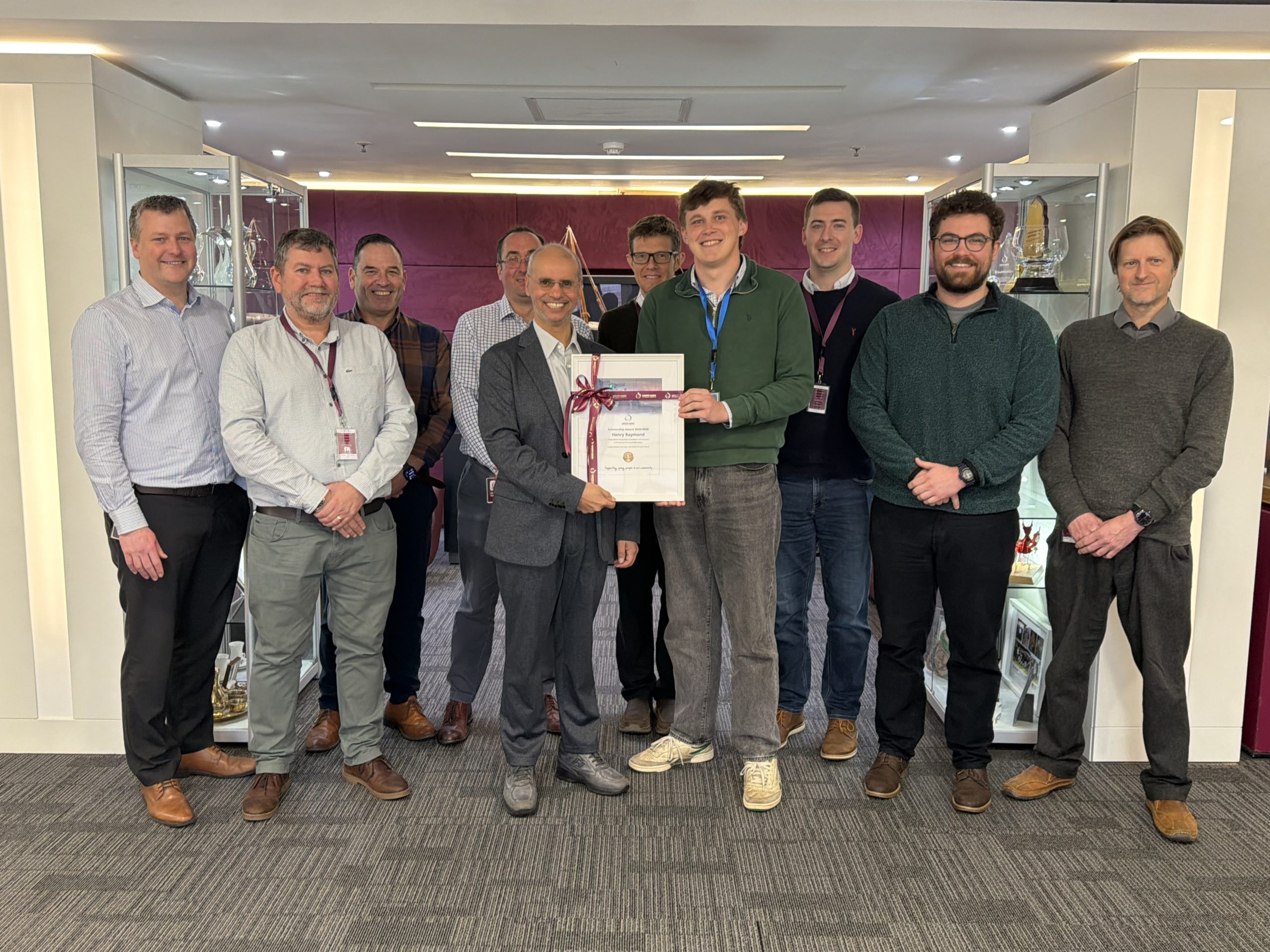
Henry was invited to South Hook earlier this year, where he was presented with a certificate and the £5,000 award. The funding will help with student costs over the remainder of his studies.
Henry said: “I’m very grateful to South Hook to have received this award. The financial support will make a huge difference to life as a student, and it’s incredible to have this kind of backing from a major player in the energy industry.”
South Hook LNG’s General Manager, Hamad Al Samra said: “We are pleased to have once again received applications from so many committed and capable young people.
“The team involved in the selection process at South Hook were particularly impressed by Henry’s dedication and commitment to his chosen subject.
“We are pleased to offer our support and wish him the very best in his future studies.”
South Hook LNG’s Scholarship Programme encourages applications from local students seeking higher education in engineering, science or business-related disciplines.
Details of how to apply for the 2026/27 award will be available on the company’s website during September.

Scholarship success: Henry Raymond, South Hook LNG’s 2026 scholarship recipient, with members of the South Hook team involved in assessing the applications.


Health10 hours ago
Senedd backs call to rule out hospital downgrades after heated NHS debate
Reform UK amendment passes as West Wales hospital fears remain central political issue THE SENEDD has backed a call for...

News13 hours ago
Coastguard callout payments axe sparks fears for coastal communities
VOLUNTEER coastguards across the UK are set to lose callout payments, prompting concern over the future resilience of emergency cover...


Farming15 hours ago
Rural Wales ‘left out’ of net zero debate, warns carbon entrepreneur
A WELSH carbon entrepreneur has warned that rural Wales risks being left behind in the national conversation about net zero....


Local Government1 day ago
Tenby Spectacular row continues as organisers say key question remains unanswered
Round Table says legal clarity over pedestrian access is still holding up event plan TENBY ROUND TABLE has welcomed Pembrokeshire...


Community2 days ago
Manorbier fire scandal: Council’s payout just £63,777 after school destroyed
PEMBROKESHIRE COUNTY COUNCIL has accepted an insurance settlement which leaves it with just £63,777.07 after the catastrophic fire which destroyed...


News2 days ago
Bus overturns in major incident near Kidwelly
All passengers rescued as emergency services remain at scene A BUS overturned on the A484 between Kidwelly and Ferryside on...


Community3 days ago
Tenby Summer Spectacular cancelled amid council row over harbour access
Organisers say popular charity events cannot safely go ahead without clear powers to control crowds TENBY ROUND TABLE has announced...


News3 days ago
Motorcyclist dies after four-vehicle crash on A40 in Carmarthenshire
A MOTORCYCLIST has died following a four-vehicle collision on the A40 between St Clears and Whitland. Dyfed-Powys Police said the...


News3 days ago
Rhun ap Iorwerth urges new deal for Wales after Starmer quits
First Minister says next Prime Minister must focus on greater powers, fair funding and respect for Wales’ democratic mandate FIRST...


News3 days ago
How Labour’s landslide victory unravelled in just two years
Prime Minister announces resignation after losing support within his own party as Andy Burnham emerges as overwhelming favourite to take...
-

 Health5 days ago
Woman jailed assaults on police, harassment and XL Bully possession
-

 Crime5 days ago
Milford Haven woman spared jail despite string of shop thefts
-

 Community4 days ago
The gentle giant behind the tattoos
-

 Crime5 days ago
Spittal man to stand trial accused of ABH
-

 Crime5 days ago
Carmarthenshire pensioner, 86, accused of causing prostitution for gain
-

 Entertainment4 days ago
Harbour Fest to bring music, food and maritime magic to Milford Waterfront
-

 Community6 days ago
Cabinet to review recent decision on crematorium services at special meeting
-

 Crime10 hours ago
Police appeal after reported rape at Young Farmers rally