


Community
Wolfscastle Council’s AGM highlights challenges and achievements

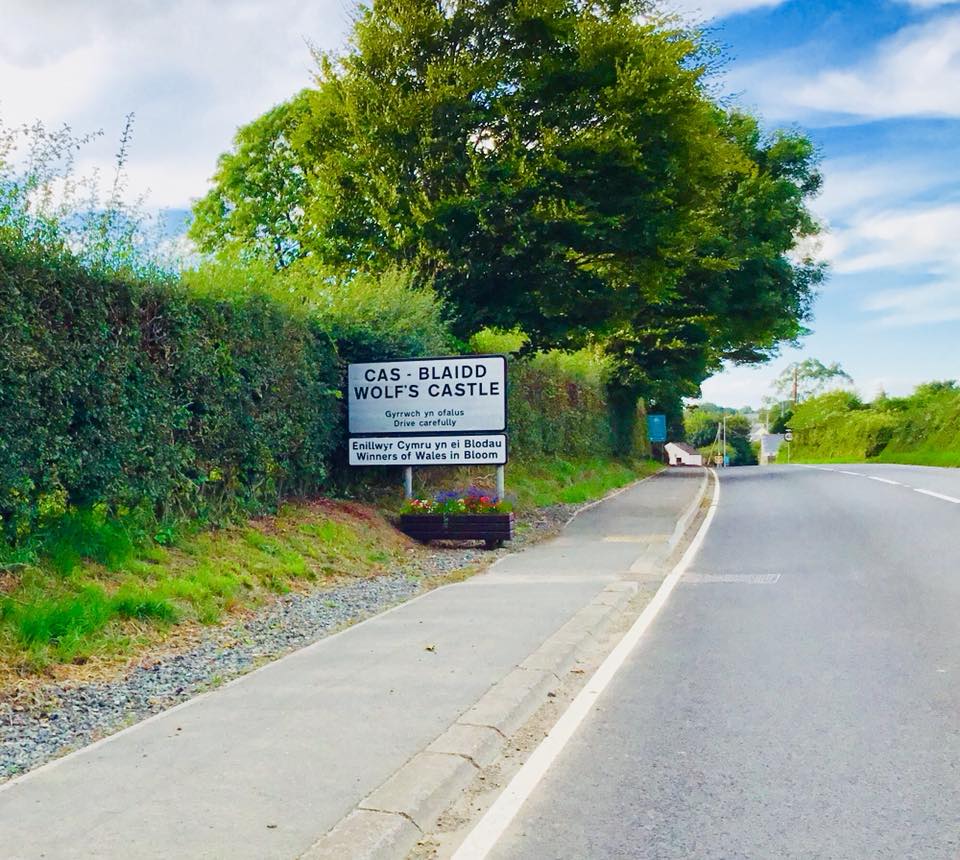
THE WOLFSCASTLE Community Council convened for its Annual General Meeting (AGM) on Tuesday, July 9, at Treffgarne Village Hall. The meeting, chaired by Councillor Gerwyn Williams, was attended by several councillors, including Brian John, Gerallt Miles, and Barrie Griffiths, alongside Pembrokeshire County Councillor Michelle Bateman and Clerk Geraint Harries. Apologies were received from Councillors Suzanne Jenkins, Peter James, and Brynmor Harries.
Chair’s Remarks and Resignations
Councillor Williams opened the meeting by welcoming attendees and expressing his relief at seeing Clerk Geraint Harries recovering well from his recent illness. He extended well-wishes for the speedy recovery of Councillors Brynmor Harries and Peter James. The chair then announced the resignation of Councillor Suzanne Jenkins, a decision made after thorough discussion and ultimately accepted. Councillor Jenkins’ departure was acknowledged as a significant loss to the council, with her contributions, including her time as a stand-in Clerk earlier this year, being greatly appreciated.
A Year of Transitions and Community Engagement
The Treasurer’s report outlined a challenging year for the Council, beginning with the resignation of former Clerk Carol Williams in May 2023. Williams was praised for her diligent work, including securing various grants for the community. Following her departure, Natalie Williams was appointed as Clerk in July 2024, only to resign in October. The subsequent months saw the Council continue its community engagement efforts, with successful Coronation celebrations in both villages and the long-awaited installation of Christmas tree lights, marked by a celebratory event in October.
The Council also played a role in local remembrance events, attending services at Wolfscastle School and Letterston in November. Despite the challenges, including winter road conditions, the Council ensured the installation of four new salt bins in preparation for the coming year.
Financial Overview
The Statement of Accounts for the year ending 31st March 2024 was presented, with income totalling £15,286.14 and expenditures amounting to £11,614.78, leaving a balance of £3,671.36. However, the Council noted that the Clerk’s salary had not been deducted, and PAYE issues were yet to be resolved, necessitating a back payment in the next financial year.

Matters Arising and Community Issues
The meeting addressed several ongoing concerns, including the repositioning of a misplaced salt bin and the need for better dog fouling signage, which was discussed with County Councillor Michelle Bateman. A site visit by an access officer was also discussed to address accessibility issues.
The Council expressed gratitude to GD Harries for promptly addressing a car park clean-up and acknowledged the satisfactory repair of potholes by Pembrokeshire County Council. The issue of road closures and unsuitable detour routes was also raised, with Councillor Bateman seeking an audit to identify problematic roads in advance.
Correspondence and Future Planning
The Council received several thank you letters from charities for donations made earlier in the year. Discussions also covered the renewal of membership with One Voice Wales, ongoing PAYE setup, and future website plans as the current system is set to be discontinued in March 2025.
A notable topic was the Boundary Commission’s consultation, proposing the amalgamation of the Wolfscastle and Treffgarne areas with Hayscastle, to form the Hayscastle and Wolfscastle Community Council. An extra meeting was scheduled for 20th August 2024 to discuss this significant change.
Councillor and County Councillor Reports
In her report, County Councillor Michelle Bateman highlighted ongoing reviews by Pembrokeshire County Council, including a school reorganisation review and plans to support the National Eisteddfod, which may be held in Llantood near Eglwyswrw in August 2026. She also mentioned the tendering process for new bus routes by Transport for Wales and a consultation on phosphate levels in new developments.
The meeting concluded with plans to address various community concerns, including parking issues near the Wolfscastle Chapel and the placement of a mobile home on land at Brynawelon. Councillor Bateman assured the council she would follow up on these matters with the relevant departments.
The next meeting, focused on the Community Boundary Review proposals, is scheduled for 20th August 2024 at Penybont Vestry.



A MEMORABLE evening of music, warmth and community spirit filled Pembroke Castle as Voices at the Castle was hailed a huge success.
The event, held on Saturday (Jun 13), brought together local performers, an international star and a strong audience in one of Pembrokeshire’s most iconic settings, all in support of the Paul Sartori Foundation.
Set against the dramatic backdrop of the historic castle, the evening offered an uplifting celebration of live music and charity. Organisers said the relaxed atmosphere, sunny setting and quality of performances helped make it a night to remember.
The event opened with Pembrokeshire Pop Voices, who entertained the audience with an upbeat set including their charity single Love the Bones of You.
They were followed by Pembroke and District Male Voice Choir, who delivered a rousing selection of classic male voice choir favourites, with many in the audience joining in.
The Paul Sartori Community Choir also impressed in one of its first outdoor performances, with a confident and spirited set which included a standout rendition of an ELO classic.
Bella Voce added to the occasion with a varied programme of melodic songs, their harmonies carrying beautifully around the castle walls.
Headline act Russell Watson brought the evening to a powerful close, captivating the crowd with his humour, warmth and remarkable voice.
His set included a mixture of classical and contemporary songs, with the audience joining him for a singalong of Volare before dancing along as the evening built to its finale.
He ended the night with a moving dedication to Paul Sartori staff, performing Someone to Remember Me.
Organisers also praised compere Rod Haynes, whose warmth, humour and natural stage presence helped the event run smoothly and created a welcoming atmosphere for all.
The charity said it remained extremely disappointed that Rock the Ramparts, due to take place on the Friday evening, could not go ahead.
High winds meant it was not possible to safely install the stage roof and associated sound equipment, forcing the cancellation of the event on health and safety grounds.
The charity thanked the bands The Candy Skulls, The Cleddau Kings, Milly and The Bandits, and Saltwater for their understanding, generosity and the time they had put into rehearsing and preparing.
Thanks were also given to the staging and lighting teams, who worked throughout the day in an effort to make the event happen despite the challenging conditions.
Special thanks were extended to staff at Pembroke Castle for their continued support and for providing the setting, as well as Wayne and the team at EPS, Magnum Sound, Bluesky Marquees, Merts Medical, Elite Security, Joshua Bennet and David Halsted for their contributions to food and drink provision.
The charity also thanked Ian Richards for photographing the event on behalf of Paul Sartori.
A spokesperson said Voices at the Castle stood as a testament to what could be achieved through collaboration, dedication and a shared love of live music, adding that organisers hoped the night would live long in the memory of those who attended.
The Paul Sartori Foundation, which operates as Paul Sartori Hospice at Home, provides end-of-life care and support for people with life-limiting illnesses across Pembrokeshire.
The charity says it is keen to dispel the belief that it is only a cancer charity, with almost a third of those it supports having a non-cancer diagnosis.
It operates an open referral system, with referrals coming from patients, family members, friends, district nurses, palliative care specialists and hospital staff.
The foundation was established in memory of Father Paul Sartori, a much-loved local priest who recognised the need for hospice care before his death from cancer at the age of 39.
Photo caption: Jon Williams from Pembroke Castle with Laura Hugman, CEO of the Paul Sartori Foundation, team members and headline act Russell Watson.
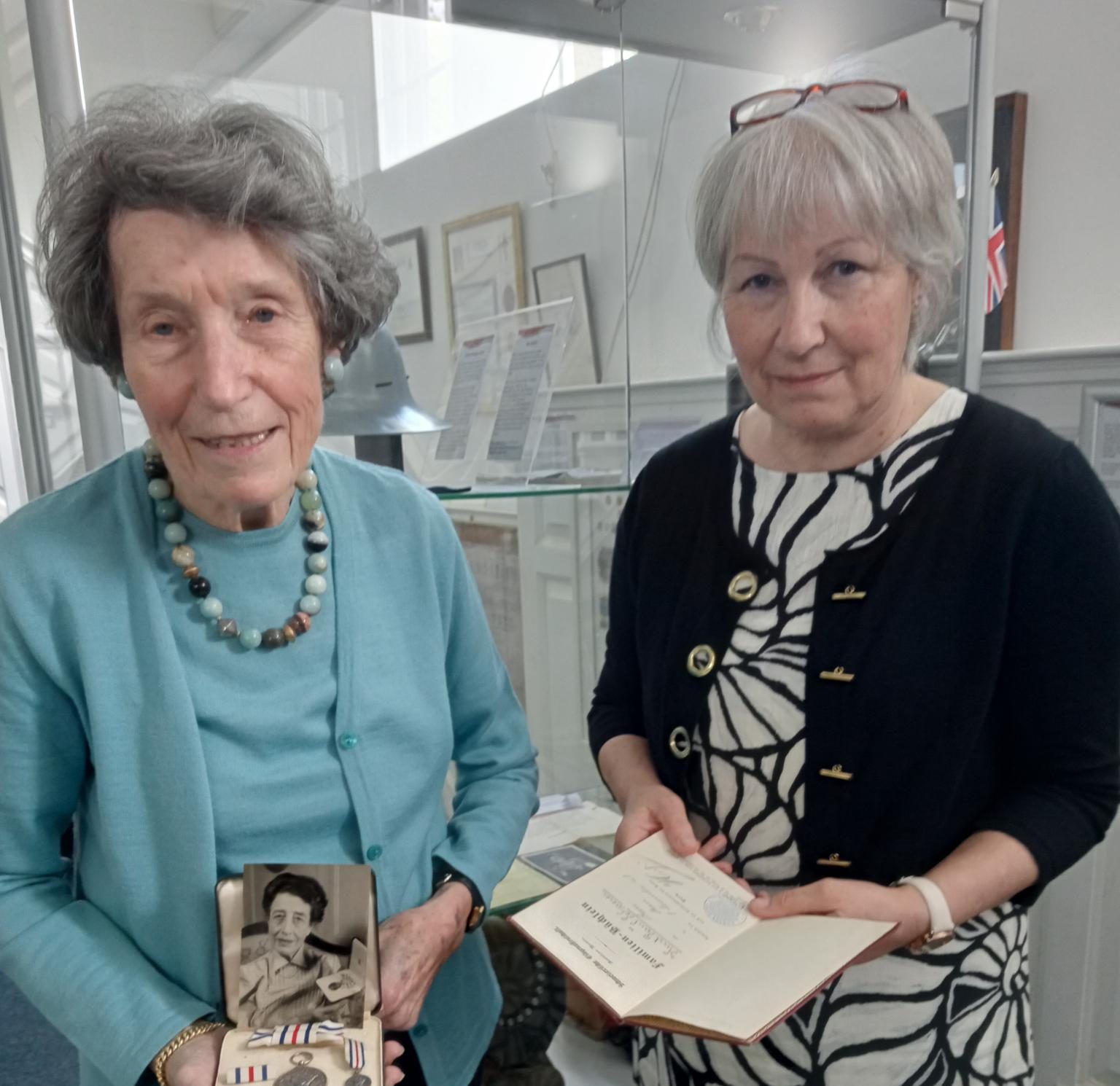
A SWISS woman has returned to Pembroke Dock Heritage Centre to see a special display celebrating her grandmother’s remarkable wartime work helping Allied servicemen who escaped into neutral Switzerland.
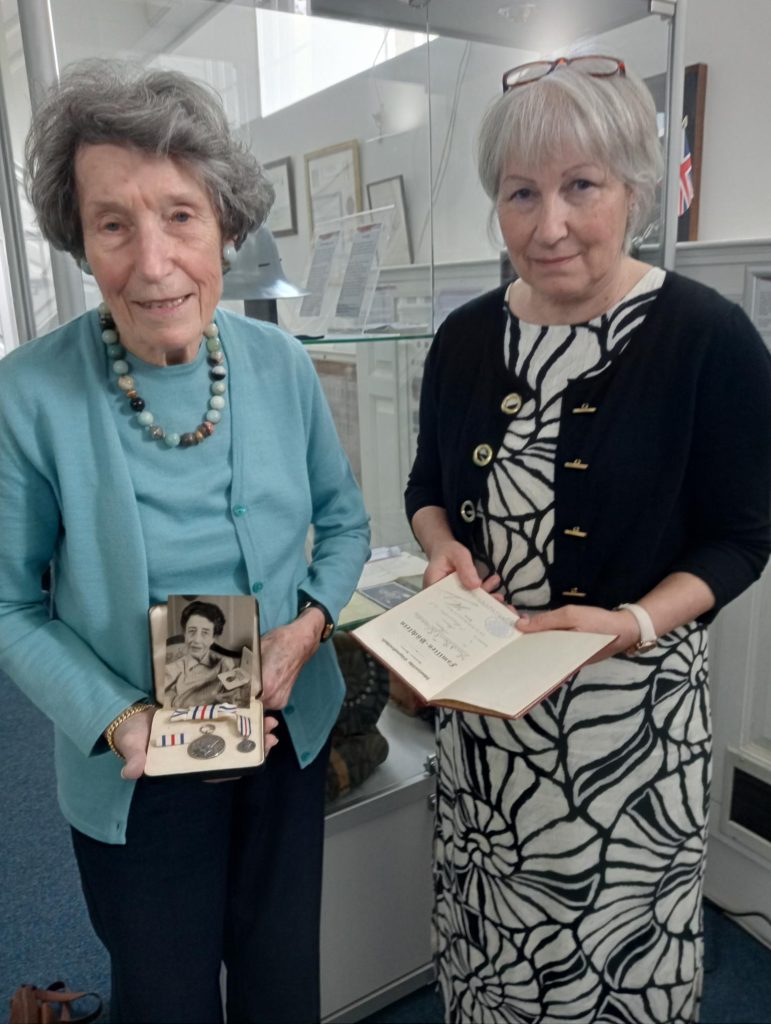
Therese Burckhardt, from Zurich, is the granddaughter of Mrs Beryl Schaerer Morse, a former Pembroke Dock woman who was awarded the King’s Medal in 1952 for her service during the Second World War.
The rare medal, one of only around 2,500 awarded, is now on display at the Heritage Centre alongside photographs, family records and an information panel telling Mrs Schaerer Morse’s story.
Beryl Schaerer Morse was born in Pembroke Dock in 1887, the daughter of Mr and Mrs Thomas Harrison Morse, who lived in Pembroke Dock and later Tenby.
After marrying a Swiss banker in 1913, she settled in Switzerland for the rest of her life, but always regarded Pembrokeshire as home. She returned for many summers to the family’s house in Tenby, which her grandparents had built in the 1930s.
During the Second World War, Mrs Schaerer Morse led an organisation assisting Allied servicemen who had escaped into neutral Switzerland. Her work was later recognised with the award of the King’s Medal.
Therese first visited the Heritage Centre last summer with childhood friend Penny Tighe, of Pembroke, bringing the medal and family records with her. She has now returned with further documents and family photographs to add to the centre’s archive.
Joining her again was Penny Tighe, along with Ruth Waddington, who now lives in the Tenby house where Therese spent many happy childhood holidays with her brother Roland, known affectionately to his grandmother as “Chips”.
Mrs Schaerer Morse died in 1967 and had expressly wished to be buried near her father at Llanion Cemetery, Pembroke Dock.
Therese said: “I am very pleased with how my grandmother’s medal and her story are displayed at the Heritage Centre, and also pleased to bring more records to add to the archive there.”
Pembroke Dock Heritage Centre is based at the Royal Dockyard Chapel and tells the story of the town’s maritime, aviation, military, social and community heritage.
Pembroke Dock was Wales’ only Royal Dockyard, a major garrison town, and during the Second World War was home to the largest flying boat station in the world.

The centre is currently open Monday to Friday, from 10:00am to 4:00pm.
Therese Burckhardt shows the King’s Medal, awarded to her grandmother, to Ruth Waddington at Pembroke Dock Heritage Centre (Pic: PDHC).

VOLUNTEERS at West Wales Maritime Museum were praised after another successful Pirates Party brought crowds to Pembroke Dock.
The family event was held at Hancock’s Yard, Front Street, on Saturday (Jun 20), with visitors enjoying a day of maritime-themed entertainment, stalls, refreshments and fancy dress.
The museum, run by the West Wales Maritime Heritage Society, hosted the event with the help of volunteers, with activities including a tombola, raffle, barbecue, face painting, children’s games and a prize for the best-dressed pirate.
There was also live entertainment from the Cantabile Singers and the Barti Waves.
One of the highlights of the afternoon was a musket firing display by the H.M.S Wales Re-enactment Group, which drew strong interest from those attending.
County councillor Jonathan Grimes, who represents Pembroke St Mary South and Monkton, was among those who visited the event.
He said it had been “a fantastic afternoon” and praised the volunteers who had worked hard to put on “another brilliant event”.
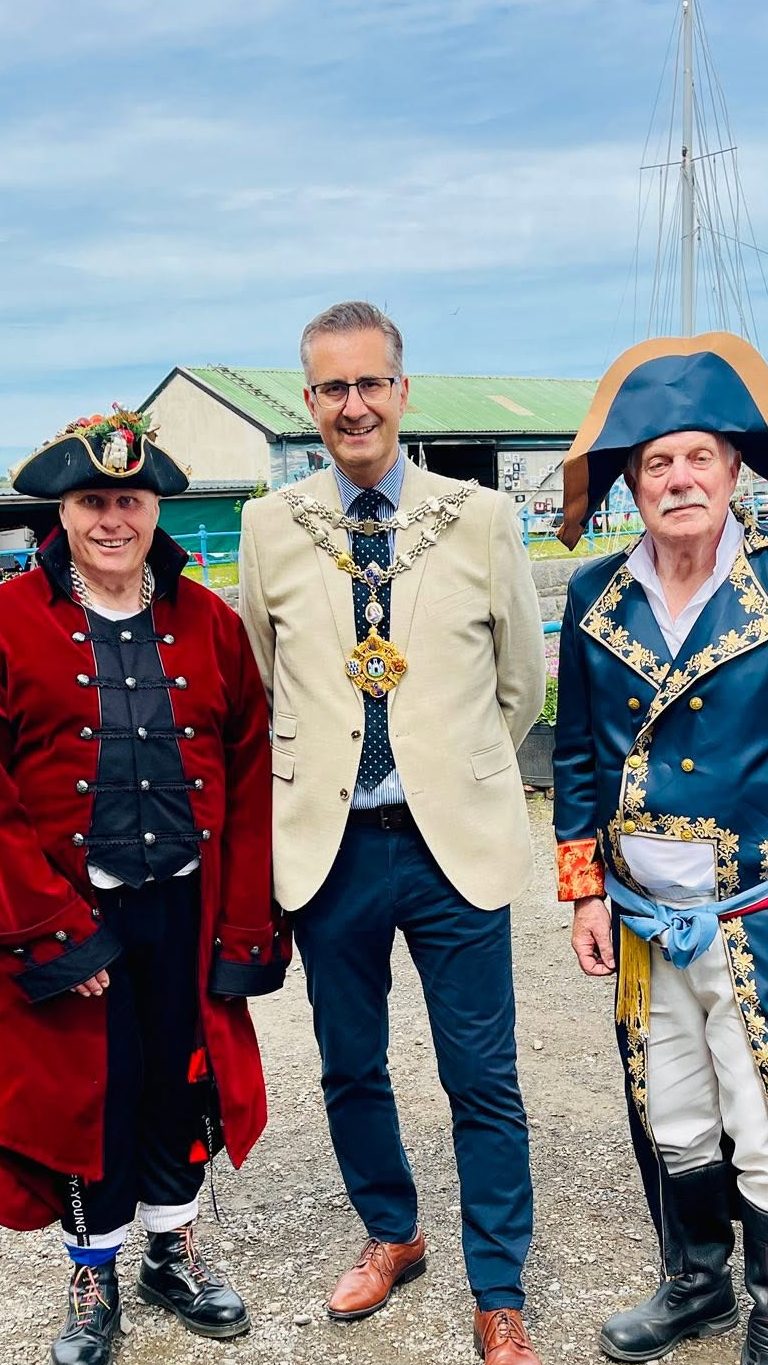
Cllr Grimes said: “There was plenty to see and enjoy, but my personal highlight had to be the musket firing display from the H.M.S Wales Re-enactment Group — a real crowd-pleaser with live firing.
“It was wonderful to see so many people coming along and supporting yet another successful event at the museum.”
He also thanked Peter Kraus and everyone involved for their dedication in bringing the event to life.
The West Wales Maritime Museum is based at the historic Hancock’s Yard and is run by volunteers who work to preserve Pembroke Dock’s maritime heritage.
The society restores and maintains classic boats, operates a museum of maritime artefacts and offers visitors a chance to learn more about the town’s long connection with the sea.

The museum has become an increasingly popular community venue, with events such as the Pirates Party helping to bring families into the town while celebrating Pembroke Dock’s seafaring past.



News3 hours ago
Long Course Weekend set to bring thousands to Pembrokeshire
Three days of swimming, cycling and running will once again transform Tenby into one of the UK’s biggest endurance sporting...


Community9 hours ago
The gentle giant behind the tattoos
Pembrokeshire security worker Josh Davies praised for professionalism, kindness and proving first impressions can be wrong JOSH Davies is hard...


Charity1 day ago
Toy Story fans fill charity toy box at Haverfordwest cinema
Donations pour in for SNAP Specialist Play as families embrace Toy Story 5 launch A TOY STORY-themed charity appeal at...


Community2 days ago
Lord Rhys emerges from the mist in St Davids
Giant puppet begins historic journey marking 850 years since the first Eisteddfod MIST swirled around St Davids Cathedral on Friday...


News2 days ago
Tragic tribute paid to Haverfordwest man after A4075 collision
FAMILY REMEMBERS “KIND AND LOVING” CALLUM HANSON THE FAMILY of a 22-year-old man from Haverfordwest who died following a road...


News3 days ago
Motorcyclist, 22, dies in A4075 crash in Pembrokeshire
A 22-year-old woman remains in hospital after two-vehicle collision A MOTORCYCLIST has died following a serious two-vehicle crash on the...


Community4 days ago
Why police will be visiting every home in Pembrokeshire
New operation aims to knock on more than 257,000 doors across Dyfed-Powys over the next three years DYFED-POWYS POLICE has...


Crime4 days ago
Prisons at breaking point: MPs warn Wales is paying the price of a failing system
Frozen healthcare budgets, overcrowded jails, homelessness on release and mounting pressure on staff are undermining rehabilitation across Wales, according to...


News4 days ago
Brexit at 10: How Britain was sold a dream that cost us dearly
A decade after the referendum, the promised benefits remain hard to find while the economic costs are increasingly difficult to...


Crime4 days ago
Worcestershire man jailed after violent attack on woman in Tenby
Defendant was already serving a suspended sentence when serious assault took place A WORCESTERSHIRE man has been jailed for more...
-

 Crime4 days ago
Milford Haven man jailed for breaching domestic violence protection order
-

 Local Government5 days ago
Security privately arranged by Mayor at Beating of the Bounds
-

 News3 days ago
Crash on Freeman’s Way causes school-run chaos across Haverfordwest
-

 Crime5 days ago
Man wanted by court after failing to attend hearing over alleged shop thefts
-
 Crime5 days ago
Man banned from roads after drink-driving offence
-

 Crime5 days ago
Man jailed after admitting strangulation and assaults
-

 Crime5 days ago
Drug trafficker must repay £33,000 after court rules he made nearly £500,000
-
 Crime5 days ago
Man sentenced over stalking campaign and lock knife offence