

Health
NHS health boards in Wales fail to balance books amid rising pressures


A RECENT audit by the Auditor General has revealed that all seven health boards in Wales have failed to meet their statutory duty to break even over a three-year period, underscoring the growing financial pressures on the NHS. The findings, drawn from the 2023-24 accounts of NHS bodies, have sparked concerns about the sustainability of health services in Wales.
The audit, which provides a comprehensive overview of the financial health of NHS bodies, concluded that while the accounts present a true and fair view of their financial positions, the seven health boards were unable to achieve the statutory financial balance required by law. Consequently, the Auditor General was compelled to qualify his ‘regularity’ audit opinion for these health boards.
In contrast, the three NHS trusts and two special health authorities in Wales successfully met their break-even duties, offering a glimpse of hope in an otherwise challenging financial landscape.

Particularly concerning were the findings related to Betsi Cadwaladr University Health Board and Velindre NHS Trust. Both were found to have breached standing financial instructions, leading to irregular expenditure in payments made to former senior officials. For Betsi Cadwaladr, this marks the second consecutive year of such breaches, further highlighting the governance challenges faced by some NHS bodies.
The financial strain on the NHS in Wales is exacerbated by a combination of rising demand for services and the impact of inflation. In 2023-24, health services in Wales received £10.638 billion in revenue funding, an increase of £744 million from the previous year. However, despite this substantial cash uplift, the real-term increase in funding was just 1.2%, a modest improvement compared to the 4.9% real-term decrease in 2022-23.

The audit also highlighted a growing in-year deficit, which has risen to £183 million in 2023-24, up from £150 million in the previous year. The three-year cumulative overspend across the NHS has now reached £385 million, a significant increase from the £248 million recorded in 2022-23.
One area of concern is the expenditure on agency staff, which, despite a 19% reduction in 2023-24, remains a significant cost at £262 million. This spending largely covers workforce vacancies and additional activity to meet rising demand, underscoring the ongoing staffing challenges within the NHS.
In response to these financial pressures, NHS bodies have been striving to deliver significant savings. Reported savings for 2023-24 reached £210 million, the highest level since 2018-19. However, much of these savings are non-recurrent, with 41% of total reported savings falling into this category, down from 60% in the previous year.
The Auditor General, Adrian Crompton, expressed concern over the situation, stating, “The growing cumulative deficit for the NHS in Wales demonstrates that despite record levels of investment and higher than ever levels of savings, the statutory framework put in place by the Welsh Government to drive financial sustainability in the NHS is not working.”
Mr Crompton called for more fundamental changes to address the challenges faced by the NHS, including the need to reconsider its structure, funding, and workforce. He urged politicians, government officials, and NHS bodies to collaborate on finding sustainable solutions to these pressing issues.
As the NHS in Wales grapples with these financial challenges, the publication of the NHS Wales Finances Data Tool 2023-24 provides further insight into the current financial positions of NHS bodies, offering a valuable resource for those seeking to understand the complexities of healthcare funding in Wales.
Auditor General, Adrian Crompton told this newspaper: “Whilst I recognise the scale of the financial and operational challenges faced by the NHS, I am concerned at once again having to qualify my audit opinion on the accounts of all seven Health Boards because they have failed to meet the statutory duty to break even over three years. The growing cumulative deficit for the NHS in Wales demonstrates that despite record levels of investment and higher than ever levels of savings, the statutory framework put in place by the Welsh Government to drive financial sustainability in the NHS is not working.

Whilst there remains an urgent need for NHS bodies to continue to drive out cost inefficiencies in the way they work, this alone is unlikely to return the NHS to financial balance. More fundamental challenges now need to be grasped around the shape and infrastructure of the NHS, the level of funding it needs, its workforce challenges and how the demand for its services can be better managed. These are issues that should exercise the minds of politicians, government officials and NHS bodies and their partners in equal measure.’
The ongoing financial pressures and the inability of health boards to meet statutory obligations serve as a stark reminder of the urgent need for strategic planning and reform within the NHS to ensure its long-term viability.

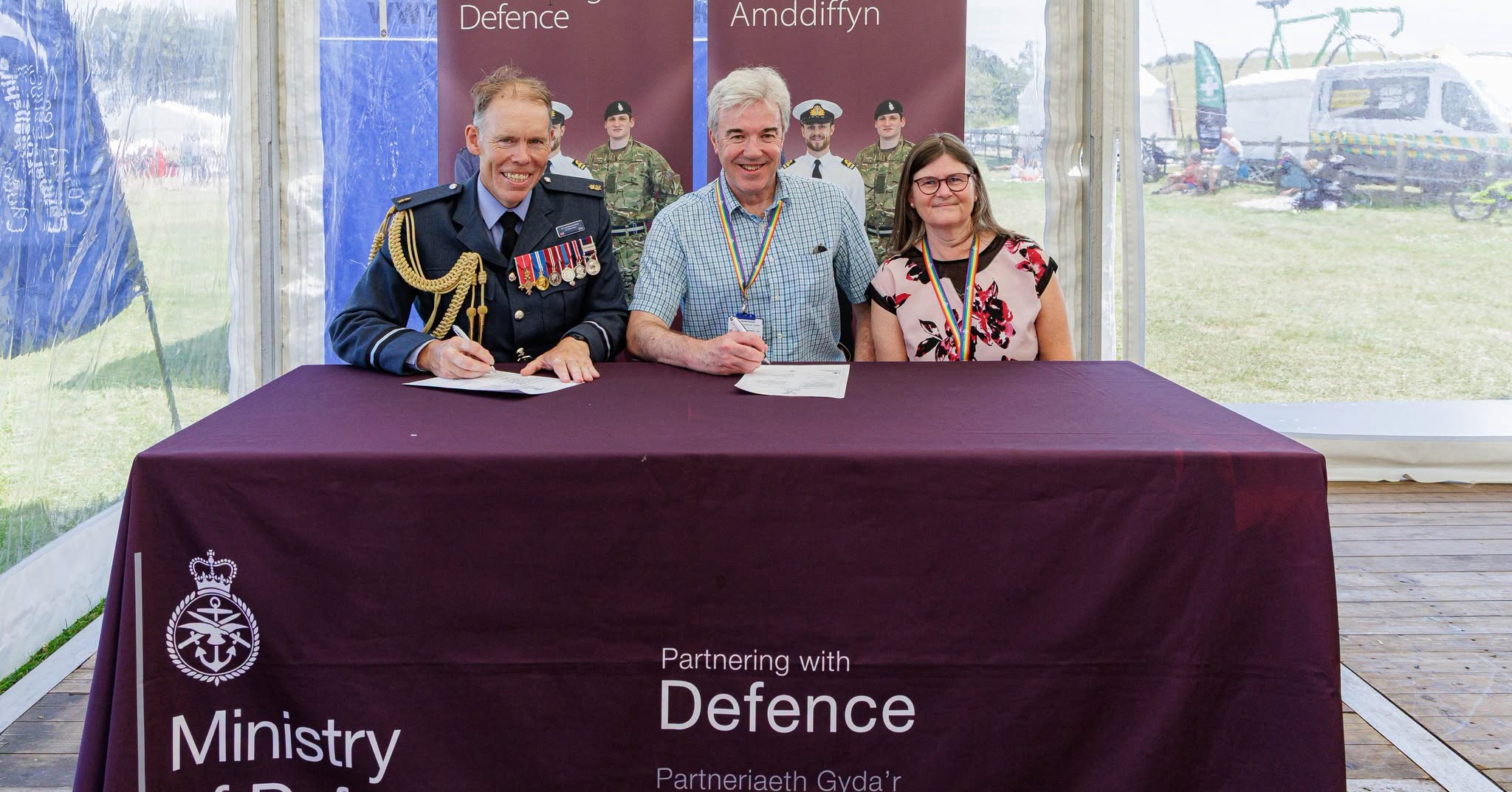
HYWEL DDA UNIVERSITY HEALTH BOARD has reaffirmed its commitment to the Armed Forces community by re-signing the Armed Forces Covenant.
The covenant was signed at the Wales National Armed Forces Day 2026 event, held at Pembrey Country Park on Saturday, June 27.
It was signed on behalf of the health board by Armed Forces Champion and Independent Board Member Michael Imperato, alongside Lisa Gostling, Deputy Chief Executive and Director of Workforce and Organisational Development.
The Armed Forces Covenant is a national promise to ensure that members of the Armed Forces community are treated fairly. It supports serving personnel, veterans, service leavers and their families, with a veteran defined as anyone who has served for at least one day.
By re-signing the covenant, Hywel Dda says it is continuing its role as an Armed Forces friendly employer and healthcare provider across west Wales.
This includes supporting the recruitment and employment of veterans, recognising military skills, providing additional support for reservists, offering flexible working for service families, working with partner organisations, supporting cadet groups and Armed Forces charities, and improving access to healthcare for veterans.
Anyone currently serving, or who has previously served in the Armed Forces, can find out more about the support available through Hywel Dda University Health Board’s Armed Forces Covenant pages.
Staff who are part of the Armed Forces community can also access support through the health board’s Armed Forces Staff Network by contacting [email protected].
Early warning system aims to prevent hospital-related decline and support faster recovery
HYWEL DDA University Health Board is among the first in Wales to introduce a new approach to spotting and preventing hospital-related decline in patients.
The Deconditioning Early Warning Indicator, known as DEWI, helps staff identify early signs that a patient may be losing strength, mobility or confidence during a hospital stay.
The aim is to make sure patients remain as active and independent as possible while receiving care, helping them return home at the same level of independence they had before admission, or even before they became unwell.
Deconditioning can develop quickly, even during a short stay in hospital, and can affect a patient’s physical, mental and emotional wellbeing.
The DEWI tool uses a structured set of indicators to build a picture of each patient’s abilities and to highlight any changes at an early stage. This allows staff to put timely support in place, including help with movement, nutrition, hydration and confidence.
Developed by NHS Wales Performance and Improvement, the tool has been tested across a number of health boards and was formally launched in November 2025. It is now being rolled out across Hywel Dda hospital sites.
More than 650 patients have already been supported using the DEWI tool during their hospital stay, with early indications showing positive trends in maintaining or improving function during admission.
Sharon Daniel, Executive Director of Nursing, Quality and Patient Experience, said: “We recognise that deconditioning can cause significant harm to our patients, often developing quickly and impacting independence and recovery during a hospital stay.
“It is therefore highly encouraging to see the Health Board leading the way in embedding the DEWI tool, alongside the development of a complementary Action Bundle which helps patients to stay active and independent.”
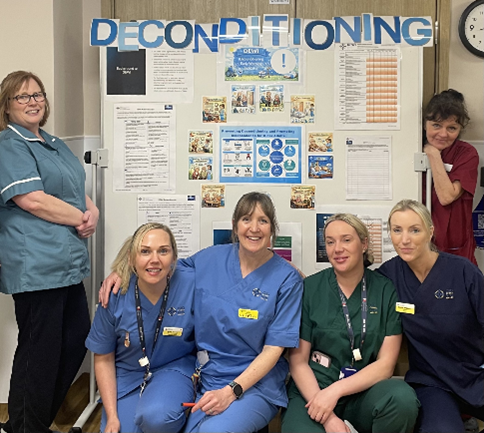
Across Hywel Dda, ward teams are now building the tool into everyday care. This includes the use of visual information boards and activities designed to encourage patients to remain active, engaged and independent.
Estelle Williams, Sister on the Acute Frailty Unit at Withybush General Hospital, said the tool was already helping staff focus on practical steps.
She said: “From a ward perspective, the DEWI tool has been really useful in helping our staff think about deconditioning as part of everyday care.

“It keeps things simple and focuses on practical actions we can take, like supporting patients to stay mobile, encouraging independence and paying attention to nutrition and hydration.
“It also fits nicely alongside the initiatives we already have in place, including the use of fortified milkshakes, bringing everything together in a more joined-up way.”
James Severs, Executive Director of Allied Health Professions and Health Science, said preventing deconditioning was central to improving outcomes for patients.
He said: “Preventing deconditioning is fundamental to improving patient outcomes and reducing the long-term impact of illness.
“This work highlights the vital role all ward staff have in keeping people active, supporting recovery and maintaining independence throughout their hospital stay.
“By identifying risks early and intervening promptly, we are helping patients recover faster and return home with greater confidence.”
The Health Board said future phases will focus on further developing the DEWI tool and embedding it as part of standard care before, during and after hospital admission.
Caption: The Deconditioning Team at Withybush General Hospital. From left: Annie, Occupational Therapy Technician; Ruth and Rosie, nurses; Lauren, Health Care Assistant; Estelle, Sister; and Violet from Hotel Services.

More than 9,000 people in Wales are waiting for specialist psychological therapies, with almost half waiting longer than six months
MORE than 9,000 people with moderate to severe mental health conditions are waiting to access specialist psychological therapies in Wales, according to new figures obtained by Mind Cymru.
The charity says the number of people waiting for treatment is now at its highest level since the Covid-19 pandemic.
Freedom of Information data gathered from all seven local health boards shows that, as of December 2025, almost half of those waiting, around 47%, had been on the list for longer than 26 weeks.
Mind Cymru said more than 4,300 people had been waiting more than six and a half months for specialist psychological therapies by December 2025.
That figure has almost doubled since March 2024, when 2,305 people were waiting more than 26 weeks.
The charity is now calling on the Welsh Government to make mental health a priority during the next Senedd term, with a focus on reducing waiting times and improving early access to support.
Aled Edwards, from Bangor, said he was told he faced a two-year wait to see a psychologist as an outpatient at a mental health hospital near his home, despite experiencing depression and suicidal thoughts.
The father-of-two was instead placed on a list to see a psychiatrist in the hope he could access support more quickly, but said it still took another 18 months before he finally received the help he needed.
Aled, who was later diagnosed with a male form of post-natal depression, said: “This was at a point in my life where I had already tried to take my own life and I was considering trying again, so this time I went to ask for help instead.
“I was experiencing some really dark thoughts and I was desperate for support.
“When I did get to see a psychiatrist, they left their job after three sessions and I went back into the system to wait for a further six months before starting trauma therapy with another doctor.
“Finding the skills to cope with the kind of intrusive thoughts I was having in the meantime was really hard, and I feel fortunate that I had the means to access private counselling support to keep me going during that period, where so many others might not.”

Mind Cymru has requested the same waiting list data from local health boards three times since 2020, as part of its campaign for improved access to specialist psychological therapies in Wales.
Its original Too Long To Wait report called for more investment in specialist psychological therapies, stronger governance around how local health boards collect and submit waiting time data, and for the figures to be made publicly available.
The charity says those recommendations remain relevant, but that urgent action is now also needed to transform the mental health system so people can access support earlier.
Simon Jones, Head of Policy and Campaigns at Mind Cymru, said the findings showed that mental health must be a central priority for the Welsh Government.
He said: “There’s clearly a very real and growing need for increasing numbers of people to receive specialist psychological support for their mental health in Wales.
“These are people living with moderate, severe and enduring mental health conditions, and those most in need of support.
“That so many are waiting too long to access therapies is placing further demand on a system already under pressure, and there’s a need for significant investment to be made at all levels to help people access the support they need, when they need it.
“With plans already in place to transform Wales’ mental health system and help deliver open access care, we need now to ensure these plans are prioritised and invested in so that we can start to see that positive impact as soon as possible.
“No one should be waiting longer than six months for support with a serious mental health issue. With this in mind, Mind Cymru is calling on the new Welsh Government to make mental health a priority across the next Senedd term.”
Specialist psychological therapies are structured, evidence-based treatments delivered by trained clinicians for specific mental health conditions or complex psychological needs.
They include therapies such as Cognitive Behavioural Therapy, Eye Movement Desensitisation and Reprocessing, Cognitive Analytic Therapy and Dynamic Interpersonal Therapy.



Crime13 hours ago
Teacher feared she was dying after Milford Haven classroom stabbing
A TEACHER allegedly stabbed in the head at Milford Haven Comprehensive School told a jury she feared she was dying...


News14 hours ago
Farage to resign as MP and fight Clacton by-election amid finance row
NIGEL FARAGE has announced he will resign as MP for Clacton and stand again in the by-election he intends to...


Crime17 hours ago
Teacher tells jury there were ‘no issues’ with accused pupil hours before ‘stabbing’
Milford Haven teacher gives evidence as trial of 15-year-old continues at Swansea Crown Court A TEACHER allegedly stabbed at Milford...


News1 day ago
Major incident stood down after fire at Impala Terminal in Milford Haven
Fire involved decommissioned oil tank containing residual crude oil and around 60 cylinders A MAJOR incident declared during a fire...


News1 day ago
Large fire breaks out at Impala Terminal in Milford Haven
Black smoke seen for miles as emergency services respond to incident at former Puma Energy site A LARGE fire has...
Crime2 days ago
Prosecution outlines ‘planned attack’ as Milford Haven teacher stabbing trial opens
Jury hears teenager allegedly brought kitchen knife into school before teacher was stabbed in the head THE JURY in the...

Crime2 days ago
Boy, 15, denies attempted murder of Milford Haven teacher in ‘horrifying’ attack
Swansea Crown Court hears dramatic opening of trial over February stabbing A 15-YEAR-OLD boy from Milford Haven has gone on...


Crime2 days ago
Fishguard man cleared after five years in prison refused compensation again
Brian Buckle’s case raises fresh questions over justice system that says a man can be cleared by a jury but...


Crime3 days ago
Wales’ police commissioners to face MPs over future of policing
WALES’ four Police and Crime Commissioners are to be questioned by MPs next week as major changes to the way...


Crime3 days ago
Man in critical condition after serious assault in New Quay
A 20-YEAR-OLD man remains in a critical condition in hospital after being seriously assaulted in New Quay. Dyfed-Powys Police said...
-

 Entertainment6 days ago
Pembrokeshire DJ lands record deal with London dance label
-
 Education6 days ago
Council deputy leader moves to halt Stepaside school closure plan
-

 News6 days ago
Bridge installation to begin at Tenby station as accessibility upgrade reaches key stage
-

 Crime6 days ago
Llandeilo man accused of rape sent to Crown Court
-
 Crime6 days ago
Fishguard man jailed after breaching order banning contact with mother
-

 Health6 days ago
Wales begins early NHS winter planning after long waits and ambulance pressure
-

 Entertainment7 days ago
A buzzing time at the Torch Theatre this July
-

 Community6 days ago
Welsh pupils pitch green ideas as youth confidence crisis deepens