


News
Plane, helicopter and lifeboats in search for missing man Chris Ellery


A MULTI-AGENCY search continues in the Fishguard area for 54-year-old Chris Ellery, missing since Wednesday (Oct 30) after setting off alone from Fishguard Harbour in a black RHIB.
Concerns for Chris’s safety were raised after he failed to return home as expected on Thursday (Oct 31). The last sighting of the experienced sailor was captured on CCTV at 2:00pm on Wednesday, just as he left the harbour.

Since then, Dyfed Powys Police, HM Coastguard, and RNLI have been conducting extensive land and sea searches. Helicopters, fixed wing aircraft and search vessels are combing the sea off Fishguard.
Rescue efforts were paused Friday evening due to fading daylight but resumed early Saturday morning.


Personal items found amid search

During Friday’s search, personal belongings linked to Chris were discovered on a secluded cove, accessible only by boat. While this discovery intensified efforts in the remote area, there has yet to be any sign of his boat or other trace of Chris.
In a Facebook appeal, his daughter, Kenzie Ellery, described her father as “always very prepared” and pleaded for help from the public. She shared a photo of the boat he was last seen on and encouraged local residents to stay vigilant along the coast. Kenzie also mentioned an AirTag device her father carried, which last pinged in the sea near Fishguard.

Public plea for assistance
Kenzie’s heartfelt plea has been shared widely, with family and friends in Bristol circulating the information in hopes of reaching those closer to the search zone. “We all need him to be home, and we pray that he is safe,” she wrote. “Please share this post—we need him to be safe and home as soon as possible.”

Police appeal for information
Dyfed Powys Police have asked anyone with information on Chris’s whereabouts to get in touch. Residents along the Fishguard coastline are urged to report any unusual sightings immediately.
Anyone with information can contact police through:

- Direct message on social media
- The police website: Dyfed Powys Police
- Email: [email protected]
- Phone: 101
If you are deaf, hard of hearing, or speech impaired, text 07811 311 908. Quote reference: 102 of the 1st Nov.


Stephen Kinnock enters Cabinet promising to champion Wales as pressure grows for further devolution
FORMER Labour leader Lord Neil Kinnock has spoken of his pride after his son, Stephen Kinnock, was appointed Secretary of State for Wales.
The Aberafan Maesteg MP was promoted to the Cabinet by new Prime Minister Andy Burnham on Monday (July 20), replacing Cardiff East MP Jo Stevens.
It is Mr Kinnock’s first Cabinet position, having previously served as a health minister in the UK Government.
Lord Kinnock, who led Labour between 1983 and 1992, said his son was “thrilled to bits” when they spoke late on Monday night.
He told BBC Radio Wales Breakfast: “We had our midnight conversation, not the first in our lives it has to be said, and usually that was because he came home late.
“It was a delight.”
Lord Kinnock, 84, said his son had earned the appointment through “a lifetime of action and service” and would now be able to influence UK Government decisions affecting Wales directly.
Stephen Kinnock described becoming Welsh Secretary as “the privilege of my life” and promised to provide a strong voice for Wales around the Cabinet table.
He said he would work with the Welsh Government, councils and institutions across the country to secure better outcomes for Welsh communities.
Mr Kinnock added: “Wales succeeds when we all pull in the same direction.
“As Welsh Secretary, I will ensure that the Wales Office continues to champion Wales within the UK Government and that the needs of the Welsh people are prioritised.”
He said his ambition was to help build “a strong Wales within a strong United Kingdom”, with economic growth reaching communities across the country.
The appointment comes at a politically important time for Labour following the party’s heavy defeat in the Senedd election in May.
Plaid Cymru now leads the Welsh Government under First Minister Rhun ap Iorwerth, while Welsh Labour is attempting to rebuild under its new leader, Ken Skates.
Gower MP Tonia Antoniazzi described the Cabinet reshuffle as a “brutal 24 hours” for some Labour colleagues.
She said Mr Burnham and Mr Kinnock faced the task of winning back voters who had switched from Labour to Plaid Cymru or Reform UK.
The new Welsh Secretary is also likely to face immediate pressure over further devolution.
During his first conversation with Mr Burnham as Prime Minister, Mr ap Iorwerth called for powers over policing, justice, rail infrastructure and the Crown Estate to be transferred to Wales.
The First Minister said the change of leadership at Westminster presented an opportunity to redefine relations between the UK and Welsh governments.
He urged Mr Burnham to turn his support for devolution into action by strengthening the Senedd rather than bypassing it.
Downing Street said the Prime Minister wanted a “collaborative, practical and pragmatic” relationship with the devolved administrations.
Plaid Cymru’s Westminster leader, Liz Saville Roberts, congratulated Mr Kinnock but repeated her party’s view that the position of Welsh Secretary had become an “anachronism” following devolution.
She said Plaid would nevertheless seek a constructive working relationship with him and press the UK Government over rail funding, the Crown Estate, justice and policing.
Ms Saville Roberts said Plaid’s Senedd election victory had given it a clear mandate which Westminster should respect.
Jo Stevens held the Welsh Secretary post from July 2024 until Mr Burnham’s reshuffle.
She said serving in the role had been “a privilege and an honour” and pointed to what she described as major achievements during her time in office.
These included a record devolution-era funding settlement for Welsh public services, support for the steel industry, investment in a proposed new nuclear development at Wylfa and a £14bn commitment for Welsh railways.
Ms Stevens wished both the new Prime Minister and her successor well, saying she believed they would work with Ken Skates to deliver for Wales.
Who is Stephen Kinnock?
Stephen Kinnock was born in Tredegar in 1970 and is the son of Neil Kinnock and the late Glenys Kinnock, who served as an MEP, government minister and member of the House of Lords.
He is married to former Danish prime minister Helle Thorning-Schmidt, with whom he has two children.
Before entering Parliament, he worked for the British Council and held senior roles in international business and public affairs.
He was first elected as MP for Aberavon in 2015 and continued to represent the area when the constituency became Aberafan Maesteg following boundary changes.
Mr Kinnock served as a junior health minister after Labour returned to power at Westminster in 2024.
He now takes charge of the Wales Office and becomes Wales’ principal representative within the new Prime Minister’s Cabinet.
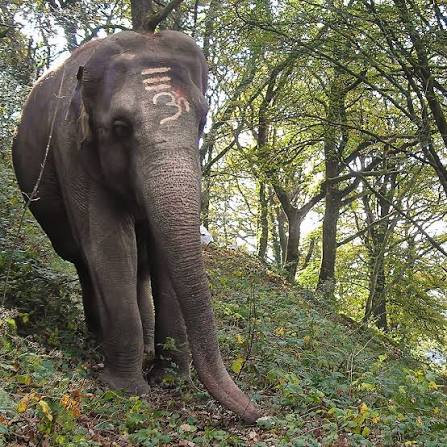
Wildlife charity calls for overhaul of 50-year-old law, although Carmarthenshire ashram says its elephants live in purpose-built facilities and are not tourist attractions
AN ASIAN elephant kept in Carmarthenshire has appeared on a new national map revealing more than 2,200 animals legally held under Britain’s dangerous wild animal licensing laws.
Data published by the Born Free Foundation lists one Asian elephant under Carmarthenshire County Council, making the county one of only four Welsh local authority areas shown as having licensed dangerous animals or applications under consideration.
The elephant is understood to be associated with Skanda Vale, the multi-faith religious community and ashram near Llanpumsaint.
However, Skanda Vale’s own website says three Asian elephants, named Valli, Lakshmi and Camela, currently live at the community.
Born Free’s published figures do not explain the difference. The charity warns that information supplied by councils may represent the maximum number permitted by a licence, the minimum number or the number present when the council responded.
Skanda Vale says the elephants live in a purpose-built barn, have access to nearby fields and are walked through the community’s woodland twice a day.
Four monks are said to work closely with the animals, accompanying them while they spend time outside and caring for their feeding, bathing and other daily needs.
The community stresses that the elephants are not a tourist attraction and visitors are not permitted to enter their barn. Photography is also prohibited at Skanda Vale.
Valli, the community’s original temple elephant, arrived in Wales from Sri Lanka in 1980 after reportedly being orphaned in the wild. Lakshmi and Camela formerly belonged to the Chipperfield Circus and later moved to France before being taken into Skanda Vale’s care.
No licensed animals recorded in Pembrokeshire
Born Free’s map records no animals currently licensed under the Dangerous Wild Animals Act in Pembrokeshire or Ceredigion.
Elsewhere in Wales, Denbighshire is listed as having 30 bison, while Monmouthshire has 12 bison and an application involving five ostriches.
An application to keep a Cuvier’s dwarf caiman is also recorded in Swansea.

Across Britain, the charity says more than 2,270 animals are licensed or subject to applications at 154 private addresses across 113 council areas.
They include 518 venomous snakes, 293 primates, 79 crocodiles, alligators and caimans, and 166 wild cats.
Animals listed across Britain include lions, tigers, cheetahs, wolves, lynx, cobras and rattlesnakes.
Born Free said the figures cover about 188 different species and subspecies, including 48 considered threatened with extinction.
The charity acknowledges that not all the animals are being kept as household pets. Some are held at sanctuaries, businesses, educational establishments or facilities involved in conservation work.
However, it believes many are being kept in domestic settings and has warned that the true number could be considerably higher because some dangerous species do not require a licence and others may be held illegally.
Law reaches its 50th anniversary
The Dangerous Wild Animals Act was introduced in 1976 following concerns about people keeping exotic and potentially dangerous animals.
Anyone seeking to keep a species covered by the legislation must obtain a licence from their local authority.
Councils must consider whether keeping the animal would pose a danger or nuisance to the public and whether its accommodation is suitable, secure and properly maintained.
Born Free claims the law has failed to keep pace with changes in the exotic animal trade, social media trends and modern understanding of animal welfare.
Chris Lewis, the charity’s captivity research and policy manager, said the legislation was originally intended to make private ownership of dangerous wild animals an exceptional occurrence.
He said: “Yet 50 years on we find ourselves in a situation where nearly ten times more venomous snakes are kept in British homes than British zoos.
“These animals are still wild, still dangerous, yet still legal to keep.
“The Government must urgently review and reform the laws governing the trade in, and keeping of, wild animals as pets.”
Born Free founder patron Dame Joanna Lumley said wild animals should not be kept as pets, regardless of how well owners believed they could care for them.
The charity is calling for ministers to review the Dangerous Wild Animals Act and the wider laws governing the sale, breeding and private ownership of exotic species.
It wants tighter controls, stronger enforcement and measures aimed at protecting animal welfare, conservation, public health and safety.
A spokesperson for the Department for Environment, Food and Rural Affairs said anyone wishing to keep an animal covered by the Act must be carefully vetted.
The spokesperson said licences imposed strict conditions governing how animals must be housed and cared for.
Carmarthenshire County Council says licensed animal establishments receive regular visits and are required to comply with their licensing conditions.
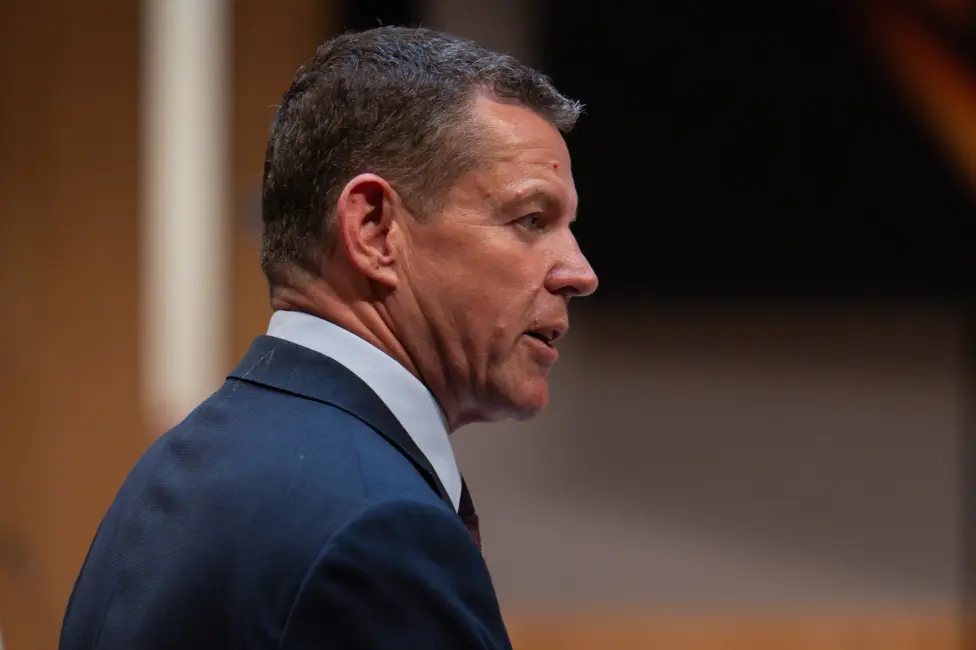
Welsh businesses, universities and NHS organisations will be able to develop new technologies and partnerships through the Horizon Europe programme
WALES has secured more than £700,000 in European funding to support the development of new digital healthcare technologies.
The Welsh Government has joined the UNITE European Digital Health Valleys project, marking what ministers say is Wales’ first European Union grant agreement since Brexit.
The funding has been awarded through Horizon Europe, the EU’s main research and innovation programme, which the UK formally rejoined as an associated country in 2024.
Welsh businesses, universities, health boards and innovation organisations will be encouraged to work with partners across Europe to design, test and introduce new digital healthcare products and services.
The programme will focus on major challenges facing health services across Europe, including ageing populations, staff shortages and increasing pressure on frontline services.
Organisations in Wales are now being urged to begin developing potential projects and establishing international partnerships ahead of future funding opportunities.
Cabinet Minister for Enterprise, Connectivity and Energy Adam Price said the agreement would support economic growth while helping NHS Wales adopt new technologies.
He said innovation-led growth, stronger international relationships and improvements to public services were central to the Welsh Government’s economic productivity plans.
Mr Price said: “This major initiative will deliver on all those fronts, with a focus on addressing shared healthcare challenges such as the needs of ageing populations and workforce pressures by connecting industry, healthcare providers, academia and the public sector.”
UNITE brings together regions from across Europe with the aim of creating a connected digital health ecosystem.
The network will allow technology companies, healthcare providers, universities and public bodies to collaborate on the development and deployment of new systems.
As a partner region, Wales will gain access to digital health organisations and potential research partners across Europe.

Ministers believe this could help Welsh organisations compete for further research and development funding while strengthening the country’s position within the international digital health market.
Mr Price added: “As a UNITE partner region, Wales will play a central role in shaping a new digital health innovation ecosystem and gain access to a network of European digital health regions.
“This will open up new opportunities for our most innovative sector organisations to collaborate internationally and access funding.
“Crucially, this will support the adoption of innovative solutions for NHS Wales while strengthening Wales’ position in the global digital health market.”
A free webinar explaining the programme and future opportunities will be held on Thursday, September 3.
Businesses and organisations can also seek further advice through Business Wales.



Crime3 hours ago
Women jailed after man chased through Milford home and attacked with knives
Kelly Rees receives further 27-month sentence while already serving prison term for notorious taxi robbery TWO women have been jailed...


Crime4 hours ago
Mother headbutted and clawed police officers after threatening social worker
Court shown body-worn footage of violent confrontation at Goodwick property A COURT has been shown police body-worn footage capturing the...


Crime22 hours ago
Man, 37, found dead following major police response in Pembroke Dock
Death not being treated as suspicious as police make statutory referral to IOPC following active investigation A 37-YEAR-OLD man has...

Community1 day ago
Household Cavalry drum horse returns home to Pembrokeshire for final farewell
Dyfed Willa Rose, who became Major Juno and the first mare to serve as a Household Cavalry Drum Horse, was...

News2 days ago
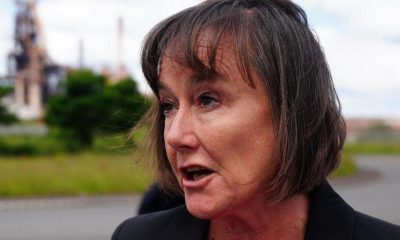
Jo Stevens out as Welsh Secretary as Burnham reshapes government
Cardiff East MP repeatedly visited Pembrokeshire to champion clean energy jobs, but her successor inherits unresolved questions over Milford Haven’s...


Crime2 days ago
Teen cleared of attempted murder but guilty of GBH after Milford teacher stabbed
Jury returns 11-1 majority verdict on charge of causing grievous bodily harm with intent, with sentencing set for September 3...

Community2 days ago
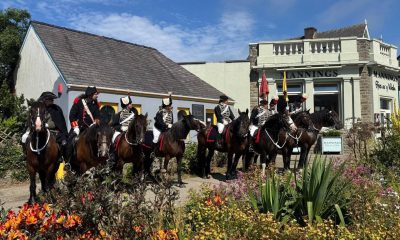
French troops march through Fishguard as Britain’s last invasion returns to life
Battle scenes, cavalry displays and a surrender procession brought one of Pembrokeshire’s most extraordinary stories back to the streets MUSKET...


News2 days ago
Andy Burnham promises new politics as he enters Downing Street
New Prime Minister admits politicians have “not been good enough” as he sets out a ten-year plan for Britain and...


Health3 days ago
Two new surgeons appointed as Hywel Dda admits orthopaedic waits remain too long
Health board says it is increasing capacity after figures revealed hip replacement patients waited an average of 64 weeks HYWEL...

Community4 days ago
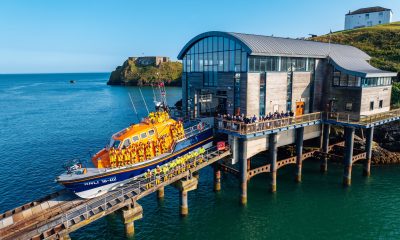
84-year-old man rescued after falling overboard near Tenby
A MAYDAY call sparked a major nighttime rescue after an 84-year-old man fell from a tender and was swept towards...
-
 Crime4 hours ago
Drunken rail passenger tried to headbutt police after being refused travel
-

 featured22 hours ago
From a father-and-son project to an award-winning campervan business
-
Crime3 hours ago
Women jailed after man chased through Milford home and attacked with knives
-
Community1 day ago
Household Cavalry drum horse returns home to Pembrokeshire for final farewell
-

 Crime2 days ago
What the Milford Haven School stabbing verdict really means
-
Crime2 days ago
Teen cleared of attempted murder but guilty of GBH after Milford teacher stabbed
-
Crime4 hours ago
Mother headbutted and clawed police officers after threatening social worker
-
 Crime2 days ago
Hakin man jailed after driving while banned and over alcohol limit