


Charity
‘Grave concerns’ over national insurance hike

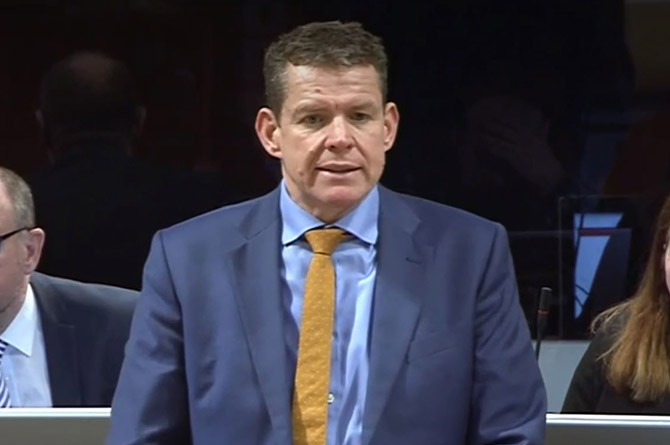
SENEDD Members expressed grave concerns about the impact of the UK Government’s national insurance tax hike on GPs, universities and charities in Wales.
Plaid Cymru leader Rhun ap Iorwerth warned the rise in employer national insurance contributions from 13.8% to 15% in April will have a disproportionate impact in Wales.
He told the Senedd: “Labour are quick to accuse others of fantasy economics whilst their own plans represent nightmare economics for thousands of employers and employees.”
Raising concerns about the impact on job creation and wages, he said employment levels are at their lowest for almost a decade – lower than anywhere else in the UK.
He accused Labour of breaking a manifesto pledge as he pointed to an Office for Budgetary Responsibility (OBR) assessment that three quarters of the cost will be passed to workers.

Leading a debate on November 20, Mr ap Iorwerth called on the UK Treasury to fully cover the added cost to public sector employers in Wales.
He said: “It’s not the private sector only … bearing the brunt. Charities, GPs, universities – sectors already feeling the squeeze, to say the very least – have been taken to the brink.”
He pointed to “eye-watering” bills of £90,000 for some GPs, with the British Medical Association warning some surgeries could close as a consequence.
Mr ap Iorwerth said mental health charity Plattform faces a £250,000 annual bill and Welsh universities, “already crippled by financial challenges”, will face significant further pressures.

Plaid Cymru’s motion urged Welsh ministers to press the UK Government to apply a wider definition of the public sector workforce to include universities, GPs and charities.
Peter Fox, the Conservatives’ shadow finance secretary, similarly accused Labour of breaking a manifesto commitment not to raise tax on working people.
The former council leader said: “Time and time again – the chancellor went on TV and made the claim, only to u-turn after they got into power.”

Mr Fox, who represents Monmouth, said even a 1% rise in employer national insurance contributions for the public sector would cost Welsh taxpayers an extra £100m.
He told the Senedd: “The UK Government has said that it will provide funding to cover the cost of national insurance contributions for those workers.
“However, this will still come out of the taxpayer’s pocket … ultimately it is the taxpayers who are going to pay for the Chancellor’s tax increase.”
Luke Fletcher, Plaid Cymru’s shadow economy secretary, warned the national insurance rise will be a drag on an “already anaemic” Welsh jobs market.
His colleague Sioned Williams, who also represents South Wales West, described the chancellor’s “back-of-a-fag-packet” plans as senseless.
She raised concerns about six-figure increases in tax bills for charities including Tenovus, Marie Curie, Citizens Advice Cymru and the Wastesavers Charitable Trust.
Cefin Campbell, Plaid’ Cymru’s shadow education secretary, said the national insurance increase will cost Welsh universities an estimated extra £20m a year.
The Mid and West Wales MS warned: “Without a shadow of a doubt, these additional costs could push our higher education institutions over the precipice.”
Labour’s Hefin David said difficult decisions had to be made to fill a £22bn “black hole” left by the Tories but he rejected Plaid Cymru claims of a return to austerity.
Dr David told the Senedd: “Yes, tough decisions have to be made but I think that in the longer term, this is to everyone’s benefit.”
Andrew RT Davies, leader of the Conservative opposition, disputed the “incorrect” £22bn figure, saying the OBR found a £9bn gap.
Replying to the debate, Mark Drakeford stressed that neither he nor the Welsh Government has responsibility for national insurance contributions.
Wales’ finance secretary, who was appointed in September, criticised “fantasy economics” from opposition members on the Plaid Cymru and Conservative benches.
Deriding the “politics of the playground”, he said: “Both of them are willing to spend money on almost anything; neither of them are willing to raise the money necessary from anyone.”
Prof Drakeford said the chancellor returned national insurance broadly to where it had been as a share of gross domestic product for 13 of the 14 Conservative years.
The former First Minister pointed out that the UK Government offset national insurance rises on small employers by more than doubling the employment allowance.
He told the debating chamber or Siambr: “If you want to pay for things, you have to find the money to do so. That is what the chancellor had to do. That is how we will get the money that will come to public services here in Wales.”
Senedd Members voted 25-19 against Plaid Cymru’s motion.


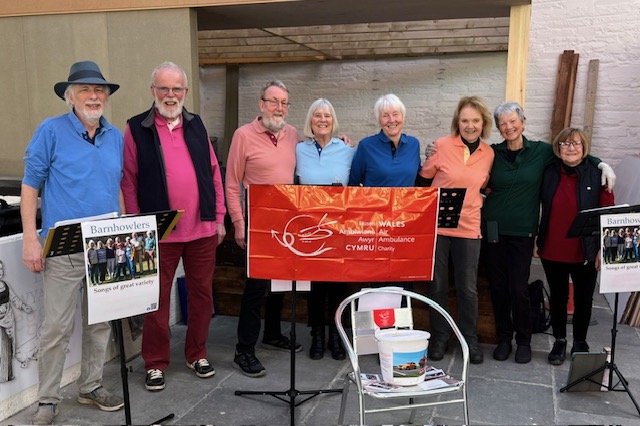
Pembrokeshire singers raise funds for Wales Air Ambulance during 25th anniversary year
A PEMBROKESHIRE a cappella group has been praised for supporting a lifesaving service during a landmark year for the charity.
The “Barnhowlers” recently busked at Cardigan Guildhall Market, raising funds for Wales Air Ambulance as it marks its 25th anniversary.
Since its first flight on March 1, 2001, the service has carried out more than 56,000 missions across Wales, delivering critical care to patients wherever it is needed.
Pam Jones, 74, who lives near Fishguard, said the cause was close to many people’s hearts.
“Most people know someone who has needed the Wales Air Ambulance,” she said.

“I know two people who are thankfully still with us because they received critical care from the service. It makes an incredible difference to patient outcomes.”
The Wales Air Ambulance is a consultant-led service, bringing hospital-standard treatment directly to patients at the scene. If required, crews can transfer patients straight to the most appropriate hospital for their condition.
The service operates through a partnership between the public and third sectors, relying on public donations to raise the £13 million needed each year to keep helicopters in the air and rapid response vehicles on the road.
Highly skilled NHS consultants and critical care practitioners are provided by the Emergency Medical Retrieval and Transfer Service (EMRTS), enabling advanced treatments such as anaesthesia, blood transfusions and even minor operations to be carried out at the scene.

As a pan-Wales service, its crews travel the length and breadth of the country to deliver emergency care, regardless of where they are based.
Pam said the Barnhowlers take pride in performing for causes that make a real difference.
“There is nothing quite like coming together to sing some of our favourite songs, knowing that we are also making a difference,” she said.

Formed in 2011, the group began as a barbershop ensemble and has since evolved into a versatile a cappella group performing a wide range of music.
“We like to mix it up, performing songs from The Beatles and Duke Ellington to Thomas Tallis and Disney,” Pam added. “We want to entertain people, and we love it when the audience joins in.”
The group performs regularly at community events, including the Friendship Circle, gardening clubs, Parkinson’s support groups and the Fishguard Folk Festival. They have also supported local food banks and other health-related charities.
“Local nursing homes seem to like us too,” Pam said. “We bring a bit of cheer and take people down memory lane.”
Barnhowlers have several performances lined up throughout the spring and summer, including a concert in aid of the Eisteddfod in Pembrokeshire.
Wales Air Ambulance Regional Fundraising Manager Mike May thanked the group for their support.
“We are so grateful to the Barnhowlers for using the power of music to shine a light on local causes,” he said.
“They entertained the crowds at Cardigan Guildhall Market in aid of Wales Air Ambulance. Every pound raised will help save lives. Diolch yn fawr.”

THE NSPCC has called for mandatory technology to block child sexual abuse images in real time after new figures revealed more than 1,200 offences were recorded by police forces in Wales in the past year.
Data obtained by the children’s charity shows that 1,287 offences involving indecent images of children were logged by Dyfed-Powys, Gwent and North Wales Police between April 1, 2024 and March 31, 2025.
The figure represents a 3% increase on the previous year, when 1,244 offences were recorded.
Across the UK, almost 37,000 offences involving child sexual abuse images were recorded by police during the same period, according to the NSPCC.
The charity said the figures demonstrate the urgent need for technology companies to introduce stronger protections for children using smartphones and social media.

It is calling on tech firms to install systems on children’s devices that would automatically block nude images from being created, shared or viewed, stopping abuse before it happens.
If companies fail to act, the NSPCC says the UK Government should make such safeguards mandatory.
Chris Sherwood, Chief Executive of the NSPCC, said: “It is utterly indefensible that we are still seeing around 100 child sexual abuse image offences recorded every single day.
“Children across the UK are being completely failed by tech companies that should be protecting them online.

“Behind every one of these offences is a child who has been groomed, abused and manipulated. They are left to carry the trauma while tech companies continue to profit.”
The NSPCC said many of these crimes take place on social media platforms.
Of the 10,811 offences where police recorded the platform used, Snapchat accounted for the largest share at 43% of cases, followed by Instagram, WhatsApp and Facebook.

The charity warned that end-to-end encryption used by some platforms may hide the true scale of abuse, making it harder for authorities to detect crimes.
Young people contacting Childline have described the devastating consequences of images being shared online.
One teenager told counsellors he was forced to move schools after a nude image he shared was leaked and used to blackmail him.
The NSPCC said 685 Childline counselling sessions last year involved concerns about online sexual abuse or exploitation, including threats to share intimate images.
The charity is urging ministers to go further in protecting children online, arguing that stronger safeguards are needed beyond proposals such as banning children from social media.
South Wales Police did not provide complete data for the latest figures, meaning the total number of offences recorded across Wales may be higher.
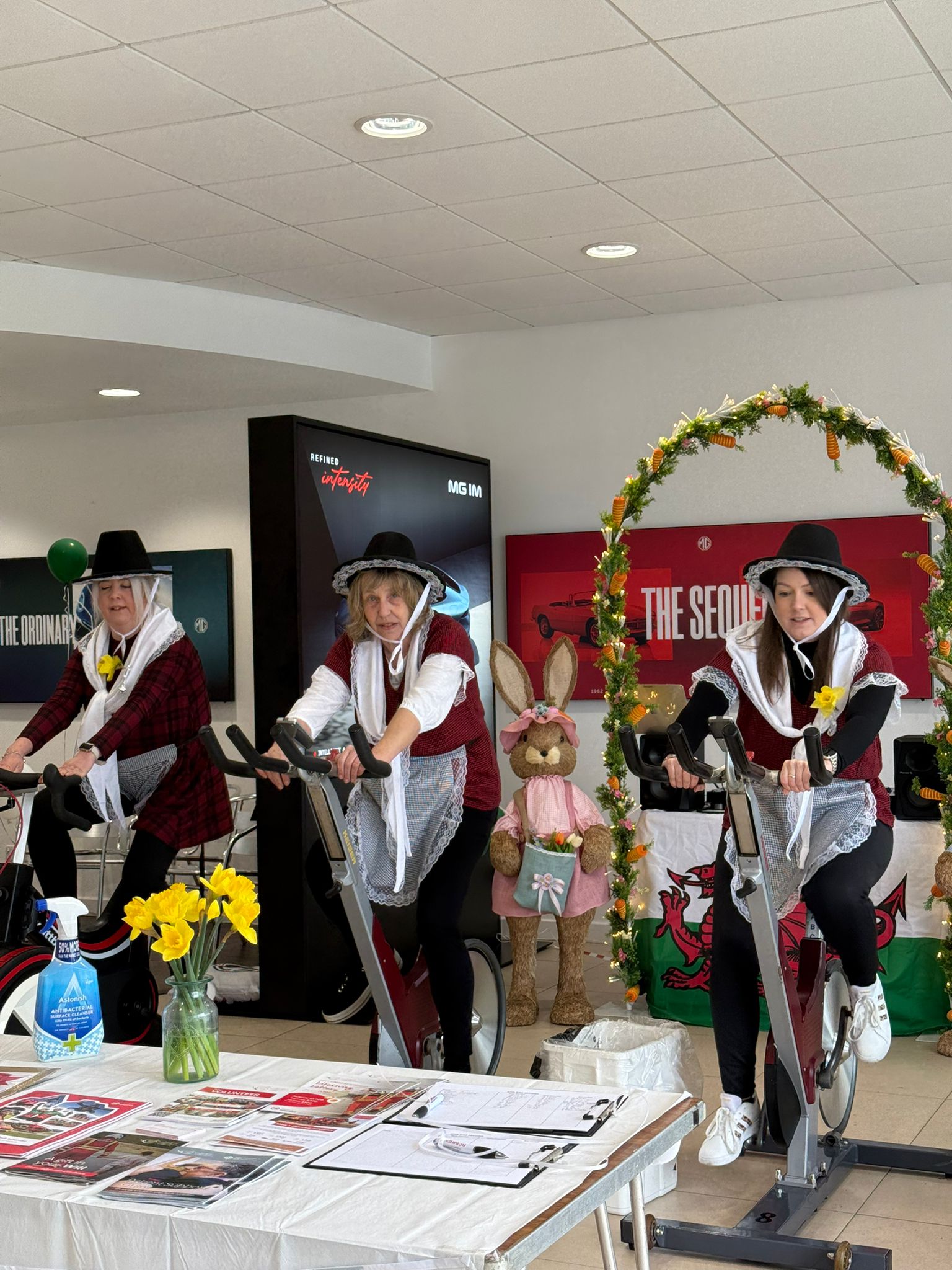
STAFF at OC Davies used pedal power to cycle an incredible 453 miles as part of a fundraising event marking two major anniversaries.
The Cardigan-based dealership is celebrating 40 years as a Renault dealer in 2026, while the Wales Air Ambulance marked its 25th anniversary on St David’s Day (Mar 1).
To celebrate the milestones – and the launch of the new vehicle registration plate – the dealership held a community open day at its Cardigan site, raising £2,102 for the lifesaving charity.

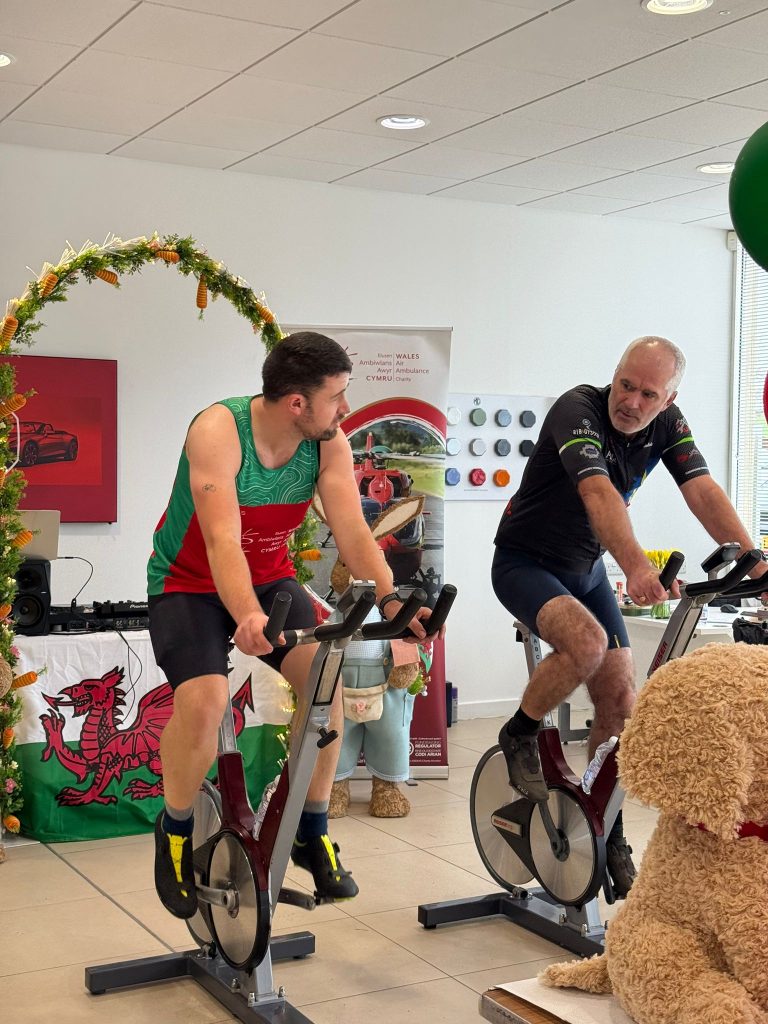
As part of the event, staff and supporters took on a spin bike challenge to cycle the equivalent of 104 miles – the distance between OC Davies’ three dealerships in Cardigan, Neyland and Carmarthen.
However, the participants far exceeded expectations.
During the 12-hour challenge, which ran from 8:00am to 8:00pm, a total of 37 people took part and collectively cycled an impressive 453 miles.
Over the years, OC Davies has now raised more than £6,600 for the Wales Air Ambulance Charity.
Nicola Lewis from OC Davies said: “We are incredibly proud to have raised £2,102. This fantastic amount exceeded all our expectations and shows just how supportive our community has been.
“The success of the event has inspired us to keep the momentum going and continue raising money for Wales Air Ambulance throughout the rest of the year.
“We currently have an Easter egg lucky dip running in the dealership and we’re also planning to raise further funds later in the summer at some outdoor events we’ll be taking part in.”
More than 200 visitors attended the open day and around 900 tickets were sold for a grand raffle.
Prizes were donated by local businesses including The Cliff Hotel & Spa, Tom Samways Butchers, U Melt Me, Tonnau, Theatr Mwldan, Folly Farm Adventure Park and Zoo, and The Queen’s Hall.
Additional prizes were also donated by the Scarlets and Swansea City FC.
Nicola added: “The open day was wonderfully supported by local businesses and members of the community, which helped make the event so special.
“We were overwhelmed by the generosity and support from businesses in Cardigan and beyond who kindly donated prizes for our grand raffle.”
The spin bikes used during the challenge were loaned by Neil Fulstow Fitness Coaching, with additional support from Clive Evans and Clive Davies.
The charity’s mascot Biggles also made an appearance during the day – even taking a turn on the DJ decks.
Emily Bell, Wales Air Ambulance’s Regional Fundraising Co-ordinator, said: “A huge congratulations to the staff at OC Davies, who smashed their original target while raising an incredible amount for our charity.
“It was a lovely open day which I was delighted to attend. OC Davies found a wonderful way to mark both anniversaries.
“Wales Air Ambulance needs to raise £13 million every year to keep our helicopters flying and our rapid response vehicles on the road. Fundraisers like this help ensure we can continue to be there for the people of Wales when they need us most.”
Wales Air Ambulance is a consultant-led service delivering hospital-standard treatment at the scene of an incident.
Through its partnership with the Emergency Medical Retrieval and Transfer Service (EMRTS), NHS consultants and critical care practitioners can provide advanced treatment including anaesthesia, blood transfusions and minor surgical procedures before transporting patients to the most appropriate hospital.
As a pan-Wales service, its crews travel across the country to deliver lifesaving emergency care wherever it is needed.
For more information visit www.ocdavies.com.


Crime13 hours ago
Publican jailed for six years for supplying cocaine and cannabis
Milford Haven man sentenced at Swansea Crown Court following drug dealing operation A MILFORD HAVEN publican has been jailed for...

Local Government15 hours ago
Poverty summit highlights support efforts across Pembrokeshire
A SUMMIT bringing together key organisations from across Pembrokeshire has highlighted both the scale of local poverty and the work...

Education2 days ago
Milford Haven school plans unveiled but funding not yet secured
PLANS for a new £100 million school in Milford Haven have been unveiled, but the project has not yet secured...


News2 days ago
Council unveils plans for new state-of-the-art secondary school in Milford Haven
PEMBROKESHIRE COUNTY COUNCIL has revealed plans for a new state-of-the-art school in Milford Haven, promising modern, inspiring learning spaces for...

Health2 days ago
NHS waiting list falls — but cancer delays and diagnostic backlog worsen
Record progress claimed by Welsh Government as critics warn key targets are still being missed THE NHS in Wales has...


Crime3 days ago
Rapist jailed after ‘abhorrent’ attacks on woman and children
Haverfordwest man told police “women won’t have sex without force” A HAVERFORDWEST man who raped a woman and a young...


News3 days ago
Reform secures first Pembrokeshire councillor in Hakin by-election win
Late Reform candidate takes seat as independent surge and Labour withdrawal shape contest REFORM UK candidate Scott Thorley has won...

News3 days ago
Scott Thorley elected as Pembrokeshire’s first Reform councillor
REFORM UK candidate Scott Thorley has won the Hakin by-election after securing 179 votes. The full result is as follows:...


News3 days ago
Police confirm man has died after being recovered from River Cleddau
Major emergency response in town centre after concerns raised for man in water A MAN has died after being recovered...


Community3 days ago
Davies and Kurtz urge groups to seek employability funding
Community organisations in Pembrokeshire encouraged to apply for new grants supporting skills and job access LOCAL Senedd Members Samuel Kurtz...
-

 News7 days ago
Rayner and Lammy visit Wales to discuss justice and community safety
-

 News6 days ago
Fishguard linked to allegations in Many Tears Animal Rescue investigation
-

 News4 days ago
Emergency services flood Haverfordwest after reports of person in river
-
 Local Government7 days ago
Investigation confirmed after inspectors visit Many Tears Animal Rescue
-

 Crime2 days ago
Mother given community order after admitting child cruelty offence
-
 Business7 days ago
Tesco B&Q Haverfordwest click and collect pod approved
-
 Business7 days ago
Legal action backed in case over development at Dinas Cross
-
 Business7 days ago
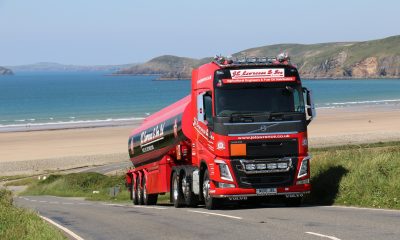
Oil firm praised for putting customers first during price surge