


Politics
St Davids recycling centre saved but others to see hours cut

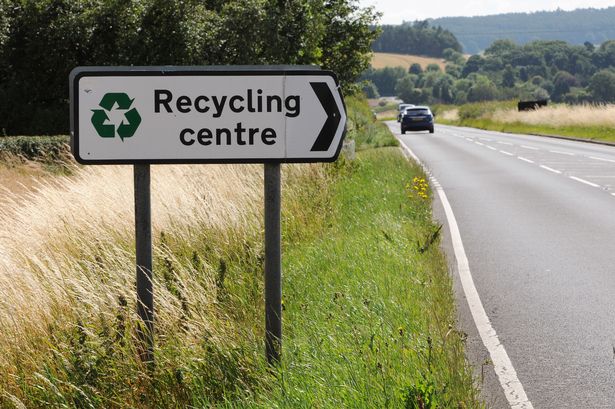
CLOSURE-threated St Davids’ recycling centre is to stay open, while other facilities in the county ‘share the pain’ with a reduction in opening times to meet cost savings.
Members of Pembrokeshire County Council’s Cabinet, meeting on December 2, considered a range of money-saving options for the provision of recycling centres in the county, against a backdrop of a need to save £70,000 from the service, which included closing the St Davids centre.
Pembrokeshire currently operates six WRCs across the County; Crane Cross, Hermon, Manorowen, St David’s, Waterloo and Winsel, one of the highest levels of provision in Wales.
The council’s medium term financial plan identifies “a ‘most likely’ projected funding gap of £84.6m over the period 2024-25 to 2027-28,” with the council needing to deliver at least £70,000 of savings from the waste and recycling budget
Four options will be presented to Cabinet: no change, with the £70,000 coming from other areas of the service; the closure of St Davids netting the £70,000; its closure along with reductions in the amount of days at other centres to save £110,000; the final option being a reduction in the number of days all were open, but keeping St Davids running, saving the £70,000.

All four options were considered by the Policy and Pre-Decision Overview and Scrutiny Committee in November, where it was “acknowledged that the status quo could not continue and a requirement for change was accepted,” the committee favouring the fourth option, described as “sharing the pain,” which it recommended to Cabinet.
A complication for keeping St Davids open was a significant capital investment requirement for that site and Hermon, Cabinet members heard.
Despite concerns by Cabinet Member for Housing Cllr Michelle Bateman that she could not justify the costs, with the level of capital investment required, to keep St Davids open, fellow Cabinet member – and local councillor – Cllr Neil Prior proposed the option four was backed, supported by leader Cllr Jon Harvey.
Members, by six voted to two, backed the “sharing the pain” approach, which will see a reduction in opening days across the county sites.

Posting on social media after the meeting, fellow local councillor Cllr Mark Carter welcomed the news “which means that St Davids WRC stays open for the foreseeable future with two opening days a week all year round,” adding: “All other WRC sites will lose one day per week. The remaining issue to be addressed at some point is the required upgrade work and where the funding will come from but for the time being St Davids WRC is safe.”

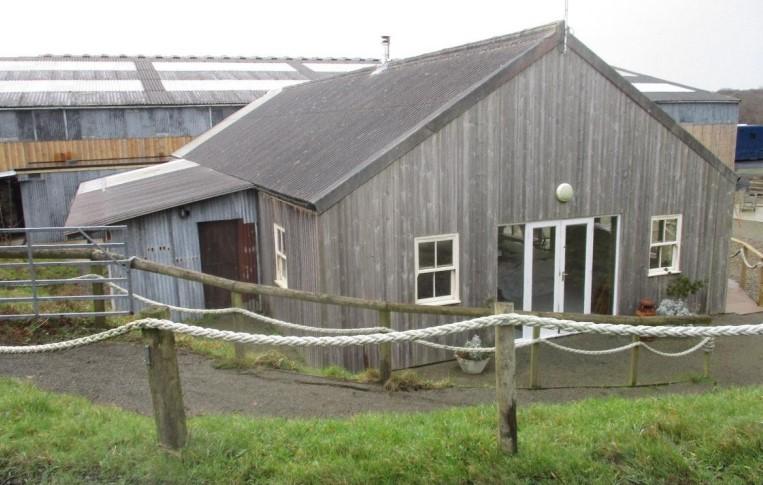
A CALL to allow a former riding stables to keep a multi-purpose building built without permission has been allowed, but its new purpose for wedding venues will need a new application.
In an application submitted to Pembrokeshire Coast National Park, Lawson & Penny Owen of LJP Owen Ltd, through agent Hayston Developments & Planning Ltd, sought permission for a certificate of lawfulness for a multi-use building at Johns Barn, Nolton Stables, Nolton.
In application for a certificate of lawfulness allows an applicant to keep a development if they can provide proof of occupancy or use over a prolonged period.
A supporting statement said the building had been used for a variety of purposes including a meet and greet use in connection with the operation of a family-owned riding stables, for various parties and occasions including birthday parties and for expansion with weddings and wedding receptions.
It added: “Mr Lawson Owen’s grandfather, along with his sons, started the stables early 1960s and his mum and dad ran the stables from 1975. Mr Owen left school in 1995 and LJP Owen Ltd took over running the stables from 2005 (Lawson, James and Penny). There is no planning history in respect of the construction of this mainly timber building which has been designed and used since 2016 for a variety of activities within Use Class D2, nor in respect of the subsequent extension, which was added by Summer 2020 and which contains a toilet block.

“Although the multi-purpose building was constructed to act as a meet and greet centre and toilets in conjunction with the established riding school / pony trekking centre based at Nolton Stables, the first use towards the end of December 2016 was to host a family event to which over 100 guests were invited.”
It said the facility predated other ventures at the site including a horse riding experience and ‘zorbing’ and segwaying.
It said that Covid restrictions in place from 2020 “resulted in the abandonment of pony trekking and hence the sale of the horses from Nolton Stables as it was economically impractical to feed and maintain the animals, saddles etc for an extended period when there was no income,” adding: “Zorbing and segwaying also had to cease because of the associated level of social contact.”
It went on to say: “The principal use of the building is now multi-purpose with wedding venue ceremonies now popular too and subsequent reception with a number of the guests staying in holiday accommodation in and around Nolton; some of which is currently managed by the applicants or to be developed by the applicants. (An application for nine holiday units is currently awaiting validation and processing by PCNP).”

An officer report in part supported the certificate of lawfulness, but felt the current use of the barn as a wedding venue, from 2022, “is considered to be a further change of use from the equine use to a sui generis use,” with a continuous period of use of for a longer period needed for that element of the ‘lawfulness’ application.
In granting the certificate of lawfulness for the building itself and equine use, it said: “The unauthorised building has a lawful equestrian activity use and any change of use from this has not yet become lawful,” adding the use as a wedding venue would require a separate planning application.


WALES risks falling behind on its long-term infrastructure needs unless major barriers to planning, funding and delivery are tackled, a leading advisory body has warned.
The National Infrastructure Commission for Wales (NICW) this week (Mar 23) published two major reports setting out what the country will need over the next 80 years — and why current systems are failing to deliver.
The Wales Infrastructure Assessment examines key sectors including energy, transport, water, digital and the circular economy, while a separate Infrastructure Delivery Report focuses on how projects can be better planned, funded and completed.
The Commission says that despite strong policies already in place, many major projects are delayed or fail to progress due to systemic problems. These include complex approval processes, short-term political and funding cycles, and a shortage of skilled workers.
It also highlights a lack of joined-up thinking across sectors, with transport, energy and digital systems often planned in isolation, leading to inefficiencies and missed opportunities.
Concerns were also raised about fragile confidence among communities and investors, driven by frequent policy changes, inconsistent engagement and uncertainty over long-term funding.
NICW has identified eight priority actions to improve delivery, including longer-term funding commitments, planning reform, better collaboration between sectors, investment in skills, and earlier engagement with communities.
Dr David Clubb, Chair of the Commission, said: “Wales has no shortage of ambition. What we face is a shortage of delivery. Unless we address the structural barriers in the system, we will not meet the needs of current or future generations.
“The next Senedd must be prepared to make long-term, and sometimes difficult, choices.”
The reports also stress the importance of better data and long-term planning, drawing on international approaches to support more informed decision-making.
With the Senedd election approaching, the Commission said the next Welsh Government will have a critical opportunity to reset how infrastructure is delivered — and warned that failure to act could undermine economic growth, climate targets and public confidence.

SAMUEL KURTZ MS has renewed calls for stronger action to tackle water pollution in Pembrokeshire after joining local open water swimmers in Saundersfoot.
The Carmarthen West and South Pembrokeshire Senedd Member attended a morning sea swim with groups including the Numb Nuts and the Blue Tits on Friday (Mar 13), where concerns were raised about sewage discharges into Welsh waterways.
He said public frustration over water quality was continuing to grow.
“Pembrokeshire is blessed with some of the most beautiful coastline and waterways in the UK, and they should be protected for everyone who lives here and enjoys them,” said Mr Kurtz.
“However, I regularly hear from residents, swimmers, surfers and local businesses who are deeply frustrated by repeated reports of sewage discharges into our rivers and seas, while water company executives continue to receive large bonuses or hide behind a not-for-profit status.”
Mr Kurtz welcomed enforcement action taken against Welsh Water following pollution incidents, but warned that fines alone were not enough.
“Penalties must lead to meaningful improvements,” he said. “The money should be reinvested directly into upgrading sewage infrastructure so these incidents become far less frequent.
“Customers should not be left paying higher water bills to fix failures that should have been addressed years ago.”
He also stressed that responsibility for water quality lies with the Welsh Government.

“Water quality in Wales is fully devolved, meaning decisions about regulation, environmental standards and oversight are made here in Wales, not in Westminster,” he said.
Mr Kurtz has repeatedly raised concerns in the Senedd about pollution affecting Pembrokeshire’s rivers and coastline, including the River Cleddau and designated bathing waters.
In a previous debate, he called for a statutory duty on water companies to take all reasonable steps to prevent sewage discharges into rivers, lakes and the sea—similar to measures introduced in England. The proposal was rejected by Welsh Labour ministers.

He said the response reflected a wider reluctance to adopt stronger measures.
“Time and again I have raised concerns about sewage discharges and their impact on our environment, only to see sensible proposals dismissed,” he said.
“This isn’t about politics—it’s about protecting our environment and restoring public confidence in the safety of our waterways.”
Mr Kurtz also highlighted the role of community groups and local initiatives, including the Cleddau Project, which aims to improve the ecological health of the river catchment.
“There is some excellent work happening locally,” he said. “But we need a joined-up, Wales-wide approach rather than piecemeal action.
“That means tackling sewage infrastructure, agricultural run-off, environmental monitoring and enforcement together. I will continue to press this issue in the Senedd.”



Business19 hours ago
Could Primark be coming to Haverfordwest? Major retailer in talks for former Wilko site
Council confirms advanced discussions as speculation grows over high street boost HAVERFORDWEST could soon see a major high street revival,...


Business19 hours ago
Rail investment ‘could unlock 40,000 jobs and £11bn for Wales’ says new report
RAILWAY stations across Wales could help unlock around 40,000 jobs and more than £11 billion for the economy by 2036,...


Local Government20 hours ago
Milford Haven set for £200m investment with schools, leisure centre and rail upgrade
Council outlines major plans for town with backing from Welsh Government MILFORD HAVEN is set for a major transformation with...

Community2 days ago
Broad Haven volunteers secure ‘national asset’ status for nature reserve
A SMALL stretch of woodland and former opencast coal mine has been transformed into a nationally recognised biodiversity site, in...


Entertainment3 days ago
Tenby steams up in spectacular style as crowds flock to festival
Colourful parade, towering creations and Victorian flair bring town centre to life TENBY was transformed into a vibrant Victorian fantasy...


Crime4 days ago
Publican jailed for six years for supplying cocaine and cannabis
Milford Haven man sentenced at Swansea Crown Court following drug dealing operation A MILFORD HAVEN publican has been jailed for...


Local Government4 days ago
Poverty summit highlights support efforts across Pembrokeshire
A SUMMIT bringing together key organisations from across Pembrokeshire has highlighted both the scale of local poverty and the work...


Education5 days ago
Milford Haven school plans unveiled but funding not yet secured
PLANS for a new £100 million school in Milford Haven have been unveiled, but the project has not yet secured...


News5 days ago
Council unveils plans for new state-of-the-art secondary school in Milford Haven
PEMBROKESHIRE COUNTY COUNCIL has revealed plans for a new state-of-the-art school in Milford Haven, promising modern, inspiring learning spaces for...


Health5 days ago
NHS waiting list falls — but cancer delays and diagnostic backlog worsen
Record progress claimed by Welsh Government as critics warn key targets are still being missed THE NHS in Wales has...
-

 News7 days ago
Emergency services flood Haverfordwest after reports of person in river
-

 Crime6 days ago
Mother given community order after admitting child cruelty offence
-
Health5 days ago
NHS waiting list falls — but cancer delays and diagnostic backlog worsen
-

 News7 days ago
Senedd vote to ban greyhound racing hailed as ‘landmark moment’ by charities
-
 News7 days ago
Senedd votes to ban Greyhound racing in Wales to protect animal welfare
-

 News6 days ago
Reform secures first Pembrokeshire councillor in Hakin by-election win
-

 Crime6 days ago
Woman stole from pharmacy despite ban, court hears
-

 Crime5 days ago
Illegal workers found at Cardigan takeaway after immigration raid