


Community
Welsh council chiefs call for minimum funding increase to prevent bankruptcy risk


COUNCIL chiefs called for a minimum 4% increase in funding for each local authority and three-year settlements to avert the risk of a Welsh council going bust.
Andrew Morgan, leader of Rhondda Cynon Taf council, warned of “extreme” budget pressures as he appeared before the Senedd’s finance committee on January 15.
He welcomed a £253m uplift in the overall settlement from the Welsh Government but contrasted the increase against a £559m funding gap in the 12 months from April.
He said: “Clearly, the figures show it actually only meets about half of the actual demand for the coming 12 months, so there is going to be significant pressure on local authorities.”
Cllr Morgan, who is leader of the Welsh Local Government Association, the collective voice of Wales’ 22 councils, added: “It is increasingly difficult to be able to explain to the public that we’ve put council tax up while still reducing services.”

He told the committee: “When it comes to council tax, most local authorities are in the range of 5% or upwards for budget planning at least at this stage.
“We are acutely aware of the pressure on local residents in terms of the cost of living, so it is a real dilemma for local authorities.”
Pressed on whether any councils in Wales could issue section 114 (bankruptcy) notices, Cllr Morgan said: “I certainly don’t think there will be any risk of 114 notices in the coming year but that’s not to say that there isn’t a risk there in the medium to long term.”
Asked about Audit Wales’ warning that councils are financially unsustainable, Cllr Morgan called for a three-year settlement to allow planning beyond a 12-month cycle.

He said: “Welsh Government comes out with a provisional settlement in December, that only gives us ten or 12 weeks for us to line up all our ducks in terms of making budgets add up – that’s what’s not sustainable, I would suggest.”
Anthony Hunt, leader of Torfaen council, described the challenge next year as “orders of magnitude different” due to a better-than-expected settlement from the Welsh Government.
He said: “There will be schools that retain staff, there will be services that can be maintained.”

Cllr Hunt told the committee a flat budget or 1% increase, as first feared, would have had “unthinkable” consequences, with “massive” service cuts and redundancies across Wales.
With councils receiving increases ranging from 2.6% to 5.6%, he made the case for a 4% floor which would be funded from outside the settlement at a cost of about £13m.
He emphasised that the 22 principal councils will never be happy with the wider funding formula because there will always be winners and losers.
Lis Burnett, leader of Vale of Glamorgan council, raised the example of hospital discharges.
She said: “I think we’re probably one of the best in Wales now that we can actually get a care package sorted out for people to go home within approximately three days.
“That has been of great benefit to the health board but it basically means that we’re £10m overspent in our social care.”
Turning to education, Cllr Burnett said: “We’re having to be very, very careful in terms of how we rationalise spending for education. The demands, and the complexity of demand, have gone up exponentially – particularly since the pandemic.”
She said her council was “lowest funded by a long way” in terms of education, adding that there is an appetite for reform of the funding formula.
Nia Jeffreys, leader of Gwynedd council, said her local authority has cut £74m over the past decade, nearly a quarter of its day-to-day revenue budget.
Warning of no easy choices, Cllr Jeffreys told the committee: “The efficiency savings have been made already and we’re in a situation now where we’re looking at real-terms cuts … that means stopping doing things and halting services that people rely upon.”
She said Gwynedd and other councils in north Wales are looking at increasing council tax by 8% to 9%, placing a burden on families already struggling with a cost-of-living crisis.
Cllr Jeffreys echoed calls for an “absolutely vital” funding floor, pointing to additional costs of delivering public services in more rural areas.
Asked about increases in employer national insurance contributions, she put the cost to Gwynedd council at about £4.5m.
Cllr Hunt said councils have been assured that they will be given money towards the cost of the rise for directly employed staff.
He stressed: “That national insurance rise is one of the reasons why there’s more money now for public service organisations. And I think we need to be a bit careful not to welcome funding but complain about where it’s come from – it needs to come from somewhere.”
Cllr Morgan said the biggest concern is the money to cover the cost being “Barnettised” (i.e. based on spending in England) which could leave Welsh councils short.
He told the committee education and social care now make up about 70% of all council budgets, suggesting only so much “tinkering” can be done within the other 30%.
He raised concerns about the “eye-watering” costs of children’s care to councils, with some specialist placements costing a five-figure sum each week for every child.


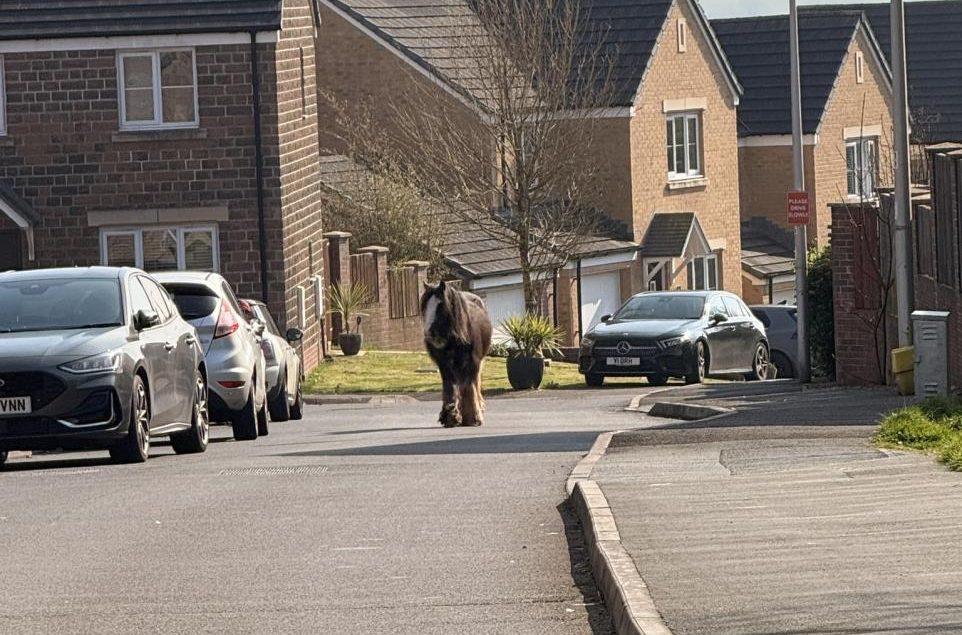
Animal seen galloping through residential streets and towards main road
POLICE are reportedly tracking a loose horse which strayed into a residential area of Pembroke.
The animal was first spotted in Gatehouse View before making its way onto a nearby main road.
A post on the Pembroke and Pembroke Dock Citizens’ Forum said the horse had left Gatehouse View and was seen heading towards the road by Pembroke Leisure Centre.
The resident wrote: “Anyone recognise it? Police following it.”
The horse was later reported to be galloping down Buttermilk Lane in the direction of Martha’s.
Stray horses are not uncommon in the area. In January, several animals were reported loose around Pembroke and along the A477, particularly near Buttermilk Close and the Cleddau Bridge.
Those incidents created a hazard for motorists, prompting Pembrokeshire County Council to step in and return the animals. Drivers were advised to take extra care and avoid startling them.

Beloved character to greet visitors as Heritage Centre reopens for new season
CHARLIE the 100-year-old ventriloquist’s doll is coming out of retirement — and back to where it all began.
Visitors to Pembroke Dock Heritage Centre will be greeted by the much-loved character when the attraction reopens for the new season on Monday (March 30).
It marks a nostalgic return for Charlie, who once performed in the very same building — then the Royal Dockyard Chapel — alongside his original owner, Ernie James, a Pembroke Dock bus company proprietor. Over the years, the duo became a familiar and popular act on the Pembrokeshire variety circuit.
Today, Charlie is cared for by Paul Elliott, of Llanreath, who inherited the doll from his father, Fred Elliott — better known locally as magician ‘Mr E’, whose shows delighted audiences for decades.
Charlie has also recently enjoyed a brush with national attention, appearing alongside Paul at a BBC Antiques Roadshow event in Swansea.

The Heritage Centre will offer free entry on opening day, with Charlie and Paul on hand to meet visitors and share stories from a century of entertainment.

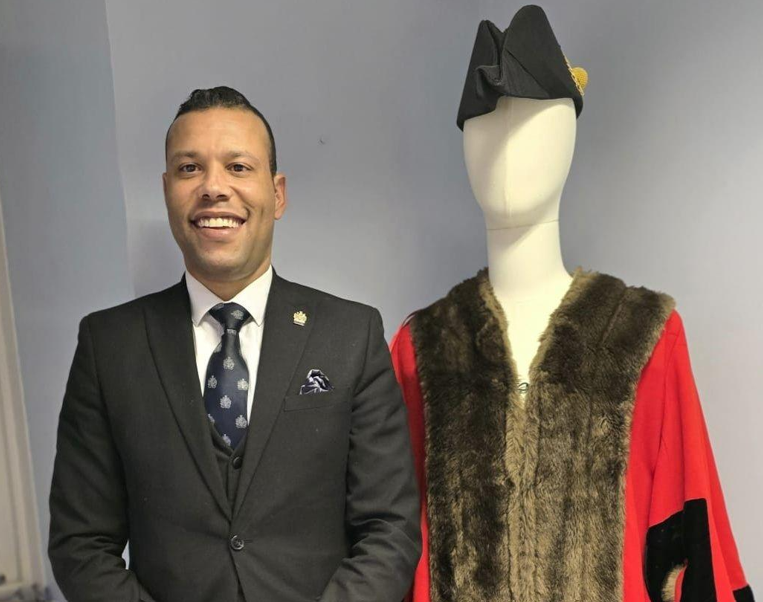
A PEMBROKESHIRE town council will soon have its first-ever person of colour as mayor, and its youngest mayor in a century.
Haverfordwest Town Councillor Randell Iziah Thomas-Turner, aged 37, is to become mayor this May.
Cllr Turner said: “Tonight [March 19], I had the honour of accepting the nomination as mayor-elect — a moment that will forever stay with me.
“In doing so, I am humbled to be making history as the first mayor of colour in Haverfordwest and the youngest mayor in a century. This is not just my achievement, it belongs to every person who believes in progress, representation, and the power of community. This is a new chapter for our town — one built on unity, opportunity, and hope.
“My mayor-making will take place this May, and I cannot wait to officially step into the role and begin serving the people of Haverfordwest with pride, passion, and purpose. Haverfordwest is the best in the West — and together, we are just getting started.

“Diversity is not a challenge to overcome, but a strength to embrace. When people from different backgrounds, experiences, and perspectives come together with respect and openness, we unlock new ideas, stronger solutions, and deeper understanding.”
It’s a double celebration for the Thomas-Turner family.
Wife, and fellow town councillor, Dani, has been voted as sheriff of the town for the second-year-running, the first woman to serve as sheriff for two consecutive years.
“The coming civic year will be one to watch as my husband Councillor Randell Izaiah Thomas-Turner is becoming the first mayor of colour in Haverfordwest’s history,” said Cllr Dani Thomas-Turner, adding: “It’s going to be a year of history and memory making for sure.”



Entertainment6 hours ago
Tenby steams up in spectacular style as crowds flock to festival
Colourful parade, towering creations and Victorian flair bring town centre to life TENBY was transformed into a vibrant Victorian fantasy...

Crime1 day ago
Publican jailed for six years for supplying cocaine and cannabis
Milford Haven man sentenced at Swansea Crown Court following drug dealing operation A MILFORD HAVEN publican has been jailed for...

Local Government1 day ago
Poverty summit highlights support efforts across Pembrokeshire
A SUMMIT bringing together key organisations from across Pembrokeshire has highlighted both the scale of local poverty and the work...


Education2 days ago
Milford Haven school plans unveiled but funding not yet secured
PLANS for a new £100 million school in Milford Haven have been unveiled, but the project has not yet secured...


News2 days ago
Council unveils plans for new state-of-the-art secondary school in Milford Haven
PEMBROKESHIRE COUNTY COUNCIL has revealed plans for a new state-of-the-art school in Milford Haven, promising modern, inspiring learning spaces for...


Health2 days ago
NHS waiting list falls — but cancer delays and diagnostic backlog worsen
Record progress claimed by Welsh Government as critics warn key targets are still being missed THE NHS in Wales has...


Crime3 days ago
Rapist jailed after ‘abhorrent’ attacks on woman and children
Haverfordwest man told police “women won’t have sex without force” A HAVERFORDWEST man who raped a woman and a young...


News4 days ago
Reform secures first Pembrokeshire councillor in Hakin by-election win
Late Reform candidate takes seat as independent surge and Labour withdrawal shape contest REFORM UK candidate Scott Thorley has won...

News4 days ago
Scott Thorley elected as Pembrokeshire’s first Reform councillor
REFORM UK candidate Scott Thorley has won the Hakin by-election after securing 179 votes. The full result is as follows:...


News4 days ago
Police confirm man has died after being recovered from River Cleddau
Major emergency response in town centre after concerns raised for man in water A MAN has died after being recovered...
-

 News6 days ago
Fishguard linked to allegations in Many Tears Animal Rescue investigation
-

 News4 days ago
Emergency services flood Haverfordwest after reports of person in river
-

 Crime3 days ago
Mother given community order after admitting child cruelty offence
-
Health2 days ago
NHS waiting list falls — but cancer delays and diagnostic backlog worsen
-
 Crime6 days ago
Man cleared of sexual assault allegation after magistrates rule no case to answer
-

 international news6 days ago
UK considers military options as pressure grows to secure Strait of Hormuz
-
 News4 days ago
Senedd votes to ban Greyhound racing in Wales to protect animal welfare
-
 News4 days ago
Senedd vote to ban greyhound racing hailed as ‘landmark moment’ by charities