


Community
Alert system set to be introduced for flood-hit Tenby road


A CALL for a road closure alert system at a regularly flood-hit road at the entrance to Tenby where the existing sign warnings “don’t like operating when it’s wet” has been backed by senior councillors.
Back at the December meeting of Pembrokeshire County Council, Cllr Rhys Jordan had said: “The B4318 at Gumfreston is prone to persistent flooding during adverse weather conditions, leading to road closures that disrupt travel and pose safety risks for residents and motorists.
“Currently, closures are not effectively communicated to residents, causing inconvenience, delays, and potential hazards. An efficient alert system would provide timely information to residents, allowing them to plan alternative routes and ensuring safety.”
At the October meeting Cllr Jordan had revealed the existing flood warning system signs “don’t like operating when its wet”.
The February meeting of the council’s Cabinet received a notice of motion by Cllr Jordan calling for a flood alert system for residents warning of any road closures of the B4318, which was recommended for approval.

In his notice of motion, Cllr Jordan said the flood warning signs, “continue to malfunction, leaving residents uninformed and ill-prepared for closures,” despite him raising the issue at full council on two occasions.
His call said: “The technology required to address this issue already exists within Pembrokeshire County Council. For example, the Cleddau Bridge successfully uses an alert system to inform residents and motorists of closures. A similar system should be implemented for the B4318 at Gumfreston.”
A report for members said a 2011 feasibility report to realign or raise the road had estimated the costs would be £4.5m at the time, now raised to £6m, the budget at the time used to install the flood monitoring and warning system.
The report added: “Recently, the warning sign system was subject to a hostile cyber-attack and whilst this has now been resolved, the signs are not currently being operated automatically, but are being remotely controlled from the Cleddau Bridge office when required.

“However, the Highways teams are working with suppliers to improve reliability and to install new water depth sensors which will allow the system to be restored to automatic operation once more.”
Referencing the current Cleddau Bridge system, the report said it would be feasible to have a similar system for the B4318 road at Gumfreston, with a cost of some £2,000 for the works.
Speaking at the February 10 meeting, Cllr Jordan said there was a need for “a long-term infrastructure solution” to address the flooding issues, but said the recommendation was a “pragmatic” improvement given the council’s limited resources.

“But what I am not happy is with the length of time this has taken, it’s a step in the right direction but disappointing that it has taken a year of me asking and many years of people suffering to get to the situation today.
“It will not solve the problem but at least will provide some mitigation. The residents deserve better planning and better outcomes.”
Cabinet member for Residents’ Services Cllr Rhys Sinnett said the council “acknowledge a long-term sustainable solution would be the best outcome,” but was pleased there was “a sense of pragmatism” in the proposal.
The proposal was unanimously supported by Cabinet members.



SAMUEL Kurtz MS has welcomed more than £4.3 million in National Lottery funding awarded to community projects across Carmarthen West and South Pembrokeshire since 2021.
Figures released by The National Lottery Community Fund show that £4,318,484 has been distributed through 122 grants in the constituency since the 2021/22 financial year, the same year Mr Kurtz was elected.
The funding has supported a wide range of grassroots charities, voluntary organisations and community groups through programmes including National Lottery Awards for All, offering grants of up to £20,000, and People and Places, which provides larger awards of up to £500,000.
Projects backed locally include mental health support for young people, environmental and sustainability initiatives, community workshops, outdoor wellbeing activities, support for vulnerable adults, and programmes aimed at building skills and confidence.
Among the organisations to benefit is Pembrokeshire Coast National Park Authority, which received £343,584 for its Routes to Discovery project, helping improve mental and physical wellbeing through accessible outdoor activities.

St Davids Diocesan Council for Social Responsibility was awarded £398,078 to deliver its Plant Dewi: Strengthening our Communities initiative, supporting families and local groups.
Other recipients include The VC Gallery, Redberth Croft CIC, The Tenby Project CIC and Neptune’s Army of Rubbish Cleaners, with funding supporting projects ranging from food initiatives and nature-based wellbeing to volunteering and environmental action.
Mr Kurtz said: “Community groups and charities across Carmarthen West and South Pembrokeshire do incredible work supporting people and strengthening local communities.
“It is fantastic to see more than £4.3 million of National Lottery funding invested in projects that are improving wellbeing, tackling isolation and creating opportunities for people of all ages during my time in office.
“The voluntary sector plays a vital role in our area, and this funding is helping organisations deliver projects that bring people together and make a real difference to people’s lives.”
The National Lottery Community Fund is the largest funder of community activity in Wales, supporting initiatives that bring communities together, promote environmental sustainability, help children and young people thrive, and improve health and wellbeing.
Organisations across Wales can apply for funding through the Awards for All and People and Places programmes to support projects that matter most to their communities.

Further information is available on The National Lottery Community Fund website.
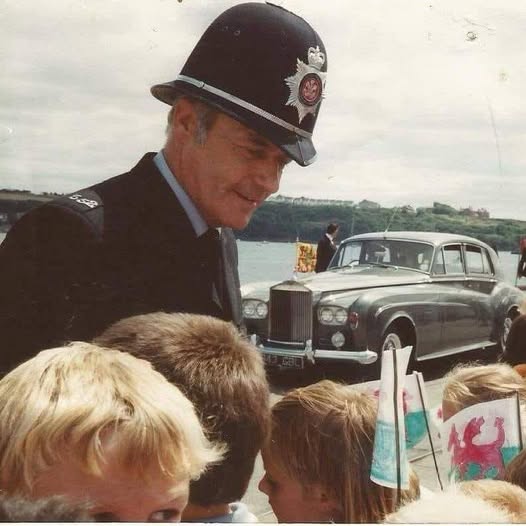
Tributes pour in for former Neyland officer remembered as a “true gentleman” and “local legend”
A FORMER Neyland police officer remembered as a “true gentleman” and “local legend” has died at the age of 83, prompting an outpouring of tributes from across Pembrokeshire.
Louis Knight, of Neyland Hill, Neyland, passed away peacefully at Withybush Hospital, Haverfordwest on Thursday (Mar 5).
Mr Knight, who served as a police officer in the area for many years, was a familiar and respected figure in Neyland and beyond. In the hours following the announcement of his death, hundreds of messages flooded social media, painting a picture of a man whose impact stretched far beyond his time in uniform.
Many described him simply as “one of the best,” while others called him “a proper local legend” and “a tremendous police officer.”
One resident wrote: “A face and name I will never forget from my youth.”

Another said: “He was a tremendous police officer… a kick up the backside and a word was enough. It stayed with you.”
Others remembered his warmth and humour away from policing.
“He always had a story to tell on the way home in the taxi,” one tribute read, while another added: “Every time you asked him how he was, the answer was always ‘bloody marvellous.’”
Many spoke of his kindness and the time he gave to people.
“Louis was one of the most kindest gentlemen around. Always made time to chat,” one message said.
Another added: “Neyland won’t be the same again.”
While some reflected fondly on a different era of policing, what came through most strongly was the respect Mr Knight earned within his community — something repeatedly highlighted in tributes from those who knew him as children, neighbours, and later as adults.

Mr Knight was the beloved husband of the late Angela, devoted father of Andrew and Alison, and adored father-in-law of Frank. He was also a loving grandfather to Michelle and Laura, and a cherished brother of Jennifer, Charles and Richard.
His family said he was loved dearly and will be greatly missed by all who knew him.
The funeral service will take place on Wednesday (Apr 1) at 11:30am at Parc Gwyn Crematorium, Narberth.
Family flowers only. Donations in memory of Louis, if desired, are for Ward 8 at Withybush Hospital and may be sent directly to the ward at SA61 2PZ.
All enquiries to Tom Newing & Sons Ltd, Funeral Directors, Dartmouth Street, Milford Haven (01646 693180).
Photo caption:
PC Louis Knight pictured during a Royal Visit, engaging with local children — a familiar sight in Neyland for many years (Pic: Supplied).
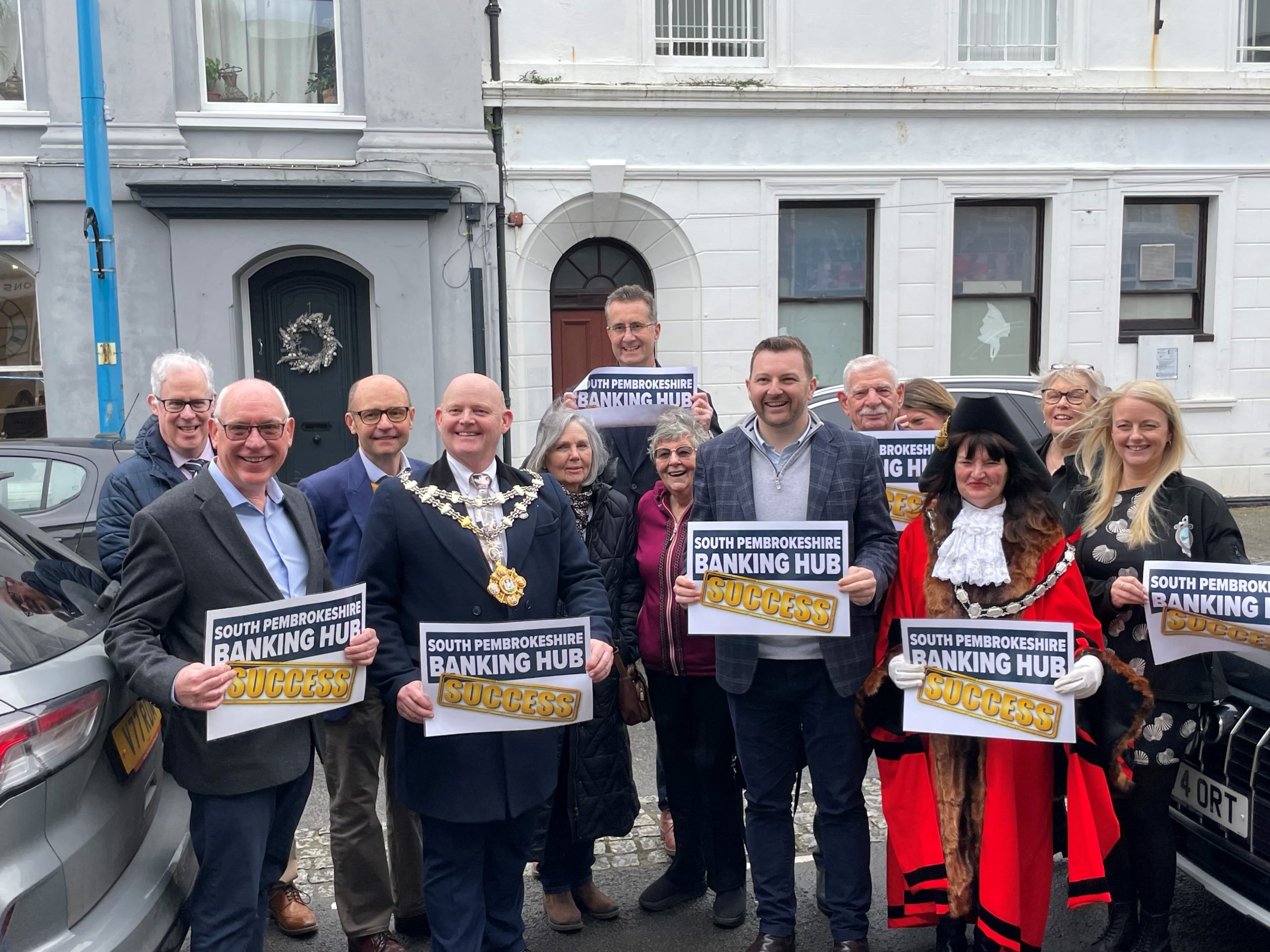
PLANS to deliver a new Banking Hub in Pembroke Dock are moving forward, following a key meeting between local representatives and Cash Access UK.
Samuel Kurtz MS met with Cash Access UK Regional Manager Debbie Crow on Wednesday (Mar 19), alongside community representatives, to discuss the next steps after confirmation last week that the campaign for a hub had been successful.
The new facility is expected to be up and running within 12 weeks, providing vital access to banking services for residents, businesses and community groups across Pembroke Dock and the wider South Pembrokeshire area.

Banking Hubs offer a shared space where customers can carry out everyday transactions such as cash withdrawals and deposits, as well as access face-to-face support from individual banks on designated days.
The development follows the closure of the last bank branch in Pembroke Dock, which had raised concerns about access to essential financial services in the area. Samuel Kurtz has been working with LINK, local businesses and community groups to secure the new hub.
Discussions at the meeting focused on identifying a suitable location and ensuring the service meets the needs of those who continue to rely heavily on cash.
Following strong public interest in the project, Mr Kurtz has confirmed he will hold a series of drop-in sessions in Pembroke and Pembroke Dock to update residents and answer questions.
Samuel Kurtz MS said: “Last week’s news that the campaign for a Banking Hub in Pembroke Dock had been successful was incredibly welcome for our community.
“Access to cash and face-to-face banking services remains vital for many residents, charities and local businesses across the area. I have already been inundated with questions from people wanting to know what happens next.

“That’s why I will be holding drop-in sessions in both Pembroke and Pembroke Dock so residents and businesses can come along, ask questions and hear the latest updates.
“I was pleased to meet with Cash Access UK’s Regional Manager to discuss the next steps, and I will continue working closely with local stakeholders to help ensure the hub is delivered as quickly as possible.”
Further details about the drop-in sessions are expected to be announced shortly.



Crime14 hours ago
Publican jailed for six years for supplying cocaine and cannabis
Milford Haven man sentenced at Swansea Crown Court following drug dealing operation A MILFORD HAVEN publican has been jailed for...


Local Government16 hours ago
Poverty summit highlights support efforts across Pembrokeshire
A SUMMIT bringing together key organisations from across Pembrokeshire has highlighted both the scale of local poverty and the work...


Education2 days ago
Milford Haven school plans unveiled but funding not yet secured
PLANS for a new £100 million school in Milford Haven have been unveiled, but the project has not yet secured...


News2 days ago
Council unveils plans for new state-of-the-art secondary school in Milford Haven
PEMBROKESHIRE COUNTY COUNCIL has revealed plans for a new state-of-the-art school in Milford Haven, promising modern, inspiring learning spaces for...


Health2 days ago
NHS waiting list falls — but cancer delays and diagnostic backlog worsen
Record progress claimed by Welsh Government as critics warn key targets are still being missed THE NHS in Wales has...


Crime3 days ago
Rapist jailed after ‘abhorrent’ attacks on woman and children
Haverfordwest man told police “women won’t have sex without force” A HAVERFORDWEST man who raped a woman and a young...


News3 days ago
Reform secures first Pembrokeshire councillor in Hakin by-election win
Late Reform candidate takes seat as independent surge and Labour withdrawal shape contest REFORM UK candidate Scott Thorley has won...


News3 days ago
Scott Thorley elected as Pembrokeshire’s first Reform councillor
REFORM UK candidate Scott Thorley has won the Hakin by-election after securing 179 votes. The full result is as follows:...


News4 days ago
Police confirm man has died after being recovered from River Cleddau
Major emergency response in town centre after concerns raised for man in water A MAN has died after being recovered...


Community4 days ago
Davies and Kurtz urge groups to seek employability funding
Community organisations in Pembrokeshire encouraged to apply for new grants supporting skills and job access LOCAL Senedd Members Samuel Kurtz...
-

 News7 days ago
Rayner and Lammy visit Wales to discuss justice and community safety
-

 News6 days ago
Fishguard linked to allegations in Many Tears Animal Rescue investigation
-

 News4 days ago
Emergency services flood Haverfordwest after reports of person in river
-
 Local Government7 days ago
Investigation confirmed after inspectors visit Many Tears Animal Rescue
-

 Crime3 days ago
Mother given community order after admitting child cruelty offence
-

 Business7 days ago
Legal action backed in case over development at Dinas Cross
-

 Business7 days ago
Oil firm praised for putting customers first during price surge
-

 Community7 days ago
Town hall takeover plan questioned as cost figures conflict