


News
The Sea Empress Disaster: Remembering the catastrophe 29 years on


IT WAS exactly 29 years ago. On the evening of February 15, 1996, at approximately 8:07pm, the oil tanker Sea Empress ran aground on rocks near St. Ann’s Head at the entrance to the Milford Haven Waterway in Pembrokeshire. The vessel, en route to the Texaco oil refinery in Milford Haven, was carrying over 130,000 tonnes of Forties blend crude oil. The incident led to one of Britain’s worst environmental disasters.
A catastrophic collision
As the Sea Empress navigated the narrow channel against an outgoing tide, strong currents pushed the vessel off course, causing it to collide with mid-channel rocks. The initial impact released approximately 2,500 tonnes of crude oil into the sea. Over the next six days, severe weather conditions and missteps in salvage operations hindered efforts to refloat and stabilize the tanker. The vessel grounded and refloated multiple times, ultimately spilling around 72,000 tonnes of crude oil and 370 tonnes of heavy fuel oil into the surrounding waters.

Environmental devastation
The spill had catastrophic consequences, particularly for the ecologically sensitive Pembrokeshire Coast National Park. More than 200 kilometers of coastline were contaminated, impacting numerous habitats and species.



Wildlife impact
Though the spill occurred in late winter before many migratory species had returned, resident wildlife suffered extensively. Thousands of seabirds, including guillemots, razorbills, and the common scoter duck, were found dead or severely oiled. Estimates suggest that approximately 5,000 of the 15,000 common scoters in the area perished.
Marine life was also heavily affected. Intertidal species such as seaweeds, invertebrates, and rock pool fish experienced significant mortality. Grey seals inhabit the region, but their population suffered minimal direct impact due to the timing of the spill.


Economic and social repercussions
The disaster had profound economic consequences for local communities. A fishing ban was promptly imposed along the affected coastlines, suspending operations for fisheries targeting species like shellfish and lobsters. The ban lasted several months, resulting in substantial financial losses. While compensation schemes were introduced, many affected individuals felt the payouts were insufficient.
Tourism, a vital part of Pembrokeshire’s economy, also suffered. The spill occurred just before the Easter holiday season, leading to mass cancellations and a decline in visitor numbers. Popular beaches were covered in oil deposits, deterring tourists and impacting businesses reliant on seasonal trade.
Mobilization of cleanup efforts


In response to the crisis, a massive cleanup operation was launched, involving over a thousand individuals, including local volunteers, environmental organizations, and government agencies. The immediate priority was rescuing and rehabilitating oiled wildlife. Specialized facilities were established to clean affected birds, though survival rates post-release remained low.
Shoreline cleanup efforts presented significant challenges. Teams employed various methods, including manual oil removal and chemical dispersants designed to break down the crude. While dispersants proved effective in some cases, concerns arose about their long-term environmental impact. Most visible oil was removed from beaches within six weeks, but cleanup efforts in remote areas continued for over a year.
Investigations and accountability
Subsequent investigations identified pilot error as a primary cause, with misjudgments regarding tidal streams and currents leading to the initial grounding. The report also highlighted deficiencies in the port’s navigational aids and emergency response protocols. As a result, the Milford Haven Port Authority faced scrutiny and was fined £4 million for its role in the disaster.
Long-term environmental recovery
Monitoring of the affected areas revealed that natural recovery was underway, aided by the region’s dynamic tidal systems. By 2001, studies indicated significant habitat restoration. However, certain species, particularly those with longer lifespans and slower reproductive rates, continued to show reduced population numbers, underscoring the prolonged effects of oil spills on biodiversity.
Lessons learned
The Sea Empress disaster prompted significant reforms in maritime safety and environmental protection within the UK, including:
- Enhanced Navigational Protocols: Improved pilot training and navigational aids to prevent future groundings.
- Regulatory Changes: Introduction of the Port Marine Safety Code, establishing national port safety standards.
- Environmental Safeguards: Strengthened oil spill contingency plans and increased investment in spill response technologies.
The Sea Empress disaster remains a stark reminder of the fragile balance between industrial activities and environmental preservation. It underscores the need for stringent safety measures, rigorous regulatory oversight, and proactive environmental protection to prevent similar catastrophes in the future.













PASSENGERS at Tenby railway station are set to benefit from step-free access as a major £8.3 million upgrade moves into its next phase.
Network Rail, working with contractor AmcoGiffen, is delivering the scheme as part of the UK Government’s Access for All programme. The project will introduce a new footbridge with lifts, providing full step-free access between both platforms.

Bridge removed as work progresses
Earlier this month, engineers removed the station’s existing footbridge using 220-tonne and 60-tonne cranes. A temporary walkway has now been installed to allow passengers to continue moving between platforms while construction continues.
The milestone was marked by a visit from local schoolchildren, who were given the chance to watch the crane operation and learn more about careers in engineering.
Complex infrastructure work underway
Behind the scenes, teams have carried out significant work to relocate and recommission signalling and telecommunications equipment. New ducting has also been installed, and cabling rerouted to support the upgraded infrastructure.
Work will continue over the coming months, with the new accessible bridge and lifts expected to be completed in autumn 2026.

Improving access for all
The Tenby project forms part of a wider national programme to improve accessibility across the rail network. Since its launch in 2006, the Access for All scheme has upgraded more than 200 stations across Britain.
Theo Smith, Senior Portfolio Manager at Network Rail Wales and Borders said: “This is an important milestone for Tenby and the local community, bringing us closer to a station that everyone can use with confidence.
“We’d like to thank passengers and residents for their patience as we continue these major improvements.”
James Gough, Customer Operations Director at Transport for Wales added: “It’s great to see real progress being made at Tenby. This investment will make a lasting difference for both local people and visitors.”

TAXI passengers in Milford Haven are facing a sudden jump in fares, as drivers increasingly switch on their meters and charge full council-approved rates.
One Herald reader said a short return trip from Milford Haven to Neyland cost £30 — around double what he expected to pay.
But drivers insist the prices are not new — they are simply the official tariff now being applied.
Under Pembrokeshire County Council rules, the standard daytime fare starts at £4 for the first mile (£5 after 6pm), rising by around £3 per mile thereafter. Waiting time is also charged, meaning even short return journeys can quickly add up.
Higher rates apply in the evenings, at weekends and on bank holidays.

End of the £3 taxi
Milford Haven has long been known for cheap taxis, with short in-town journeys often costing as little as £3 — far below official rates.
That was down to competition, older vehicles, and the need to keep prices low in a town where many rely on affordable transport.
Drivers say those days are now over.
One local driver told The Herald: “People got used to cheap fares, but that was never the real price. Now we have to use the meter or we’re losing money.”
Fuel costs biting
Most taxis run on diesel, now around 170p per litre locally. For drivers covering long distances each day, the increase has hit hard.
Global tensions in the Middle East have pushed up oil prices, feeding directly into higher fuel costs in the UK.
With fare increases requiring a lengthy council process, many drivers say they have no option but to charge the full tariff.

Vulnerable hit hardest
The change is being felt most by those who rely on taxis the most.
Elderly residents, people on low incomes and those without access to a car are now facing higher everyday travel costs.
There has been no recent increase in Pembrokeshire’s official taxi fares, which have remained broadly unchanged since 2022.
The difference is simple: drivers are now charging them.
As one put it: “We’re not putting prices up — we’re just finally charging what we’re supposed to be charging.”

Support for bereaved children among local causes chosen in Pembroke Dock
LIDL colleagues in Pembroke Dock have chosen a Pembrokeshire children’s bereavement charity to receive a community donation as part of the retailer’s expanded investment programme across Wales.
Staff at the store selected Sandy Bear Children’s Bereavement Charity as one of two local organisations to receive a £500 donation. The charity provides specialist support to children and young people up to the age of 25, helping them cope with loss and rebuild confidence.
Sandy Bear was chosen in recognition of its work supporting bereaved families across Pembrokeshire, including more than 20 families in the Pembroke area.
Ben Rees, shift manager at the Pembroke Dock store, said the scheme allows staff to support organisations making a real difference locally.
Martin Jones, business development manager at Sandy Bear, said: “Behind every child we support is a story of loss that no family should have to face alone. Support from local businesses like Lidl means we can continue to be there when families need us most, helping children understand their grief and find a way forward.”
Colleagues also selected Pembrokeshire and Carmarthen Mind, which provides mental health support through community programmes and wellbeing initiatives across the region.
The donations form part of Lidl GB’s wider community investment programme, which has supported more than 145 causes in Wales since 2022, contributing over £188,000 to local charities.
Alongside financial donations, charities linked to Lidl stores also receive support through the retailer’s ‘Feed it Back’ scheme, run in partnership with Neighbourly. The initiative redistributes surplus food, providing the equivalent of more than 2.3 million meals in Wales since 2016.
Lidl GB chief executive Ryan McDonnell said the programme empowers staff to support causes that matter most to their communities.

The retailer says its wider community work in Wales includes investment in initiatives such as its Foodies programme, which promotes healthy eating in schools and has reached more than 25,000 children across the country.

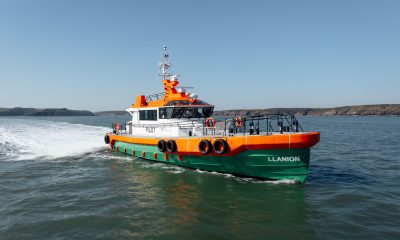

Business4 hours ago
New pilot vessel Llanion arrives at Milford Haven
State-of-the-art 22-metre craft marks reset after £3.6m pilot boat controversy THE PORT OF MILFORD HAVEN has taken delivery of a...


Business1 day ago
Could Primark be coming to Haverfordwest? Major retailer in talks for former Wilko site
Council confirms advanced discussions as speculation grows over high street boost HAVERFORDWEST could soon see a major high street revival,...


Business1 day ago
Rail investment ‘could unlock 40,000 jobs and £11bn for Wales’ says new report
RAILWAY stations across Wales could help unlock around 40,000 jobs and more than £11 billion for the economy by 2036,...


Local Government1 day ago
Milford Haven set for £200m investment with schools, leisure centre and rail upgrade
Council outlines major plans for town with backing from Welsh Government MILFORD HAVEN is set for a major transformation with...


Community2 days ago
Broad Haven volunteers secure ‘national asset’ status for nature reserve
A SMALL stretch of woodland and former opencast coal mine has been transformed into a nationally recognised biodiversity site, in...


Entertainment3 days ago
Tenby steams up in spectacular style as crowds flock to festival
Colourful parade, towering creations and Victorian flair bring town centre to life TENBY was transformed into a vibrant Victorian fantasy...


Crime4 days ago
Publican jailed for six years for supplying cocaine and cannabis
Milford Haven man sentenced at Swansea Crown Court following drug dealing operation A MILFORD HAVEN publican has been jailed for...


Local Government4 days ago
Poverty summit highlights support efforts across Pembrokeshire
A SUMMIT bringing together key organisations from across Pembrokeshire has highlighted both the scale of local poverty and the work...


Education5 days ago
Milford Haven school plans unveiled but funding not yet secured
PLANS for a new £100 million school in Milford Haven have been unveiled, but the project has not yet secured...


News5 days ago
Council unveils plans for new state-of-the-art secondary school in Milford Haven
PEMBROKESHIRE COUNTY COUNCIL has revealed plans for a new state-of-the-art school in Milford Haven, promising modern, inspiring learning spaces for...
-

 Crime6 days ago
Mother given community order after admitting child cruelty offence
-

 Health5 days ago
NHS waiting list falls — but cancer delays and diagnostic backlog worsen
-

 News7 days ago
Senedd vote to ban greyhound racing hailed as ‘landmark moment’ by charities
-

 News7 days ago
Senedd votes to ban Greyhound racing in Wales to protect animal welfare
-

 News6 days ago
Reform secures first Pembrokeshire councillor in Hakin by-election win
-

 Crime6 days ago
Woman stole from pharmacy despite ban, court hears
-

 News7 days ago
Could Pembrokeshire hold the key to St Patrick’s lost birthplace?
-

 Crime5 days ago
Illegal workers found at Cardigan takeaway after immigration raid