


News
Shadow Minister speaks



Owen Smith MP: We must try and maintain high quality jobs
AFTER the shock news of the collapse of the Murco takeover deal, Shadow Secretary of State for Wales joined local councillor Paul Miller to meet with Herald Deputy Editor Jon Coles and discuss the buyout’s traumatic failure. With rumour and counter-rumour swirling about the cause for the Klesch Group’s abortive acquisition of the refinery, we asked Owen Smith about what had gone wrong. He told us: “My understanding is that this is a problem that has occurred on behalf of the buyer in this group, Klesch Group. The buyer couldn’t come through with a deal now.
That’s what the unions at the plant told us; that’s what the management at the plant we met today told us at the plant. I will take their word that is the case.” Rejecting ideas that either the UK or Welsh Governments were at fault, Owen Smith pointed out the generous funding arrangements that both governments had made and told us: “Governments at both ends of the M4 have been doing all they could to make sure that the funding that they were going to provide was in place We will want to get to the bottom of what went wrong and I am going to be writing to David Cameron and to Stephen Crabb as to why Klesch didn’t come through.”
Acknowledging the shattering effect on the economy, Owen Smith said: “The deal’s failure is a devastating blow for this community. These are high quality jobs, well-paying jobs and they will not be replaced easily. There are wider implications for the entire Pembrokeshire economy and the West Wales economy.” Owen Smith was hopeful that all parties would strive to put steps in place to soften the impact of the blow: “The Welsh Government – Carwyn Jones, Edwina Hart and others – will absolutely put their shoulder into the wheel.
They will be under no illusions as to how important this closure would be. They know precisely the nature of the economy in Pembrokeshire and I they can be relied on to do or within their power to make sure whatever happens. “We must try and maintain high quality jobs in this area. Westminster has to play its part. The Westminster parliament is a government for Pembrokeshire as well in London, and we need to make sure that they understand their role. A very large amount of money was supposed to come from the government in Westminster to support the takeover bid. We now to make sure that the UK Government plays a full part not only in supporting those workers who may lose their jobs, but also trying to replace those jobs.
Warming to his theme, he continued: “We need to make sure that we pull out all the stops on this because, I say again: these jobs are so important for this community; established jobs; high skilled jobs; high paid jobs. Whether the government is Labour or Tory, we’ve got to do all we can to try and make sure that the bits of Britain at the fringes, a long way from London and the south-east, don’t have to see our children, our sons and daughters leave to find good work when it could be right here, on our doorsteps.” On the broader elements of how to sustain jobs in primary industries, Owen Smith was clear as to where he saw Labour’s priorities lying: “There are key things that governments need to do in order to support industry especially in more peripheral parts of Britain.

“The next Labour government, in my view, will have to have a really solid infrastructure plan, but more importantly a very strong industrial strategy. I think you could argue that successive governments have not had a powerful enough industrial strategy, especially for key industries like refining, steel and chemicals. We need to get back to that. We need to get back to supporting manufacturing jobs – jobs in high skilled, perhaps old, but still vital industries. Those are the jobs that we have got in communities like Milford Haven.
They’re some of the jobs we’ve got in steel producing areas of Britain and they are still going to be hugely important part of our industrial mix for the next twenty years, more hopefully. “We need to be looking into the jobs for the future but we also need to remember what we have got now and what governments can do right now to make sure that we maintain and sustain those industries and those jobs.” Paul Miller put a personal perspective on the collapse of the refinery deal: “My family’s been supported by that particular site for the last few decades. My brother still works there; so I know just how important that site is and just how difficult a period it is for the families working there.
“I want to make absolutely sure that everyone on the Labour front bench being in Cardiff or Westminster are under no illusions of how important this site is, how important those jobs are and how difficult a period this is going to be for the Pembrokeshire economy. No stone must be left unturned in finding the solution for this particular problem. “I’m delighted that Owen accepted the invitation to come to see what was happening on the ground. We needed to hear from management and from staff about what’s going on and if there’s anything at all we can do to help them.”

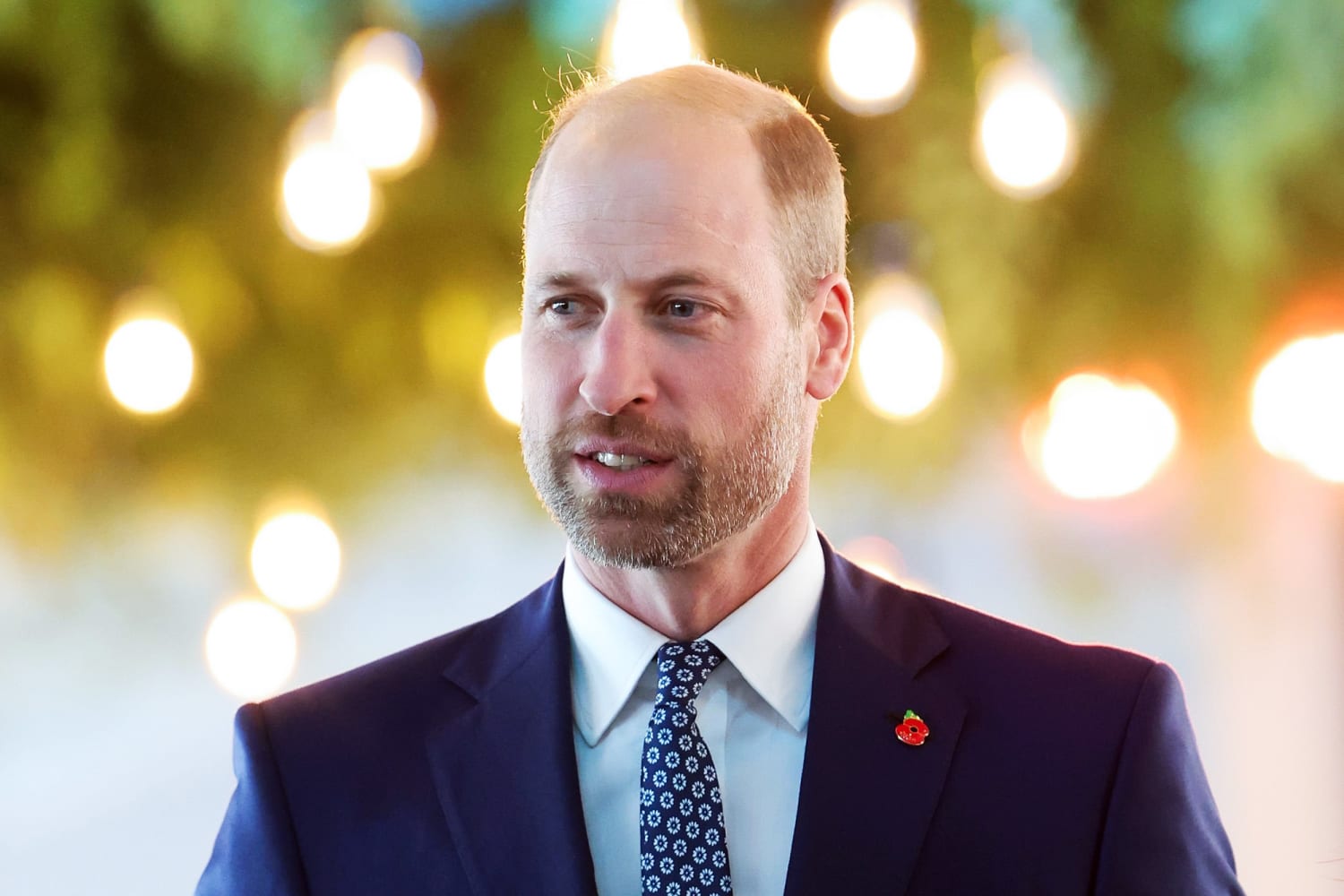
Energy, trade and human rights concerns collide as UK deploys monarchy’s ‘soft power’
PRINCE WILLIAM will step into one of the most politically sensitive overseas trips of his public life this week as he travels to Saudi Arabia at the request of the UK Government.
Unlike recent royal visits to Estonia, Poland or South Africa, this tour carries significant diplomatic weight, placing the Prince of Wales at the centre of a complex balancing act between strengthening economic ties and confronting a deeply controversial human rights record.
Sources close to the Palace say William “didn’t flinch” when asked to go, viewing such duties as part of his responsibility as heir to the throne.
But Saudi Arabia presents challenges unlike almost anywhere else on the royal calendar.
A country in transition
The visit will focus on energy transition and young people, two areas the kingdom is promoting heavily as it attempts to diversify its oil-dependent economy.

In recent years Saudi Arabia has staged major sporting and cultural events, including Formula One races, international film festivals and high-profile entertainment shows. The country will also host the men’s football World Cup in 2034.
Officials argue this signals modernisation and openness.
Critics say it is “sportswashing” — using global events to distract from repression.
Human rights organisations including Amnesty International continue to raise concerns over restrictions on free speech, criminalisation of same-sex relationships and harsh penalties for dissent.

While reforms have allowed women to drive and increased participation in public life, significant legal and social limits remain.
Meeting a controversial leader
Central to the trip will be talks with Mohammed bin Salman, widely known as MBS, the kingdom’s de facto ruler.
The crown prince is credited with pushing economic reforms but remains internationally divisive.

A US intelligence report concluded he approved the 2018 killing of journalist Jamal Khashoggi inside the Saudi consulate in Istanbul — an allegation he denies and Saudi Arabia rejects.
Whether William raises such issues privately is unlikely to be disclosed. Kensington Palace does not comment on confidential conversations.
However, the prince will be briefed extensively by the Foreign Office and the British Embassy before any meetings.
Soft power diplomacy
Government insiders describe William as a key diplomatic asset.
One source said the monarchy acts as a “secret weapon”, able to open doors politicians sometimes cannot.
This form of so-called soft power has long been part of the Royal Family’s overseas role — building relationships first, leaving governments to handle the harder negotiations.
Dr Neil Quilliam of Chatham House says Saudi leaders value high-level recognition from Britain.
“Deploying Prince William sends a signal that the UK takes the relationship seriously,” he said.
Energy cooperation and investment are expected to dominate talks, particularly as Britain seeks new partners during the global shift away from fossil fuels.
Echoes of the past
The visit also reflects longstanding links between the two royal families.
King Charles III has travelled to Saudi Arabia numerous times over the decades and is said to maintain warm relations with senior figures there.
William is now expected to assume a more prominent global role as he prepares for future kingship.
A delicate balancing act
For many observers, images of handshakes between William and MBS will be uncomfortable.
Yet world leaders continue to engage with Riyadh, citing its strategic and economic importance.
The prince’s task is unlikely to involve grand statements. Instead, it will be quiet diplomacy — maintaining dialogue while representing British values.
It is a careful, sometimes uneasy role.
But it is one the monarchy has long performed: building bridges in places where politics alone struggles to tread.

Survey underway as resident explores sites and funding for year-round skating facility
PLANS to bring a permanent ice skating rink to Pembrokeshire are gathering momentum after a local resident began talks with council officers and launched a public survey to test demand.

Jemma Davies, from Newgale, says the county is missing out on a major leisure attraction that could benefit families, schools and visitors while creating new jobs.
At present, the nearest full-time rink for Pembrokeshire residents is in Cardiff — a round trip of several hours — making regular skating sessions difficult for many families.
She believes a local facility could change that.
“I think it would give people something completely different to do here,” she said. “It’s exercise, it’s social, and it’s something children could take up after school instead of having to travel out of the county.”
Early talks with council
Jemma has already met officers from Pembrokeshire County Council’s sport and recreation department to discuss whether the idea could be viable.
She is also hoping to approach Sport Wales to explore possible funding streams and support.
To measure interest, she has set up an online questionnaire asking residents whether they would use an ice rink and how far they would be willing to travel.
She said early responses have been positive, with families, young people and skating enthusiasts backing the idea.
Reusing empty buildings
Rather than constructing a new arena, Jemma is investigating whether vacant premises could be converted, reducing costs.
Potential options include a former retail unit in Haverfordwest or a large hangar-style building near existing leisure attractions.
She said: “If we can reuse a building that’s already there, it keeps the costs down and brings life back into empty spaces at the same time.”

As part of her research, she plans to visit Vindico Arena to better understand the practicalities of running a rink.
More than just skating
Beyond public sessions, she believes a rink could host school trips, birthday parties, events and competitions, while encouraging young people to take up winter sports.
“Pembrokeshire has produced plenty of sporting talent over the years,” she said. “There’s no reason we couldn’t develop figure skaters or ice hockey players here too.”
Residents who want to share their views can complete the online survey.
Cover image:
Jemma Davies: Hopes to bring a permanent ice rink to Pembrokeshire (Pic: Supplied).

A GREETING card meant to celebrate St David’s Day has become an accidental comedy hit after shoppers spotted its Welsh message makes absolutely no sense – and, even better, it is still on sale.
The card, sold by online retailer Moonpig, reads: “Hapus Dewi Sant Dydd.”
Unfortunately for the designers, that translates back into something closer to “Happy David Saint Day” or “Day Saint David Happy” rather than the correct Welsh phrase, “Dydd Dewi Sant Hapus.”
In other words, the words are right – just in completely the wrong order.
The mistake was first highlighted by Nation.Cymru, prompting plenty of amusement online, with some joking it looked like the result of a lazy copy-and-paste from an automatic translator.
The Herald decided to check for itself.
And yes – as of today – the card is still live and available to buy on Moonpig’s website.
Customers can personalise it and add it to their basket just like any other design, with no sign the message has been corrected.
One reader joked: “It’s like they put the words in a hat and picked them out at random.”
Another described it as “peak AI Welsh”.
For Welsh speakers, the error is immediately obvious. Welsh sentence structure differs from English, so simply translating each word individually rarely works. It’s the linguistic equivalent of writing “Birthday happy you” on a cake.
There was also online chatter that the dragon artwork may be facing the wrong direction – though by that point, the language had already stolen the show.

With St David’s Day cards meant to celebrate Welsh culture, the gaffe feels particularly ironic.
Still, if you fancy a collector’s item or a bit of office wall décor, you might want to be quick. Once someone at Moonpig finally runs it past an actual Welsh person, this one could quietly disappear.
Photo caption: The mistranslated St David’s Day card still available for sale on the Moonpig website (Pic: Moonpig).



Crime12 hours ago
Pembroke Dock man admits threatening to hack woman’s head off with sword
Court imposes strict bail conditions and bans contact with named individuals ahead of sentencing A PEMBROKE DOCK man has admitted...


Crime18 hours ago
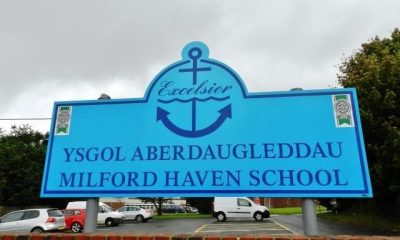
Teenager remanded after teacher injured in knife incident at Milford Haven school
Fifteen-year-old charged with Section 18 grievous bodily harm and possession of a bladed article appears before Swansea magistrates A FIFTEEN-YEAR-OLD...

Crime1 day ago
Police confirm teacher was stabbed at school as teenager appears in court
15-year-old charged with Section 18 GBH with intent and possession of a bladed article on education premises POLICE have confirmed...


Crime2 days ago
Man arrested for murder following death of pensioner in Pembroke Dock
Officers called to Hawkstone Road property as investigation continues and residents urged to come forward DYFED-POWYS POLICE officers have launched...


Crime2 days ago
Teacher discharged as Milford School to reopen Monday after serious assault
Deputy head praises ‘calm and professional’ staff and pupils during lockdown A TEACHER injured in a serious incident at Milford...


Crime3 days ago
Teacher discharged as police step back from Milford Haven school after assault
Teenager remains in custody as school closes and patrols increased to reassure community POLICE have confirmed they are no longer...


Crime3 days ago
Teacher injured and teenager arrested for attempted murder at Milford Haven School
Lockdown triggered as pupil allegedly attacks staff member with weapon – boy, 15, held on suspicion of attempted murder A...


international news3 days ago
Pembrokeshire women conquer Atlantic in epic 3,000-mile row
PEMBROKESHIRE’S all-female rowing crew Merched y Mor have completed one of the hardest endurance challenges on the planet after crossing...


Crime4 days ago
Sex offender jailed after living off grid in Pembrokeshire and refusing to register
Man walked into police station after months avoiding authorities A CONVICTED sex offender who told police he intended to live...


Crime4 days ago
More rape and sexual assault survivors to get right to challenge dropped cases
New review scheme to be rolled out across CPS Cymru-Wales following successful pilot SURVIVORS of rape and serious sexual assault...
-

 Health3 days ago
Health board targets rise in steroid and gym drug use across west Wales
-
Crime4 days ago
Sex offender jailed after living off grid in Pembrokeshire and refusing to register
-

 News5 days ago
Princess of Wales visits historic Pembrokeshire woollen mill
-

 Health7 days ago
Doctor struck off after sexual misconduct findings at Withybush Hospital
-
Crime3 days ago
Teacher injured and teenager arrested for attempted murder at Milford Haven School
-

 News7 days ago
Herald journalists to feature in true-crime documentary on local lockdown murder
-
 Crime5 days ago
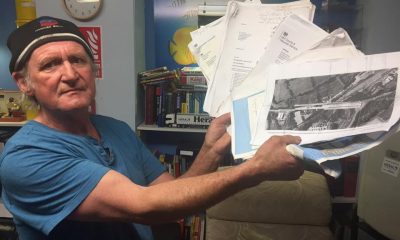
Hakin man’s appeal delayed again as Crown Court seeks guidance on insurance law
-

 Crime6 days ago
Arrest made after Carmarthen park stabbing investigation
badge identification system
January 5, 2026 at 10:04 pm
This is a topic I’ve been curious about. Thanks for the detailed information.