


Entertainment
Deckhand turned artist: Milford trawlerman’s work exhibited at Torch

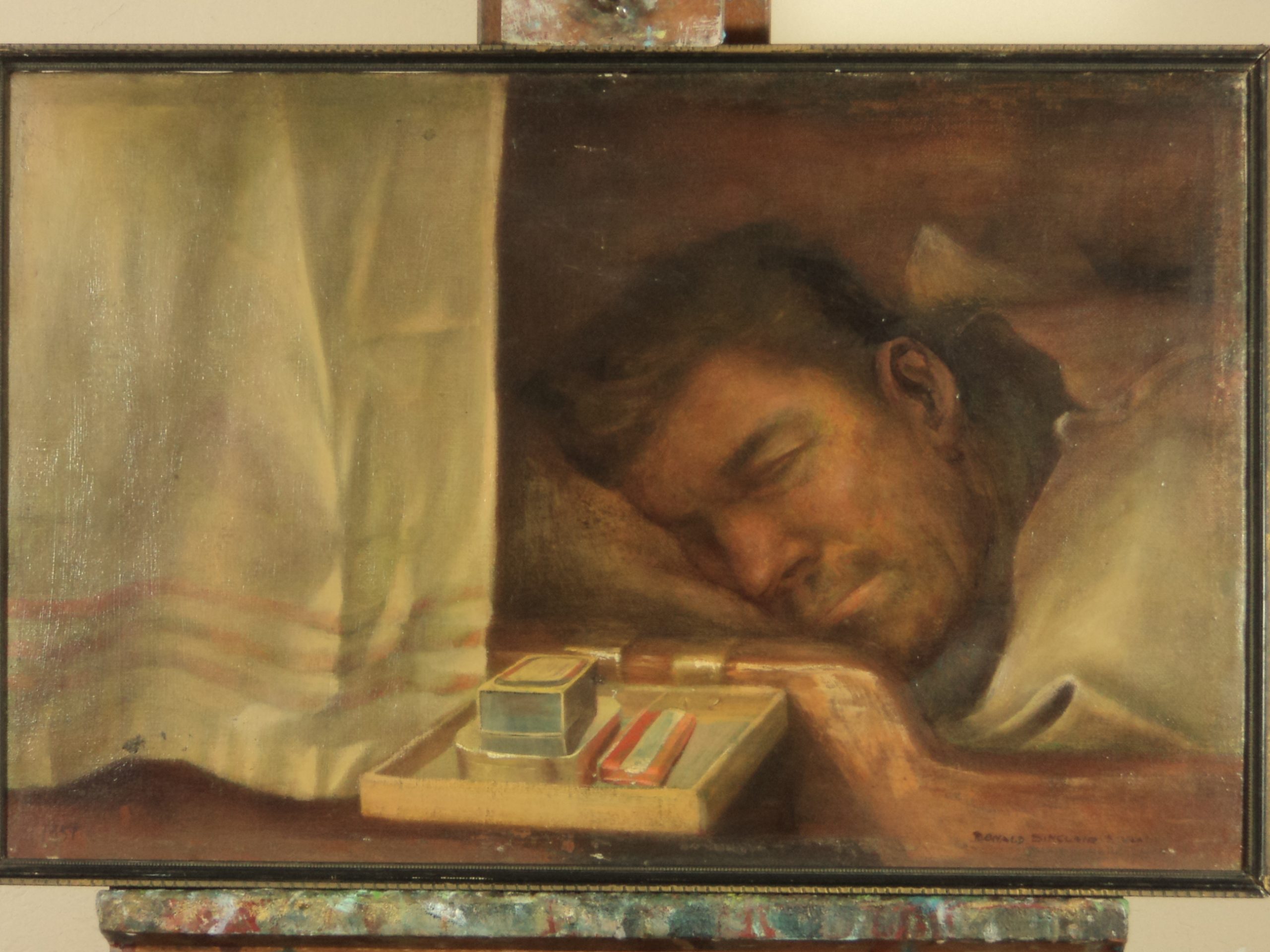
A DECKHAND on the Milford Haven steam trawler Maretta is the subject of a powerful and moving exhibition opening this May at the Torch Theatre in Milford Haven.
Artist Donald Sinclair Swan FRSA (1918–2004), who once served as a deckhand on the Maretta, had a lifelong connection with the sea. From an early age, he was fascinated by ships—often dreaming of them or sketching their outlines in pencil. His passion for the ocean, especially the rugged beauty of the North Atlantic, is reflected in the collection now on display in the Joanna Field Gallery. Most of the works have never been seen before.

Born in Glasgow, Donald was the son of a Presbyterian minister and a former primary school teacher. He was educated at Glasgow High School but left at sixteen to join the Clan Line shipping company, determined to pursue a life in the Merchant Navy. The move came as little surprise to his father, who himself had spent years under sail before taking up the ministry.
As his daughter Mary explains, a life at sea was never a question for Donald—it was a calling.
“In 1938, with the Second World War looming, Dad transferred to the Royal Navy, serving on HMS Barham as a cadet midshipman,” she said. “By 1939 he was a Sub Lieutenant on HMS Wessex, heading into the Western Approaches. In 1940, he was posted to HMT Northern Sun, a requisitioned trawler, but contracted tuberculosis in 1941 and had to be discharged.”

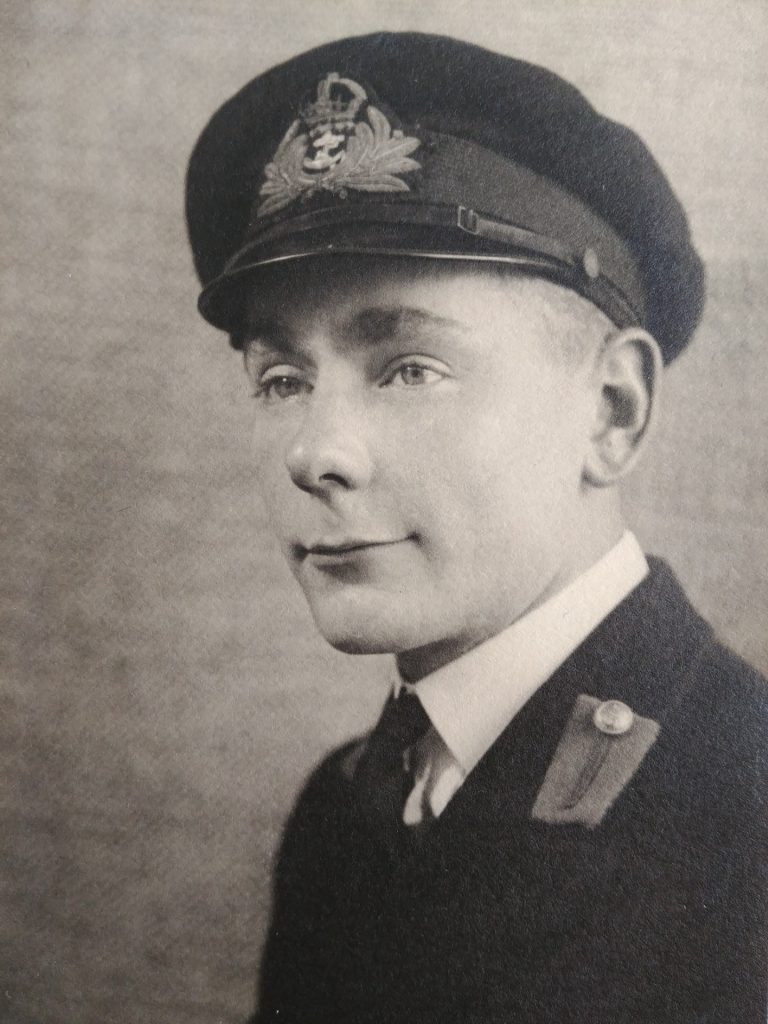
The illness nearly cost Donald his life. He survived a spontaneous pneumothorax against the odds but was advised never to undertake strenuous work again. During his recovery, he turned to his childhood dream: becoming an artist.
With help from an ex-serviceman’s grant, Donald studied at the Glasgow School of Art and the Patrick Allan Fraser School of Art at Hospitalfield, Arbroath. Influential tutors included Hugh Crawford RSA and James Cowie RSA.
In 1945, he moved to London, living an unsettled life between the capital, Glasgow and eventually Cornwall. A promising spell working with Royal portrait painter Sir James Gunn was interrupted when he had to return north to care for his ailing parents.
By 1948, feeling stronger and eager to return to sea, Donald signed on as mate of the Thames sailing barge Carina. Then, in 1949, he joined the crew of the Maretta as a deckhand—drawn once again to the open sea.

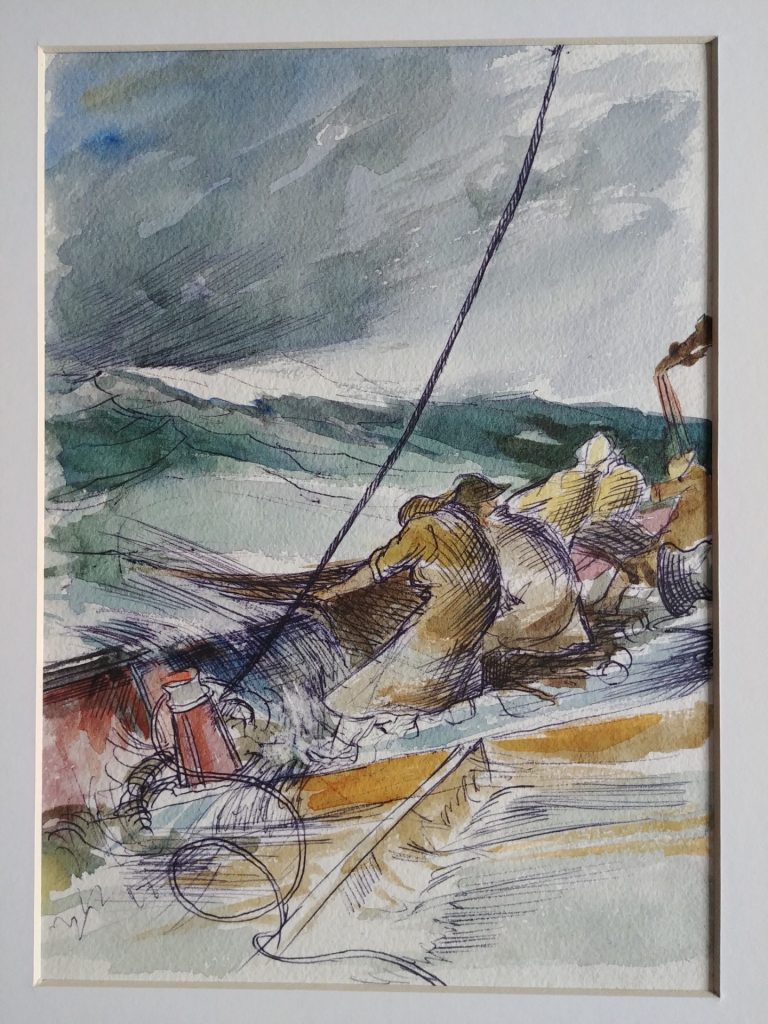
“He joined the fishing fleet at a time when the industry was booming,” said Mary. “After the war, many trawlers had been requisitioned and fish stocks were healthy. Milford Haven had become a thriving fishing port.”
It was during this time that Donald wrote to an old school friend from his lodgings at The Seaman’s Bethel, Charles Street:
“As you’ll have guessed from my address, the old curse has got me and I’m off to sea again… this time for deep sea trawling. Hard work and good money—and I hope to God it lays my ghosts for keeps.”

“From my window I can see a destroyer anchored in the Roads where we lay ten years ago… The ghosts it brings up are quite unbelievable, quite beyond anything I’d expected or prepared for. Still—hard work and Atlantic air may work wonders.”
The experience proved pivotal. Donald sketched prolifically during his time aboard the Maretta, capturing the daily life, physical strain, and quiet dignity of trawlermen. Later, he would turn many of these sketches into finished artworks.
In the 1950s, Donald returned to Cornwall and married fellow artist Elizabeth Lane. The couple raised three children in a cottage near St Ives. He went on to exhibit his work on board the Cutty Sark in 1969, marking the ship’s centenary, and took on major commissions including paintings of the Mayflower, HMS Bounty, HMS Endeavour, and Suhaili, the yacht sailed solo around the world by Sir Robin Knox-Johnston.
In 1972, the family moved back to Scotland, where Donald continued painting maritime scenes—particularly Clyde paddle steamers—and turned his hand to pottery. Alongside Elizabeth, a Leach-trained potter, he established the Castle-an-Dinas Pottery in Cornwall and later the Isle of Cumbrae Pottery in Scotland.
Donald’s ability to sketch quickly and from life also helped him in portraiture—particularly with children. As he once wrote from the Bethel, “At the moment I’m earning my keep very nicely by drawing people…”
His “Time and Family” portrait series, a visual family history spanning 40 years and three generations, was exhibited multiple times in Scotland and Cornwall.
He and Elizabeth returned to Cornwall in 2000. Donald continued to paint until shortly before his death in November 2004. His final portraits, of his nephew’s children, were sent to Canada just weeks before he died. Elizabeth continued to paint into her 80s, passing away in 2021.
“When I found the drawings, I knew Dad would have wanted them shown in Wales,” said Mary. “With his connection to Milford Haven, the Torch Theatre seemed like the perfect place. I hope people who visit will see something of their own lives in his work.”
The exhibition includes watercolours, oils, and impressionistic sketches—some bearing the names of other trawlers and fellow crew members. One haunting piece, Up Trawl, Ballet of Sleeping Deckies, shows the sheer exhaustion of life at sea. The artworks serve not only as pieces of art but as a record of a vanished way of life—and a tribute to those who lived it.
The exhibition runs throughout May at the Torch Theatre’s Joanna Field Gallery, during Box Office opening hours. For more information, visit www.torchtheatre.co.uk or call (01646) 695267.

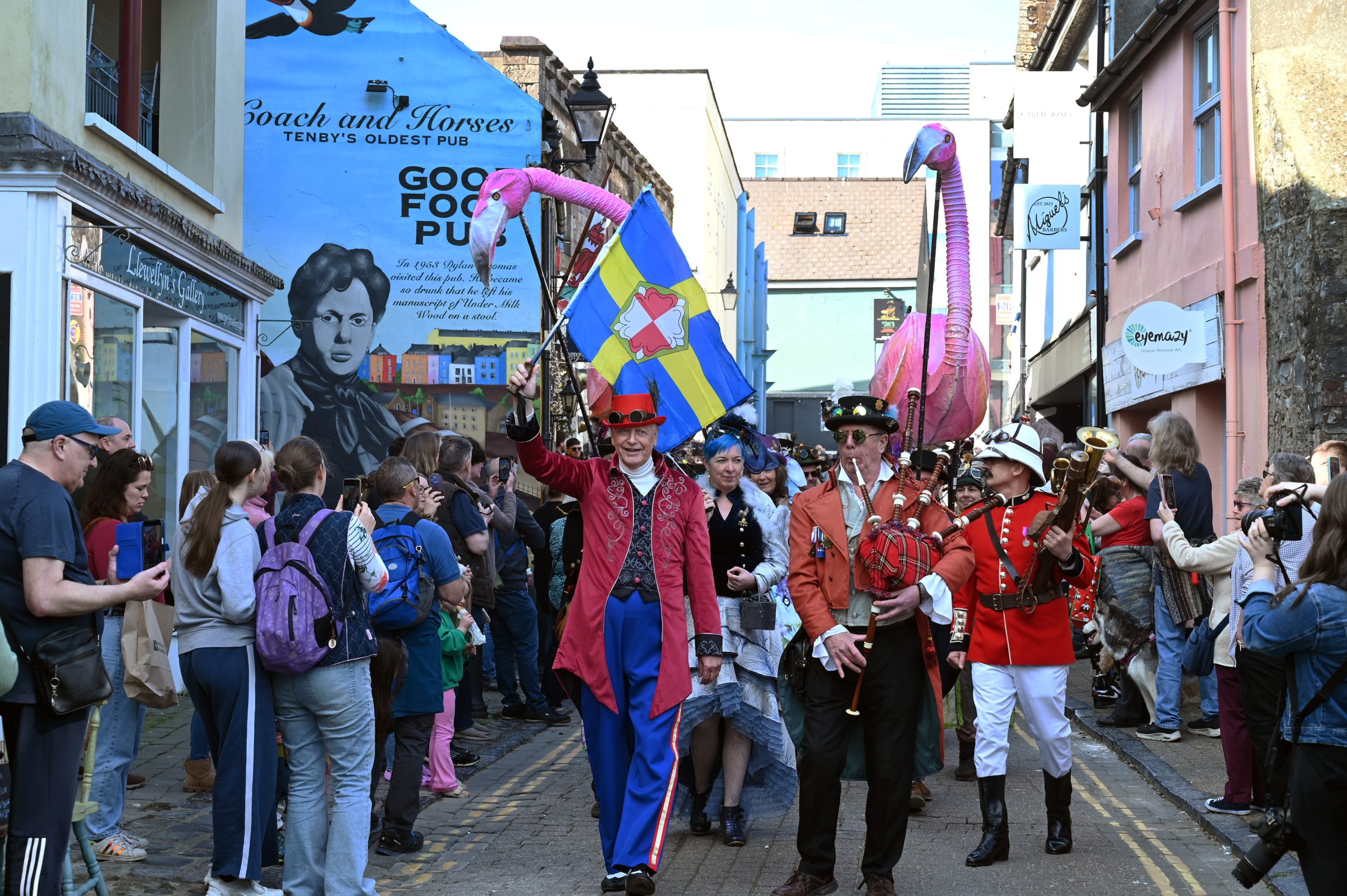
Colourful parade, towering creations and Victorian flair bring town centre to life
TENBY was transformed into a vibrant Victorian fantasy on Saturday (Mar 21) as hundreds of visitors descended on the town for the annual Steampunk Festival.
The highlight of the day came with the much-anticipated Peacock Parade, which saw elaborately dressed participants wind their way through Tenby’s narrow streets, drawing large crowds of spectators.

Residents and visitors lined the route, many stopping to take photos as performers in eye-catching costumes passed by. From brass goggles and top hats to military-inspired uniforms and elegant gowns, the outfits on display reflected the creativity and theatrical spirit of the steampunk scene.
Among the most striking sights were the towering pink flamingo creations, which rose high above the crowds and became an instant talking point. Musicians in period costume added to the atmosphere, playing lively tunes as they marched through the town.
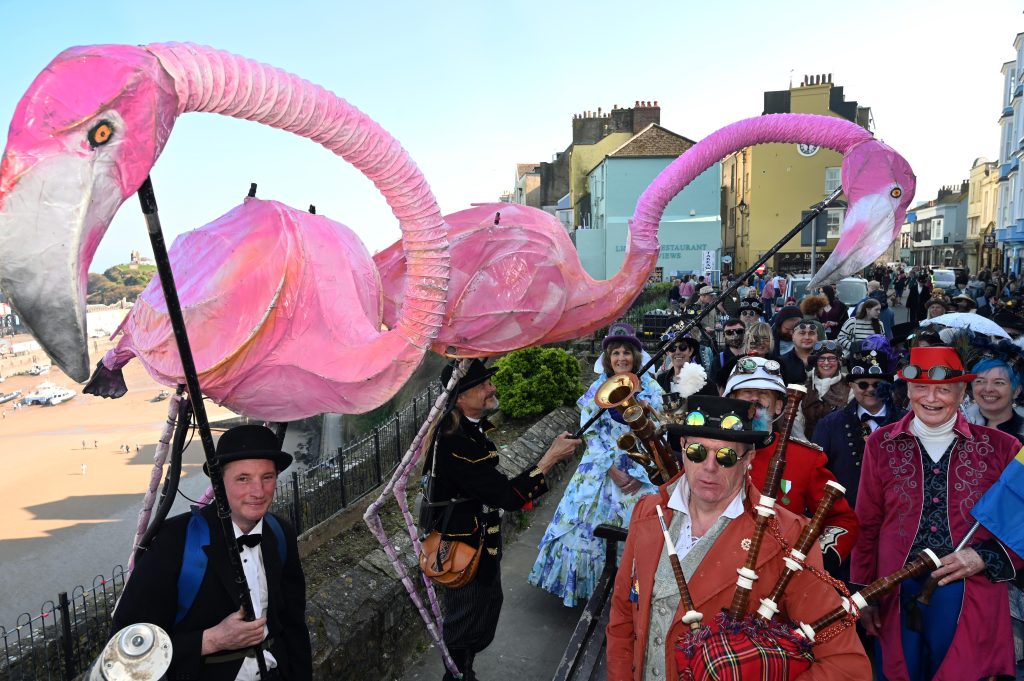
Families were out in force, with children and adults alike enjoying the spectacle. Many visitors had travelled from across Wales and beyond to attend the event, which has grown in popularity in recent years and is now firmly established as a key date in Tenby’s events calendar.
The Herald understands that local businesses also benefited from the influx of visitors, with cafés, pubs and shops seeing a steady flow of customers throughout the day.
In addition to the parade, a range of activities were taking place across the town, including markets, performances and themed entertainment centred around the De Valence Pavilion.
Organisers have worked to create an inclusive and welcoming event, with many people choosing to dress up while others simply come along to enjoy the unique atmosphere.
The festival continues on Sunday, with further events planned as Tenby remains firmly in the grip of steampunk fever for the weekend.


Photos: Colourful characters take part in the Peacock Parade through Tenby on Saturday (Pic: Gareth Davies).
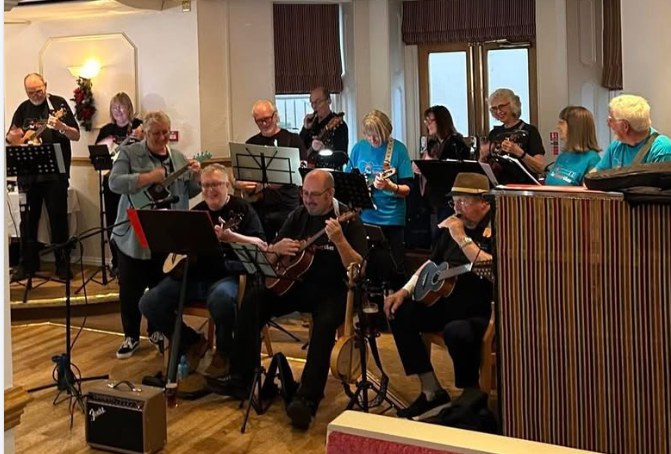
GET ready to celebrate St Patrick’s Day in style this Friday at the Giraldus Centre in Manorbier.
The community venue is hosting a lively evening of music, dancing and Irish-themed fun, with entertainment from popular local group The Slipway Ukes.
Doors open at 7:00pm on Friday (Mar 20), with free entry for all. A fully licensed bar will be open throughout the evening, serving drinks and snacks with an Irish twist.
Organisers are encouraging everyone to “unleash their inner leprechaun” and enjoy a night on the dance floor.
There is no need to book—just turn up and join in.

Donations on the night will be gratefully received in support of the Paul Sartori Foundation.
The event takes place at the Giraldus Centre, Manorbier, SA70 7TN.

Lise Davidsen leads star cast in Wagner’s epic tale of love and death in special cinema broadcast on Sunday (Mar 22)
AFTER years of anticipation, a truly unmissable event arrives in cinemas worldwide as the electrifying Lise Davidsen takes on one of the ultimate roles for dramatic soprano – the Irish princess Isolde – in Wagner’s transcendent meditation on love and death, Tristan und Isolde.
Heroic tenor Michael Spyres stars opposite Davidsen as the love-struck Tristan in what promises to be a powerful and emotionally charged performance.
The production also marks the arrival of a new staging at the Metropolitan Opera by Yuval Sharon, making his Met debut. Sharon has been hailed by The New York Times as “the most visionary opera director of his generation” and was the first American to direct an opera at the famous Wagner festival in Bayreuth.
Music Director Yannick Nézet-Séguin also leads Tristan und Isolde at the Met for the first time in this landmark production.
The cast includes mezzo-soprano Ekaterina Gubanova reprising her acclaimed portrayal of Brangäne, alongside bass-baritone Tomasz Konieczny as Kurwenal following his celebrated Met appearances in Wagner’s Der Fliegende Holländerand the Ring cycle. Bass-baritone Ryan Speedo Green makes an important role debut as King Marke.
Reviewing the production for The Observer, Fiona Maddocks described it as a “glorious production” and “well worth catching”, adding: “This was one of those rare and blissful nights when dropped jaws silenced noisy opinion in the queue for coats afterwards.”
The recorded broadcast of Tristan und Isolde will be screened at the Torch Theatre on Sunday (Mar 22) at 4:00pm.
For further information visit www.torchtheatre.co.uk or contact the Box Office on (01646) 695267.
ENDS



Entertainment1 day ago
Tenby steams up in spectacular style as crowds flock to festival
Colourful parade, towering creations and Victorian flair bring town centre to life TENBY was transformed into a vibrant Victorian fantasy...


Crime2 days ago
Publican jailed for six years for supplying cocaine and cannabis
Milford Haven man sentenced at Swansea Crown Court following drug dealing operation A MILFORD HAVEN publican has been jailed for...


Local Government2 days ago
Poverty summit highlights support efforts across Pembrokeshire
A SUMMIT bringing together key organisations from across Pembrokeshire has highlighted both the scale of local poverty and the work...


Education3 days ago
Milford Haven school plans unveiled but funding not yet secured
PLANS for a new £100 million school in Milford Haven have been unveiled, but the project has not yet secured...


News3 days ago
Council unveils plans for new state-of-the-art secondary school in Milford Haven
PEMBROKESHIRE COUNTY COUNCIL has revealed plans for a new state-of-the-art school in Milford Haven, promising modern, inspiring learning spaces for...


Health3 days ago
NHS waiting list falls — but cancer delays and diagnostic backlog worsen
Record progress claimed by Welsh Government as critics warn key targets are still being missed THE NHS in Wales has...


Crime4 days ago
Rapist jailed after ‘abhorrent’ attacks on woman and children
Haverfordwest man told police “women won’t have sex without force” A HAVERFORDWEST man who raped a woman and a young...


News4 days ago
Reform secures first Pembrokeshire councillor in Hakin by-election win
Late Reform candidate takes seat as independent surge and Labour withdrawal shape contest REFORM UK candidate Scott Thorley has won...


News5 days ago
Scott Thorley elected as Pembrokeshire’s first Reform councillor
REFORM UK candidate Scott Thorley has won the Hakin by-election after securing 179 votes. The full result is as follows:...


News5 days ago
Police confirm man has died after being recovered from River Cleddau
Major emergency response in town centre after concerns raised for man in water A MAN has died after being recovered...
-

 News5 days ago
Emergency services flood Haverfordwest after reports of person in river
-

 Crime4 days ago
Mother given community order after admitting child cruelty offence
-

 Crime7 days ago
Man cleared of sexual assault allegation after magistrates rule no case to answer
-
Health3 days ago
NHS waiting list falls — but cancer delays and diagnostic backlog worsen
-

 News5 days ago
Senedd vote to ban greyhound racing hailed as ‘landmark moment’ by charities
-
 News5 days ago
Senedd votes to ban Greyhound racing in Wales to protect animal welfare
-
News4 days ago
Reform secures first Pembrokeshire councillor in Hakin by-election win
-

 News6 days ago
£3.8m to help Welsh families struggling with soaring heating oil costs