


News
Elderly care crisis: Councils warned over ‘second class citizen’ treatment

Underfunding in Carmarthenshire and Pembrokeshire fuels hospital chaos, family hardship, and looming care home closures
VULNERABLE older people in West Wales are being forced to pay for their care—or go without it—due to a worsening funding crisis that experts say is placing them at risk and driving up NHS costs.
A growing “postcode lottery” in council funding has created stark inequalities between local authorities, with Carmarthenshire and Pembrokeshire among the worst hit. Care providers warn that the current situation is not only financially unsustainable but morally indefensible, as elderly people are left stranded in hospitals or charged extra just to receive basic care.
£8,500 less per patient
In Carmarthenshire, research has shown that the local authority pays around £8,500 less per year per person for nursing care than neighbouring Ceredigion. The shortfall is so severe that some care homes have begun charging families extra, or risk closure.
One care home owner, who asked not to be named, told The Herald: “It’s heartbreaking to tell a family: ‘If you can’t pay this, we’ll have to give notice.’ But we can’t make ends meet on Carmarthenshire’s fees. Meanwhile, just over the border in Ceredigion, they pay enough to cover the cost. Why are our residents treated like second class citizens?”
They added that some care homes avoid charging extra and are therefore more likely to receive referrals from the council—but may be located far from a resident’s home town, increasing isolation and hardship for families.

“The system punishes compassion. Homes are closing. And we’re losing places for our most vulnerable citizens.”
Pembrokeshire: NHS under pressure, families stretched
In Pembrokeshire, the situation is no better. While weekly rates are slightly higher than in Carmarthenshire—£908 for nursing care and £986 for EMI—they still fall far short of the actual cost of delivery.
The result? Bed-blocking at Withybush Hospital has reached critical levels.
Elderly patients medically fit for discharge are being kept in hospital, sometimes for weeks, due to a shortage of care home placements.

According to estimates, the cost of keeping an elderly patient in hospital is around £500 per day, compared to less than £200 per day in a care home—making the system not just inefficient but unsustainable.
‘12 months of instability’ ahead
One care group operating six homes in Pembrokeshire says they are facing a £150,000 annual hit due to increased National Insurance contributions and a rise in the Real Living Wage. They’ve warned of “12 months of instability”, with growing pressure on families to pay third-party top-up fees—and a risk that smaller care homes could fold altogether.
Care Forum Wales has estimated the total shortfall across the sector in Wales to be £150 million, describing the situation as an “existential threat” to elderly care.

Council and government response
Pembrokeshire County Council is already grappling with a projected £34.1 million funding gap for 2025–26, with adult social care listed as one of the most significant pressure points. Meanwhile, Carmarthenshire County Council has not issued a public statement on the care home funding disparity, despite repeated concerns from local providers.
The Welsh Government has announced a small uplift in care home fees, from £235.88 to £254.06 per week from April 2025, but providers say it’s nowhere near enough to prevent closures or redundancies.
Some initiatives—such as improved NHS discharge planning and tech-based bed tracking—are being piloted, but sector experts say they will not resolve the crisis without urgent and significant funding increases.
‘Rotten boroughs’ of care?
Mario Kreft MBE, chair of Care Forum Wales, has slammed the disparity between councils as a form of “institutional prejudice” against the private care sector, which provides the majority of services across Wales.
“It’s a race to the bottom, and elderly people are paying the price. In South West Wales, with the exception of Ceredigion, fee levels are appalling. These councils are like rotten boroughs, offering the least to the most vulnerable.”
“Wales was supposed to be built on equality. But you’d never know it when you look at how care is funded.”
He called on councils and government to rethink their approach, warning:
“Those making these decisions should consider their positions. They are causing harm to families and risking the collapse of care in their communities.”
What happens next?
If no action is taken, providers warn, more care homes will close, families will be left without support, and hospitals will continue to suffer.
“Either we fight to save our homes,” the anonymous care home owner told The Herald, “or we walk away. And then what becomes of the residents?”
The Herald has contacted Carmarthenshire and Pembrokeshire County Councils for comment. This article will be updated if and when responses are received.

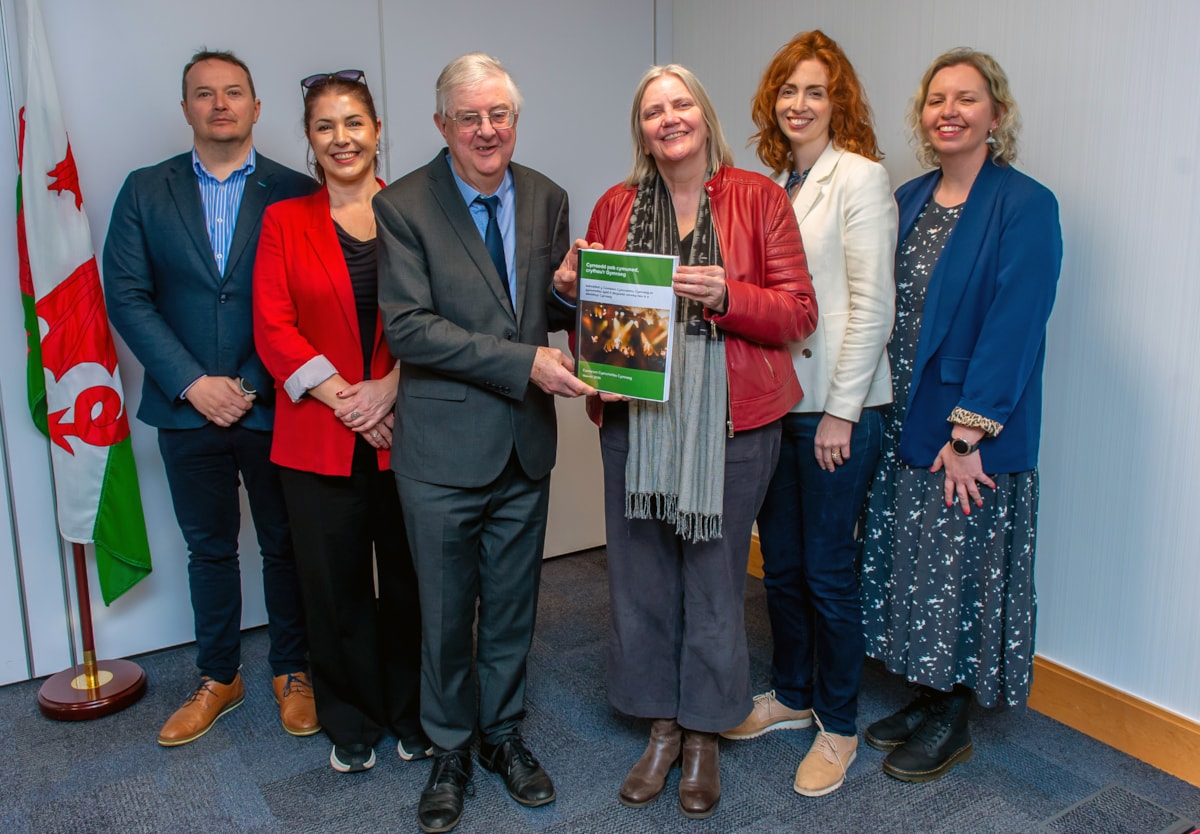
EVERYDAY use of the Welsh language must extend beyond classrooms into workplaces, communities and online spaces if it is to thrive, according to a new report.
The study, published by the Commission for Welsh-speaking Communities, highlights the need for greater investment in the social, cultural and digital environments where people live their daily lives.
The report, Cymraeg in every community: strengthening the Welsh language, focuses on areas where fewer than 40% of people speak Welsh. It examines how the language can become a more natural part of everyday life in these communities.
The Commission says that while education remains vital, it cannot carry the responsibility alone. Young people must have opportunities to use Welsh outside school, particularly in activities they enjoy such as sport, youth groups and cultural events.
Among its recommendations is the creation of a dedicated fund to boost Welsh-language content online, including support for young people producing digital media in Welsh.
The report builds on earlier work published in August 2024, which focused on areas with higher numbers of Welsh speakers.
Commission co-chair Dr Simon Brooks said: “To ensure Welsh is a national language that belongs to us all, its future as a community language must be secured in every part of Wales. We urge the next Welsh Government to act on these recommendations with ambition.”
Co-chair Professor Elin Haf Gruffydd Jones added that there is strong appetite to use Welsh, but a lack of spaces to do so.
She said: “More than half of Welsh speakers live in areas where fewer than 40% of people speak the language. Public policy must create the right conditions for Welsh to flourish in everyday settings, with real investment in the spaces where people spend their time.”

She also pointed to international examples, including the Basque Country, where communities have actively created environments for their language to be used naturally.
Cabinet Secretary for Finance and the Welsh Language, Mark Drakeford, said the Welsh Government remained committed to its target of one million Welsh speakers by 2050.
He said: “Significant progress has already been made, with 17 recommendations from the Commission’s first report implemented during this Senedd term. This latest report provides a strong foundation to build on that momentum.”


FORMER BBC news presenter Huw Edwards has issued a strongly worded statement criticising an upcoming television drama based on his fall from grace.
Edwards, who received a suspended prison sentence after admitting offences relating to indecent images of children, said the programme was produced without properly checking its claims with him.

The two-part drama, Power: The Downfall of Huw Edwards, features actor Martin Clunes portraying the former newsreader.
In a statement published in the national press, Edwards claimed those behind the programme failed to verify key elements of the story before filming began. He said producers only approached him for comment after production had already been completed, and even then retained editorial control over any response.
He also questioned whether contributors to the programme had been paid, suggesting the drama may not accurately reflect events.
Edwards said he had already expressed “deep regret and remorse” for his crimes during court proceedings, having pleaded guilty at the earliest opportunity.
He added that he found the offences deeply disturbing and offered a further apology, acknowledging that each image involved a real victim.
The former presenter said he is now working on his own account of the events, although progress has been slow due to ongoing health issues. He has previously spoken about long-term mental illness, which he said had worsened in the period leading up to his offences.
However, he stressed that mental health difficulties should not be used to excuse criminal behaviour.
Edwards rose to prominence as one of the UK’s most recognisable news anchors before his career collapsed following allegations of misconduct and subsequent criminal charges.
In September 2024, he was handed a six-month suspended sentence and placed on the sex offenders register for seven years. He was also ordered to complete a rehabilitation programme.
Responding to his criticism, a spokesperson for Channel 5 said the drama was based on interviews with those involved, including the complainant and journalists who broke the story, as well as court reporting and message evidence.

They added that the programme was produced in line with broadcasting regulations and that allegations featured in the film had been put to Edwards through his legal representatives in advance.
AS GLOBAL demand for sustainable textiles continues to grow, wool is presenting farmers with a renewed opportunity to increase revenue by improving flock quality.
Competition shearer and sheep farmer Matt Smith has been working for several years to enhance the value of wool from his Romney flock. However, he believes it could take another decade before he achieves the level of fleece quality needed to deliver a significant uplift in returns.
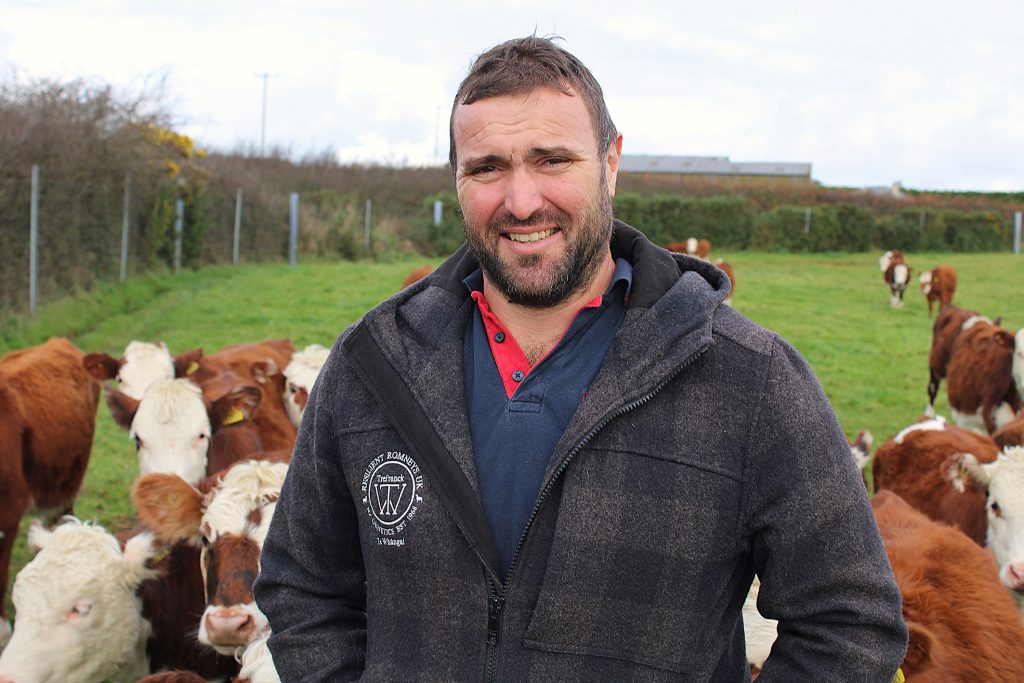
“We have invested heavily in genetics, particularly to improve micron density within the flock,” he said. “High-quality wool is in demand for premium, sustainable clothing, and better micron density combined with a higher comfort factor will always attract stronger prices.”
While his flock already produces wool that commands a good return, Smith believes there is further potential—particularly with the introduction of new technology that allows more precise measurement of wool quality.
“I have been fortunate to trial a new handheld device from Woven Optics, which measures micron and comfort factor in real time,” he explained. “It has allowed me to clearly see how breeding decisions are influencing wool quality.”

Developed in Australia, the Woven Optics device is designed for use in a range of conditions and has proven to be an accurate on-farm testing tool. In the UK, the company has partnered with Heiniger to bring the technology to farmers.
“I have been working with Hefin Rowlands from Heiniger to monitor our Romneys using the device,” Smith added. “While it represents a significant investment, it is small compared to what we already spend on genetics.”
He believes the technology offers farmers a practical way to track improvements and better understand how breeding choices impact wool value.
“It is an enabler,” he said. “Having the ability to test wool on farm in seconds could help shift the industry back towards prioritising wool as a key genetic trait.”

Smith argues that this shift is not just about profitability, but also about animal health and long-term sustainability.
“In recent years, breeding has focused heavily on carcass weight to meet market demand for larger cuts of meat, and wool quality has been overlooked,” he said. “That has had unintended consequences.”
Drawing on his experience as a contract shearer across the UK, Smith has observed a decline in fleece quality in many flocks.
“I am seeing more yellowing in fleeces and a stronger odour, which can increase susceptibility to fly problems,” he said.
He warns that neglecting wool quality may also be contributing to a growing reliance on chemicals, antibiotics and anthelmintics—raising concerns about resistance and animal welfare.
“As a sheep breeding nation, we risk forgetting how important wool quality is to overall sheep health,” he added. “Changes in fleece condition, combined with warmer temperatures, can increase flystrike risk. By breeding for better wool, we can reduce these issues and cut reliance on pharmaceuticals.”
Smith believes that embracing technology such as the Woven Optics device could help reverse current trends.
“Breeding in the wrong direction is not sustainable,” he said. “By improving wool quality, farmers can produce healthier, more valuable sheep. The tools are now available, and the opportunity is there to restore wool as a priority within UK sheep farming.”



Business3 hours ago
Could Primark be coming to Haverfordwest? Major retailer in talks for former Wilko site
Council confirms advanced discussions as speculation grows over high street boost HAVERFORDWEST could soon see a major high street revival,...


Business3 hours ago
Rail investment ‘could unlock 40,000 jobs and £11bn for Wales’ says new report
RAILWAY stations across Wales could help unlock around 40,000 jobs and more than £11 billion for the economy by 2036,...


Local Government4 hours ago
Milford Haven set for £200m investment with schools, leisure centre and rail upgrade
Council outlines major plans for town with backing from Welsh Government MILFORD HAVEN is set for a major transformation with...


Community22 hours ago
Broad Haven volunteers secure ‘national asset’ status for nature reserve
A SMALL stretch of woodland and former opencast coal mine has been transformed into a nationally recognised biodiversity site, in...


Entertainment2 days ago
Tenby steams up in spectacular style as crowds flock to festival
Colourful parade, towering creations and Victorian flair bring town centre to life TENBY was transformed into a vibrant Victorian fantasy...


Crime3 days ago
Publican jailed for six years for supplying cocaine and cannabis
Milford Haven man sentenced at Swansea Crown Court following drug dealing operation A MILFORD HAVEN publican has been jailed for...


Local Government3 days ago
Poverty summit highlights support efforts across Pembrokeshire
A SUMMIT bringing together key organisations from across Pembrokeshire has highlighted both the scale of local poverty and the work...


Education4 days ago
Milford Haven school plans unveiled but funding not yet secured
PLANS for a new £100 million school in Milford Haven have been unveiled, but the project has not yet secured...


News4 days ago
Council unveils plans for new state-of-the-art secondary school in Milford Haven
PEMBROKESHIRE COUNTY COUNCIL has revealed plans for a new state-of-the-art school in Milford Haven, promising modern, inspiring learning spaces for...


Health4 days ago
NHS waiting list falls — but cancer delays and diagnostic backlog worsen
Record progress claimed by Welsh Government as critics warn key targets are still being missed THE NHS in Wales has...
-

 News6 days ago
Emergency services flood Haverfordwest after reports of person in river
-

 Crime5 days ago
Mother given community order after admitting child cruelty offence
-
Health4 days ago
NHS waiting list falls — but cancer delays and diagnostic backlog worsen
-

 News6 days ago
Senedd vote to ban greyhound racing hailed as ‘landmark moment’ by charities
-
 News6 days ago
Senedd votes to ban Greyhound racing in Wales to protect animal welfare
-

 News5 days ago
Reform secures first Pembrokeshire councillor in Hakin by-election win
-

 News6 days ago
Could Pembrokeshire hold the key to St Patrick’s lost birthplace?
-
 Crime5 days ago
Woman stole from pharmacy despite ban, court hears