


Crime
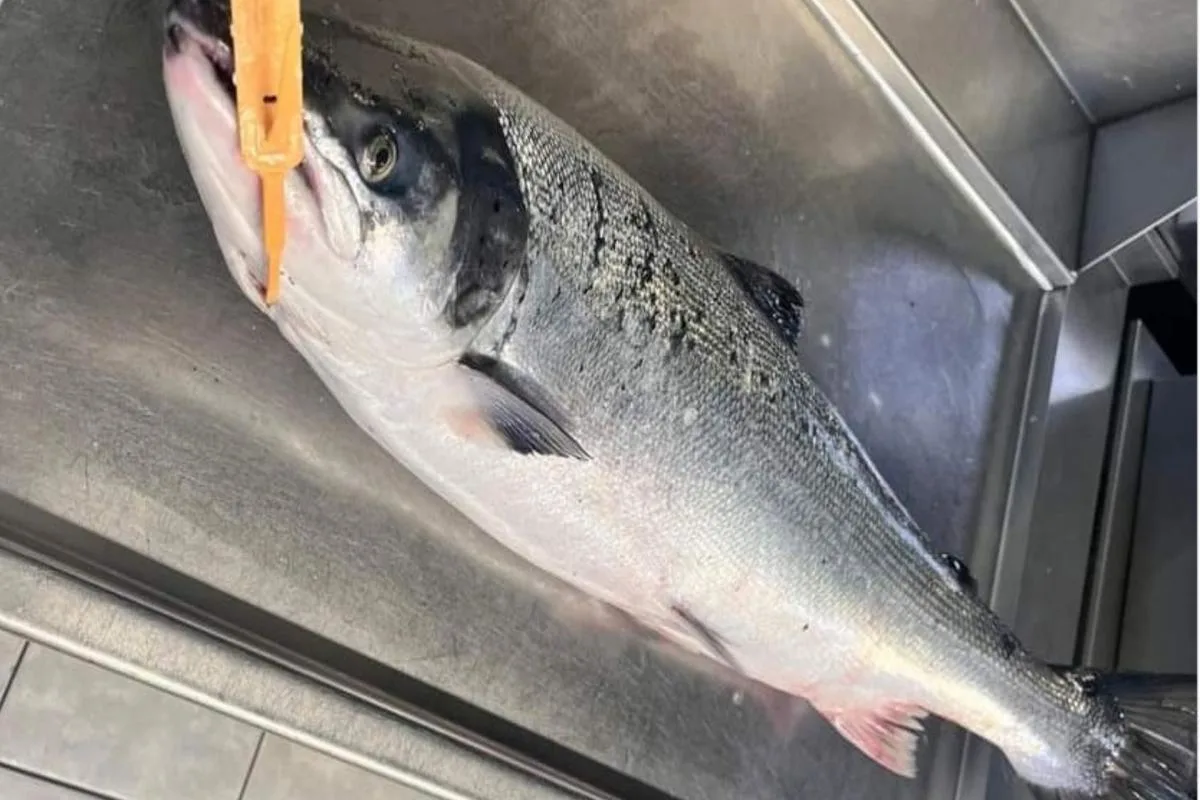
Cilgerran coracle fisherman fined after catching protected salmon

Case reignites debate over tradition, conservation and the future of Welsh river fishing
A TRADITIONAL fisherman from Cilgerran has admitted to illegally catching and selling a protected Atlantic salmon from the River Teifi — one of Wales’ most ecologically sensitive waterways.

Mark Dellar, 51, of High Street, appeared at Aberystwyth Magistrates’ Court where he pleaded guilty to handling fish in suspicious circumstances, contrary to Section 32 of the Salmon Act 1986. The offence stemmed from his failure to correctly identify and release the salmon, a protected species whose numbers have plummeted in recent years.
The incident came to light after a July 2024 Facebook post from the Pentre Arms pub in Llangrannog advertised a 16lb “locally caught sewin” — the Welsh name for sea trout — as a featured dish on its menu. Natural Resources Wales (NRW) enforcement officers, concerned that the fish was in fact a salmon, began investigating.
The Pentre Arms’ owner and chef fully cooperated, providing the fish cutlets, a receipt showing they had paid £135 for the fish, and a commercial carcass tag which traced the catch back to Dellar. The fish had been legally tagged — suggesting Dellar believed it to be a permitted catch — but subsequent analysis by NRW confirmed it was a salmon, not a sea trout.
Caught between law and tradition
Dellar, who has fished the Teifi for more than 20 years using a coracle — a centuries-old boat unique to west Wales — said in a voluntary police interview that he had believed the fish was a sewin when he landed it on July 5.

Magistrates imposed an absolute discharge but ordered Dellar to pay £85 in costs. While the sentence was lenient, the case has reignited a broader debate around the clash between traditional fishing practices and modern environmental protections.
Coracle fishing has been practised in Wales for generations, with fishermen using lightweight, round-bottomed boats woven from willow and covered with tar or canvas. The Teifi, along with the Tywi and Taf rivers, has long been home to this unique heritage — but fishers say the tradition is on the brink of extinction.
In 1975, there were over 50 licensed coracle netsmen on the Teifi. Today, just a handful remain. The season has been drastically reduced, now running only from May to July, and strict byelaws introduced in 2020 require all salmon — whether caught by rod or net — to be released immediately and unharmed. The sale or retention of salmon is banned altogether, a measure aimed at saving the species from collapse.
Conservation in conflict
Jeremy Goddard, who leads NRW’s enforcement team in mid Wales, said the case highlighted the importance of respecting conservation rules, regardless of fishing experience.
“The killing and sale of a prime adult salmon shows clear disregard for the law and for the health of our rivers,” he said. “Mr Dellar, with his years of experience, would know how to tell a salmon from a sea trout. With salmon numbers in serious decline, all netsmen and anglers are expected to release every salmon they catch. It’s not just a legal requirement — it’s a crucial step to protect the species. Every spawning fish matters.”
Further analysis showed the salmon had spent two years in the Teifi as a juvenile before migrating to sea, where it spent another two years feeding before returning to its native river to spawn — a journey that underscores the ecological significance of every individual fish.
Heritage under pressure
While NRW says its enforcement actions are necessary to protect the future of wild salmon, coracle fishers argue that their ancient craft is being regulated out of existence. Many say they are being punished for mistakes while industrial pollution and large-scale farming runoff continue to degrade river habitats with little consequence.

“This is our heritage — not just a job, but our way of life,” one local netsman told The Herald. “We’ve followed the rules, bought the tags, shortened the season, but now even a simple mistake can lead to court. Meanwhile, slurry pours into the river and nobody is held accountable.”
Indeed, the Teifi has suffered from repeated pollution incidents in recent years, with sewage overflows and agricultural discharge blamed for reducing oxygen levels and harming aquatic life.
The river is designated a Special Area of Conservation under the EU Habitats Directive due to its internationally important salmon population. Yet recent monitoring data from NRW shows that wild salmon numbers remain critically low, with fewer than 1,000 returning to the Teifi in some years — down from tens of thousands in the 1980s.
Is NRW focusing on the wrong target?
While NRW has emphasised the need for strict compliance from netsmen and anglers, critics argue that such prosecutions miss the bigger picture — and that the real threats to Welsh rivers come from far larger sources than a handful of coracle fishers.
Farming runoff, sewage discharges, deforestation and bank erosion have all been cited by environmental groups as leading contributors to the sharp decline in water quality across Wales. Data from NRW and third-party groups like River Action and Surfers Against Sewage show regular breaches of water safety limits, with phosphates, nitrates and slurry regularly entering protected river systems like the Teifi.
Despite this, enforcement against major polluters remains rare. According to NRW’s own reports, only a small fraction of reported incidents result in prosecution — and fines, when issued, are often minimal.
“What’s happening is a kind of environmental scapegoating,” one local conservationist told The Herald. “You’ve got ancient fishing practices with deep cultural roots being criminalised, while industrial agriculture and water companies carry on polluting with virtual impunity.”
This sense of injustice is echoed in local fishing communities. While coracle fishers have drastically cut back their activity, embraced tagging schemes, and complied with shortened seasons, they say NRW is failing to hold powerful polluters to the same standard.
A question of balance
NRW insists that its approach balances conservation with cultural heritage. Goddard said the agency would continue to inspect restaurants, fishmongers, and coastal buyers as part of its “Buyer Beware” campaign, aimed at preventing illegal salmon sales and educating businesses on the byelaws.
But for many in west Wales, Dellar’s case is a sign of a deeper unease — that a way of life is slipping away under the weight of bureaucracy and ecological crisis.
“Once the coracle netsmen are gone,” said another local, “they’ll be gone for good. And we’ll have lost something you can’t bring back — not just a fish, but a tradition.”


THE VICTIMS’ Commissioner for England and Wales has welcomed plans to expand electronic tagging of offenders but warned that technology alone will not keep victims safe.
The UK Government has announced new measures to widen the use of electronic monitoring, including mandatory tagging for all prison leavers and real-time GPS tracking for high-risk offenders such as domestic abusers and burglars.
The plans also include a pilot scheme for “proximity monitoring”, designed to alert authorities if an offender approaches a victim, alongside a shift in probation resources to focus on those posing the greatest risk to the public.
Responding to the announcement, Victims’ Commissioner Claire Waxman said the move was a “necessary step” towards strengthening a probation system that has faced years of pressure.
She said: “I welcome the Government’s investment in expanding electronic tagging and increasing the number of probation officers managing dangerous offenders. This is a necessary step in helping to rebuild a probation service that has been under immense pressure for years.”
However, she cautioned that monitoring technology must be backed by swift enforcement.
“For many victims — particularly survivors of domestic abuse and stalking — the knowledge that an offender is being monitored can provide a vital sense of reassurance,” she said.
“But technology and innovation are only as effective as the system that supports them. Tagging must be backed by swift, robust enforcement the moment a breach occurs.”
Waxman warned that without immediate action when rules are broken, victims could be left at risk.

“Without this, there is a real risk of creating a false sense of security for victims at a time of already heightened concern,” she added.
She also stressed that while prioritising high-risk offenders is practical, lower-risk individuals should not be overlooked.
“While prioritising high-risk offenders is a pragmatic necessity, it is essential that ‘lower-risk’ is never treated as ‘no-risk’,” she said.

“Ultimately, victim safety must remain the priority.”
The Commissioner said this requires not only investment in new monitoring tools, but also ensuring the Probation Service has the capacity and expertise to act quickly when warning signs emerge.

Business shut down temporarily as court order imposed following repeated offences
A CARDIGAN takeaway has been forced to close temporarily after immigration officers discovered illegal workers during a raid.
Officers from Immigration Enforcement visited Romino’s Pizza & Kebab in Finch Square on Wednesday (Mar 5), where two men from Turkey were found working without the legal right to do so.
The Home Office confirmed that this was not the first time the premises had been targeted. During three previous visits, a total of six illegal workers had been identified, resulting in fines totalling £135,000 for those responsible.
Following the latest visit, officials issued an illegal working closure notice, preventing access to the premises and banning any paid or unpaid work from taking place on site.
Such notices allow authorities to shut down a business immediately for up to 48 hours where illegal employment is identified.
Court order imposed
The following day, Thursday (Mar 6), Immigration Enforcement applied to Llanelli Magistrates’ Court for a formal illegal working compliance order, which was granted.
The order places strict conditions on how the business operates and can remain in force for up to twelve months.
These measures can include restricting access to the premises, requiring full right-to-work checks on all staff, and allowing immigration officers to carry out further inspections.
Such orders are typically used where previous enforcement action has failed to bring businesses into compliance.

Takeaway reopens amid investigation
The Herald understands the takeaway reopened on Monday (Mar 10) and began advertising for new staff the same day.
However, further action may follow, as the Home Office has also requested a review of the premises licence by Ceredigion County Council on the grounds of preventing crime and disorder.
Government warning
A Home Office spokesperson said illegal working damages legitimate businesses and local wages, while also supporting organised immigration crime.
They added that enforcement activity is increasing nationwide, with a significant rise in arrests, and warned that further action will be taken against employers who break the law.


A woman who was reported to police for drink-driving from a Narberth pub has been banned from the roads
A COURT has heard how a motorist was arrested by police officers following a call stating that she was drink-driving from the Ivy Bush in Narberth.
The call was made just after 10pm on February 22.
“The caller stated that Tanya Hanna was drinking-driving from the Ivy Bush in a Mercedes,” Crown Prosecutor Linda Baker told Haverfordwest magistrates this week.
When Hanna, 36, was apprehended by officers at Kiln Park Road, a roadside breath test proved positive while further tests at the police station showed she had 47 mcg of alcohol in her system, the legal limit being 35.
Hanna, who has no previous convictions, pleaded guilty to the drink-driving charge. She was represented in court by Michael Kelleher.

“It wasn’t the most pleasant situation when someone took umbrage with Tanya and phoned the police,” he said. “As a result, she has lost her job.
“She knows she’s let herself and her family down, because without a driving licence, it’ll be very difficult for her to keep in regular contact with them, having to rely on public transport.”
Hanna, of Beach Hotel, Marsh Road, Pendine, was disqualified from driving for 14 months. She was fined £120 and ordered to pay £85 court costs and a £48 surcharge.



Education19 hours ago
Milford Haven school plans unveiled but funding not yet secured
PLANS for a new £100 million school in Milford Haven have been unveiled, but the project has not yet secured...


News20 hours ago
Council unveils plans for new state-of-the-art secondary school in Milford Haven
PEMBROKESHIRE COUNTY COUNCIL has revealed plans for a new state-of-the-art school in Milford Haven, promising modern, inspiring learning spaces for...


Health22 hours ago
NHS waiting list falls — but cancer delays and diagnostic backlog worsen
Record progress claimed by Welsh Government as critics warn key targets are still being missed THE NHS in Wales has...


Crime2 days ago
Rapist jailed after ‘abhorrent’ attacks on woman and children
Haverfordwest man told police “women won’t have sex without force” A HAVERFORDWEST man who raped a woman and a young...


News2 days ago
Reform secures first Pembrokeshire councillor in Hakin by-election win
Late Reform candidate takes seat as independent surge and Labour withdrawal shape contest REFORM UK candidate Scott Thorley has won...


News2 days ago
Scott Thorley elected as Pembrokeshire’s first Reform councillor
REFORM UK candidate Scott Thorley has won the Hakin by-election after securing 179 votes. The full result is as follows:...


News3 days ago
Police confirm man has died after being recovered from River Cleddau
Major emergency response in town centre after concerns raised for man in water A MAN has died after being recovered...


Community3 days ago
Davies and Kurtz urge groups to seek employability funding
Community organisations in Pembrokeshire encouraged to apply for new grants supporting skills and job access LOCAL Senedd Members Samuel Kurtz...


News3 days ago
Emergency services flood Haverfordwest after reports of person in river
Town centre sealed off as multi-agency response continues A MAJOR emergency response is underway in the centre of Haverfordwest after...


News3 days ago
Detectives receive surge of new information in bid to identify man found at Powys reservoir
Public response follows release of facial image as officers pursue fresh lines of enquiry DETECTIVES investigating the identity of a...
-

 Health7 days ago
Welsh Ambulance Service to host bi-monthly Board meeting
-

 News6 days ago
Rayner and Lammy visit Wales to discuss justice and community safety
-

 News5 days ago
Fishguard linked to allegations in Many Tears Animal Rescue investigation
-
News3 days ago
Emergency services flood Haverfordwest after reports of person in river
-

 Local Government6 days ago
Investigation confirmed after inspectors visit Many Tears Animal Rescue
-

 Business7 days ago
Work set to begin on £50m hydrogen plant in Milford Haven
-

 Community7 days ago
Local charity hosts cancer awareness event in Cardigan
-

 Community7 days ago
Extra £1m announced to help feed families across Wales