


Politics
Morgan’s big speech a tired rehash of old hits

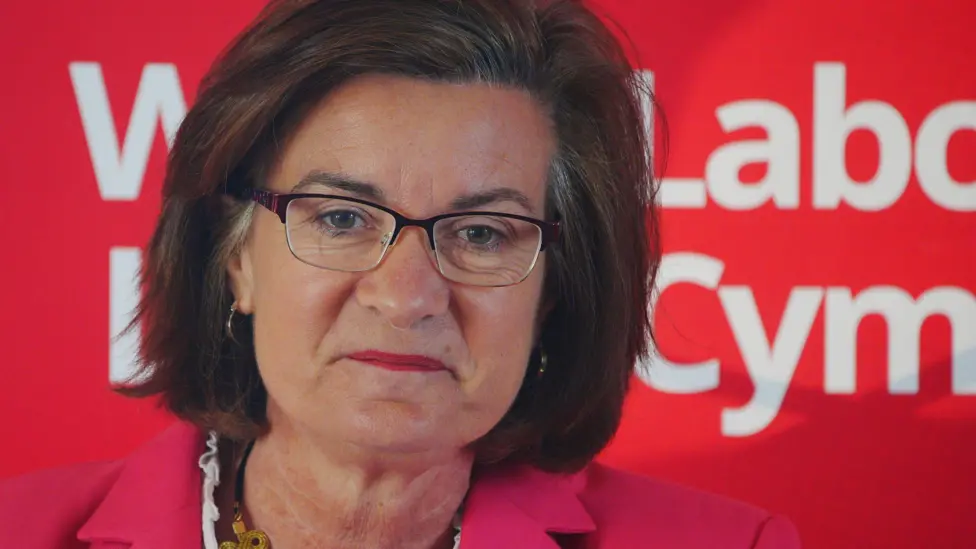
ELUNED MORGAN’s big speech aimed to rally the faithful ahead of next year’s Senedd election and reach out to those Labour voters alienated by the Labour government in Westminster. Artful leaks beforehand claimed she would “call out Keir Starmer”, criticise Westminster’s welfare reforms, “put country before party”, and invite voters to join her on the “Welsh red way”.
LABOUR’S SUPPORT CRATERS
Instead, it was desperate stuff, revealing the depths of Labour’s desperation in Wales. Labour’s share of the Welsh vote in last July’s General Election fell, and the edges of that vote are vulnerable. Reform UK has surged in opinion polls, which suggest that Nigel Farage’s policy-free limited company is taking votes from Labour in Wales at a rate even higher than it is stealing them from the Welsh Conservatives.
On the evening Baroness Morgan delivered her rallying call, a Barn Cymru/ITV poll revealed Labour’s support in Wales had fallen to an all-time low of 18% of those surveyed.
The opportunity existed for Baroness Morgan to do the unthinkable and set out once and for all how she would strike out from Keir Starmer’s unpopular Westminster government, stand up to it in the interest of Wales, and produce real changes in its approach to benefit Welsh voters.

Then reality intervened.
OLD LINES RE-USED
Even with devolution and the much-vaunted “partnership in power” at either end of the M4, the First Minister’s influence on Labour’s direction at the UK level is virtually non-existent.
Carefully leaked excerpts from her speech and remarks the First Minister made to a meeting of Labour’s Welsh constituency MPs stand revealed as the efforts of a struggling First Minister and an exhausted government to cling to power in Cardiff Bay.

Her message offered nothing concrete that was new, and nothing new that was concrete. Instead, Baroness Morgan leaned heavily on old Labour rhetoric that has echoed through decades of Welsh political life.
She framed Reform UK as a growing threat to Wales. She urged voters not to “gamble with our future” by backing Reform or Plaid Cymru, warning that a split on the left could open the door to right-wing populism.
She did not seem to understand that the new electoral system Labour and Plaid Cymru imposed on Wales for 2026 reduced the scope for tactical voting and did away with the possibility of split votes, where you could vote for a candidate on the constituency list and a party on the regional one.

That no longer exists. A vote cast will be a vote for a party and not an individual. A vote for Plaid Cymru, Labour, Reform UK, the Welsh Conservatives, the Liberal Democrats, or the Green Party is a vote for that party alone.
“YOU’LL NEVER TAKE OUR WIND!”
Even her efforts to connect present-day grievances with long-standing injustices came across as faintly ridiculous.
“We saw them take our coal,” Eluned Morgan said in her Braveheart moment.”We saw them take our water. We will not let them take our wind”.
Worse, her next line unwittingly referenced fictional Prime Minister Jim Hacker’s efforts to save the British sausage from EU food standards: “Not this time. Not on my watch.” At least she avoided saying “here I stand, I can do no other.”
The problem with Baroness Morgan’s approach is that it doesn’t allow her to address, or even acknowledge, the sources of voters’ dissatisfaction with Labour’s record in the Welsh Government.
According to the First Minister, “The Welsh NHS is not a failing system in need of rescue. It’s a public service that works.”
Pull the other one, it’s got bells on. It’s worth remembering that the Welsh Government denies the existence of a crisis in the Welsh NHS, despite doctors, nurses, clinicians, and reviews commissioned by it highlighting its extent.
And, because Eluned Morgan cannot acknowledge that voters might have some reason to be unhappy, it is hard for her to explain how she intends to address their concerns. Instead of addressing voters’ concerns, she spoke to the faithful as though voters were incidental to democracy.
THE POLICY VACUUM
Vacuous phrases, such as “Time for change isn’t just a slogan. It’s a demand,” added nothing to her message. She might come to reflect that “time for change” after being in power for a quarter of a century is precisely the sloganeering Labour in Wales might want to avoid.
Again, the First Minister spoke to the metropolitan media and the magic circle bounded by the Cardiff Ring Road, saying, “This is our Wales. Not a Wales of division or decline—but of solidarity, fairness and progress.”
Tell that to farmers, steel workers, the tourist industry, or the defence firms that the Welsh Government prevents from seeking funding from the Development Bank of Wales. Try saying it to the growing number of children who grow up in poverty in Wales and their parents, whose experience is almost identical to their own.
Political opponents and analysts were quick to point out that Morgan’s speech repeated themes long used by her Labour predecessors, from Rhodri Morgan’s “clear red water” to Carwyn Jones’ defiant calls for fairness from Westminster.
THE SAME OLD SONG
“The problem isn’t the message—it’s that we’ve heard it all before,” one Labour insider told The Herald. “Solidarity, NHS, devolution, anti-Tory sentiment—it’s the same script we’ve used since 1999.”
Welsh Conservative MS Darren Millar called the speech “a last-ditch, desperate attempt to save the Labour Party’s bacon,” adding: “Labour has broken the Welsh NHS, broken our education system, and broken our economy.”
Despite a clear effort to contrast Labour’s values with those of Reform—portrayed as “cynical”, “dishonest”, and “dangerous”—Morgan offered few fresh policies. Instead, she cited well-known Labour achievements like free prescriptions and school meals, and highlighted past battles with Westminster over steel, coal, and infrastructure.
Even Morgan’s call for “mutual respect” with a UK Labour government sounded like a rerun of speeches by former First Ministers, all of whom have, at one time or another, promised to “stand up for Wales” against London.
There was also pointed criticism of UK Labour welfare proposals, with Morgan insisting: “We will call it out if UK Labour get it wrong for Wales.” However, it remained unclear whether this marked a meaningful policy divergence or pre-election positioning.
“I can’t get a GP appointment, my son’s school is underfunded, and our train line is a joke,” said Julie Morgan, a retail worker in Pembrokeshire (no relation). “I’ve voted Labour all my life, but I honestly don’t know what they stand for anymore.”
And the problem for Eluned Morgan is that, nebulous aspirations and slogans apart, she couldn’t explain that either.


THE CEREDIGION Penfro Green Party has warned that rising global tensions are driving up energy costs and leaving households across west Wales increasingly exposed to price shocks.
In a statement issued on Wednesday (Mar 18), the party said the ongoing conflict in the Gulf is pushing up fuel prices, with knock-on effects on the cost of living, including food and household bills.
The Greens argue that decades of reliance on cheap oil have left the UK vulnerable, particularly in rural areas. They highlighted that around 72 per cent of households in the Ceredigion and North Pembrokeshire constituency rely on oil for heating.
The party is now calling for an urgent transition to electrified heating systems, supported by a major expansion of renewable energy, including wind and solar power.
Lead candidate Amy Nicholass said communities must be properly involved in decisions about new energy infrastructure.

“Consultations feel meaningless if people can’t see that their voices are being heard,” she said.
Plans for windfarms and new electricity pylons across Carmarthenshire, Ceredigion and Powys have faced opposition from some residents and landowners. However, the Greens said these developments are part of the Welsh Government’s long-term strategy set out in the Future Wales National Plan 2040.
The party suggested it is inconsistent for political parties to support the strategy at a national level while opposing specific planning applications locally.
It also addressed concerns over alternatives to pylons, such as underground cable trenching, warning that these options are significantly more expensive and have not been widely used for high-voltage, long-distance transmission. Pylons, it added, are also more resilient during severe weather.

The Greens say planning decisions should be taken at the lowest appropriate level, giving local councils a stronger voice, while accepting that the Welsh Government should retain final authority over major strategic projects.
The party believes that greater community involvement, along with tangible local benefits such as improved transport, upgraded facilities, and access to renewable technologies, will be key to gaining public support.
The statement concludes that the conversation around energy infrastructure must shift quickly to reflect both the urgency of the crisis and the potential benefits for local communities.

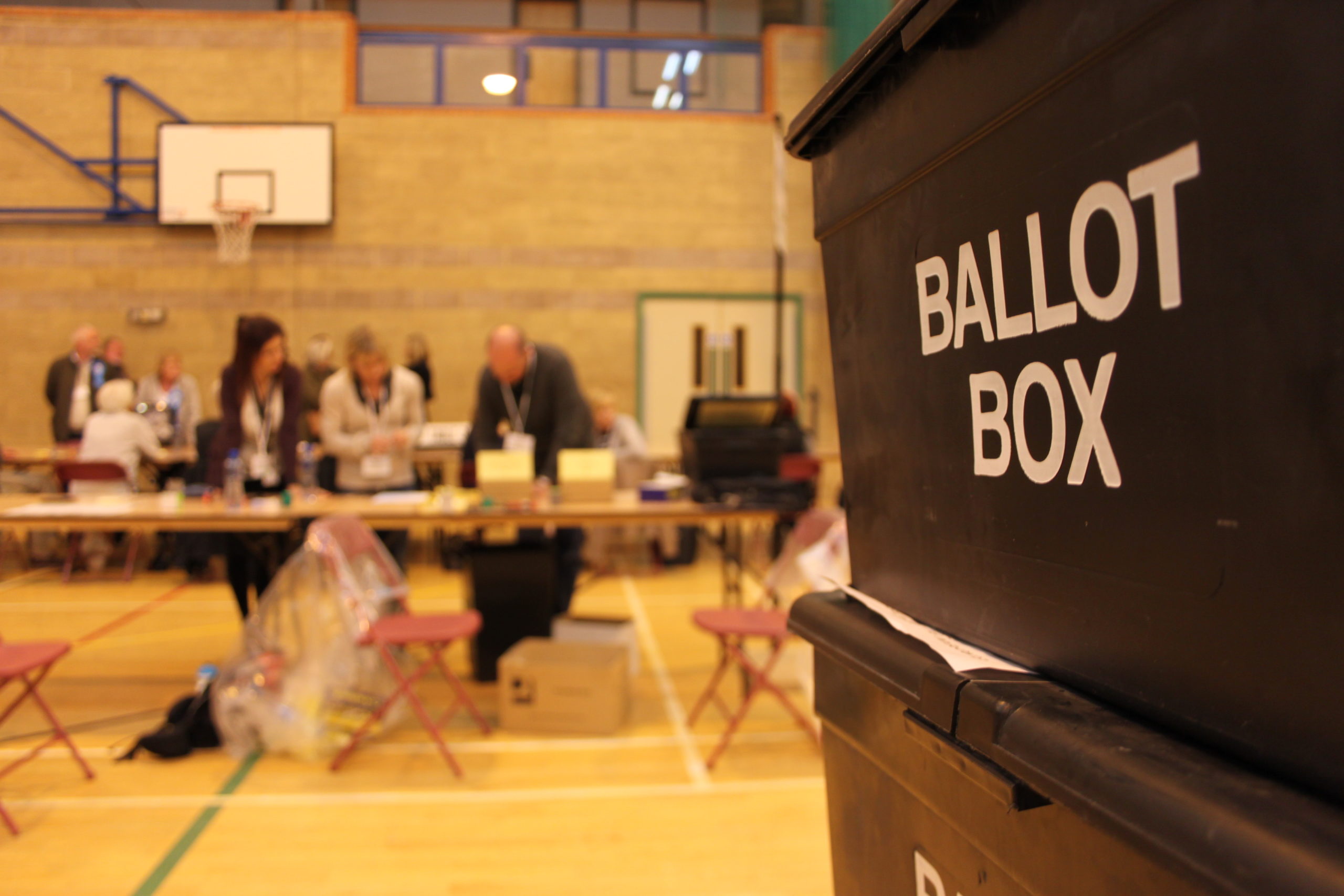
Broadcaster promises debates, youth-focused content and full results coverage across Wales
BBC CYMRU WALES has unveiled its plans for comprehensive coverage of the 2026 Senedd election, with a strong focus on accessibility, youth engagement and on-the-ground reporting.
The broadcaster says its election output—available in both English and Welsh—will include live debates, breaking news, in-depth interviews, analysis and expert commentary across television, radio, online and social platforms ahead of polling day on Thursday (May 7).
Special attention will be given to first-time voters aged sixteen and seventeen, as well as explaining the new electoral system. Content aimed at younger audiences will feature prominently, including short-form videos, “minute manifestos,” rapid-fire leader Q&As, and fact-checking reels shared across BBC Wales’ social channels.
Delyth Isaac, Head of News and Current Affairs at BBC Wales, said: “Welsh voters are our number one priority in this election. Our job in the run-up to polling day is to ensure they have all the information they need to make their choice.
“Our teams are getting out into communities across Wales, listening to voters, reporting on local issues and holding politicians to account. We will create spaces for open debate and ensure all voices are heard.”
Debates across Wales
A series of live debates and Q&A programmes will take place across the country in the weeks leading up to the election.
On Tuesday (Mar 17), Nick Servini hosted a Your Voice Live debate in Wrexham, featuring representatives from Welsh Labour, Welsh Conservatives, Plaid Cymru, Welsh Liberal Democrats, Reform UK and the Wales Green Party.
Further programmes include two Your Voice Live: Ask the Leader events. One will be broadcast from Haverfordwest on Wednesday (Apr 8) at 8:00pm on BBC One Wales, with another from Llandudno on Wednesday (Apr 15) at the same time. Both will also air on BBC Radio Wales and BBC Sounds.
The main leaders’ debate will take place on Tuesday (Apr 28), hosted by Bethan Rhys Roberts in Cardiff and broadcast at 8:00pm on BBC One Wales.
Digital, radio and investigation focus
BBC Wales News Online and Cymru Fyw will provide rolling coverage throughout the campaign, including policy analysis, constituency breakdowns, manifesto guides and BBC Verify fact-checking.
The BBC’s investigations team will also examine the spread of disinformation during the campaign, particularly on social media.
On radio, BBC Radio Wales and BBC Radio Cymru will feature regular election coverage across flagship programmes, alongside special editions of podcasts such as Walescast and Gwleidydda.
Full results coverage planned
BBC Wales reporters will be present at every count across the country when results are declared on Friday (May 8).
Coverage will include live reporting, expert analysis and reaction from candidates, with Political Editor Gareth Lewis playing a central role.
Special results programmes will air on BBC One Wales and S4C, alongside rolling coverage online and on radio. Politics Wales will also broadcast extended programmes during the campaign and a one-hour results special on Sunday (May 10).
Content for younger audiences
BBC Bitesize will produce a bilingual series of explainer videos aimed at 14–16-year-olds, while Newyddion S4C will provide dedicated coverage for younger viewers.
A major Welsh-language debate, Y Ddadl Fawr, will be broadcast live from Carmarthenshire on Thursday (Apr 23) at 8:00pm across S4C, BBC Radio Cymru and BBC Sounds.
The BBC said its aim is to ensure every voter in Wales understands how to take part and how their vote counts as the country heads towards a crucial election.
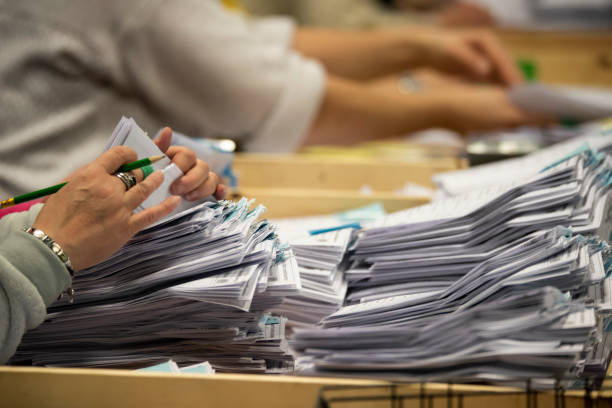
Late Reform candidate takes seat as independent surge and Labour withdrawal shape contest
REFORM UK candidate Scott Thorley has won the Hakin by-election, securing 179 votes in a contest marked by low turnout, a late candidate withdrawal, and a strong showing from an independent challenger.
A total of 661 votes were cast, representing a turnout of 32.7%, with 271 of those votes submitted by post.
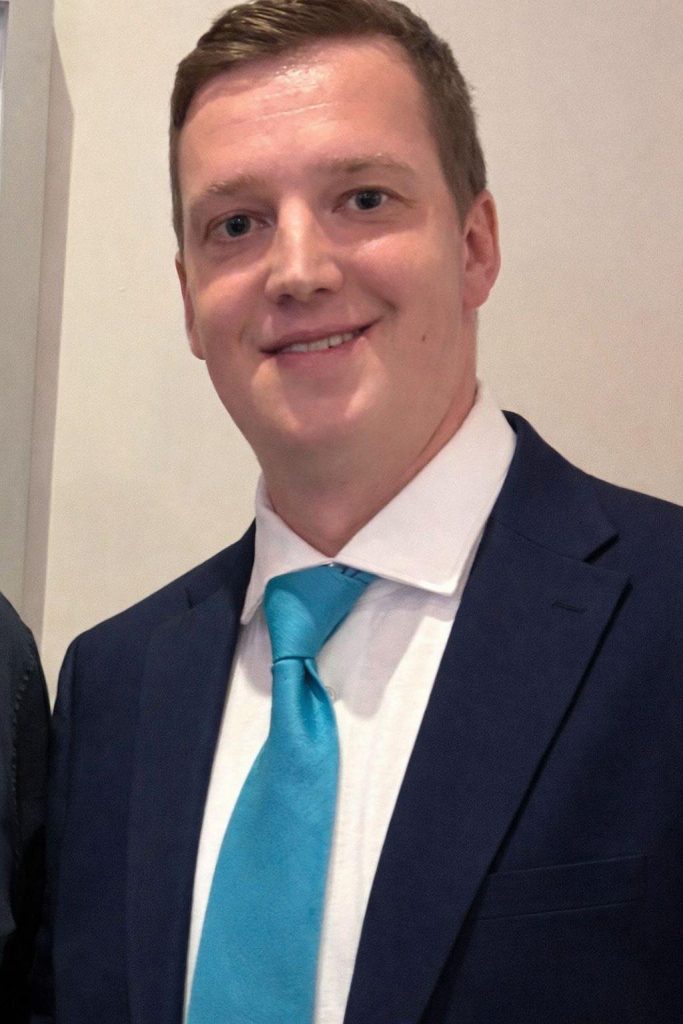
Thorley, who sits as a Haverfordwest town councillor and works as a retail manager on the Withybush Industrial Estate, was a late and reportedly reluctant addition to the ballot. Not being from Milford Haven, his candidacy raised some eyebrows locally.
However, he emerged victorious on the night and appeared visibly both surprised and excited by the result.
Speaking to The Herald shortly after the count, in his first video interview as county councillor, Thorley said he was “passionate about serving the community” and pledged to ensure that Milford Haven and Hakin receive a fairer share of council resources.
He said: “We need to start with the basics – fixing potholes and broken bus shelters. It’s clear Hakin has been neglected.”
Thorley already serves as a Haverfordwest town councillor and indicated he intends to continue in both roles.
He said he would be able to “get on with doing both jobs”.
The Herald understands this is the first time a councillor has represented communities in both Haverfordwest and Milford Haven at the same time.
Strong showing for independent
Independent candidate Lee James Bridges delivered one of the standout performances of the election, finishing with 106 votes. A sitting Milford Haven town councillor, Bridges ran a highly visible and energetic campaign, focusing strongly on local issues.
Without the backing of a political party, his result is likely to be seen as a significant achievement and suggests he may play an ongoing role in local politics.
Speaking after the count, Lee Bridges said: “I just want to say a sincere thank you to everyone who supported me during this campaign. It’s been a privilege to meet so many residents across the Hakin ward and hear your views.

“Of course I’m disappointed with the result, but I’m proud that I stood up, gave it everything, and ran a positive campaign focused on representing local people.
“What I will say is that it is really hard to put yourself out there and try to do this, as it can be very difficult to see people write unkind things about you on social media. Anybody who is willing to stand up has my respect.
“Congratulations to the winning candidate, Scott Thorley representing Reform, and I wish him the very best in representing the people of Hakin at County Hall.”
Heavy campaigning fails to boost turnout
The election saw an intense level of doorstep campaigning, with candidates from across the political spectrum carrying out extensive door knocking in the ward.
However, the level of canvassing appears to have had a mixed reception among residents, with some reportedly placing notes on their doors reading “no politicians” in an effort to deter campaigners.
Despite the significant effort on the ground and what many viewed as a tightly contested race, turnout remained relatively low at just 32.7%.
Limited campaign still delivers strong result
Brian Taylor, representing the Welsh Conservative Party, secured 144 votes. A well-known local businessman and familiar name in Hakin, Taylor’s campaign was notably limited, as he was on holiday during some of the election period and did not attend the count.
Despite this, he still achieved a strong second-place finish, reflecting his established presence in the community.
With just 35 votes separating him from the winner, several people at the count suggested that, with a more visible campaign, Taylor would have taken the seat.
Labour candidate withdraws
The election was also overshadowed by the withdrawal of Welsh Labour candidate Nicola Catherine Harteveld. She pulled out of the race after reporting that her son had been subjected to verbal abuse following her candidacy, with police involvement.
Despite her withdrawal, Harteveld still received 27 votes – more than independent candidate Derrick Abbott, who polled 11.
The unusual situation left Welsh Labour, for a short time, unknowingly campaigning in the area without an active candidate, with senior figures including the First Minister seen canvassing locally during the campaign period.
Elsewhere, Sam Booth of the Wales Green Party received 85 votes, Sam Warden of the Welsh Liberal Democrats secured 57, and independent Duncan Edwards polled 52.
The result highlights both the continued fragmentation of local politics and the potential for independent candidates to make a significant impact, particularly where strong community ties and grassroots campaigning are evident.
With turnout relatively low and a high proportion of postal votes, the election also raises ongoing questions about engagement in local democracy.
Efficient count praised
Pembrokeshire County Council staff were praised for running an efficient and accurate count on the night.
The Returning Officer was Will Bramble, Chief Executive of Pembrokeshire County Council.
Full result:
Derrick Abbott (Independent) – 11
Sam Booth (Wales Green Party) – 85
Lee James Bridges (Independent) – 106
Duncan Edwards (Independent) – 52
Nicola Catherine Harteveld (Welsh Labour) – 27
Brian Taylor (Welsh Conservative Party) – 144
Scott Thorley (Reform UK) – 179
Sam Warden (Welsh Liberal Democrats) – 57



Crime13 hours ago
Rapist jailed after ‘abhorrent’ attacks on woman and children
Haverfordwest man told police “women won’t have sex without force” A HAVERFORDWEST man who raped a woman and a young...


News15 hours ago
Reform secures first Pembrokeshire councillor in Hakin by-election win
Late Reform candidate takes seat as independent surge and Labour withdrawal shape contest REFORM UK candidate Scott Thorley has won...

News1 day ago
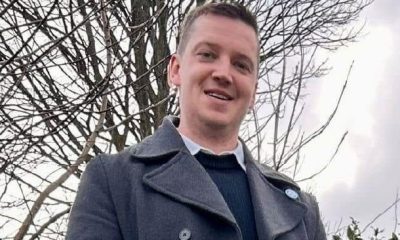
Scott Thorley elected as Pembrokeshire’s first Reform councillor
REFORM UK candidate Scott Thorley has won the Hakin by-election after securing 179 votes. The full result is as follows:...


News1 day ago
Police confirm man has died after being recovered from River Cleddau
Major emergency response in town centre after concerns raised for man in water A MAN has died after being recovered...

Community1 day ago
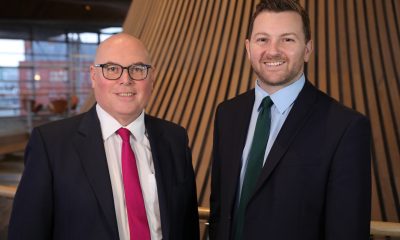
Davies and Kurtz urge groups to seek employability funding
Community organisations in Pembrokeshire encouraged to apply for new grants supporting skills and job access LOCAL Senedd Members Samuel Kurtz...

News1 day ago
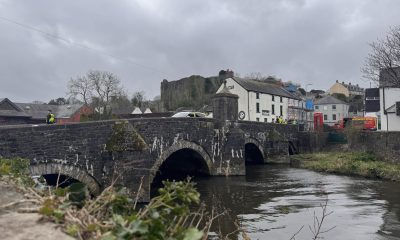
Emergency services flood Haverfordwest after reports of person in river
Town centre sealed off as multi-agency response continues A MAJOR emergency response is underway in the centre of Haverfordwest after...

News1 day ago
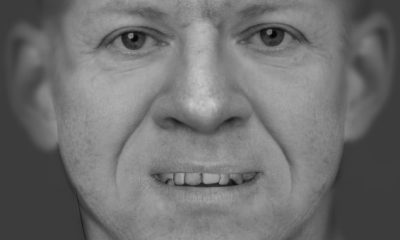
Detectives receive surge of new information in bid to identify man found at Powys reservoir
Public response follows release of facial image as officers pursue fresh lines of enquiry DETECTIVES investigating the identity of a...

News2 days ago
Senedd committee urges next Welsh Government to prioritise Wales–Ireland links
A SENEDD committee has called on the next Welsh Government to continue prioritising Wales’s relationship with Ireland, describing it as...

Education3 days ago
New facilities open at Portfield School as redevelopment reaches key milestone
THE FIRST phase of a major redevelopment programme at Portfield School in Haverfordwest has been completed, marking a significant step...


News3 days ago
£377m spent saving blast furnaces months after Port Talbot closure
Government intervention keeps UK’s last primary steelmaking furnaces running THE UK GOVERNMENT spent £377 million to prevent the closure of...
-

 Health6 days ago
Welsh Ambulance Service to host bi-monthly Board meeting
-
 News5 days ago
Rayner and Lammy visit Wales to discuss justice and community safety
-
 News4 days ago
Fishguard linked to allegations in Many Tears Animal Rescue investigation
-
News1 day ago
Emergency services flood Haverfordwest after reports of person in river
-
 News7 days ago
Calls grow for water industry overhaul after Welsh Water faces £44.7m fine
-
 Education7 days ago
Manorbier school closure approved while insurance claim still unresolved
-
 Charity6 days ago
Many Tears Animal Rescue visited by inspectors as police attend in support role
-
 Local Government5 days ago
Investigation confirmed after inspectors visit Many Tears Animal Rescue