


Crime
Police scheme to tackle predators on nights out to be rolled out forcewide


Project Vigilant will now cover all four Dyfed-Powys divisions
A POLICE operation that uses specially trained officers to spot and disrupt potentially predatory behaviour during nights out is being extended across the Dyfed-Powys Police force area.
Project Vigilant, which was trialled in Carmarthenshire over the Christmas period, involves both plain clothed and uniformed officers working together to identify and intervene where concerning behaviour is observed—before a crime takes place.
Plain clothes officers act as ‘spotters’, trained to recognise signs of sexually predatory or violent conduct. Once such behaviour is identified, uniformed officers nearby are called in to disrupt and, where necessary, take enforcement action.

Following a positive review of the pilot, the project will now be rolled out across Ceredigion, Pembrokeshire and Powys.
Chief Inspector Dominic Jones said: “This was a new project for Dyfed-Powys Police that we trialled during the busy festive season. It’s an innovative, intelligence-led approach to protecting vulnerable people and preventing harm.

“Everyone should feel safe on a night out. Nobody should have to modify their behaviour to avoid becoming a victim. By targeting those who pose a risk, we can change behaviours and make our communities safer.”
The force received training from Thames Valley Police, where Project Vigilant was first developed. Officers were taught how potential predators may attempt to isolate individuals from their friends or use other concerning tactics. Once identified, uniformed colleagues can then make their presence known and potentially prevent a crime from occurring.
CI Jones added: “Evidence from other forces shows that deploying visible officers alone often results in offenders moving elsewhere. What sets Project Vigilant apart is the use of plain clothes officers to discreetly spot suspicious behaviour, with backup ready to intervene. So far, there is no evidence that this simply displaces the problem.”

While the initiative is focused on reducing sexual and violent offences, the pilot also led to the detection of other crimes. In one case, officers safeguarded a vulnerable woman who had become separated from her friends. On another occasion, a man was arrested for drink driving and possession of ketamine after being spotted driving erratically.

Dyfed-Powys Police officers who took part in the scheme praised its effectiveness. One said: “The training on what behaviours to watch for was really beneficial. That one interaction—asking the right question at the right time—could stop a sexual assault.”
The pilot was funded by the Office of the Police and Crime Commissioner under the Serious Violence Duty.
Police and Crime Commissioner Dafydd Llywelyn said: “I’m proud to have supported this project. It’s a proactive approach that ensures officers are in the right place at the right time to prevent harm. The rollout of Project Vigilant across all four divisions reflects Dyfed-Powys Police’s clear commitment to public safety.”




Hartt family members listed at Haverfordwest Magistrates’ Court over unpaid penalties linked to major cattle prosecution
TWO PEMBROKESHIRE farmers convicted in a major bovine tuberculosis-related cattle case are due back before the courts this week over unpaid financial penalties.
Henry Hartt, 66, of Ciffig, Whitland, and Edward William Henry Hartt, 48, of Llandewi Velfrey, are both listed to appear at Haverfordwest Magistrates’ Court on Thursday (June 11).
Court records show both men face proceedings relating to the non-payment of fines of £94,739.64 imposed on March 4, 2024. Separate applications to lodge committal warrants are also listed, relating to unpaid fines of £22,300 and £22,400 respectively.
The pair were among three members of the Hartt family sentenced at Swansea Crown Court in March 2024 following a major prosecution brought by Pembrokeshire County Council involving bovine TB controls.
The court heard that cattle known to have reacted to bovine tuberculosis tests were knowingly kept on-farm, while substitute animals were allegedly presented for slaughter instead.
At the time, Henry Hartt, Edward Hartt and Charles Hartt admitted a total of 12 cattle identification offences connected to Longford Farm, Clynderwen.
The case centred on failures to comply with bovine TB restrictions and cattle tracing rules designed to prevent the spread of the disease.
Each defendant was fined £24,000, while confiscation orders and prosecution costs running into hundreds of thousands of pounds were also imposed.
Thursday’s hearing is expected to deal with enforcement proceedings connected to the unpaid financial orders rather than the original criminal offences.
The Herald will be attending court.

How this newspaper’s legal battle helped shape national guidance on reporting restrictions
A LITTLE-KNOWN legal challenge by The Pembrokeshire Herald has left a lasting mark on how courts across England and Wales handle reporting restrictions.
The case originated in a high-profile local trial, a mid-trial anonymity order for defence witnesses, threats to a reporter, and public accusations of biased coverage — accusations rooted in legal restrictions rather than editorial choice.
It culminated in the Herald becoming one of the few independent regional titles to take a Crown Court judge’s decision to the Court of Appeal.
Though the appeal was dismissed on procedural grounds, the case did not end there. The following year, Re Pembrokeshire Herald / R v Oulton [2021] EWCA Crim 1165 was cited in the Judicial College’s official guidance on Reporting Restrictions in the Criminal Courts — the key reference used by judges and practitioners nationwide.
For a small independent paper serving rural Pembrokeshire, this represents a rare legacy: turning a local battle into a contribution to national standards on open justice.
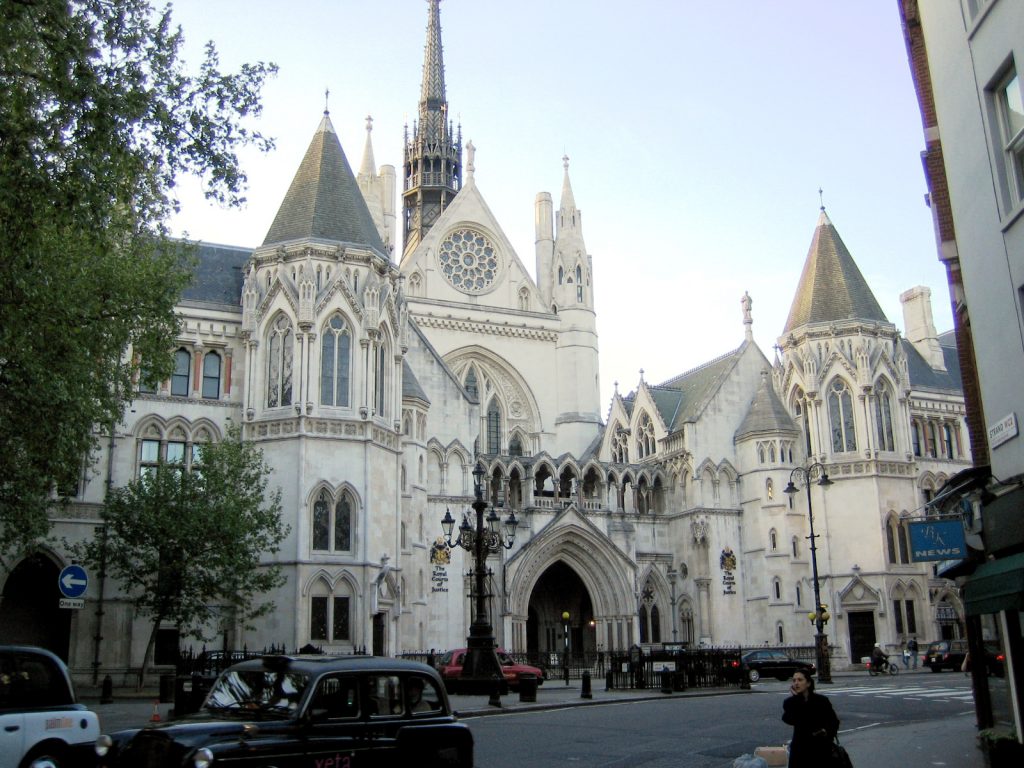
A trial with limited coverage
The proceedings centred on the 2021 trial of former Haverfordwest primary school teacher James Oulton at Swansea Crown Court. He faced 30 counts of sexual assault on former pupils.
Other media outlets provided limited coverage, leaving The Herald to deliver detailed daily reporting on a case of significant local importance.
The newspaper reported the prosecution evidence extensively, consistent with the default principle of open justice: criminal trials are heard in public so that justice can be seen to be done.
Mid-trial restrictions
That changed when the trial judge imposed a reporting restriction order under section 46 of the Youth Justice and Criminal Evidence Act 1999.
The order protected the anonymity of several adult defence witnesses, based on evidence of fear and distress linked to local tensions and social media commentary.
Readers continued to see detailed prosecution accounts, but The Herald was restricted from equivalent contemporaneous reporting of the defence case.
Criticism followed swiftly, with accusations of one-sided coverage.

In truth, The Herald argued it had been legally prevented from presenting the fuller picture.
The imbalance became particularly stark after Oulton was found not guilty of all charges. Many interpreted the verdict through the lens of the earlier, necessarily incomplete reporting.
Pressures in and around court
Tensions escalated beyond editorial debate.
Herald reporter Carli Newell was allegedly threatened in the public gallery and had to be removed for her safety. The judge later apologised in open court.
The newspaper also received hostile communications.
Despite this, it continued its coverage.
An expensive appeal
Frustrated by the restrictions and their effects, The Herald took the rare step of challenging the order via section 159 of the Criminal Justice Act 1988.
This route allows media organisations to appeal certain reporting restrictions to the Court of Appeal.
With no corporate backer, the fight was very expensive — much of it funded from Editor Thomas Sinclair’s savings.
The BBC expressed sympathy but cited budget constraints for joining as co-appellant. The Press Association considered the case important enough to attend the hearing, reportedly sending the only other person in the public gallery.
The Herald was represented by barrister Matthew Graham Paul, with Sinclair and assistant Ryan Millward present.
The principle at stake
At its core, the challenge concerned open justice: the right of the public to receive fair, accurate, and contemporaneous reporting of proceedings heard in open court.
Restrictions, while sometimes necessary to protect witnesses, should be proportionate, evidence-based, and subject to proper challenge.
The Court of Appeal dismissed the application, primarily on timing and jurisdictional grounds. The challenge came after witnesses had testified in reliance on the order, and certain procedural routes were limited.
However, the judgment engaged with the important issues raised and has since been referenced in official guidance.
National impact
In 2022, the Judicial College guidance expressly cited the case in sections addressing appeals against reporting restrictions, section 159 procedures, and the limits of appellate powers.
It reinforces principles the Herald championed: fair and contemporaneous reporting, the media’s role as the “eyes and ears” of the public, and the need for restrictions to be necessary and proportionate.
Why it matters
In an era when many local newspapers have scaled back court reporting due to costs, The Herald invested heavily in coverage, endured criticism and threats, and then risked significant resources to defend the public’s right to fuller information.
It was not a fight for sensationalism, but for the ability to report more — not less.
The newspaper was blamed for imbalance while simultaneously battling for the tools to correct it.
Though the specific appeal was lost, the principles endure.
A small independent title from Pembrokeshire helped inform how courts nationwide approach the delicate balance between open justice, witness protection, and fair reporting.
Photo caption:
Press freedom and open justice: The Pembrokeshire Herald took its reporting restrictions battle to the Court of Appeal (Pic: Herald).

Kyle Bevan, jailed for the murder of Haverfordwest toddler Lola James, was allegedly stabbed 25 times and left ‘as if asleep’ in a maximum-security prison cell attack
KYLE BEVAN, the man jailed for murdering two-year-old Lola James in Haverfordwest, was stabbed 25 times during an attack in his prison cell, a murder trial has heard.
Bevan, 33, was serving a life sentence at HMP Wakefield after being convicted of killing his partner’s daughter, Lola, whose death shocked Pembrokeshire and led to major questions about child protection failings.
Leeds Crown Court heard that Bevan was attacked on November 5 last year by three fellow prisoners, Lee Newell, 57, Mark Fellows, 45, and David Taylor, 63.
All three deny murder.
‘Left to bleed to death’
Prosecutor Jason Pitter KC told the jury the attack lasted four minutes and 39 seconds after Bevan entered his cell on A Wing.
He said the defendants followed him in “with real purpose” before allegedly carrying out a joint attack intended to kill him.
The court heard Bevan suffered at least 30 injuries, including 25 stab wounds from a sharp weapon. His heart and major blood vessels were damaged.
Mr Pitter said Bevan was then placed in bed “as if asleep” and left to bleed to death. His body was not discovered by prison staff until roll call the following morning.
Weapons found
Jurors were told a makeshift weapon, described as a folded piece of metal, was later found hidden behind a television and had Bevan’s blood on it.
Other weapons were allegedly found hidden in a container of chilli sauce in Taylor’s cell.
The court also heard that Taylor was allegedly heard saying: “Nice working with you and the Ice Man,” with “Ice Man” said to be a nickname for Fellows.
Pembrokeshire case
Bevan was jailed in 2023 for the murder of Lola James, who died after suffering catastrophic head injuries at her home in Haverfordwest.

Her mother, Sinead James, was also jailed for causing or allowing her death.
The case caused widespread anger in Pembrokeshire and led to serious questions about how Lola had been left in danger despite concerns being known before her death.
The trial continues.



Crime11 hours ago
Farmers fined in bovine TB scandal face fresh court action
Hartt family members listed at Haverfordwest Magistrates’ Court over unpaid penalties linked to major cattle prosecution TWO PEMBROKESHIRE farmers convicted...


Crime15 hours ago
Pembrokeshire child killer stabbed to death in prison cell, murder trial hears
Kyle Bevan, jailed for the murder of Haverfordwest toddler Lola James, was allegedly stabbed 25 times and left ‘as if...


News22 hours ago
Pendine cliff fall victim recovering after major emergency response
A 22-YEAR-OLD man who suffered serious injuries after falling from cliffs overlooking Pendine Beach is recovering well following emergency surgery....


Community24 hours ago
Commissioner launches free course to help tackle ageism in Wales
A NEW free learning course has been launched to help people across Wales recognise and challenge ageism. The Older People’s...


News2 days ago
First Minister challenged over jobs for student nurses
REFORM WALES has accused the First Minister of failing to guarantee jobs for student nurses in Wales, despite continuing pressure...

Crime2 days ago
Knife blankets call as school staff face rising violence fears
GMB says protective equipment should be considered where risk assessments show staff could face blades SCHOOL staff should be given...


News2 days ago
Claire Archibald secures review of Milford Haven train times
RURAL TRANSPORT CONCERNS RAISED WITH TFW CLAIRE ARCHIBALD MS has secured a review of train times between Milford Haven and...


Crime2 days ago
PCC review calls for stronger youth crime prevention work
REPORT MAKES 13 RECOMMENDATIONS A REVIEW into crime and anti-social behaviour services for young adults has called for stronger prevention...


Crime2 days ago
Families condemn failed appeal by paddleboard boss jailed over Haverfordwest tragedy
RELATIVES SAY LATEST COURT BID HAS REOPENED PAIN AFTER FOUR DEATHS ON WESTERN CLEDDAU THE FAMILIES of victims of the...


Crime2 days ago
MPs warn overcrowded Welsh prisons are undermining safety and rehabilitation
A DAMNING report by MPs has warned that overcrowding, staff shortages and rising pressure across Welsh prisons are undermining safety,...
-
Crime6 days ago
Paddleboard company owner loses bid to cut sentence over Haverfordwest tragedy
-

 Crime5 days ago
Milford Haven man admits harassment and assault
-

 News5 days ago
Community appeal for privacy after serious emergency in Pendine
-

 Crime3 days ago
Sex offender in senior role at Tenby family hotel
-

 Community3 days ago
Forgotten wartime archive found in Pembroke Dock attic after 80 years
-
Crime2 days ago
Families condemn failed appeal by paddleboard boss jailed over Haverfordwest tragedy
-

 Community5 days ago
Founders Day hailed a success despite rising costs and extra security
-

 Business5 days ago
Call for gym and Padel courts at Kiln Park Farm unanimously backed