


News
One third less for new Chief


Former Chief: Bryn’s rate of £195,000 a year has been cut for the new chief
A REPORT from the Independent Remuneration Panel for Wales (IRPW) has recommended a massive cut in pay for any new Chief Executive at Pembrokeshire County Council.
Former Chief Executive Bryn Parry Jones’ rate of £195,000 a year, plus extra for his duties as returning officer, will be replaced with a significantly lower but still eyewatering salary of £130K per year.
The council had argued that the replacement salary should be £145,000 a year. The board, whose recommendations must be taken into account by the local authority when setting the pay for a new Chief Executive, have said that Pembrokeshire’s size does not justify paying even the Council’s proposed salary, itself £50,000 lower than that paid to Bryn Parry-Jones.
In relation to Chief Executives, the Panel’s role is limited to taking a view and making a recommendation. Although the Local Authority/ Authorities concerned must have regard to this opinion, they are not obliged to follow it. It is true other legislation will require any such decision to be made through a vote of full council.
It is also the case the decision would be open to scrutiny, not only by the authorities’ internal scrutiny processes, but also by external regulators such as the Wales Audit Office. The authority would need to explain why they did not agree with the Panel’s recommendation, if it set a different salary than that suggested by the Remuneration Panel.

QUESTIONS RAISED ON PAY
The setting of the Chief Executive’s salary at a level a third lower than Mr Parry-Jones’ raises a number of questions about the way in which his salary and the salary of senior officers has been set. IPPG Leader Jamie Adams, and others within the governing group, have repeatedly claimed that to get the best the authority needs to offer large and attractive wage packages to senior officers. In the past, the same councillors have used IRPW recommendations as a basis for arguing that high pay was justified.
It would be, however, a remarkable situation indeed if the Head of Paid Service had a smaller remuneration package than staff notionally junior to them in the Council hierarchy. From an examination of similar roles in other authorities, The Pembrokeshire Herald has discovered that the salary of those staff at director level – for example, the same as Pembrokeshire’s own Director of Development Dr Steven Jones – are paid between 75% and 80% of a Chief Executive’s salary.
If that was followed through to its logical conclusion, setting the salary of the Chief Executive at £130,000 would produce director level salaries in the region of (at most) £104,000 a year, a pay cut of around one fifth of those directors’ current salary level.

The Pembrokeshire Herald has looked at a number of authorities in England of comparable size to Pembrokeshire and has noticed that salaries for senior officers in Wales appear to be significantly higher than those of comparators across the border. One noticeable factor in the ratio of pay between the lowest paid full-time council employees in England is that Chief Officers’ pay is often pegged to the pay of the authorities’ lowest earners.
In the case of Hertfordshire, for example, this means that the median Chief Officers’ pay of £127,000 is between seven to eight times the pay of the lowest (non-school) members of council staff.
If Pembrokeshire County Council set its pay on such a basis, this would mean that the lowest paid full-time worker at the authority when Mr Parry-Jones was its Head of Paid Service would have been approximately £26,000. Almost 3,000 of Pembrokeshire’s County Council’s 6,129 workforce are paid less than the so-called ‘living wage’ of £7.65 per hour. An hourly rate of £7.65 per hour equates to an annual wage of around £15,000 pa.

if worked on a full-time basis. Paul Miller told us: “The pay of the former Chief Executive was allowed to reach a level completely out of kilter with the lives of the ordinary people Pembrokeshire Council is elected to serve. Future Chief Officer remuneration needs to be much lower and needs to be very clearly related to the pay of rest of staff body.
I’m pleased that the Independent Remuneration Panel for Wales has sought to significantly reduce the salary offered to the next Chief Executive. I will, at next weeks meeting, be calling for a much more wide ranging review of senior officer pay in Pembrokeshire.”
‘TIME TO MOVE FORWARD’
Bob Kilmister agreed: “On the basis of the evidence I have seen so far, the recommendation from the Remuneration Panel for Wales is in my view is extremely sensible. The Pembrokeshire Alliance said at its launch, ‘We want to see an end to the excessive pay of senior staff.’ It is clear the Remuneration Panel for Wales agree with this conclusion. How successive ruling administrations have allowed such excessive pay over a such a long period of time remains a mystery to me and I am sure most of the residents of Pembrokeshire.”
The issue of the high salary paid to former Chief Executive Bryn Parry-Jones was highlighted by Cllr Jacob Williams: “It would appear from the Panel’s recommendation that Bryn Parry-Jones was overpaid for his role for nigh on twenty years. With several pay rises during that time, there was plenty of scope to bring it back to a reasonable figure but as your readers know, the ruling independent party are easy with other people’s money.
Always have been, always will be.” Cllr David Simpson told The Herald: “I think that the Council should listen to the advice given from the Independent Remuneration Panel. When I was a Cabinet Member, we were told time and again that the Welsh Assembly Government ‘had it in’ for Pembrokeshire because the Independents were the ruling group! Look where this Group mentality thinking has got us.
The attitude that the Independent Group is always right is the reason that Pembrokeshire County Council is the laughing stock of Wales. The arrogance of members of the Independent Group has prevailed for far too long, when Education was put into Special Measures help and assistance offered to us by the Ministerial Board was constantly fought against.
The Chairman of the Ministerial Board, who was himself a retired Judge, could not believe the resistance he met. He once stated to me that whenever he pointed out a problem with the system the Council would retaliated with thirty excuses! It took the Council 12 months to realize that the Board was right and we either worked with them or they would take over the authority. The Panel’s knowledge is far superior to that of lay members of the Council and it’s time for us to put excuses behind us. It is time to move forward.”

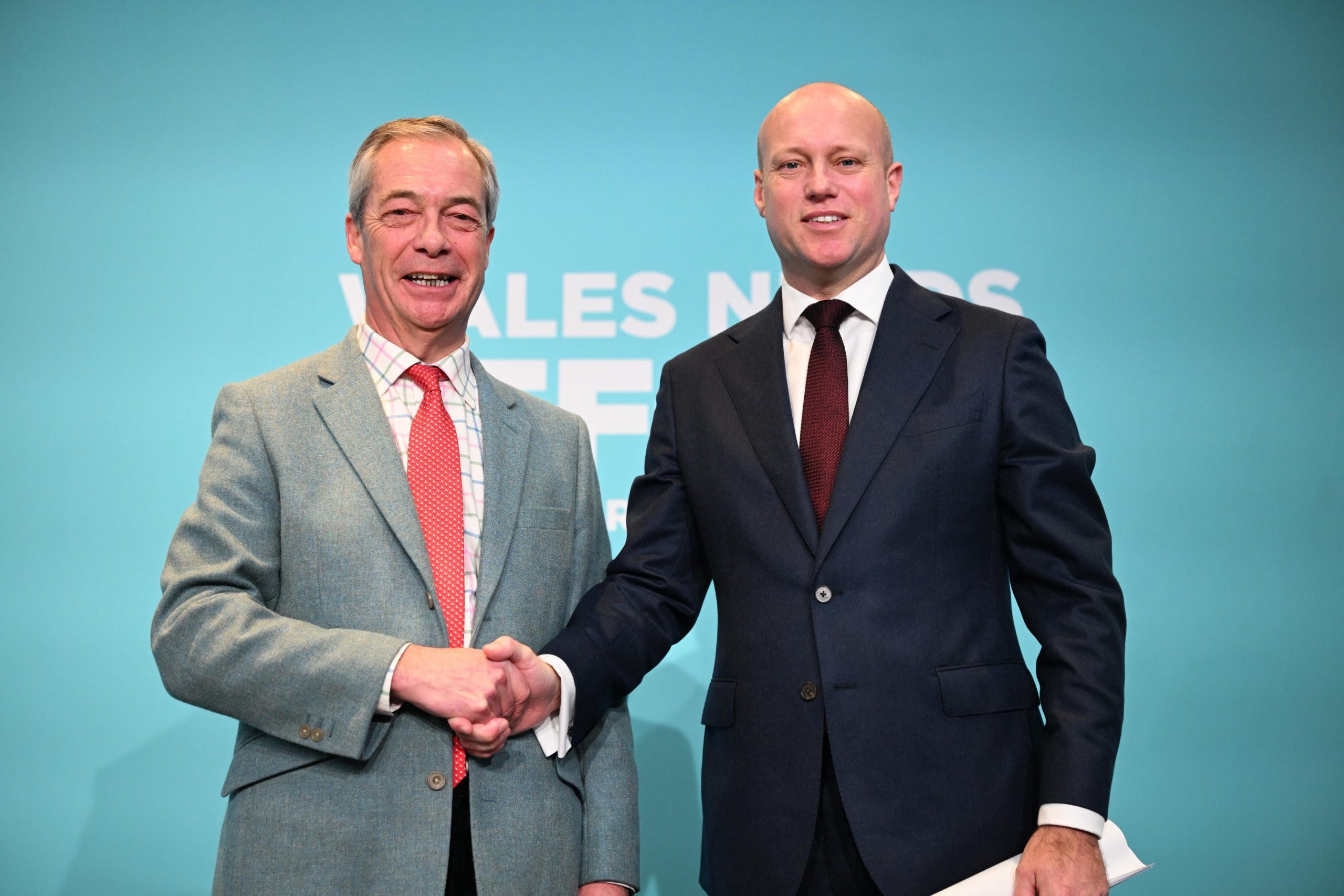
Monkton councillor tops Pembrokeshire list as party confirms Carmarthenshire names and includes Haverfordwest councillor in unwinnable Swansea spot
REFORM UK has unveiled its full list of candidates for the 2026 Senedd election, setting out its challenge across west Wales including Pembrokeshire and Carmarthenshire.
The party has named Susan Claire Archibald, a sitting councillor for Monkton on Pembroke Town Council, as its lead candidate for the Ceredigion Preseli, Mid and South Pembrokeshire regional list.
Speaking to The Herald, Archibald said: “I am honoured to represent Reform UK and Wales.” She added that a fuller statement outlining her priorities would be released in due course.
The remaining candidates on the Pembrokeshire regional list are Paul Marr, a former prison officer, Michael Allen, Elisa Randall, Peter John and Bernard Holton.
Carmarthenshire candidates named
Reform has also confirmed its list for the Caerfyrddin and Llanelli region, with Gareth Beer placed first, followed by Carmelo Colasanto, Sarah Edwards, Christopher Brooke, Alan Cole and Michelle Beer.

The announcement forms part of a nationwide rollout of candidates as the party seeks to establish itself as a credible electoral force ahead of the 2026 vote.
Thorley listed in Swansea region
Among the names included elsewhere is Scott Thorley, a Haverfordwest-based councillor and the first Reform representative elected to Pembrokeshire County Council.
Thorley appears on the party’s list for the Gower and Swansea West region, where he is placed sixth.
Under the Senedd’s proportional representation system, candidates placed lower on regional lists are significantly less likely to be elected, meaning his position is widely viewed as a paper candidacy to complete the slate.

Election framing
Reform Wales leader Dan Thomas said the party was offering voters a stark political choice.
He said: “After a hundred years of failure, Labour are finished in Wales. The choice at this election is what comes next — common sense and a fresh start with Reform, or independence by stealth with Plaid Cymru.”
The Herald understands that further announcements, including candidate profiles and policy details, are expected in the coming weeks as the campaign begins to take shape.


POLICE are appealing for witnesses following a serious assault in Fishguard that has left a man in hospital.
The incident happened on Main Street at around 11:00pm on Saturday (Mar 21), when the victim was reportedly punched, sustaining head injuries. He remains in hospital receiving treatment.
A 24-year-old man was arrested on suspicion of grievous bodily harm (GBH) and has since been released on bail while enquiries continue.
Dyfed-Powys Police are urging anyone who witnessed the incident, or who may have information that could assist the investigation, to come forward.
Anyone with information is asked to contact police quoting reference: 26*227686.

Information can be provided online via the Dyfed-Powys Police website, by emailing [email protected], by calling 101, or by sending a direct message on social media.
Alternatively, information can be given anonymously to Crimestoppers on 0800 555111 or via crimestoppers-uk.org.

Hourly rate to rise as costs increase
THE WELSH GOVERNMENT has confirmed an increase in the hourly rate paid to childcare providers under its Childcare Offer, following a review of funding levels.
The Minister for Children and Social Care, DAWN BOWDEN MS, announced that the rate will rise to £6.67 per hour from April 6, 2026. The increase of 4.18% comes after feedback from childcare providers and sector data gathered during 2025.
The Welsh Government said the change is designed to help providers cope with rising costs, including increases to the National Living Wage.
The Herald understands the review drew on responses from the Childcare Offer’s Annual Survey, as well as information from Care Inspectorate Wales’ Self-Assessment of Service Statement (SASS).
The move follows a policy shift announced last year to review the rate annually, rather than every three years, in a bid to make funding more responsive to pressures facing the sector.
As part of the update, the maximum charge for meals will also increase by 4.18%, which ministers say is intended to balance affordability for both providers and parents.
Dawn Boden said the Welsh Government remains committed to supporting the long-term sustainability of childcare services, adding that officials will continue working with the sector to explore further improvements.


News3 hours ago
Reform reveals west Wales candidates for Senedd battle
Monkton councillor tops Pembrokeshire list as party confirms Carmarthenshire names and includes Haverfordwest councillor in unwinnable Swansea spot REFORM UK...

Health10 hours ago
Clash over Withybush Hospital services as Paul Davies challenges First Minister
A HEATED exchange in the Senedd has laid bare growing tensions over the future of hospital services in west Wales....


Crime1 day ago
Police stop car in Pennar as three arrested in drugs investigation
Suspected drug driver report leads to major police response and multiple arrests DRAMATIC scenes were reported in Pennar on Monday...


Business1 day ago
New pilot vessel Llanion arrives at Milford Haven
State-of-the-art 22-metre craft marks reset after £3.6m pilot boat controversy THE PORT OF MILFORD HAVEN has taken delivery of a...


Business2 days ago
Could Primark be coming to Haverfordwest? Major retailer in talks for former Wilko site
Council confirms advanced discussions as speculation grows over high street boost HAVERFORDWEST could soon see a major high street revival,...


Business2 days ago
Rail investment ‘could unlock 40,000 jobs and £11bn for Wales’ says new report
RAILWAY stations across Wales could help unlock around 40,000 jobs and more than £11 billion for the economy by 2036,...


Local Government2 days ago
Milford Haven set for £200m investment with schools, leisure centre and rail upgrade
Council outlines major plans for town with backing from Welsh Government MILFORD HAVEN is set for a major transformation with...


Community3 days ago
Broad Haven volunteers secure ‘national asset’ status for nature reserve
A SMALL stretch of woodland and former opencast coal mine has been transformed into a nationally recognised biodiversity site, in...


Entertainment4 days ago
Tenby steams up in spectacular style as crowds flock to festival
Colourful parade, towering creations and Victorian flair bring town centre to life TENBY was transformed into a vibrant Victorian fantasy...


Crime5 days ago
Publican jailed for six years for supplying cocaine and cannabis
Milford Haven man sentenced at Swansea Crown Court following drug dealing operation A MILFORD HAVEN publican has been jailed for...
-

 Health6 days ago
NHS waiting list falls — but cancer delays and diagnostic backlog worsen
-

 Crime5 days ago
Pembroke man remanded in custody over knife threat, assault and damage allegations
-

 Crime6 days ago
Illegal workers found at Cardigan takeaway after immigration raid
-

 Crime5 days ago
Broad Haven man remanded in custody over sexual harm prevention order breach
-

 Education6 days ago
Milford Haven school plans unveiled but funding not yet secured
-

 News6 days ago
Council unveils plans for new state-of-the-art secondary school in Milford Haven
-
Crime5 days ago
Publican jailed for six years for supplying cocaine and cannabis
-

 Community6 days ago
Former Neyland police officer Louis Knight dies aged 83
ieuan
December 18, 2014 at 6:38 pm
£145,000 for Bryn’s replacement??
Is that idiot Jamie Adams having a laugh??
Go back to your old job Jamie!!!
Pay him under £100,000, he’s only running a council not Wales!