


Politics
Senedd unites to call for fairer funding

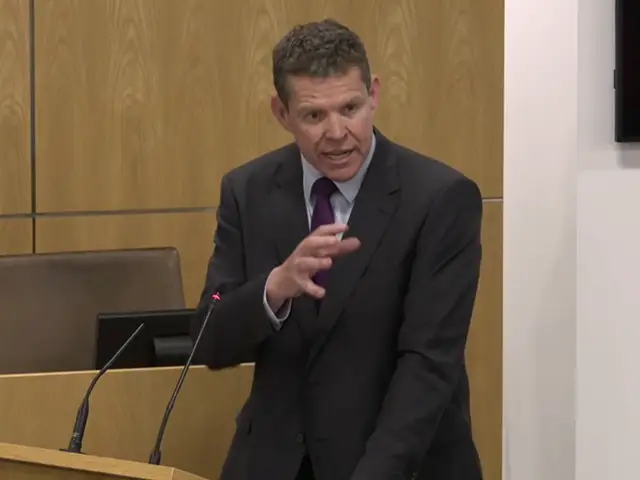
SENEDD Members unanimously called for a fairer funding formula for Wales.
Rhun ap Iorwerth led a debate calling for the “outdated and unfair” Barnett formula to be scrapped, warning Wales gets a “poor deal”.
The population-based Barnett formula – which was devised as a temporary measure in the late 1970s by Labour’s Joel Barnett – is used by the Treasury in Westminster to set public spending in Wales, Scotland and Northern Ireland.
Mr ap Iorwerth told the Senedd: “The inadequacy of the Barnett formula has been apparent ever since its inception, which, of course, way predates the devolution era.”
The Plaid Cymru leader pointed out Wales faced a £72m shortfall from Westminster to cover the increased cost of national insurance in the public sector due to the “flawed” formula.

Mr ap Iorwerth argued Wales is owed around £5bn from rail projects across the border being classified as “England-and-Wales”, denying the Welsh Government consequential funding.
He criticised Darren Jones, chief secretary to the Treasury, for telling a Welsh MP he should be “more grateful” for rail cash, which “typifies the contempt shown by the UK Government”.
The former broadcast journalist described the Welsh Government’s approach as trying to squeeze fairness from a fundamentally unfair system.
Sam Rowlands, for the Conservatives, called for a review of the fiscal framework – a 2016 agreement between the Welsh and UK Governments on funding and tax powers.


He said: “In simple terms, the Welsh Government receives £1.20 from the UK Government for every £1 spent on public services in England.”
Mr Rowlands said Scotland has had two such reviews since 2015, increasing a cap on borrowing powers which now rises in line with inflation unlike in Wales.
He added: “Our friends in Northern Ireland have benefited from recent reviews too. Their most recent review, published in 2024, provides a Barnett needs assessment of a 24% increase against Wales’ 20%. So, it doesn’t seem right to me.”

Labour’s Mike Hedges said the Barnett formula evolved from the Goschen formula, which was used to allocate funds to Scotland and Ireland relative to England and Wales.

“The formula was thus never designed with Wales in mind,” he told the Senedd.
Rhys ab Owen, an independent, warned that the Barnett formula works on an annual basis, making it difficult to plan for the longer term.
Calling for a needs-based formula, he said: “Funding is linked to specific changes in public spending in England and is fundamentally responsive to English… rather than Welsh need.”
Pointing out that Scotland and Northern Ireland can borrow £3bn compared with £1bn in Wales, Mr ab Owen said: “County councils, in proportion to the population they represent, also have more borrowing powers than the Welsh Government.”
Responding to the debate on June 25, Mark Drakeford backed the motion which is “nothing more than a restatement of the long-standing policy of successive Welsh Governments”.

He agreed with Lord Barnett who himself described the formula as grossly unfair in 2003.
Warning that the formula is often bypassed, Wales’ finance secretary told the Senedd: “Funding is not allocated fairly and systematically across the devolved countries.
“A good example is the Theresa May bung of £1bn to Northern Ireland following the 2017 election, purely driven by the need to prop up a minority Conservative UK Government.”
The former First Minister vowed to make the case for replacement of the Barnett formula at a meeting of finance ministers from the four nations in London the following day.


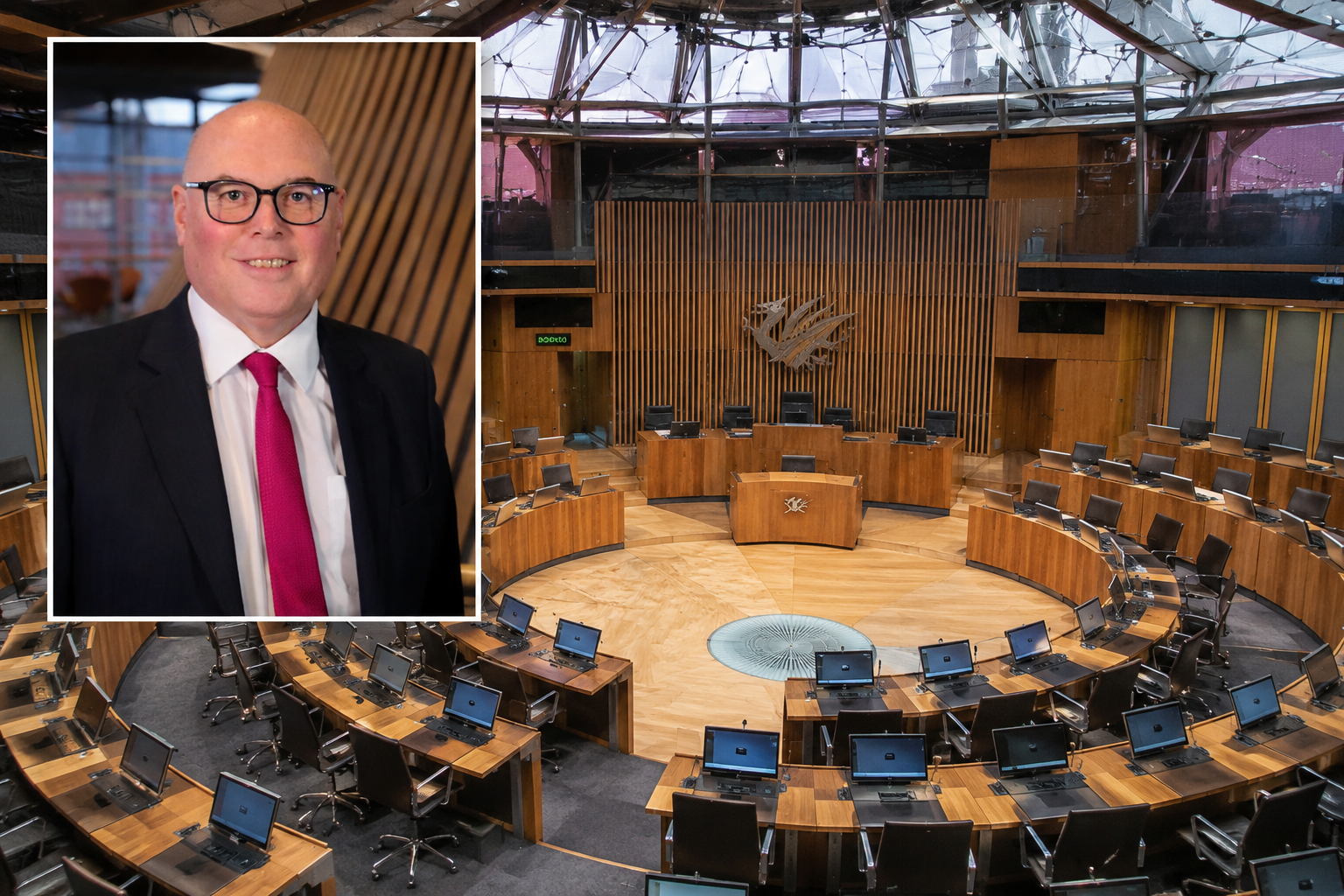
Senior Conservative MS says he has the experience and procedural knowledge needed for the role
PAUL DAVIES has confirmed that he will put his name forward to become the next Llywydd of the Senedd following growing speculation after the Welsh election.
The former leader of the Welsh Conservatives and long-serving Member of the Senedd said he had decided to stand after discussions with colleagues and encouragement from others.
In a statement issued on Sunday (May 10), Davies said he believed he had the experience needed to champion the Welsh Parliament and oversee proceedings fairly.
He said: “There has been much speculation since the election about who will take on the role of the next Llywydd in the Senedd.
“I want make it clear that, after consultation with colleagues and having been urged to do so by others, I will be putting my name forward to be the next Presiding Officer.
“I have the experience to champion the Welsh Parliament and have a clear understanding of its Standing Orders and procedures.
“As the Temporary Presiding Officer in the previous Senedd, and as a former Committee Chair and Business Manager in the Welsh Parliament, I have the necessary skills to take on this important role.”
The role of Llywydd is one of the most senior positions in the Senedd, with responsibility for chairing debates, maintaining order in the chamber and ensuring parliamentary rules are followed.
Davies, who represents Ceredigion Penfro, has been a prominent figure in Welsh politics for many years and previously served as leader of the Welsh Conservatives.
Sam Kurtz disappointment
Davies’ announcement also comes against the backdrop of disappointment within Welsh Conservative circles after Sam Kurtz failed to win a seat.
Kurtz, the former Carmarthen West and South Pembrokeshire MS, had been placed second on the Conservative list in Ceredigion Penfro behind Davies.

That decision was controversial locally, with many party supporters believing Kurtz had built a stronger personal following in Pembrokeshire and was one of the party’s most visible and energetic campaigners in west Wales.
His failure to return to the Senedd is likely to be seen as one of the most significant Conservative casualties of the new electoral system, particularly given his profile in rural affairs, farming, tourism and local campaigning.
There is already speculation about Kurtz’s next move, including rumours that he could seek to stand for Parliament in the future.
However, speaking to The Herald at the declaration, Kurtz was tight-lipped about his plans and even suggested he may return to journalism.
Before entering politics, Kurtz worked in local journalism, including at The Pembrokeshire Herald and the Western Telegraph.
Davies said he was saddened that Kurtz had not been returned, describing him as a hard-working colleague who had given strong service to Pembrokeshire and west Wales.
The announcement comes as parties continue discussions following the historic 2026 Senedd election, which resulted in no overall majority and a dramatically reshaped Welsh political landscape.
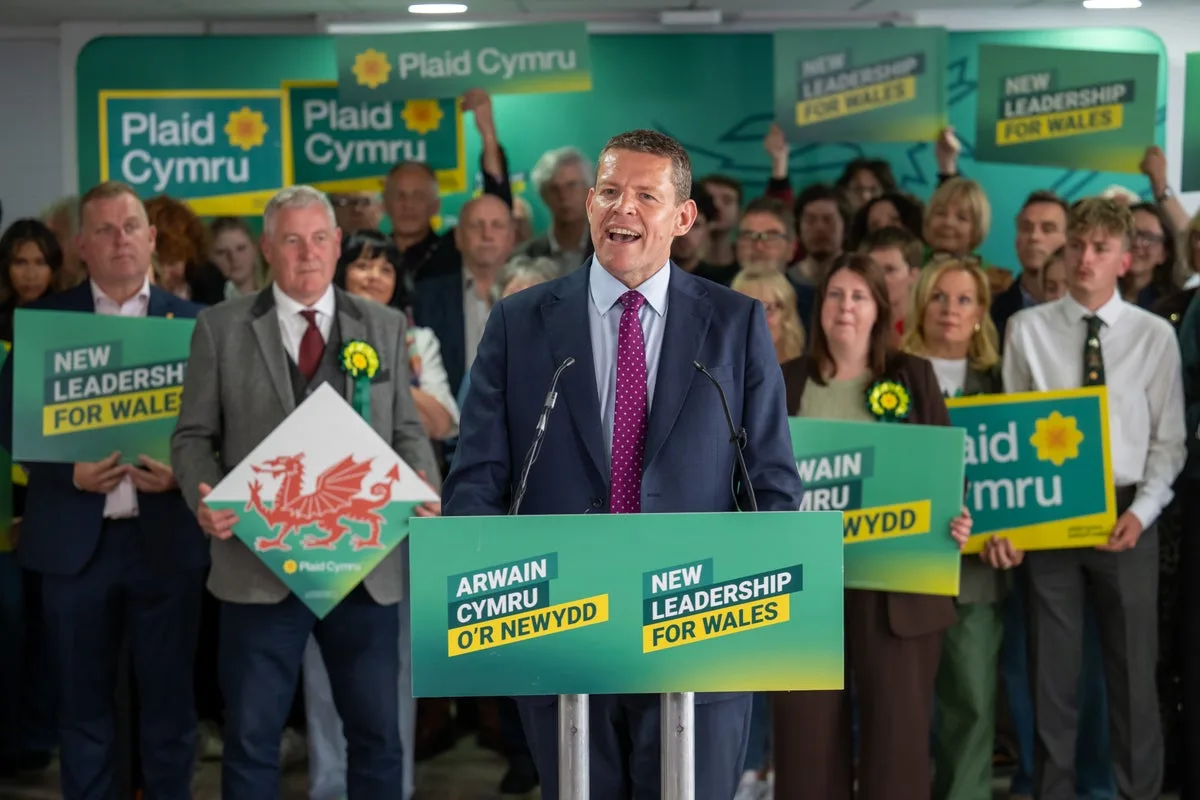
PLAID CYMRU leader Rhun ap Iorwerth has signalled he is ready for confrontation with Prime Minister Keir Starmer after the biggest political earthquake in Welsh devolution history.
Following Plaid’s dramatic Senedd election victory, which saw the party emerge as the largest force in the Welsh Parliament for the first time, ap Iorwerth has made it clear he intends to push aggressively for more powers and funding for Wales — including reopening rows over HS2 funding, policing, justice, and control of natural resources.
Speaking during a series of high-profile interviews on Sunday, the likely next First Minister said the UK Labour government now faced a choice: work with Wales or risk being seen as punishing Welsh voters for rejecting Labour dominance.
The comments are likely to raise tensions between Cardiff Bay and Westminster just days after Welsh Labour suffered a historic collapse at the polls.
Plaid plans minority government
Plaid Cymru won 43 seats in the expanded 96-member Senedd, leaving the party short of an outright majority but comfortably ahead of rivals.
With support expected from the two Green MSs, and the Liberal Democrats indicating they will abstain rather than oppose him, ap Iorwerth now appears on course to become Wales’ next First Minister as early as Tuesday.
The result marks the end of more than a century of Labour electoral dominance in Wales and the first time Labour has failed to emerge as the largest party since devolution began in 1999.
Ap Iorwerth has insisted he wants Plaid to govern alone rather than form a coalition, although he acknowledged cross-party cooperation would be necessary.
Fresh pressure over HS2 and funding
One of the clearest signals from the Plaid leader was his intention to revive demands over the HS2 rail project.
Welsh politicians have long argued Wales was unfairly denied billions of pounds in consequential funding after HS2 was classified as an England-and-Wales project despite no track entering Wales.
Ap Iorwerth suggested a future “Wales Bill” at Westminster could include demands on fairer funding, policing and criminal justice powers, and greater Welsh control over natural resources.
The remarks are likely to concern Labour strategists in London already facing growing pressure after heavy losses in Wales.
Labour admits “catastrophic defeat”
Interim Welsh Labour leader Ken Skates described the election result as a “catastrophic defeat” and confirmed the party would carry out what he called a “forensic” review into what went wrong.
Skates is also expected to enter the race to become permanent Welsh Labour leader following the shock loss of former First Minister Eluned Morgan, who lost her own seat during the election.
Meanwhile, Reform UK, which surged to 34 seats, said it intended to become an aggressive opposition force inside the Senedd.
Tensions with Reform
Ap Iorwerth also appeared to take a swipe at Reform leader Dan Thomas after claiming he had been unable to arrange a courtesy call following the election.
Reform denied the allegation, insisting contact details had been provided and that Plaid had been told to communicate through Thomas’s staff.
Despite the row, Reform MS Llŷr Powell suggested the party would not simply oppose everything brought forward by Plaid, saying Reform would judge proposals individually and focus heavily on government spending and scrutiny.
“A new era” for Wales
The weekend celebrations outside the Senedd increasingly resembled the atmosphere of a government-in-waiting, with Plaid supporters openly speaking of a “new era” in Welsh politics.
For the first time since the Senedd was created, Wales now faces the prospect of a nationalist-led government prepared to challenge Westminster far more openly than previous Labour administrations.
Whether that leads to meaningful constitutional change, or confrontation with London, could define the next chapter of Welsh politics.

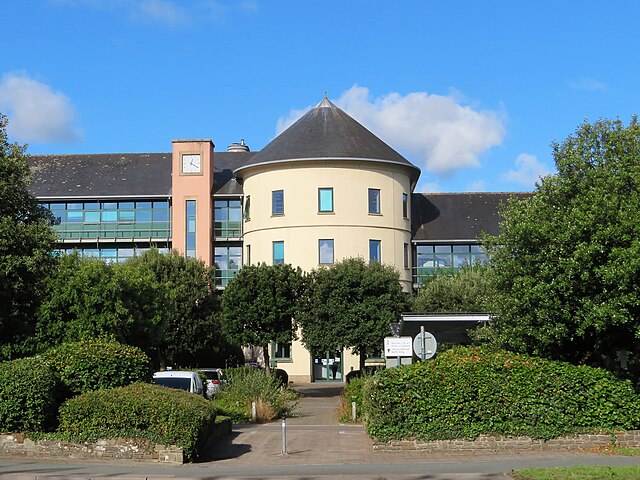
A PETITION call to Pembrokeshire councillors, which raises concerns at the “hefty funds” needed to support its commitment to net zero, will be heard at full council next week.
Last July, councillors agreed to set up a group to review its own decision to declare a climate emergency some seven years ago.
In May 2019, the council declared a climate emergency following a notice of motion by Cllr Joshua Beynon calling on the authority to back the global consensus that climate change poses a risk to the well-being of future generations.
He had urged county councillors to back a motion to take “bold, decisive action” to fight “truly, catastrophic” climate change, with the council to committing to becoming a zero-carbon local authority by 2030.
At the July 2025 meeting of Pembrokeshire County Council, a successful notice of motion by the late Cllr Mike Stoddart called for the establishment of a working group to review that decision.
That led to a recent petition, by Lynda Duffill of West Wales Climate Coalition, which attracted 725 signatures, calling on the council to reaffirm its Declaration of a Climate Emergency, and retain the ambition to deliver Net Zero Council operations by 2030.
That petition was considered at the October 2025 meeting of full council; members agreeing the working group be asked to ensure the petition is included as evidence in its consideration of the matters referred to it by the council resolution in July 2025.
That has now led to a further petition, concerned at a potential increase in council tax from a re-affirmation of a Declaration of a Climate Emergency.
The latest e-petition, on the council’s own website, created by Carolyn Ellis, read: “We call upon all elected members of Pembrokeshire County Council to support and to take seriously the working group tasked with the review of the ‘climate emergency’ called in 2019 (by the-then 21-year-old councillor Joshua Beynon) and to question the hefty funds needed to spend on ‘net zero’.
“We refer to the recent petition by the West Wales Climate Coalition which purports to speak for the residents and council tax-payers of Pembrokeshire.
“There is potentially a far higher number of residents who do not share this unsubstantiated view and who are extremely concerned about the potential for huge hikes in council tax, especially if this tax is linked in future to the carbon efficiency of homes and businesses.
“This was hinted at as a possible lever for encouraging ‘compliance’ with decarbonising homes in the ‘Better Homes, Better Wales, Better World’ report. Therefore, not only could we be faced with more taxes, but also inevitable deterioration in service provision by PCC.”

The current petition ran to March 26 and attracted 753 signatures; any petition of over 500 triggers a debate at full council, the petition due to be heard at the May 14 meeting.



News45 minutes ago
Rhun prepares for clash with Starmer as Plaid eyes power in Cardiff Bay
PLAID CYMRU leader Rhun ap Iorwerth has signalled he is ready for confrontation with Prime Minister Keir Starmer after the...


News1 day ago
Plaid Cymru celebrates historic victory as Rhun ap Iorwerth arrives at Cardiff Bay
CROWDS gathered outside the Senedd as Plaid Cymru leader Rhun ap Iorwerth arrived in Cardiff Bay following his party’s historic...


Crime1 day ago
Police standoff ends after four-hour incident in Pembroke Dock
ELIZABETH COURT SCENE STOOD DOWN AFTER DOMESTIC INCIDENT A FOUR-HOUR police standoff in Pembroke Dock has ended with a 21-year-old...


Crime1 day ago
Teen denies attempted murder of Milford Haven teacher
TEENAGER REMANDED AHEAD OF JULY TRIAL A 15-YEAR-old boy has denied attempting to murder a teacher during a stabbing incident...

News2 days ago
Catastrophe for Labour as Plaid and Reform reshape Welsh politics
ELUNED MORGAN LOSES SEAT AS OLD CERTAINTIES ARE SWEPT AWAY THE VOTERS of Wales have delivered one of the most...

News2 days ago
Labour wiped out in Ceredigion Penfro as Plaid tops poll and First Minister loses seat
Shock result sends political shockwaves across Wales as Reform also surges in historic Senedd count LABOUR suffered one of the...

News2 days ago
Labour deputy says party ‘will not form next Welsh Government’
LABOUR FACES HISTORIC DEFEAT AS COUNTING CONTINUES ACROSS WALES LABOUR’S Deputy Leader in Wales has effectively conceded the Senedd election,...

News2 days ago
Counts underway in historic Senedd election
Wales waits for results as first election under new voting system reaches count stage COUNTING is underway across Wales today...


Charity3 days ago
Chief’s Tour honours fallen officers with 75-mile Pembrokeshire ride
Dyfed-Powys Police team raises thousands for bereaved police families charity A TEAM of officers and staff from Dyfed-Powys Police cycled...


Crime3 days ago
Racial abuse suspect barricaded himself inside Johnston lodge
ARMED police were called to a supported accommodation building in Johnston after a man allegedly barricaded himself inside a room...
-

 News5 days ago
Baby in critical condition after Fishguard emergency
-

 News4 days ago
Former housing officer admits drink-driving in Pembrokeshire retail park
-

 Crime4 days ago
Job loss threat for convicted Pembrokeshire drug-driver
-
 Crime4 days ago
Milford motorist disqualified for drug-driving
-

 Crime4 days ago
Police tip-off leads to driving ban for Milford motorist
-
Crime3 days ago
Racial abuse suspect barricaded himself inside Johnston lodge
-

 Crime4 days ago
Delivery driver caught twice over legal drink-drive limit
-

 Community4 days ago
Sixth-former firefighter balances schoolwork with saving lives