


Cymraeg
Drakeford resists calls for law to protect historic place names

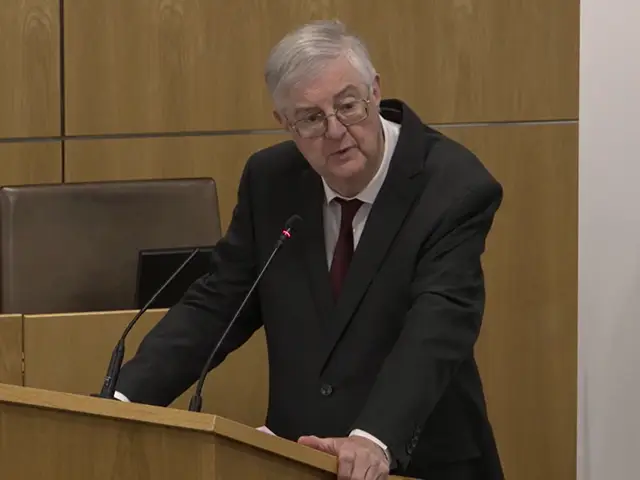
THE WELSH Welsh Government has rejected calls for a new law to protect historic place names, arguing goodwill and current initiatives are already working.
Favouring persuasion rather than enforcement, Mark Drakeford unveiled a four-point plan including guidance for councils and a tool for the public to record historic names.
The former First Minister pointed to research showing properties in Wales are at least three times more likely to be renamed from English to Welsh than vice versa.
He told the Senedd his approach was driven by the same anxieties that motivated past campaigns, saying: “The same concern lay behind the research commissioned by this government, research on current trends in relation to changes to place names in Wales.”
Prof Drakeford added that the Welsh Government would commission further research on “topographical” names given to the natural landscape and geographical features.

In a statement on September 30, Prof Drakeford acknowledged a passionate campaign for legal protections led by former Plaid Cymru Senedd Member Dai Lloyd.
Dr Lloyd introduced a bill aimed at reversing a trend of historic place names in the Welsh language being lost but his draft law was voted down at the first stage in 2017.
The retired GP said at the time: “The rich smorgasbord of our history is going down the tube and we’re standing idly by, either doing nothing or lamely saying, ‘Duw, let’s have a bit of guidance, is it?’
“No, it is not on. We’re talking about the history of a nation here – pride in the history of that nation – pride that deserves to be enshrined in law.”

Tuesday’s statement highlighted cross-party support for protecting place names but clear differences of opinion remain on whether goodwill was enough without new legislation.

Tom Giffard, for the Conservatives, supported the commitment to retain Wales’ cultural heritage by promoting Welsh place names. But he stressed the need to strike a balance by respecting the rights of property owners or communities who prefer English names.
The former teaching assistant in a Welsh-medium school also raised practical questions about how public contributions would be verified and how young people would be engaged.

In response, Prof Drakeford said the government respects people’s individual choices and does not want to pursue legislation because “we’re gaining ground without doing that”.
Plaid Cymru’s Heledd Fychan welcomed the work but challenged the refusal to legislate, arguing for legal protection for historic names rather than relying on community campaigns.
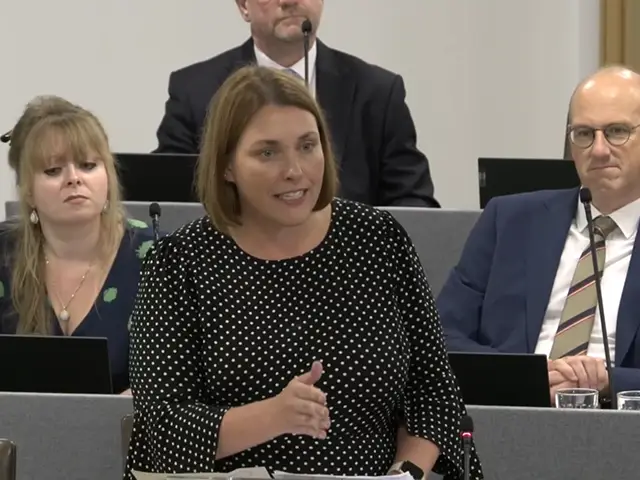
Her party colleague Siân Gwenllian said relying on “goodwill alone” was insufficient in the current political climate and legislating is the only way to truly safeguard names.
A different note of caution came from Labour backbencher Lee Waters.
While praising practical steps like the “crowdsourcing” tool, the former minister questioned the headline statistic about the rise in Welsh names.

Mr Waters asked whether this represented a growth in authentic local names or the loss of heritage to “charming folksy names” with no real connection to an area.
He raised the “egregious example” of Llyn Bochlwyd in Eryri being called Lake Australia – warning the ancient Welsh name is at risk of being replaced by an informal nickname.
The debate also touched on practical issues, with Conservative Gareth Davies expressing concerns about inconsistent road signage as he called for more harmony between councils.
In response, Prof Drakeford clarified that the law requires any new street signs to be bilingual, with Welsh appearing first.



A NEW national framework aimed at securing a lasting legacy from the National Eisteddfod has been published jointly by the festival’s organisers and the Welsh Government.
The plan sets out how the Eisteddfod’s impact will be strengthened before, during and after each annual event, bringing together partners from across education, community development, culture, the economy and the Welsh language sector.
While each Eisteddfod reflects the identity of its host community, the framework aims to ensure long-term benefits are consistently delivered nationwide, rather than limited to the festival period.
The legacy programme will cover a wide range of areas including education, inclusion, digital innovation, volunteering and economic development, with new national and local structures designed to coordinate delivery more effectively.
A national project board will oversee the strategy, setting direction and sharing best practice year-on-year. At a local level, a steering group will drive community-based work, helping turn the Eisteddfod into a catalyst for lasting change.
Cabinet Secretary for Finance and the Welsh Language, Mark Drakeford said the festival’s impact goes far beyond a single week.
“The Eisteddfod is far more than a week-long festival. It is a multi-year project that leaves a lasting legacy for the Welsh language and culture in the area,” he said.
“By bringing together partners from across key sectors, this framework will help deliver real and lasting change for our communities and support our ambition of reaching a million Welsh speakers by 2050.”
Nic Parry, President of the Eisteddfod Court and Chair of its Management Board, said the framework strengthens collaboration at both local and national level.
“It allows us to deliver on a long-held ambition to drive language planning through the lens of the National Eisteddfod,” he said.
“It also positions the Eisteddfod as a powerful tool for boosting local economies and supporting sustainable communities for future generations.”
Further details are expected later this year, with membership of the national project board due to be confirmed by mid-June.

A dedicated session at this year’s Eisteddfod will also gather evidence from the 2026 host area to help shape future plans for 2027 and 2028.
More information is available via the Eisteddfod’s legacy framework online.

Local success stories highlight surge as more than 20,000 people learn Welsh across Wales
A PEMBROKESHIRE-BASED Welsh tutor who once learned the language as an adult is now helping others follow in his footsteps — as new figures reveal a record number of people learning Welsh across Wales.
David Thomas, who teaches with Learn Welsh Pembrokeshire, began learning the language in 2016 after returning to Wales from London. He went on to win Welsh Learner of the Year at the AmGen Eisteddfod in 2021 and now teaches beginner courses locally.

He is joined by fellow tutor Gwilym Morgan, a Cardiff University student who teaches online courses while running his own business.
Their journeys come as new data shows that 20,445 people completed Welsh courses in 2024–2025 — the highest number ever recorded.
Figures released on Monday (Mar 17) by the National Centre for Learning Welsh show a 12% rise on the previous year, and a 61% increase since records began in 2017–2018.
The growth is being driven in part by flexible learning options and targeted programmes, including a major expansion in workplace training.
Nearly four in ten learners (39%) are now learning Welsh through their jobs — a total of 8,370 people — particularly in sectors such as health, social care and education.
Education watchdog Estyn has described the Centre as “one of the cornerstones of linguistic planning initiatives in the workplace.”
There has also been a sharp rise in younger learners. In 2024–2025, 4,110 people aged sixteen to twenty-four took part — a 56% increase on the previous year and a 483% rise since 2018–2019.

Overall, 17,350 learners were aged between sixteen and sixty-four.
Learners are also engaging more deeply, completing 34,960 learning activities over the year — up 12% on 2023–2024.
Dona Lewis, Chief Executive of the National Centre for Learning Welsh, said: “We’re delighted with these latest figures, which show consistent, steady growth in the number of people learning Welsh.
“The figures reflect the Centre’s strategic planning and the way it uses its expertise to reach new audiences — particularly in workplaces — supporting our aim of creating more Welsh speakers.”
Speaking about his own journey, David said learning Welsh had been life-changing.
“As someone who learned Welsh as an adult, I see it as a gateway to the whole culture of Wales,” he said.
“I know what it feels like to be in the classroom, so being able to introduce others to the language — and hopefully give them a positive experience — is really special.”
The National Centre for Learning Welsh leads the adult Welsh learning sector, working with providers across Wales to deliver courses ranging from beginner to advanced level, both in person and online.

Language activists warn proposal could undermine long-term support for Welsh
CAMPAIGNERS have warned that proposals by the Nigel Farage-led Reform UK to scrap Wales’ target of one million Welsh speakers by 2050 could place the language at risk.
The comments came during the launch of Reform’s Welsh manifesto in Newport on Thursday (Mar 5), where Farage and the party’s Welsh leader Dan Thomas set out their plans for the language.
The party says it would remove what it describes as “arbitrary” targets for the number of Welsh speakers, arguing that the language is already growing naturally.
Farage told supporters that Welsh appeared to be “thriving” in parts of the country and said younger generations were increasingly learning and using the language.
He argued that Welsh culture and language should be allowed to develop organically rather than being driven by official targets or public bodies.

Questions were also raised at the event about the future of the Welsh Language Commissioner. Farage suggested there was no clear need for additional “quangos” if the language continued to grow through public interest.
However, campaign group Cymdeithas yr Iaith said the proposals demonstrate a misunderstanding of the current challenges facing the language.
Chairman Owain Meirion said it was wrong to describe Welsh as thriving when the proportion of speakers has fallen in recent census results.
According to campaigners, around 17.8 per cent of people in Wales currently report being able to speak Welsh, with the overall proportion declining over the past two censuses.

They warned that removing the 2050 target of one million speakers could weaken long-term support for the language and the communities where it is most widely spoken.
Campaigners also pointed out that the manifesto includes relatively few references to Welsh beyond cultural pledges.
Reform has said it would continue supporting events such as the National Eisteddfod and would press the UK Government to maintain funding for the Welsh-language broadcaster S4C.

Despite this, Cymdeithas yr Iaith warned that the wider approach set out in the manifesto could weaken existing structures designed to protect and promote the language.
Farage also used the Newport event to claim that Reform could challenge the long-standing dominance of the Welsh Labour in Welsh politics.
The party says its manifesto represents a plan for significant political change ahead of the next Welsh election.
Language campaigners, however, say the debate highlights continuing tensions over how best to protect the future of Welsh while ensuring policies reflect the realities facing communities across Wales.



Crime2 hours ago
Publican jailed for six years for supplying cocaine and cannabis
Milford Haven man sentenced at Swansea Crown Court following drug dealing operation A MILFORD HAVEN publican has been jailed for...

Local Government4 hours ago
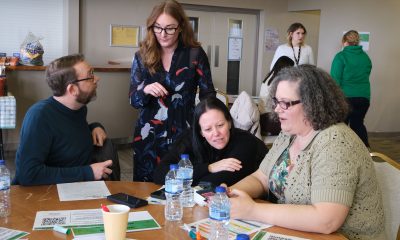
Poverty summit highlights support efforts across Pembrokeshire
A SUMMIT bringing together key organisations from across Pembrokeshire has highlighted both the scale of local poverty and the work...


Education1 day ago
Milford Haven school plans unveiled but funding not yet secured
PLANS for a new £100 million school in Milford Haven have been unveiled, but the project has not yet secured...


News1 day ago
Council unveils plans for new state-of-the-art secondary school in Milford Haven
PEMBROKESHIRE COUNTY COUNCIL has revealed plans for a new state-of-the-art school in Milford Haven, promising modern, inspiring learning spaces for...


Health1 day ago
NHS waiting list falls — but cancer delays and diagnostic backlog worsen
Record progress claimed by Welsh Government as critics warn key targets are still being missed THE NHS in Wales has...


Crime2 days ago
Rapist jailed after ‘abhorrent’ attacks on woman and children
Haverfordwest man told police “women won’t have sex without force” A HAVERFORDWEST man who raped a woman and a young...


News2 days ago
Reform secures first Pembrokeshire councillor in Hakin by-election win
Late Reform candidate takes seat as independent surge and Labour withdrawal shape contest REFORM UK candidate Scott Thorley has won...


News3 days ago
Scott Thorley elected as Pembrokeshire’s first Reform councillor
REFORM UK candidate Scott Thorley has won the Hakin by-election after securing 179 votes. The full result is as follows:...


News3 days ago
Police confirm man has died after being recovered from River Cleddau
Major emergency response in town centre after concerns raised for man in water A MAN has died after being recovered...


Community3 days ago
Davies and Kurtz urge groups to seek employability funding
Community organisations in Pembrokeshire encouraged to apply for new grants supporting skills and job access LOCAL Senedd Members Samuel Kurtz...
-
 News6 days ago
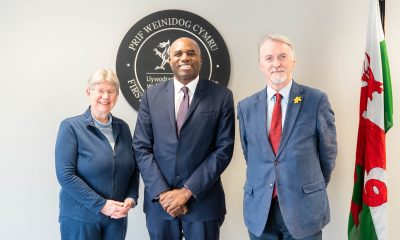
Rayner and Lammy visit Wales to discuss justice and community safety
-

 News5 days ago
Fishguard linked to allegations in Many Tears Animal Rescue investigation
-

 News3 days ago
Emergency services flood Haverfordwest after reports of person in river
-
 Local Government6 days ago
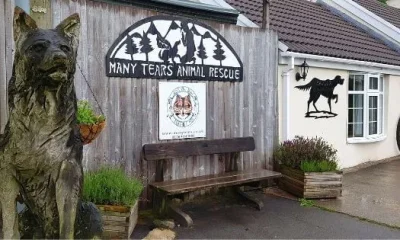
Investigation confirmed after inspectors visit Many Tears Animal Rescue
-

 Crime2 days ago
Mother given community order after admitting child cruelty offence
-

 Business7 days ago
Tesco B&Q Haverfordwest click and collect pod approved
-

 Community6 days ago
Town hall takeover plan questioned as cost figures conflict
-
Health1 day ago
NHS waiting list falls — but cancer delays and diagnostic backlog worsen