


Politics
Senedd meeting cancelled as most members unable to attend


AN EVIDENCE session was cancelled after four of the five politicians who sit on a committee were unable to attend, leaving the Senedd no choice but to postpone the meeting.
The Senedd’s petitions committee was due to meet this afternoon (October 20) as part of a short inquiry into the impact of the Hafod landfill site on people living nearby in Wrexham.
But the meeting had to be pulled at the 11th hour after Plaid Cymru’s Luke Fletcher, Labour’s Vaughan Gething, Tory Joel James and independent Rhys ab Owen all sent apologies.
The Conservatives sent Gareth Davies as a substitute for Mr James but Carolyn Thomas, the Labour chair of the committee, was the only other politician in attendance.

Under the Senedd’s rules or standing orders, committee meetings must be cancelled if fewer than three members or less than a third of members are present. Meetings must also be cancelled if only one political group is represented by members.

Some committees – including finance, legislation and standards – currently have only four members, regularly putting meetings at risk due to roadworks or sickness absence.
Ms Thomas said: “I have received apologies from Luke Fletcher, Vaughan Gething, Joel James and Rhys ab Owen. Gareth Davies is attending as a substitute for Joel James.
“However, as there are fewer than three members present, this meeting is inquorate under standing order 17.31 which requires at least three members to be present – so all business from today’s meeting will be rescheduled to a future meeting.
“We are next due to meet on November 10, so apologies and I will have to close the meeting until next time. Diolch.”

The danger of committees lacking enough members to ensure sufficient scrutiny was one of the core drivers behind plans to expand the Senedd from 60 to 96 members from May 2026.
Labour’s Mike Hedges, who chairs the Welsh Parliament’s legislation committee and sits on three others, has consistently expressed concerns about inadequate numbers.
Last year, he warned a meeting of the public accounts committee would have been declared inquorate if he had gone to the toilet. “You cannot run an organisation like that,” he said.












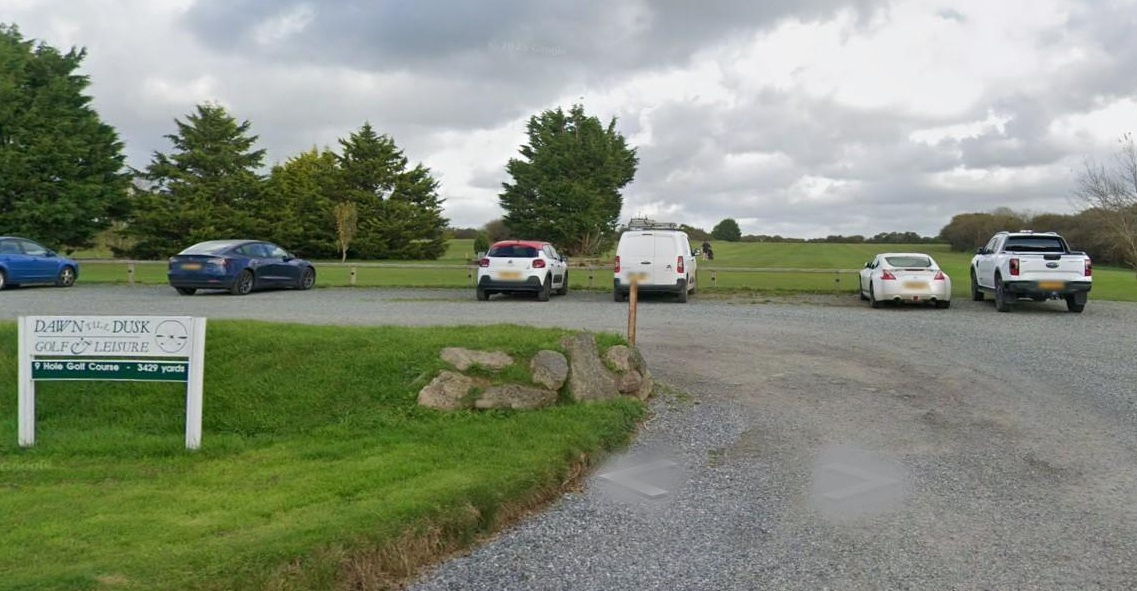
A CALL to extend a long-established Pembrokeshire golf club, bringing it up to a full 18 holes, has been submitted to county planners.
In the application, Mr and Mrs Young, through agent Preseli Planning Ltd, seek a change of use of land adjoining the Dawn Till Dusk Golf Club, Furze Hill Farm, Bastleford Road, Rosemarket, to form an extension to the existing golf course, along with landscaping and associated works.
A supporting statement through the agent says: “The application seeks full planning permission for the enlargement of the existing golf course to provide an additional six holes, to provide a total of 18 holes.
“The proposal would involve minor landscaping works to the fields and boundaries and the creation of a small number of ponds and bunkers. The extension would be located on land to the west of Furze Hill Farm and on the opposite side of the road to the existing golf course and clubhouse.
“An altered access to the land parcel is proposed as part of this application, which would provide an improved route for users crossing the public highway to avoid conflict with movements at the main entrance.

“The application site exceeds 1ha and therefore the proposal is considered major development necessitating a Pre-Application Consultation prior to formally submitting the planning application to the Local Planning Authority.”
It adds: “The existing golf course has operated in excess of 30 years and is popular with both visitors and locals. Club membership currently stands at approximately 350 and there is demand for enhancing the provisions of the course.
“The applicants’ sons have recently increased their involvement in the enterprise and in recent years wet winter months have necessitated the closure of the course, or parts of it, due to the ground becoming waterlogged, primarily due to the flat nature of the existing course.
“The extension would provide variation to the terrain, providing, dryer conditions, as well as the ability to alternate between the existing and proposed to maintain use, enhancing the viability of the enterprise.”
The application will be considered by Pembrokeshire County Council planners at a later date.
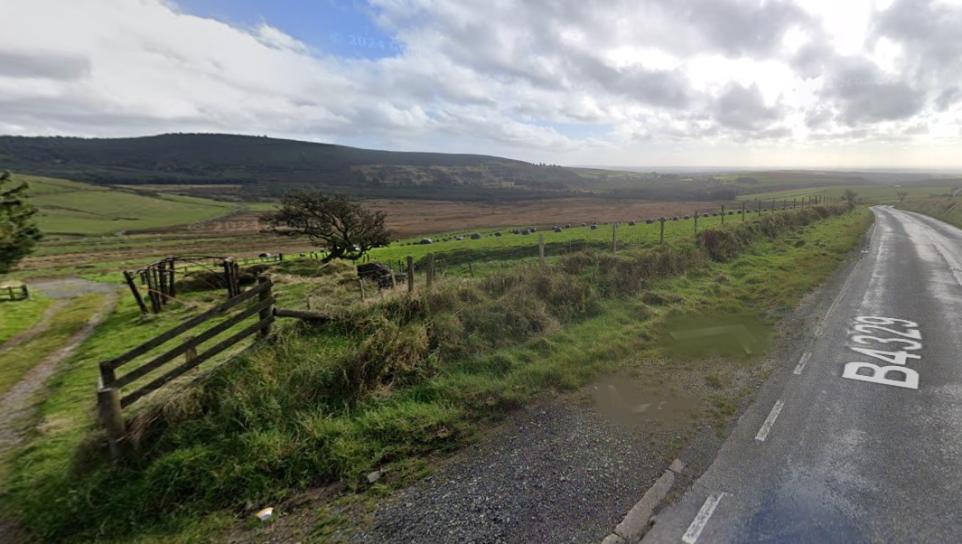
A CALL to rebuild a fire-damaged Pembrokeshire farm building, as a family home to help manage one of the largest sheep flocks in Wales, has been submitted to the national park.
In the application to Pembrokeshire Coast National Park, D B Davies and Sons through agent Harries Planning Design Management, with a supporting statement by Reading Agricultural Consultants Ltd, seek permission to renovate an existing fire-damaged dwelling, together with the conversion and extension of outbuildings to form an agricultural worker’s dwelling at Mynydd Du, Rosebush.
The supporting statement through Reading Agricultural Consultants Ltd says Mynydd Du is part of a wider holding which includes Eisteddfa Fawr and land around the village of Brynberian, the farms approximately six km apart, with land under control of the applicant amounting to some 1,500 acres, with a further 3,000 acres of Preseli mountain common land also used; the land accommodating a 5,000-ewe flock with 10 suckler cows and followers.
It says DB Davies & Sons Unlimited, has five partners: the two Davies brothers, Berian and Ken; their wives; and Berian’s son, Dyfed.
Berian and Ken are in their late 70s, with most of the heavy work on the farm is undertaken by Dyfed.
Dyfed and his wife Megan are first language Welsh speakers, living some 10 km away in Nevern, while Berian and Ken, and their wives, live at Eisteddfa Fawr, Brynberian.
The dwelling at Mynydd Du, where most sheep are now wintered, is structurally sound and repairable but has been unoccupied since 1990, and was subject to arson circa 2013, the statement says.
It says Dyfed works full-time on the farm, alone with increasing frequency as the older business members are above retirement age, working “long hours out of necessity to undertake all the work associated with one of the largest flocks of sheep in Wales”.
“His working hours are extended further due to the fact that he lives remote (6kms) from the main block of land at Tyllosg, where Mynydd Du is situated in the centre of the farm. Travelling back and forth several times each day during lambing and other times during poor weather, to check on flock welfare is an arduous task and can be dangerous, particularly if driving when tired during inclement conditions.”

The statement adds: “The application seeks permission to repair the fire damaged dwelling at Mynydd Du and bring it back to serve a useful purpose to enable Dyfed to closely monitor the ewes, not only at lambing, but throughout the year when the flock is grazing on the adjacent common land.
“It will also enable Dyfed to be with his partner and young child on a more regular basis than simply at the end of a long day when he is away from their current home, tending the sheep at Mynydd Du.”
The application will be considered by park planners at a later date.


PEMBROKESHIRE COUNTY COUNCIL has revealed plans for a new state-of-the-art school in Milford Haven, promising modern, inspiring learning spaces for children and young people across the community.
A newly released video accompanying the announcement features the First Minister, the local authority’s Deputy Leader, the Cabinet Member for Education and the headteacher, outlining what the development will deliver. The plans include specialist teaching areas, improved accessibility, and high-quality outdoor learning and play spaces.
The project places a strong emphasis on sustainability, incorporating energy-efficient features and modern building standards designed to reduce environmental impact while delivering long-term value.
The scheme forms part of a Strategic Outline Case approval. Any final funding commitment will depend on the project successfully progressing through the full business case process.
Cllr Guy Woodham, Cabinet Member for Education, said: “This project represents a major investment in our children’s future. The new school will offer a safe, modern and inclusive environment where pupils can thrive, and we are delighted to share this vision with the community as we move towards the next stage of this exciting process.”

First Minister Eluned Morgan added: “This is fantastic news for pupils, parents, teachers and the whole community. Modern learning environments can make a real difference to pupils and staff alike. The Welsh Government has shown its commitment to new schools in Pembrokeshire as part of our wider programme of improving schools and colleges across Wales.”
Speaking on behalf of staff, pupils and governors, Deputy Headteacher Daryl John said the school community was excited by the plans.
He said: “Milford Haven School recently welcomed a visit from the First Minister, along with the Deputy Leader and Cabinet Member for Education, to mark initial progress on proposals for a new, aspirational school building.
“The development will provide inspirational learning and teaching spaces, offering high-quality, ambitious and equitable opportunities for all pupils. It aims to support our young people to thrive, develop their talents and grow into confident, successful individuals, supported by dedicated staff and the wider school community.”
Stephen Thomas, Headteacher at Milford Haven Primary School, said the project had been long awaited.
He said: “This new school building has been long awaited, and I know how much it will mean to our children, staff and the community as a whole in Milford Haven.
“For many years, our community has hoped for facilities that truly reflect the potential, pride and ambition of our children, and now that vision is becoming a reality.

“This is more than just a new building. It is a statement of belief in our young people and in the future of Milford Haven. It will provide modern, high-quality learning environments, improved spaces for wellbeing and inclusion, and facilities that will open up wider opportunities for our pupils and families.
“As Headteacher, I feel incredibly proud and grateful to see this investment in our community. Our children deserve the very best, and this new school will help us continue raising aspirations, strengthening community links and ensuring every child can thrive.”
The council will now begin a period of consultation and engagement with pupils, staff, parents and local residents to ensure the new school reflects the needs and ambitions of the whole community.



Crime7 minutes ago
Publican jailed for six years for supplying cocaine and cannabis
Milford Haven man sentenced at Swansea Crown Court following drug dealing operation A MILFORD HAVEN publican has been jailed for...

Local Government2 hours ago
Poverty summit highlights support efforts across Pembrokeshire
A SUMMIT bringing together key organisations from across Pembrokeshire has highlighted both the scale of local poverty and the work...


Education23 hours ago
Milford Haven school plans unveiled but funding not yet secured
PLANS for a new £100 million school in Milford Haven have been unveiled, but the project has not yet secured...


News1 day ago
Council unveils plans for new state-of-the-art secondary school in Milford Haven
PEMBROKESHIRE COUNTY COUNCIL has revealed plans for a new state-of-the-art school in Milford Haven, promising modern, inspiring learning spaces for...


Health1 day ago
NHS waiting list falls — but cancer delays and diagnostic backlog worsen
Record progress claimed by Welsh Government as critics warn key targets are still being missed THE NHS in Wales has...


Crime2 days ago
Rapist jailed after ‘abhorrent’ attacks on woman and children
Haverfordwest man told police “women won’t have sex without force” A HAVERFORDWEST man who raped a woman and a young...


News2 days ago
Reform secures first Pembrokeshire councillor in Hakin by-election win
Late Reform candidate takes seat as independent surge and Labour withdrawal shape contest REFORM UK candidate Scott Thorley has won...


News3 days ago
Scott Thorley elected as Pembrokeshire’s first Reform councillor
REFORM UK candidate Scott Thorley has won the Hakin by-election after securing 179 votes. The full result is as follows:...


News3 days ago
Police confirm man has died after being recovered from River Cleddau
Major emergency response in town centre after concerns raised for man in water A MAN has died after being recovered...


Community3 days ago
Davies and Kurtz urge groups to seek employability funding
Community organisations in Pembrokeshire encouraged to apply for new grants supporting skills and job access LOCAL Senedd Members Samuel Kurtz...
-

 News6 days ago
Rayner and Lammy visit Wales to discuss justice and community safety
-

 News5 days ago
Fishguard linked to allegations in Many Tears Animal Rescue investigation
-

 News3 days ago
Emergency services flood Haverfordwest after reports of person in river
-

 Local Government6 days ago
Investigation confirmed after inspectors visit Many Tears Animal Rescue
-

 Crime2 days ago
Mother given community order after admitting child cruelty offence
-

 Community7 days ago
Community football club raises £1,000 for Withybush Hospital
-

 Business6 days ago
Tesco B&Q Haverfordwest click and collect pod approved
-

 Community6 days ago
Town hall takeover plan questioned as cost figures conflict