Connect with us
Advertisement
Advertisement

News

Carmarthen Kings spark basketball revival with undefeated start

Published

on

COMPETITIVE basketball has returned to Carmarthen in electrifying fashion as the Carmarthen Kings celebrate an unbeaten start to their first season — ending years without senior hoops action in the town.

Historic cup triumph sets the tone

The Kings’ long-awaited debut on Friday (Sept 26) was one to remember. In front of a lively crowd at the UWTSD Sports Centre, the Kings overpowered Swansea Storm Troopers 70–39 in the Welsh Cup.

A powerhouse starting five — featuring three former Swansea Storm players and VLP junior graduates — set a blistering pace. Relentless defence and rapid transitions established an early lead, and the Kings never looked back. Veterans Tal Remec, Jac Moretti and George Spencer combined efficient scoring with dominant rebounding, while younger players finished the game with flair and composure.

Momentum builds in the league

That form continued into SWBA Division 3 action, beginning with a gritty home win over Port Talbot Spartans 2. The Kings held firm in a physical contest, with Jac Moretti’s second-half surge sealing victory. Fast breaks, disciplined team defence and balanced scoring are already hallmarks of their play.

Their most recent outing saw the Kings storm past Llanelli Steelers 93–54 in Trimsaran — a statement win built on tactical precision. A switch from zone to man-to-man defence proved decisive, with forward Moretti recording 13 steals to ignite a flurry of transition baskets. Captain Tal Remec led by example, hitting 30 points, 23 rebounds and seven assists, supported by sharp shooting from Kwaku Asibey-Berko and tireless defensive work from Harrison Walters and Mackenzie Callard.

A new era for Carmarthen basketball

The revival has struck a chord with the community. Home fixtures have rekindled the spirit of “Friday night basketball,” with the UWTSD Sports Centre buzzing once more. Backed by sponsors VLP Hoops, the Kings are benefitting from professional-level coaching, structure and preparation — reflected in their cohesion and discipline on court.

Captain’s reflection

“Many people around Carmarthen have been waiting years for this kind of basketball atmosphere to return,” said club captain Tal Remec. “We’re proud to represent the town and bring everyone together again — this is just the beginning for the Kings.”

Looking ahead

As Carmarthen’s only active senior men’s basketball team, the Kings aim to provide high-quality competition, nurture local talent and inspire the next generation.

Supporters can follow the team’s progress on Facebook, Instagram and TikTok (@carmarthen.kings). The club is also seeking sponsors to help cover season costs and expand its community outreach.

Contact:
[email protected]

 

Community

Dogs removed after welfare concerns at Milford Haven property

Published

on

DOGS have been removed from a Milford Haven property following concerns raised by neighbours.

The Herald was contacted on Wednesday (Apr 29) by a resident who claimed two dogs had been left inside a property in the Precelly Place area for several weeks.

The resident, who asked to remain anonymous, said neighbours had become increasingly distressed and had already contacted the RSPCA, the dog warden and police.

Pembrokeshire County Council confirmed that police and local authority services were “liaising and dealing with this matter”.

A council spokesperson added: “Concerned residents are urged to allow the relevant authorities to respond.”

The council later said it understood police had attended and that “required follow up” was in place.

Footage seen by The Herald shows police removing at least one small dog from the property, while a small crowd of nearby residents gathered outside watching events unfold.

The incident was also live streamed on Facebook by a local resident, attracting several hundred viewers as concerns about the animals spread through the community.

The Herald understands that dogs were removed from the property on Wednesday night, although Dyfed-Powys Police has yet to formally confirm the details.

The RSPCA said it was unable to comment on specific cases.

A spokesperson said: “Unfortunately we are unable to discuss complaints about specific people and what action may have been taken. We understand how frustrating that is for animal lovers but releasing information could prejudice a future prosecution or could lead to us being fined.

“We are so grateful to people who report suspected animal suffering to us and we would like to reassure people we will always look into and, if necessary, investigate any complaints made to us about animal welfare.”

Anyone concerned about the welfare of an animal is urged to contact the RSPCA, the local authority dog control service, or police if there is an immediate risk.


Continue Reading

News

Wales heading to the polls in historic Senedd election

Published

on

NEW SYSTEM, NEW SEATS, NEW BOUNDARIES AND A HIGH-STAKES CONTEST FOR CEREDIGION PENFRO

WALES goes to the polls next Thursday (May 7) in an election unlike any other since devolution began.

For the first time, voters will elect a larger Senedd, under a new voting system, in new constituencies, using one ballot paper and one vote.

The changes are significant. The Senedd will increase from 60 Members to 96. Wales has been divided into 16 new constituencies, each electing six Members of the Senedd. The old system of one constituency vote and one regional list vote has gone. In its place is a closed proportional list system.

That may sound technical, but the practical effect is simple: voters will no longer choose an individual party candidate. They will choose a party list, or an independent candidate.

The order of names on each party list now matters more than ever. If a party wins one seat in a constituency, the first name on its list is elected. If it wins two seats, the first two names are elected. If it wins three, the first three names go to Cardiff Bay.

It means voters will still see the names of candidates on the ballot paper, but they will not be able to pick and choose between them.

That is one of the biggest changes in Welsh democracy for a generation.

It also comes at a time when Welsh politics is already shifting. Labour has led every Welsh Government since devolution began in 1999. For more than a quarter of a century, the basic shape of Welsh politics has been familiar: Labour dominant, Plaid Cymru strong in parts of rural and Welsh-speaking Wales, the Conservatives competitive in rural and border areas, and smaller parties trying to break through.

This election may change that.

Polls throughout the campaign have suggested that Plaid Cymru and Reform UK are both in serious contention to become the largest party. Labour is under pressure after 27 years in power. The Conservatives are being squeezed by Reform on the right. The Greens hope to enter the Senedd in meaningful numbers. The Liberal Democrats are trying to rebuild a Welsh presence after years of limited representation.

But the story is not simply one of “change” replacing “more of the same”.

The new voting system means that Wales may vote for change and still end up with a complicated Senedd in which no party has an overall majority.

A majority in the new Senedd requires 49 seats. Current polling suggests that no party is likely to get there alone.

That means the real question after polling day may not be who wins the most seats, but who can work with whom.

For Reform, the difficulty is that it has few obvious allies. The party may take votes and seats from the Conservatives, but the more it weakens the Conservatives, the harder it becomes for the right-of-centre bloc to form any kind of majority.

For Plaid Cymru, the route to government may be easier mathematically, but not necessarily politically. Plaid has campaigned hard on the argument that Wales needs a complete change after years of Labour rule. If it then needs Labour support to govern, voters may ask how much change is really being delivered.

A deal or understanding with the Greens may look more natural to some Plaid supporters, but that would bring its own complications. Plaid’s base includes farmers, rural communities and Welsh-speaking areas, while the Greens’ strongest support is often urban and progressive. That could create tensions over farming, transport, housing, energy and the economy.

Labour, even if it loses heavily, may still matter. In a fragmented Senedd, a weakened Labour group could still hold the balance of power.

That is the paradox of this election.

The voters may deliver an historic result. They may end Labour’s long dominance. They may put Plaid or Reform at the top. They may send new Green voices to Cardiff Bay. They may reshape the Conservative presence in Wales.

But the final outcome may still depend on negotiation, compromise and deals.

Ceredigion Penfro: the new battleground

For Herald readers, the new Ceredigion Penfro constituency is one of the most interesting contests in Wales.

It is a vast seat, created by merging the Ceredigion Preseli UK Parliamentary constituency with Mid and South Pembrokeshire. It stretches across two counties and includes communities as different as St Davids, Haverfordwest, Milford Haven, Pembroke Dock, Narberth, Cardigan, Aberaeron and Aberystwyth.

That makes it difficult to predict.

This is not a neat urban seat, a classic Valleys seat, or a purely rural Welsh-speaking constituency. It contains farming communities, coastal towns, university voters, second-home pressure points, Welsh-language heartlands, tourism businesses, ports, market towns and working-class estates.

The old map has gone. Voters who were used to named constituency contests in Preseli Pembrokeshire, Carmarthen West and South Pembrokeshire, and Ceredigion are now being asked to vote in a much larger political area.

That is a major change.

Under the old system, voters had one named constituency Member and a separate regional vote. Under the new system, six Members will represent the whole of Ceredigion Penfro.

That could give voters more choice in who they contact after the election. But it could also make accountability less direct. If something goes wrong, who does the voter blame? The party? The individual MS? The list order? The government? The system?

Those questions may not be answered until after the election.

Ceredigion Penfro also contains some of the best-known political names in Wales.

Labour’s list is headed by First Minister Eluned Morgan, followed by Marc Tierney, Joshua Phillips, Margaret Greenaway, Tansaim Hussain-Gul, Luke Davies-Jones and Peter Huw Jenkins.

Plaid Cymru’s list is led by former Llywydd Elin Jones, followed by Kerry Ferguson, Anna Nicholl, Cris Tomos, Colin Nosworthy, Clive Davies, Owain Jones and Matt Adams.

The Welsh Conservatives have placed Paul Davies first and Samuel Kurtz second, followed by Claire George, Brian Murphy, Gill Evans and Claire Jones.

Reform UK’s list is headed by Susan Claire Archibald, followed by Paul Marr, Michael Timothy Allen, Elisa Bessie Gonzalez Randall, Peter Martin John and Bernard Holton.

The Green Party list is led by Amy Nicholass, followed by Tomass Jereminovics, James Purchase, Morgan Phillips, Rosie O’Toole and Kezia Hine.

The Welsh Liberal Democrats are led locally by Sandra Jervis, followed by Alistair Cameron, Tom Hughes, Lee Herring, Andrew Lye and Maggie Robinson.

There are also smaller party and independent options. Gwyn Wigley Evans is standing for Gwlad. Elizabeth Davies is standing for the Heritage Party. Paul Haywood Dowson, Aaron Carey and George Alexander Chadzy are standing as independents.

That is a crowded ballot paper.

It also means voters have a genuine choice between established names, national party brands, smaller parties and independents.

Why list order matters

The closed list system means voters need to think carefully about what their vote does.

A voter who wants Sam Kurtz back in the Senedd must vote Conservative, but the first Conservative seat would go to Paul Davies. Sam Kurtz would only be elected if the Conservatives win two seats in Ceredigion Penfro.

A voter who wants Marc Tierney elected must vote Labour, but Labour’s first seat would go to Eluned Morgan. Marc Tierney would only be elected if Labour wins two seats.

A voter who wants Kerry Ferguson elected must vote Plaid Cymru, but Plaid’s first seat would go to Elin Jones. Kerry Ferguson would only be elected if Plaid wins two seats.

The same applies to every party list.

That is not a comment for or against any candidate. It is simply how the new system works.

The old personal vote has not disappeared entirely, because well-known candidates may still influence how people vote. But the direct link between voter and individual candidate has changed.

The choice is now party first, list order second.

That may suit voters who are loyal to a party. It may be more difficult for voters who like one candidate on a list but not another, or who previously voted for a person rather than a party.

It also means that internal party decisions about who comes first, second, third and fourth on the list have become extremely important.

Those decisions may decide careers.

For the Conservatives, the key local question is whether they can win enough support to elect both Paul Davies and Sam Kurtz. If the party wins only one seat, Mr Davies returns and Mr Kurtz loses out.

For Labour, the question is whether the party can hold enough support to elect more than the First Minister. If Labour wins only one seat in Ceredigion Penfro, Eluned Morgan is elected and the rest of the list falls away.

For Plaid Cymru, Elin Jones is in the strongest position on the list, but the party will be aiming for more than one seat if it is to make a serious national breakthrough.

For Reform, the question is whether a surge in support can translate into a seat, or possibly more.

For the Greens and Liberal Democrats, the challenge is to reach the level of support needed to survive the rounds of counting.

For independents, the challenge is even harder. An independent candidate has no wider party list behind them and must win enough personal support across a huge constituency to compete with national parties.

All parties agree: On the door step most voters consider healthcare to be the biggest issue in Wales

The big issues

The central issues in this election are familiar because they are the issues people talk about every day.

The NHS is at the top of the list. Waiting times, ambulance delays, access to GPs and dentists, hospital services and social care have all dominated the campaign.

In West Wales, concerns over hospital provision and the future shape of healthcare have particular force. Voters do not experience health policy as an abstract Cardiff Bay debate. They experience it when they cannot get an appointment, when an ambulance is delayed, when a relative waits too long for treatment, or when a journey to hospital becomes longer and harder.

For Pembrokeshire, the future of hospital services has been a long-running concern. For Ceredigion, distance from major services and access to treatment are equally serious issues. Across the new constituency, health is not just a policy area. It is a lived reality.

Education is another major issue. School standards, attendance, behaviour, funding, additional learning needs and the new curriculum have all become part of the wider argument about whether Wales is moving in the right direction.

Then there is the cost of living. Council tax, fuel prices, food prices, rents, mortgages, business costs and wages are still shaping household decisions.

In rural Wales, those pressures are sharpened by transport costs and limited public services. A family in a village without regular buses, a young worker travelling long distances to work, or an elderly resident trying to reach medical appointments faces a very different set of pressures from voters in more urban areas.

Housing is one of the sharpest local issues. Second homes, holiday lets, council tax premiums, local wages, planning rules and the lack of affordable homes for young people all feed into a wider sense that some communities are being priced out of their own future.

That issue is felt strongly in coastal towns and Welsh-speaking rural communities. It affects school numbers, chapel life, sports clubs, local businesses and the ability of young people to remain close to their families.

Farming is also central in Ceredigion Penfro. Agriculture is not just another sector in this constituency. It is part of the social, economic and cultural structure of the area.

Any government formed after this election will have to deal with the future of Welsh farming, food security, environmental rules, bovine TB, water quality, subsidies, rural jobs and the relationship between farmers and Cardiff Bay.

For many farmers, the question is not whether the environment matters. It is whether the people making policy understand the pressures on working farms.

Tourism is another balancing act. It brings money into Pembrokeshire and Ceredigion, supports thousands of jobs, and keeps many small businesses alive. But it also creates pressure on housing, roads, services, parking, waste, beaches and local communities.

Tenby, Saundersfoot, St Davids, Cardigan, Aberaeron and New Quay all understand both sides of that argument.

Transport matters too. Roads, buses, rail services, active travel, speed limits and access to work or hospital are all part of the daily reality of living in West Wales.

A policy that sounds simple in Cardiff can land very differently in a village, a farming area, or a town where the last bus has already gone.

The economy is also central. Milford Haven port, energy, floating offshore wind in the Celtic Sea, small businesses, farming, tourism, public sector employment and town centre regeneration are all part of the local picture.

The promise of green jobs will be tested against the reality of whether those jobs actually reach local workers and communities.

The Welsh language also sits close to the heart of this constituency. Ceredigion Penfro contains communities where Welsh is not just a symbol of national identity, but the language of work, family, school, chapel, sport and everyday life.

For some voters, the election will be about competence. For others, it will be about identity. For others still, it will be a protest vote against the political class.

That is what makes the election so unpredictable.

What the parties are offering

Labour is asking voters to stick with experience and continuity. Its argument is that Wales needs serious government, not slogans, and that public services require investment, stability and practical reform.

But Labour also has to defend its record. After 27 years in power, it cannot easily present itself as the party of change. In this election, every debate about the NHS, education, transport and the economy eventually comes back to the same question: if things are not working, why not?

Plaid Cymru is making the most direct pitch for a change of government. Its argument is that Wales has been held back by Labour and needs a government that will put Welsh interests first.

Plaid’s challenge is to convince voters that it is not only a strong opposition party, but a credible party of government. In Ceredigion Penfro, it will also have to hold together a coalition of voters that includes Welsh-language communities, farmers, rural families, public sector workers, students and people simply looking for a change.

Reform UK is appealing to voters who feel ignored, frustrated or angry with the political system. Its message is simple and disruptive: Labour has failed, the Conservatives have failed, and Wales needs a break from the political establishment.

Its challenge is to show that protest can be turned into government. Winning seats is one thing. Finding a route to power in a Senedd where most other parties are unlikely to work with it is another.

The Conservatives are trying to hold ground in areas where they have traditionally been strong, including rural Wales and Pembrokeshire.

Locally, they have two sitting Senedd Members in Paul Davies and Sam Kurtz at the top of their list. Their difficulty is that Reform is now competing aggressively for voters who might once have automatically backed the Conservatives as the main anti-Labour option.

The Greens are hoping the new system gives them the breakthrough they have long wanted. Their pitch is built around climate, housing, public transport, social justice and a different economic model.

Their challenge in Ceredigion Penfro is to persuade rural and coastal voters that Green politics can work outside urban Wales and that environmental policy can sit alongside farming, local jobs and practical transport needs.

The Liberal Democrats are trying to appeal to voters who want a moderate, localist alternative. In some parts of Wales, the party still has deep community roots.

Its challenge is visibility in a crowded field and in a political argument increasingly dominated by Labour, Plaid, Reform and the Conservatives.

Smaller parties and independents will also hope that the new system gives them a route through. But under a six-member constituency system, they still need a significant share of the vote to win a seat.

How the vote is counted

The voting system is called d’Hondt.

The name may sound complicated, but the principle is straightforward.

First, all the votes are counted. The party or independent candidate with the highest total wins the first seat.

That winner’s vote is then divided by two. The totals are compared again. The highest remaining total wins the second seat.

If a party has won two seats, its vote is divided by three. If it has won three seats, its vote is divided by four.

This continues until all six seats in the constituency are filled.

The effect is to make the result more proportional than the old system. A party that comes first will usually win more than one seat, but it becomes progressively harder for it to keep winning more as its vote is divided.

That is why second, third and even fourth-placed parties can still win representation.

It also means every vote matters, even for parties unlikely to top the poll. A party does not need to win the constituency outright to win a seat. It needs enough votes to stay competitive through the six rounds of counting.

There is no fixed legal percentage that guarantees a seat, because the outcome depends on how votes are split between all parties and independents. But in practical terms, parties will be looking at whether they can reach a level of support strong enough to survive the later rounds.

That could make Ceredigion Penfro particularly interesting.

The contest may not be about one winner and several losers. It may be about how the six seats are divided.

Could Plaid win two? Could Labour hold one or two? Could the Conservatives keep both Paul Davies and Sam Kurtz? Could Reform break through? Could the Greens or Liberal Democrats reach the threshold? Could an independent gather enough support to survive the rounds?

Those are the questions that will decide the local result.

How to vote

Polling day is Thursday (May 7).

Polling stations will be open from 7:00am to 10:00pm.

Voters aged 16 and over can vote in this Senedd election, provided they are registered and meet the eligibility rules.

That means many 16 and 17-year-olds will be able to vote in a national Welsh election. For young people, this is not a school council exercise or a token consultation. It is a real vote for the people who will make decisions on education, transport, housing, health, the environment and the future of Wales.

At the polling station, voters will be given one ballot paper. The ballot paper will show the parties and independent candidates standing in the constituency. Party lists will show the candidates in the order chosen by each party.

To vote, mark one X next to the party list or independent candidate of your choice.

You do not need photo ID to vote in this Senedd election.

Postal voters should complete and return their ballot as soon as possible. Those who leave it too late to post can take their postal vote to their polling station by 10:00pm on polling day.

Voters should check their poll card for their polling station. It may not be the closest building to their home, and it may have changed since the last election.

Voter checklist

Election day: Thursday (May 7)

Polling hours: 7:00am to 10:00pm

The count: Friday (May 8)

How many votes: One

How to vote: Put one X beside one party list or one independent candidate

Photo ID: Not needed for Senedd elections in Wales

Who can vote: Registered voters aged 16 and over who meet the eligibility rules

Postal votes: Return as soon as possible, or hand in at the polling station before 10:00pm on polling day

The youngest voters

One of the most important changes in Welsh democracy is the right of 16 and 17-year-olds to vote in Senedd elections.

For young people in Ceredigion Penfro, this election is not remote from their lives. It touches school funding, college places, apprenticeships, public transport, housing, the Welsh language, climate policy, farming families, town centre jobs and whether young people feel they can build a future in their own communities.

In university towns such as Aberystwyth, the youth vote may also matter. But it is not only about students. It is about young people in Milford Haven, Haverfordwest, Cardigan, Pembroke Dock, St Davids, Lampeter, Narberth, Fishguard and every village between.

For many, this will be the first time they have walked into a polling station and made a decision that counts.

That matters.

Why this election matters

The Senedd is not Westminster. It does not control everything. Defence, most welfare policy, immigration and many major economic powers remain with the UK Government.

But the Senedd and Welsh Government have major responsibilities over everyday life in Wales.

Health, education, transport, local government, housing, the Welsh language, culture, planning, agriculture, the environment and some taxes are all shaped in Cardiff Bay.

That means this election is not a second-order contest or a protest vote without consequences. The result will help decide how Wales is governed for the next four years.

It will decide who leads the Welsh Government. It will decide who controls ministerial departments. It will decide which parties chair committees, scrutinise legislation and shape the national debate.

For Pembrokeshire and Ceredigion, it will also decide who speaks for this new, huge constituency.

The six MSs elected for Ceredigion Penfro will have to represent an area with very different needs.

The concerns of Aberystwyth are not always the same as those of Milford Haven. The issues facing St Davids are not always the same as those facing Lampeter, Cardigan, Pembroke Dock or Haverfordwest.

That makes representation more complex.

It also makes the result more important.

The morning after

The count will take place on Friday (May 8).

By the end of that day, Wales should know the shape of its new Senedd.

But it may not immediately know the shape of its new government.

Voters do not directly elect the First Minister. After the election, the Senedd must nominate a Member to become First Minister. If no party has a majority, parties may need to negotiate before a government can be formed.

If one party wins a majority, the answer is simple. But that looks unlikely.

The more likely result is a Senedd where the largest party must govern as a minority, form a coalition, or reach some form of agreement with another party.

A Plaid-led government, if Plaid finishes first, could seek support from Labour, the Greens, or both. But any arrangement with Labour would be politically delicate after a campaign built around replacing Labour. Any arrangement with the Greens could test Plaid’s relationship with rural Wales.

A Reform-led government, if Reform finishes first, would face an even harder route. Without enough Conservative seats to support it, and with other parties likely to resist working with it, Reform could find itself the largest party but still unable to command the Senedd.

Labour could still matter even if it loses heavily. In a fragmented Senedd, a weakened Labour group may still hold the balance of power.

That may frustrate voters who want a clear break from the past.

Yet it is also the reality of a more proportional system. The new Senedd is designed to reflect Wales’s divided political choices more accurately. That means it may also reflect the fact that Wales itself is not speaking with one voice.

The election on May 7 is therefore not just a contest between parties.

It is a test of whether Welsh democracy can handle a new system, a new political map, and a public mood that is clearly restless.

For Ceredigion Penfro, this is not just an election about Cardiff Bay. It is about whether the voices of Milford Haven, Haverfordwest, Pembroke Dock, St Davids, Fishguard, Cardigan, Aberaeron, Lampeter and Aberystwyth can be heard clearly inside a much larger political map.

Voters are not just choosing six names from a long ballot paper.

They are helping decide whether Wales continues with familiar government, turns to Plaid Cymru for the first time, gives Reform UK a dramatic breakthrough, or produces a Senedd where no party can move without talking to others.

Change is coming.

The only question is what kind of change voters will get.


Continue Reading

Community

Milford Haven Beer Fest returns to waterfront this May

Published

on

EVENT WILL FEATURE 34 DRINKS, LIVE MUSIC AND STREET FOOD

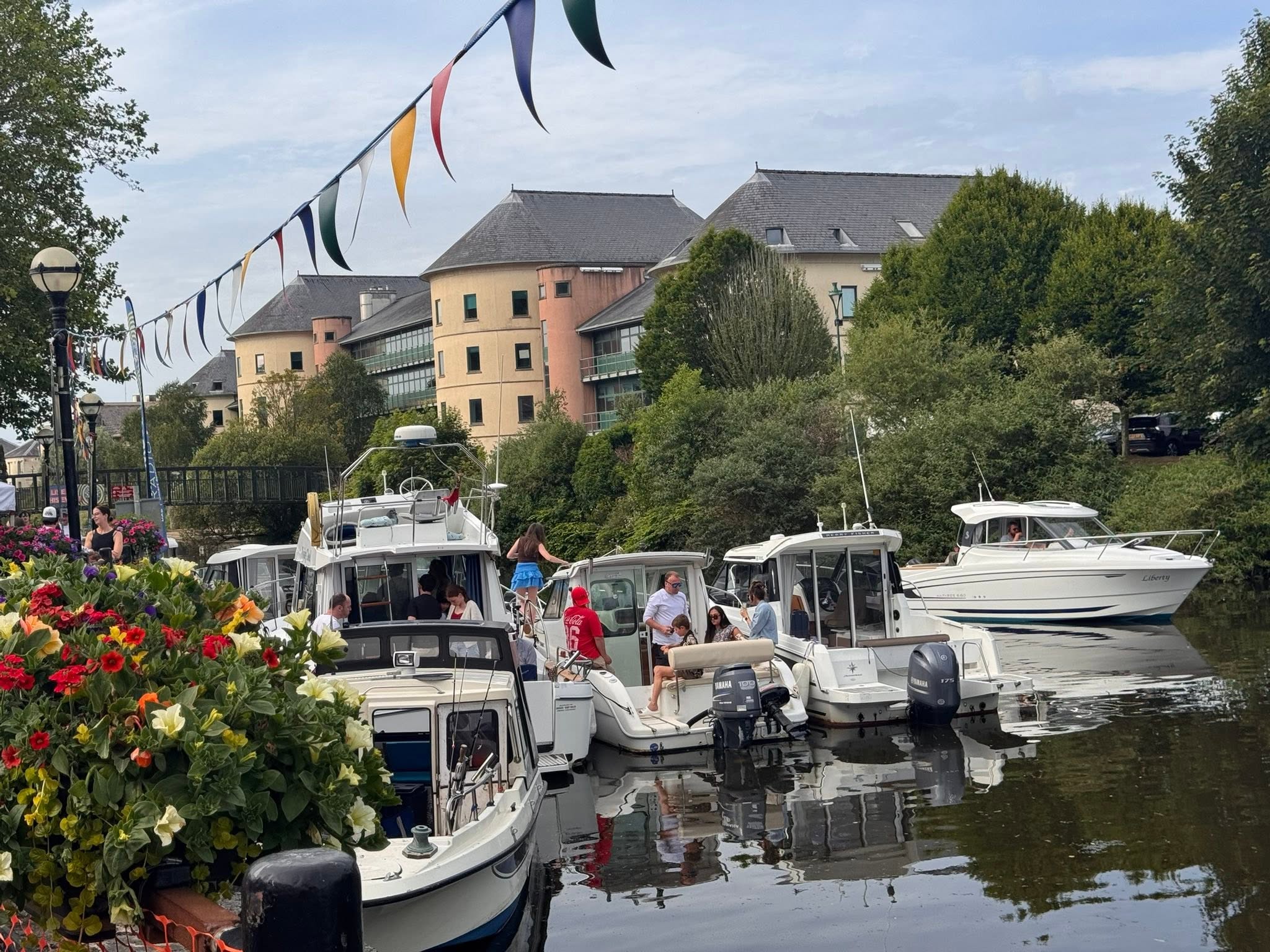
MILFORD HAVEN is preparing to raise a glass as Beer Fest returns to Milford Waterfront next month.

The Milford Haven Round Table Beer Fest will take place on Saturday (May 23), bringing a full day of drinks, food and live entertainment to Mackerel Quay.

Running from 12:00pm until 10:30pm, the event is expected to bring a festival atmosphere to the waterfront, with organisers promising “big pours, big energy and proper food”.

This year’s drinks line-up will feature 34 different options, including real ales, craft beers, lagers, ciders, Pimms, prosecco, gin and other summer favourites.

The event will also showcase a number of Pembrokeshire’s independent breweries and drinks producers, giving visitors the chance to sample local and regional flavours in one of the county’s best-known waterfront settings.

Music will be a major part of the day, with performances from 4th Street, Steve Bartram, Big Chicken, Jake Taylor and Funktion 22. Guest DJ Josh Navidi will also appear during the event.

Food will be available throughout the day, with a street food zone featuring Junkyard Dogs and Reeves BBQ. Visitors will also be able to make use of Milford Waterfront’s restaurants, cafés and independent eateries.

The Beer Fest has become one of Milford Haven’s popular early summer events, attracting both local residents and visitors to the marina. Last year, hundreds turned out despite wet weather, with the event praised for its atmosphere, live music and community spirit.

The festival is organised by Milford Haven Round Table, which has worked closely with Milford Waterfront in recent years to stage major community events in the town, including the beer festival, carnival and fireworks display.

Previous Round Table events have helped raise money for local charities, groups and good causes, while also bringing more footfall into the waterfront area.

Tickets for this year’s Beer Fest cost £25 per person.

Organisers are reminding those attending to drink responsibly and enjoy the event safely.


Continue Reading

Community2 hours ago

Milford Haven Beer Fest returns to waterfront this May

EVENT WILL FEATURE 34 DRINKS, LIVE MUSIC AND STREET FOOD MILFORD HAVEN is preparing to raise a glass as Beer...

Community1 day ago

Cancer patients targeted with parking fines outside Haverfordwest support centre

Adam’s Bucketful of Hope says vulnerable users, elderly volunteers and charity drivers have paid more than £1,000 after Ateb introduced...

Charity1 day ago

Row erupts at Spitfire museum after Reform poster displayed at charity premises

A HAVERFORDWEST museum has become caught up in a political row after Reform UK campaign material was photographed inside the...

Crime1 day ago

Pembrokeshire man charged with making hundreds of indecent images of children

A PEMBROKESHIRE man has appeared before magistrates charged with making hundreds of indecent images of children. David Lewis, 42, is...

Crime2 days ago

Man appears in court charged over death of Blood Bike Wales volunteer

FAMILY WATCHED FROM PUBLIC GALLERY AS CASE SENT TO CROWN COURT A PEMBROKESHIRE man has appeared before magistrates charged with...

Crime2 days ago

Police launch arson investigation after Haverfordwest fire

CCTV APPEAL ISSUED POLICE have launched an arson investigation after a derelict building was destroyed in a major overnight fire...

News2 days ago

Residents told to stay indoors as derelict building destroyed in Haverfordwest fire

EMERGENCY SERVICS were called to a major overnight fire in Haverfordwest which led to residents being urged to remain indoors...

Health2 days ago

Welsh public backs urgent action on dementia ahead of Senedd elections

Calls grow for diagnosis, care and support to become national priority NEW figures reveal overwhelming public demand for dementia to...

Local Government3 days ago

Council pays tribute to long-serving councillor Brian Hall

PEMBROKESHIRE COUNTY COUNCIL has paid tribute to long-serving Pembroke Dock Market councillor Brian Hall, following his death. Cllr Hall first...

Sport4 days ago

Bluebirds reach European play-off final after penalty drama in Barry

Haverfordwest County beat Barry Town United 3-1 on spot-kicks after 1-1 draw at Jenner Park HAVERFORDWEST COUNTY are one win...

Popular This Week