


Politics
‘We’re piling up laws never delivered’: former minister criticises own government

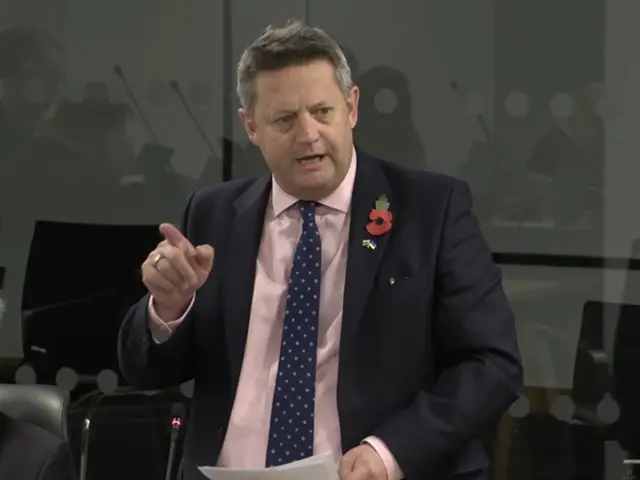
A FORMER minister has accused the Welsh Government of “piling up laws” that are “never delivered”, painting a picture of a pattern of incompetence over the past decade.
Labour’s Alun Davies criticised a seven-year delay in introducing an environment bill to plug post-Brexit gaps which left Wales with some of the weakest protections in western Europe, according to environment charities.
Mr Davies, who is first on Labour’s list for the new Blaenau Gwent Caerffili Rhymni seat at next year’s election, said: “We’ve got to do more than pass declaratory legislation… [which] doesn’t have any bite… All too often the vanity of politicians takes over and we believe we can change things quite fundamental and, usually, outside our control simply by passing laws.”
He added: “I remember when this was important and an emergency back in 2018.”
He accused Huw Irranca-Davies, the Deputy First Minister, of being able to offer “no credible explanation” of why it has taken seven years to bring forward the environment bill.

Mr Davies stressed the delay was not a one-off, questioning why it took ministers about a decade to implement public health and renting laws too.
Calling for a parliamentary inquiry, he asked: “Why is it we’re asked to vote for this legislation, time and time again, but the government isn’t able to deliver?”
He warned: “There are real failures of parliamentary and governmental processes here.”
The backbencher, who has twice been sacked from government, added: “We are creating increasingly bureaucratic and cumbersome new structures, targets, which probably won’t be met and, in fact, if you read the bill, won’t even be set until the end of the next Senedd.”

He made the comments as the environment bill, which would establish a watchdog and set a framework for biodiversity targets, passed the first stage in the Senedd. Similar watchdogs were set up in Scotland, Northern Ireland and England in 2021.
Mr Davies told the Senedd: “It’s increasingly worrying to me that what we’re doing is piling up laws… which are never delivered, never implemented and which create burdensome and cumbersome demands on public bodies which they themselves are unable to deliver.”
The Conservatives’ Janet Finch-Saunders was similarly scathing, describing delays as a “point of national shame” and a “serious political failure”. She suggested the Welsh Government will go down in history for kicking the can down the road.


She warned the bill pushes key decisions, such as actually setting targets, beyond the 2026 Senedd election when cross-party consensus on the issue could collapse.
Labour’s Mike Hedges, who chairs the Senedd’s legislation committee, concluded the bill “appears to have been deprioritised by the Welsh Government”.
He described the biodiversity target-setting framework as “ill-conceived”.
Delyth Jewell, Plaid Cymru’s shadow climate secretary, questioned why the Welsh watchdog was set to receive £300,000 less than its Scottish counterpart despite a wider remit.

And climate committee chair Llŷr Gruffydd warned last-minute government concessions “undermined” scrutiny as he called for the new watchdog to be “genuinely independent”.
During the debate on Tuesday November 11, Huw Irranca-Davies agreed to accelerate the timeline for setting targets from three years to two and bolster the body’s independence.
The Deputy First Minister and climate secretary also pledged to introduce a framework for short- and long-term targets, halve the time to report on missed targets to six months, and ensure the watchdog’s enforcement powers are active within two years.
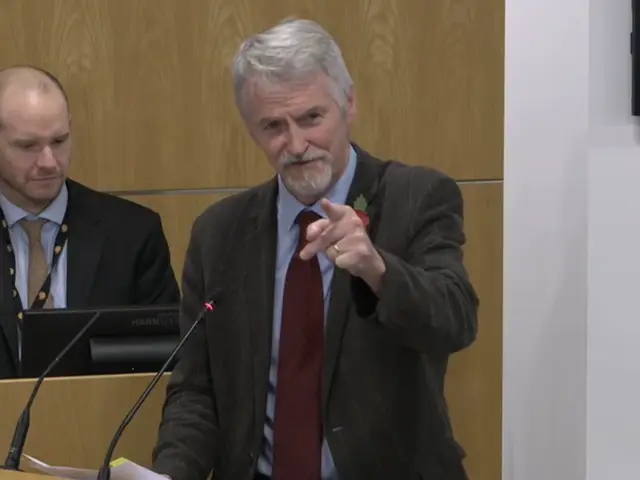
Turning to his colleague’s criticism, he joked: “I very much welcome all of the comments that members have made today and the spirit in which they were made – you too, Alun.”
Mr Irranca-Davies then rejected the charge that the legislation was weak, insisting the targets would not be “half-arsed” and telling Mr Davies: “I do think you’re unduly pessimistic on this – this is more than declaratory legislation. This has got the benefit, because it has taken a bit longer, of being exceptionally, exceptionally well-worked, well-crafted.”
Senedd Members voted 50-1 in favour of the general principles of the bill, which now moves to amendment stages, with only Reform UK’s Laura Anne Jones, who represents South Wales East, voting against.


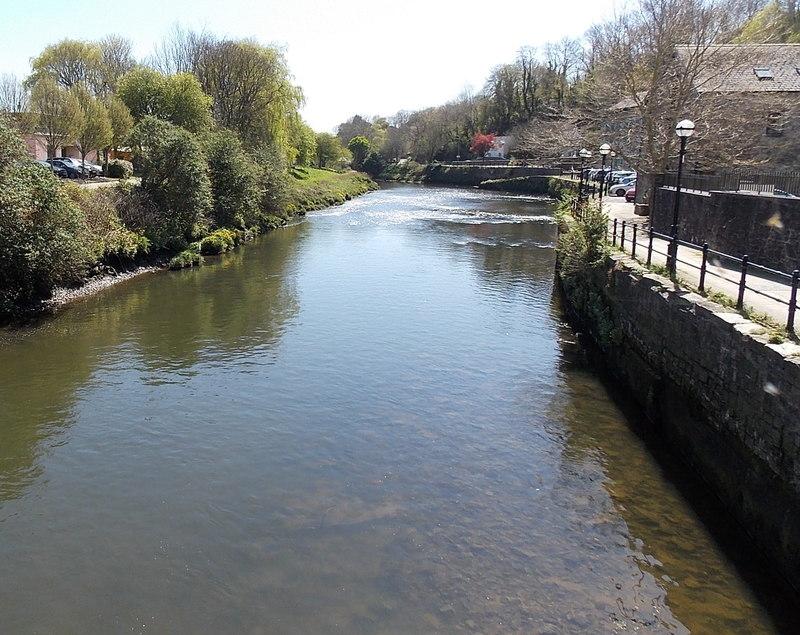
A PETITION call for a public commitment to save Pembrokeshire’s River Cleddau which has attracted more than 2,200 signatures, and is due to be heard by full council, ends in a few days.
The e-petition on Pembrokeshire County Council’s own website, started by James Harrison-Allen, says: “We call on Pembrokeshire County Council to create and enact a Clean Rivers Policy to restore the Cleddau to good health after decades of neglect and degradation.
“The Cleddau flows through the heart of Pembrokeshire, including our county town, and is the foundation for Pembrokeshire’s prosperity. The river is failing, and we need to act now to save it from irreversible decline.
“What’s the problem? The Cleddau rivers and estuary are the worst (and worsening) polluted SAC (Special Area of Conservation) designated rivers in Wales; worse even than the Wye and the Usk (NRW Water Assessment Report 2024), and considerably worse than the neighbouring Towy and Teifi.
“Damaging impacts on Pembrokeshire’s economy, public health and the natural environment. Ineffective regulation; monitoring, responding, policing, enforcement and prosecutions. What should PCC be doing to address this? Make a formal, public commitment to cleaning up the Cleddau. Make the health of the Cleddau central.”

Earlier this year, Henry Tufnell, MP for Mid and South Pembrokeshire, called for “urgent” action to tackle the poor state of the River Cleddau when he chaired a discussion bringing together key stakeholders, environmental experts, and community voices to address the issues surrounding water quality and pollution.
The panel event, organised by local river action group The Cleddau Project, covered topics including pollution sources, enforcement failures, and potential solutions to improve the river’s health.
The e-petition runs up to February 1, and had attracted 2,207 signatures by January 27.
If a petition gets 500 signatures, the creator will have an opportunity to debate it at a future full council meeting.

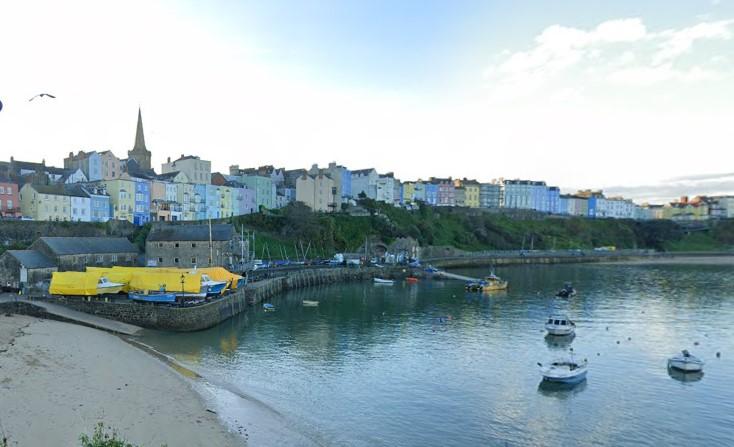
PLANS for works at Tenby’s historic sailing club building, part of the ‘iconic view’ of the town’s harbour have been given the go-ahead by the national park.
In an application to Pembrokeshire Coast National Park, Tenby Sailing Club, through agent David J P Morgan RIBA Architect sought permission for the two openings in second floor gable wall along with two new windows at Tenby Sailing Club, Penniless Cove Hill, along with a related listed building consent.
The application was supported by Tenby Town Council and Tenby Civic Society, the latter saying it will “add value to the use of the building and maintain the character and value of the listed building and the conservation area”.
Supporting documents for the application said: “The proposal is to form two new openings in the stonework and install two windows. These will replicate the existing windows at first floor level below. The openings will have red brick head as on existing original openings on the building. The proposal will have very little adverse impact on the listed building.”
They added: “The proposed new windows will improve observation of the harbour and bay from the second-floor level. This is where yacht racing is monitored and observed by officials and safety personnel.”
An officer report, recommending approval said: “The sailing club was built as a warehouse c. 1825, abutting the C17 sluice. Originally wine stores, it was later used by the local fishermen for stores and is now the home to Tenby Sailing Club, established in 1936. The rubble-built building is of three storeys and four bays, the glazing all later C20 with a slated roof and a modernised interior. There is a large steel stair to north (seaward) elevation.”
It added: “The building forms part of a group picturesquely clustered around the sluice, in turn forming part of the iconic view of Tenby Harbour. The proposal is to insert two windows at second floor level to the north (seaward) elevation, flanking the existing door,” adding: “The area retains its mercantile character not just in appearance, but also through its character due to ongoing use as fishing boat stores and winter moorings.
“The sailing club has occupied the building for many years and remains very active. The proposal is intended to improve the amenity of the building to provide better viewing at elevation and seeks to copy the detail and proportions of the windows at first floor stage.”
The application, and the related listed building consent, was conditionally approved by park planners.


OPPOSITION calls on Labour Government to restore 30mph default, revive frozen projects, and advance long-stalled infrastructure schemes amid ongoing controversy over speed limits and road investment.
In a session that began around 4:30pm and was broadcast live via the Senedd’s online proceedings, the Welsh Conservatives presented a detailed motion urging the Welsh Labour Government—supported by Plaid Cymru under their co-operation agreement—to reverse several high-profile transport decisions. At the heart of the debate was a call to restore the default speed limit on restricted roads from 20mph back to 30mph, a policy introduced in September 2023 that continues to divide opinion sharply.
The Conservatives framed their proposals as a comprehensive plan to “fix Wales’ transport system,” emphasizing that robust road networks are fundamental to supporting businesses, generating employment, and stimulating economic growth. They argued that current policies—including the 20mph default, the long-standing cancellation of the M4 relief road around Newport, and the effective moratorium on new major road projects—amount to an “attack on Welsh motorists” that is exacerbating economic stagnation, lengthening journey times, increasing costs for commuters and hauliers, and contributing to Wales trailing other UK nations in wages and overall prosperity.
The specific demands outlined in the motion included:
- Restoring the default speed limit to 30mph (with the party noting that 20mph zones would remain appropriate in sensitive locations such as near schools, hospitals, and residential areas with high pedestrian activity);
- Proceeding with construction of an M4 relief road to alleviate severe congestion in and around Newport, a bottleneck that has persisted for decades despite repeated promises and planning;
- Upgrading the A55, the key North Wales corridor linking Holyhead port to the English border and vital for tourism, freight, and daily commuting;
- Dualing sections of the A40 in West Wales to address chronic bottlenecks that hinder access to regions like Pembrokeshire and Carmarthenshire;
- Delivering a third Menai crossing to enhance connectivity between mainland Gwynedd and Anglesey, reducing reliance on the existing bridges which face capacity and maintenance challenges;
- Unfreezing all paused road projects to resume investment in infrastructure that supporters say has been neglected for too long.
Leading the debate, Sam Rowlands MS—Welsh Conservative Shadow Cabinet Secretary for Finance, Transport and Infrastructure—described Labour and Plaid Cymru’s approach as one that is “slowing Wales down and holding our economy back.” He positioned the Conservative agenda as pragmatic and economy-focused, arguing that good transport links are indispensable for prosperity, job creation, and reversing underinvestment in Wales’ crumbling infrastructure.
This latest intervention comes against a backdrop of sustained political contention over transport policy in Wales. The 20mph default speed limit, championed by the Welsh Government as a road safety measure expected to reduce collisions, injuries, and NHS costs (with some early data showing positive trends in casualty reductions on affected roads), has faced widespread public backlash. A record-breaking Senedd petition opposing the change amassed nearly half a million signatures, and opinion polling has consistently shown strong opposition—often around 70%—particularly among drivers who report increased journey times, frustration in rural and suburban areas, and occasional non-compliance.
The Welsh Conservatives have capitalized on this discontent, repeatedly branding the policy “anti-motorist” and positioning themselves as defenders of drivers, rural communities, businesses dependent on road freight, and those in less well-served regions where public transport alternatives are limited. Critics of the current approach, including the opposition, point to economic modeling (including some Welsh Government estimates) suggesting potential costs from slower average speeds running into billions over time, alongside enforcement expenses and perceived over-application in areas where higher speeds were historically considered safe.
For their part, the Welsh Government and its supporters defend the 20mph limit as evidence-based, life-saving, and aligned with broader goals of sustainable transport, reduced emissions, and safer communities—especially in built-up areas. They have highlighted data indicating collision and injury reductions in the first year of implementation, while acknowledging implementation challenges and engaging in reviews and “listening” exercises in response to criticism. Previous Senedd debates on the issue (including those prompted by petitions and opposition motions) have seen the government largely hold firm, though with signals of potential adjustments toward more targeted application rather than blanket coverage.
The debate also occurs in the early stages of the run-up to the May 2026 Senedd election, where transport—alongside health, the economy, and devolved powers—remains a key battleground. Polling suggests a competitive landscape, with Labour facing pressure to retain its historic dominance, Plaid Cymru gaining ground, and emerging challengers like Reform UK adding volatility. The Welsh Conservatives hope to frame themselves as offering a clear, motorist-friendly alternative that prioritizes economic connectivity and infrastructure delivery.

No immediate outcome from the January 28 debate was detailed in public releases, but such opposition-led motions typically serve to highlight divisions, rally supporters, and keep issues prominent in the media and public discourse ahead of the election. Sam Rowlands MS was made available for media interviews following the session, underscoring the party’s intent to sustain momentum on these themes.
The session underscores the ongoing tension in Welsh politics between competing visions of transport: one emphasizing road-user convenience, economic efficiency, and major infrastructure projects; the other prioritizing safety gains, environmental sustainability, active travel alternatives, and long-term decarbonization. As Wales approaches a pivotal election year, debates like this one are likely to shape voter perceptions of how best to balance these priorities.



News17 hours ago
Wales’ first minister keeps distance from Starmer before May vote
Senedd race not Westminster THE FIRST MINISTER has moved to draw a clear dividing line between the Welsh Labour campaign...
News21 hours ago
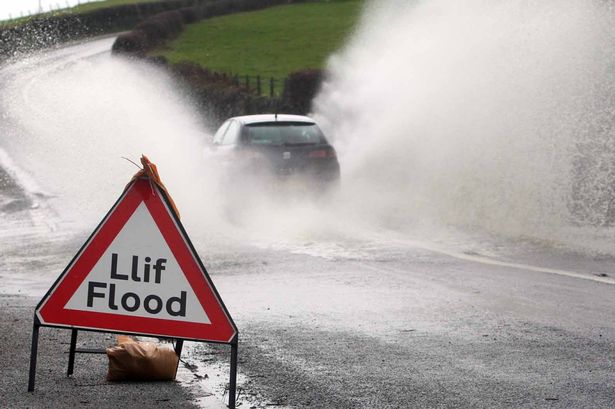
Kurtz raises Gumfreston flooding in the Senedd as petition deadline nears
LOCAL Senedd Member Samuel Kurtz has raised the long-running flooding problems affecting the B4318 at Gumfreston in the Senedd, as...

Community1 day ago
Anchor re-dedicated to mark 30 years of US–Haverfordwest ties
Service honours shared history, service and friendship on the Quayside A SYMBOL of Haverfordwest’s wartime and Cold War connections with...


Business2 days ago
Senedd urged to act as Welsh pubs fall further behind England on business rates
Industry leaders warn of closures and job losses as pressure mounts on ministers to pass on funding PUBS across Wales...


Crime2 days ago
Haverfordwest man jailed for online death threat
A Haverfordwest man has been sentenced to a year in prison after sending a threatening message online. Michael Carruthers, 34,...


Community2 days ago
Storm Chandra: Morning impacts across Pembrokeshire
HEAVY overnight rain and strong winds brought by Storm Chandra have caused disruption across Pembrokeshire, with fallen trees and localised...


Business3 days ago
Business voices heard as Kurtz and Davies urge action on business rates
LOCAL businesses from across West Wales have voiced serious concerns about the impact of business rates at a dedicated roundtable...

Crime3 days ago
Milford Haven man appears in court charged with burglary and GBH
Bail granted with tagged curfew and ban from Pembrokeshire A MILFORD HAVEN man has appeared in court charged with burglary...


News4 days ago
First Minister warns UK could break up as Starmer faces pressure ahead of elections
Eluned Morgan says there is a “real possibility” the Union could fracture as Labour braces for losses and Prime Minister’s...


Crime4 days ago
New national police force planned in biggest shake-up for generations
Ministers promise “British FBI” to take on terrorism, fraud and organised crime as forces face new performance targets and intervention...
-
 Community7 days ago
CPRW welcomes long-awaited grid report and calls for more transparency
-
 Health7 days ago
Hywel Dda board to consider refreshed health strategy to 2040
-
 Health5 days ago
Health Board to decide on future model for nine clinical services
-
 Crime7 days ago
Haven Master spared jail after River Cleddau kayak crash
-
 News7 days ago
Milford Haven School placed in special measures after Estyn inspection
-
Health7 days ago
Withybush staff fear crèche fee rise will price parents out
-

 News7 days ago
IPSO rejects complaint concerning Pembrokeshire Herald court report
-

 Business6 days ago
New planning rules could block Welsh pubs from running pop up campsites