


Local Government
A decade of mismanagement in the Pembroke Dock grants scandal exposed


How PCC commissioned fresh legal advice in late 2023 but kept its existence concealed until councillors forced its release — resulting in a redacted report confirming the evidential threshold for fraud was met, but concluding PCC could not prosecute because of its own internal failings.
A DECADE of confusion, missing evidence, redactions and internal failures has been laid bare in the long-running scandal surrounding the Pembroke Dock Commercial Property Grant Scheme – a case Pembrokeshire County Council quietly revisited in 2023 before burying most of the crucial legal advice until their hand was forced.
The legal advice has been released by the authority, but is heavily redacted.
The Herald can reveal that council officers sought fresh legal advice in December 2023, nearly ten years after the original investigation, following efforts to determine once and for all whether the authority could pursue a prosecution over alleged irregularities in grant-funded renovation work in Pembroke Dock.
That advice, written by barrister Lee Reynolds of Apex Chambers, was only published in heavily redacted form (After Cllrs Mike Stoddart and Jacob Williams argued that it would not be in the public interest for the whole of the report to be considered in private). Despite confirming that the evidential threshold for fraud had been met, Reynolds advised in the strongest possible terms that Pembrokeshire County Council must not prosecute – because its own officers’ conduct, document handling and procedural failures would undermine any case in court.
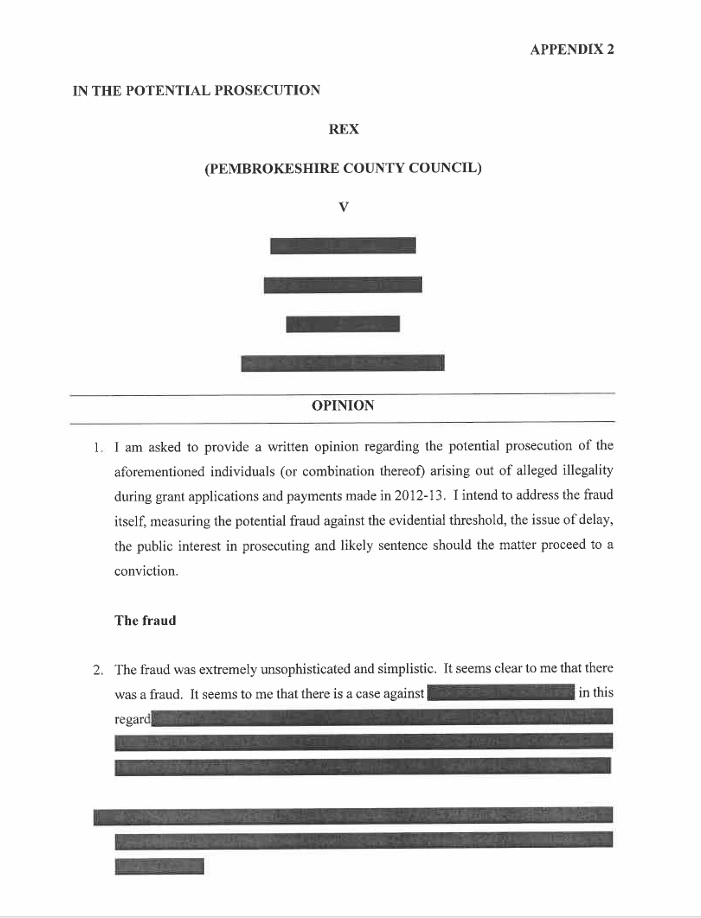
Advice confirms fraud – but PCC “cannot prosecute”
The visible sections of Reynolds’ opinion are stark. He describes the fraud under investigation as “clear”, “unsophisticated” and “supported by evidence”. He states plainly that the evidential test for prosecution is met.

But he concludes that PCC cannot be the prosecuting authority because of severe concerns about the authority’s own internal processes. He warns that allegations of “complicity (at worst) or gross incompetence (at best)” by individuals within the Council would fatally compromise any case brought by PCC.
The majority of the written advice – including the detailed factual background and key evidence against the suspects – remains entirely blacked out.
Police and CPS raised identical concerns years earlier
The Herald has reviewed a Dyfed-Powys Police letter summarising Crown Prosecution Service findings from the original 2014–2016 referral. It highlights:
- Missing evidence, including a caseworker’s computer hard drive that vanished before reaching police.
- Concerns about document integrity after public allegations that papers in a council store room may have been interfered with.
- Unreliable or conflicting statements from officers who administered the scheme.
- Inadequate training and inconsistent handling of claims.
- Failure to follow proper processes when approving invoices or carrying out on-site checks.
The CPS concluded there was no realistic prospect of conviction – not because fraud had not occurred, but because PCC’s own internal failings had contaminated the evidence. Reynolds’ 2023 opinion echoes those concerns almost word for word.

A scandal without accountability
After a decade of investigations, repayments, police enquiries, CPS reviews, council motions and now a second round of legal advice, the Pembroke Dock grant scandal ends not with prosecutions, but with more redactions, missing evidence and unanswered questions.
- Despite a barrister confirming the evidential test for fraud was met – no one will ever face trial.
- Despite WEFO raising serious concerns – no officer has been held publicly accountable.
- Despite repeated calls from councillors for transparency – large parts of the file remain secret.
The Council has formally closed the matter. The final question remains: what else is still buried?
One name that will be familiar to long-time readers is that of Gwyn Evans, the Council’s then European Manager, who oversaw elements of the grant scheme. Concerns about Mr Evans’ role were raised publicly as far back as 2014, when Audit Committee papers and subsequent reporting highlighted that he had been interviewed during the police investigation and that questions had been raised about the accuracy of a report he produced relating to the 29 Dimond Street project. While the new barrister’s opinion does not reveal names, the pattern of redactions and the references to officers interviewed as witnesses or potential defendants strongly suggest that figures involved in those earlier controversies – including Mr Evans – feature within the censored sections of the 2023 legal advice.


In January 2024, the issue briefly resurfaced when a meeting described on the agenda as a “review” was repeatedly referred to by senior officers as an “investigation” into the scheme. Reporting at the time highlighted that senior figures – including Finance Director Mark Lewis, Development Director Dr Steven Jones, European Manager Gwyn Evans, and Head of Internal Audit Jonathan Haswell – addressed councillors on the controversy.
The public gallery was packed. In a marked departure from the secrecy that characterised the 2014 era, Monitoring Officer Lawrence Harding announced that all councillors would be given confidential access to grant documentation. But the promise was short-lived: the material councillors eventually received was heavily restricted, with key documents withheld and others made available only under supervision.
Behind the scenes, as we now know, the Council had already commissioned the 2023 Reynolds advice – yet no mention of it was made during that meeting. Councillors were not told that a fresh legal opinion existed, nor that it confirmed the evidential test for fraud had been met. Instead, the authority continued to present the matter as an internal housekeeping exercise, even as redactions were being prepared for eventual publication nearly two years later.
What PCC still hides
Black bars in the Reynolds opinion almost certainly conceal:
- The detailed narrative of the alleged fraud
- WEFO audit evidence
- Internal emails and correspondence
- Officer decision-making and supervisory failures
- Lost or mishandled evidence
- Conflicting staff statements
- Senior officer involvement in grant approvals
- Potential conflicts of interest
TIMELINE: 2013–2025

2013–14 — Concerns first raised about grant payments in Pembroke Dock
2014 — PCC refuses councillors access to key documents; police investigation begins
2015–16 — CPS rules no prosecution possible due to evidential contamination
2017–22 — WEFO oversight continues; internal reviews carried out
Dec 2023 — PCC quietly commissions fresh barrister’s advice
2024 — Redactions prepared behind closed doors
Late 2025 — Heavily censored advice finally published
2025 — Case closed: no prosecutions, no accountability
TWELVE YEARS OF WARNINGS – NOTHING HAS CHANGED

December 2013
Cllr Mike Stoddart told Cabinet that grants were being paid for building works “which had never materialised” and accused the authority of hiding the truth behind blacked-out documents. Then council leader Jamie Adams responded by attacking Cllr Stoddart’s former career in the building trade rather than addressing the allegations. When challenged Cllr Adams was unable to substantiate these allegations. The meeting descended into shouting.

Private Eye’s Rotten Boroughs column covered the row days later, mocking the council’s claim that a grant-funded roof had magically been made to look authentically “aged” with a mix of new and recycled slate, and highlighting phantom works the council later insisted had been paid for privately by developer Cathal McCosker.
2023–2025
A barrister confirms the evidential test for fraud is met.
The same advice is heavily redacted.
No one will ever be prosecuted.
Twelve years, two police referrals, multiple audits and a CPS review later – many will say that the culture of secrecy and deflection remains untouched.
Here is the final, press-ready companion piece – written in the same house style, legally cautious where it needs to be, but still devastating. It can run alongside your main article or as a separate “How We Exposed It” box/feature.
How The Herald uncovered Pembroke Dock’s longest-running scandal
Long before The Pembrokeshire Herald existed, our predecessor title Pembrokeshire’s Best first put developer Cathal McCosker on the front page – dubbing him the “Baron of the Bedsits”.
What started as a series of curious planning applications and suspiciously generous grants turned into one of Welsh local government’s most enduring scandals. Over more than a decade, Herald journalists – together with dogged whistleblowers inside and outside County Hall – pieced together a picture that officials worked hard to keep hidden.
Among the discoveries that never quite made it into the official narrative:
- A senior council officer caught altering the public minutes of a key meeting.
- Evidence that then-Chief Executive Bryn Parry-Jones personally intervened to block disciplinary action against at least one member of staff linked to the grant scheme.
- A furious confrontation in which Mr Parry-Jones reportedly threatened to hire private investigators to find out who was talking to this newspaper. (County Hall’s walls, it turned out, were very thin indeed.)
- A former NatWest bank on Meyrick Street converted into ten bedsits – despite planning permission having been granted for just four flats. The extra six appeared only after a retrospective application was quietly nodded through.
- Within days of the council reporting the alleged fraud to the police the developer Cathal McCosker offered to pay back all the £180,000 in grants he had received on the four completed properties and to forgo the £120,000 due on the nearly complete project at No 1 Dimond Street even though the dossier handed to the police only concerned £60,000 in contested payments. Mr McCosker’s offer was on condition that this “would be the end of the matter”
- A Dimond Street butcher’s shop (No 25) that supposedly received grant-funded renovation work before the purchaser even owned the building.
- The developer was allowed to omit the work to fireproof the ceiling between the former butcher’s shop and the flat above
- Housing Benefit payments for tenants routed to an Irish bank account that never appeared in the relevant company filings.
- Tenants left without electricity or water despite tenancy agreements promising “all bills included”.
- The disappearance – never satisfactorily explained – of a laptop and hard drive containing crucial grant records.
- Repeated attempts by senior officers and members of the ruling Independent Political Group to delay, deflect or shut down scrutiny, even after the money trail had become impossible to ignore.
The collapse of confidence in the Commercial Property Grant Scheme fed directly into the wider crisis that eventually ended Bryn Parry-Jones’s controversial tenure at County Hall.
When we sat down with Cllr Mike Stoddart – the one elected member who refused to let the matter die – and compared his files with ours, the conclusion was the same.
It was, in the end, a very simple fraud with very few moving parts.
And twelve years later, despite police investigations, CPS reviews, WEFO audits and now a barrister confirming the evidential test for fraud was met, nobody has ever been prosecuted – and most of the paperwork is still blacked out.
That is the real scandal.












Structural concerns at privately owned property prompt extended traffic restriction
CRACKWELL STREET in Tenby is expected to remain closed to vehicles for approximately another eight weeks while work continues at a privately owned property overlooking the harbour.
Scaffolding has been erected along the building, with the closure originally introduced to allow the structure to be inspected and repaired safely.
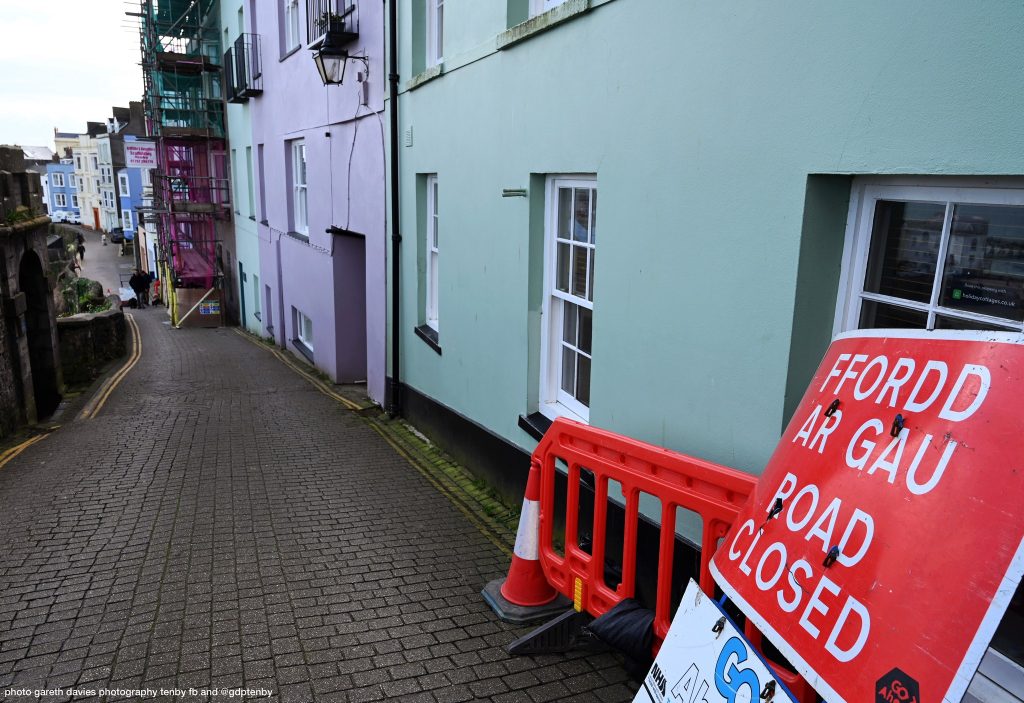
Pembrokeshire County Council confirmed that the road closure was first communicated prior to a formal public notice being issued on Tuesday (Dec 3).
The council said the restriction applies only to vehicles, with pedestrian access continuing along the narrow harbour-side street.
In a statement to The Herald, a council spokesperson said the property is privately owned and that the authority is not directly involved in the structural works taking place.
The spokesperson said: “The property is privately owned and therefore questions relating to the structural issues and the work being undertaken should be addressed to the owner.”
However, council officers remain in contact with the owner while the road closure remains in place.

The council added that the restriction on vehicular access was extended from Sunday (Feb 23) for a further period of approximately eight weeks.
No formal safety notice or structural assessment has been issued by the council in relation to the building, and the authority said it is not aware of any impact on neighbouring properties.

Officials also confirmed that pedestrian access along Crackwell Street remains open despite the traffic restriction.
A council spokesperson added: “Council officers are in dialogue with the property owner as works continue relating to ongoing road closure requirements.
“The property owner and engineers are working to remove the scaffold at the earliest opportunity and allow the road to be re-opened to vehicles.”

Crackwell Street, which links Tenby’s harbour area with the town centre, is one of the town’s most distinctive streets, lined with colourful buildings overlooking the harbour below.
The closure has temporarily restricted vehicle access along the route while engineers continue work on the property.
Photos: Gareth Davies Photography Tenby

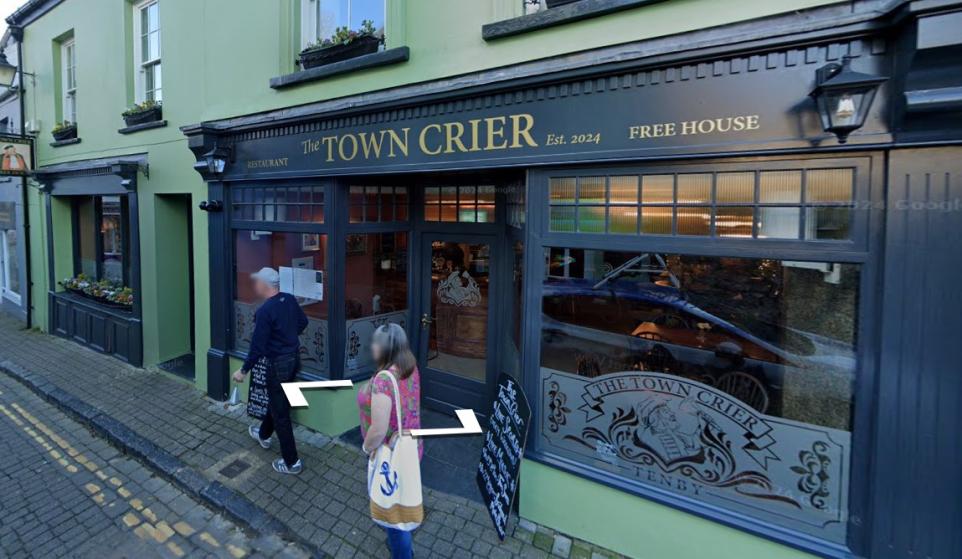
PLANS to expand the facilities offered by a Pembrokeshire seaside town pub, which was once a toyshop, have been approved by the national park despite concerns raised by the local civic society.
In an application to Pembrokeshire Coast National Park, The Old Town Crier Pub Ltd, through agent Argent Architects, sought permission for the installation of a retractable canopy to rear courtyard of The Town Crier Pub, 3-4 Upper Frog Street, Tenby.
A supporting statement said the scheme for the pub, in Tenby town centre, with a rear boundary on the town’s Grade-I-listed 13th century town wall, “makes a positive contribution to the site, adding an elegant structure, which remains sensitive to the host building and the historic town wall”.
The application added: “The proposals are limited to the private realm of the premises’ courtyard, and do not touch the town wall. The experience of the town wall from the public realm will remain unchanged. There is no perceived impact on the historic town wall arising from the proposals.”
The application was supported by Tenby Town Council, but Tenby Civic Society raised concerns about the potential impact on the nearby town walls.

It added: “We regret having to put these views as on balance the modern scheme built on this site has a lot of virtues, one of which has been to open up views and appreciation of the inside of the Town walls to the public as customers.
“The application presents no justification for the impact on the inside of the town walls, and the proposal would in our view diminish the significance and appreciation of the inside of the town walls.”
An officer report recommending approval noted the concerns, pointing out the civic society was not a statutory consultee.
It added: “Whilst in very close proximity to the town walls, the proposed canopy is not readily visible from the public realm, the existing courtyard connecting to the highway only via a pedestrian door, this offering limited views into the site. In terms of overall impact on the special qualities of the National Park, the proposal is considered acceptable.”
The Upper Frog Street site of the Town Crier was formerly the Clarice Toys toy and novelty shop, and is called the Town Crier in tribute to the late John ‘Yobbler’ Thomas, a former proprietor of the shop and a former town crier of Tenby.
John Thomas served as Tenby’s town crier for more than 30 years, and was responsible for bringing four national crier contests to Tenby.
John and wife Caroline, who would become a councillor and serve as mayor in the town, set up Clarice Toys in Tenby’s Upper Frog Street after their marriage in 1961, with the business being later run by their son and daughter, Ian and Kerri.
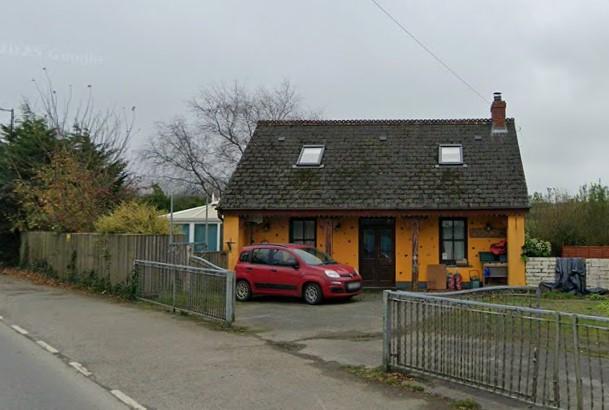
A CALL to convert a financially unviable disused former antiques shop on the edge of Crymych to residential accommodation has been given the go-ahead by county planners.
In an application to Pembrokeshire County Council, Clare Griffiths, through agent Josh Macrae, sought a change of use of a disused shop with ancillary accommodation above, at Ty Ebrill, Clares Shop, on the edge of the village, to an ancillary accommodation unit.
A supporting statement said: “Siop Clare is a mixed-use building in the curtilage of the main dwelling on the site, Ty Ebril, it comprises a small flat above a disused shop below. The flat, constructed in 2007, is comprised of a single modestly sized living space and bedroom area, with a bathroom; the flat is accessed by a set of stairs to the rear of the building. Since its construction the flat has been used as ancillary accommodation for family members of the owners of Ty Ebrill.
“The disused retail premises below is comprised of an open plan shop area with a conservatory attached, the conservatory was previously used as a flower preparation area.
“The shop was in use for a number of decades; it was operated by the current owner since 2003 and was previously an antiques shop, but has been disused since it was closed 2019 as it was no longer financially viable and the owner had changed career. Due to the shop being located within the curtilage of the main dwelling it has not considered suitable for the shop to be leased to another party.”
It added: “The change of use will require a minimal amount of work to covert the disused shop and modestly sized flat into a small dwelling. The dwelling would be suitable for single occupancy, a small household, or as continued ancillary accommodation for the main dwelling, this would create the opportunity for multi-generational living on the site should the owner sell Ty Ebrill.
“As there is a high demand for housing in the Pembrokeshire area it is felt that the proposal would be suitable and would allow the building to become a viable dwelling, creating a potentially low-cost home in the area.”
The application was conditionally approved by county planners.



Health15 hours ago
Future of Withybush Hospital petition sparks urgent call for Senedd debate
CALLS have been made for an urgent debate in the Senedd over the future of services at Withybush Hospital as...

Crime1 day ago
Man jailed after threatening to chop teen’s ears off in drunken phone call
17-year-old victim said she feared for her life after a series of threats A MAN who threatened a teenage girl...


Sport1 day ago
Sean Bowen set for historic Welsh clash at Cheltenham Gold Cup
PEMBROKESHIRE jockey Sean Bowen could be part of a historic all-Welsh showdown when he lines up in the Cheltenham Gold...


Community1 day ago
Tenby still waiting as Wales hits 50 rural mobile mast upgrades
Seaside town plagued by signal congestion again absent from latest government-backed coverage improvements A NEW milestone in the UK Government’s...


Crime2 days ago
Man raped 15-year-old girl in caravan while she was on family holiday in west Wales
Jury convicts Pendine man after court hears he raped intoxicated teenager in caravan during family holiday A MAN who raped...


Community2 days ago
Crash sparks fresh questions over future of former Haverfordwest library
CONCERNS have been raised about the future of a distinctive Haverfordwest building after a car crashed into it last week,...


Community3 days ago
Councillors vote to close Ysgol Clydau despite community concerns
Petition and protests fail to prevent closure of small rural school near Tegryn PEMBROKESHIRE COUNTY COUNCIL has voted to close...


News3 days ago
Rescue drama at Swanlake Bay as lifeboats race to aid hypothermic casualty
TENBY lifeboat crews were involved in a dramatic multi-agency rescue on Saturday morning (Mar 7) after a person suffering from...


Sport3 days ago
Wales show heart in Dublin but Ireland hold firm
Ireland 27 – 17 Wales – Aviva Stadium, Dublin – Guinness Six Nations, Round Four WALES produced their most encouraging...


Community3 days ago
Farm matriarch who built family poultry business dies aged 90
Tributes have been paid to the woman described as the “heart and soul” of a well-known Pembrokeshire family farm following...
-

 Community5 days ago
Whitland Post Office re-opens under new management
-

 Health2 days ago
Women’s health services ‘expanding’ across mid and west Wales says Health Board
-

 Crime5 days ago
Man who threatened to kill police during Milford Haven standoff avoids jail
-

 Crime7 days ago
Man sentenced after punching convicted paedophile in Haverfordwest pub
-

 Crime6 days ago
A teenage driver sentenced after pedestrian seriously injured on zebra crossing
-

 Crime6 days ago
Police investigating nightclub assault in Saundersfoot
-

 Education5 days ago
Future of Pembrokeshire school destroyed by fire hangs in the balance
-

 News5 days ago
Reform energy policy raises questions for Milford Haven and Celtic Freeport ambitions