


News
Eight arrested in Cardiff as policing varies across UK during latest Palestine Action protests


EIGHT people were arrested in Cardiff city centre on Saturday as part of a coordinated wave of sign-holding demonstrations challenging the UK Government’s decision to proscribe the direct-action group Palestine Action. The Cardiff protest, held outside Tŷ William Morgan House in Central Square at 1:00pm, formed part of a wider day of action across more than 20 towns and cities.
Participants sat silently holding cardboard signs stating: “I oppose genocide. I support Palestine Action.” Police made arrests under section 13 of the Terrorism Act 2000, which prohibits expressions of support for proscribed organisations. Palestine Action was added to the proscribed list earlier this year, a decision now being reviewed in the courts.
Cardiff was among several locations where arrests were made, but police responses differed markedly across the UK. In Edinburgh, where around 55 people took part, and in Exeter, where 35 people sat outside Central Station, local forces made no arrests. By contrast, arrests were reported in Manchester, Bristol, Birmingham, Norwich, Cambridge, Sheffield and Lancaster. In Wales, two people were also arrested near BAE Systems’ Glascoed site in Newport, while two protesters took part in Presteigne without incident.
Saturday’s actions bring the number of arrests linked to the Lift The Ban campaign to 636 over 12 days, and 2,717 since the ban was introduced. Campaigners argue the variation in enforcement indicates that the ban is difficult to apply consistently. Police forces have not commented in detail but say decisions are made on a case-by-case basis.
Judicial Review continues
The demonstrations coincide with the ongoing Judicial Review into the Government’s decision to proscribe Palestine Action. The review is due to conclude on Tuesday, 2 December, with judgment expected at a later date.

The legal challenge — brought by Huda Ammori, co-founder of Palestine Action — argues that the group is the first non-violent direct-action organisation to be proscribed under terrorism legislation. Submissions from Liberty, Amnesty International and UN Special Rapporteur Ben Saul express concern about the implications for free expression and the wider protest landscape.
Government lawyers maintain that the decision was lawful and proportionate under the Terrorism Act.
Hunger strike update
Campaigners say six prisoners on remand for alleged actions linked to Palestine Action are currently on rolling hunger strike. Two individuals — Teuta Hoxha and Kamran Ahmed — have recently been taken to hospital after their health deteriorated.
Most of those on remand have not been charged under the Terrorism Act itself, but prosecutors have applied terrorism-related aggravation to some criminal damage cases. The CPS says all decisions follow established legal tests.
Scottish cases and fines rejected
In Scotland, six people previously charged for sign-holding under section 13 have publicly rejected a £100 fiscal fine offered as an alternative to trial. Police Scotland have made no arrests at any of the Edinburgh sign-holding events, though 19 people have been charged following subsequent investigations.

Statements from participants
Several participants in Saturday’s actions, including retirees, academics and campaign supporters, told The Herald they were concerned about the use of counter-terrorism legislation in the context of peaceful protest.
A 65-year-old former teacher trainer from Cambridge said she took part because of long-standing links with educational projects in Gaza.
A 31-year-old Norwich bartender said she was worried that ordinary protest could be “misinterpreted” as support for terrorism under the law.
Their accounts reflect the variety of personal motivations expressed during the campaign.
Background to the ban
The Home Secretary proscribed Palestine Action earlier this year following incidents of break-ins and criminal damage at defence-industry sites. Ministers said the organisation’s tactics met the threshold for proscription, though critics argue that existing criminal law was sufficient.
Under section 13 of the Terrorism Act, displaying support for a proscribed organisation — including through clothing, signs or public statements — is an offence carrying a maximum six-month prison sentence.

What happens next
A ruling in the Judicial Review will determine whether the proscription stands or whether ministers must revisit the decision.
Meanwhile, those involved in the Lift The Ban campaign say coordinated sign-holding is likely to continue. Police forces have not yet indicated whether their approach to enforcement will change following Saturday’s events.

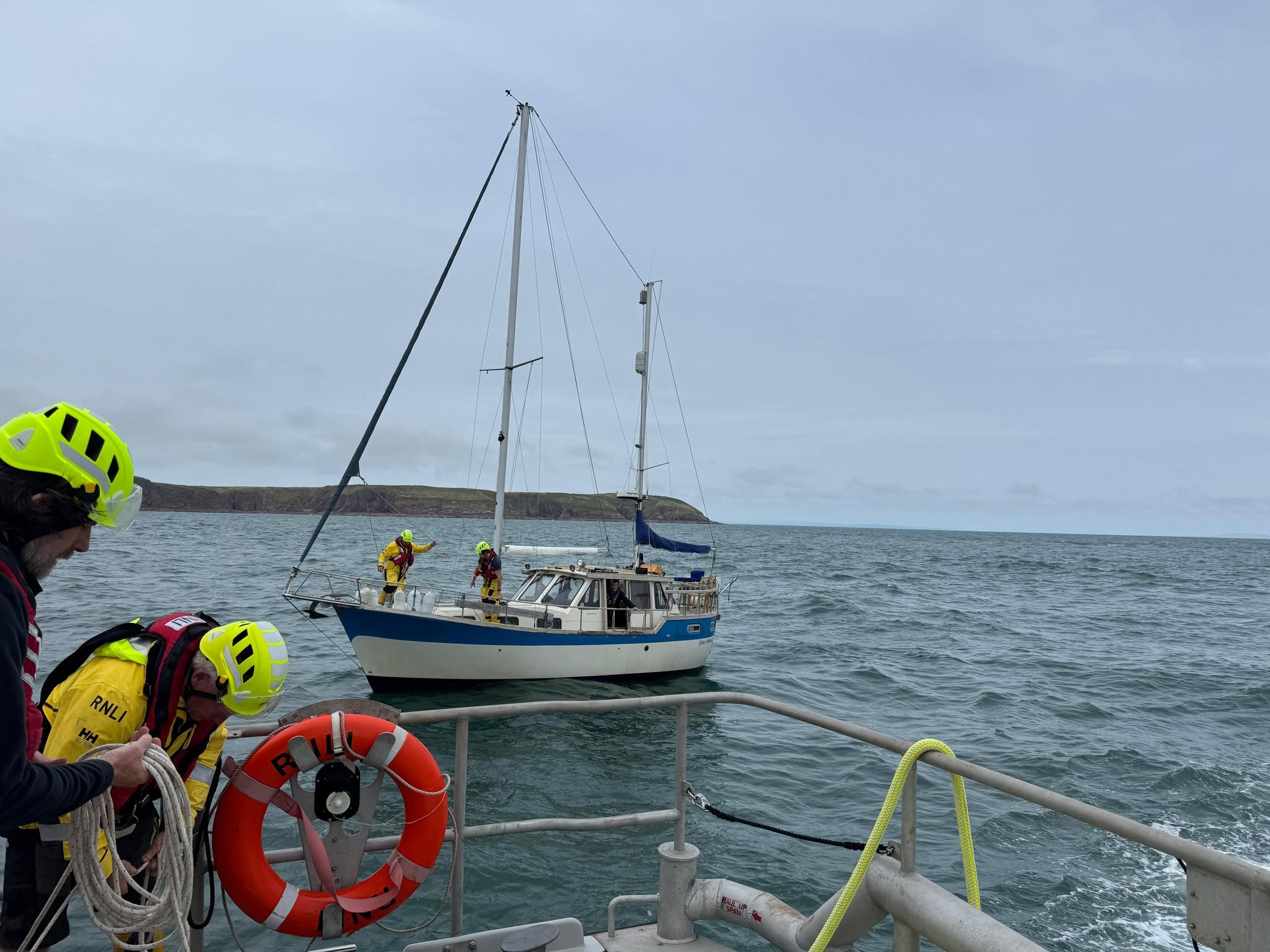
A YACHT was towed back to Tenby after its skipper became unwell off Caldey Island.
Tenby’s all-weather lifeboat was requested to launch at 1:40pm on Monday (Jun 15), after the coastguard received a call from the occupants of a yacht reporting that the skipper had become ill around one mile south of Caldey Island.
The volunteer crew quickly made their way to the vessel, which had three people and a dog on board.
Once alongside, the lifeboat crew discovered that the skipper was suffering badly from seasickness and that the other two people on board were unable to sail the yacht themselves.
After a full assessment by the coxswain, it was decided that the safest course of action was to tow the yacht back to Tenby. The vessel was drifting with the tide towards Caldey Island and was also considered a potential navigational hazard to other boats.
Two lifeboat crew members were placed aboard the yacht to help set up the tow and to monitor the unwell skipper during the journey back.
After a tow of around an hour, the yacht was placed on the lifeboat mooring in the calmer waters of North Bay.
The lifeboat then returned to station, arriving back at 3:15pm.

THE WORLD’S last seagoing paddle steamer will return to Pembrokeshire this week as Waverley marks the 79th anniversary of her maiden voyage.
The historic vessel will sail from Milford Haven and Tenby on Tuesday (Jun 16), with trips including a daytime cruise around Skokholm, Skomer, St Brides Bay and Ramsey Island from 11:30am to 4:30pm.
There will also be an evening sailing from Milford Haven at 5:00pm, travelling to St Govan’s Head, Caldey Island and along the Pembrokeshire coast, returning at 9:50pm.
Passengers can also join Waverley at Tenby, with sailings to Milford Haven and an evening cruise around Caldey Island and the coast.
On Wednesday (Jun 17), Waverley will make her only Fishguard visit of 2026, with an evening cruise to St David’s Head, passing Strumble Head Lighthouse, from 6:15pm to 9:15pm.
Tickets are available through Waverley Excursions.

MID WALES peace activist Angie Zelter was arrested outside the Royal Courts of Justice in London after holding a placard in support of Palestine Action.
The 75-year-old campaigner, from Knucklas, Powys, was detained at around 12:20pm on the steps of the court, according to Radnor Palestine Links.
The group said Ms Zelter was arrested under Section 13 of the Terrorism Act 2000 after holding a sign which read: “Saving lives is not terrorism. I support Palestine Action.”
She was taken to Charing Cross Police Station and released around two hours later, the group said.
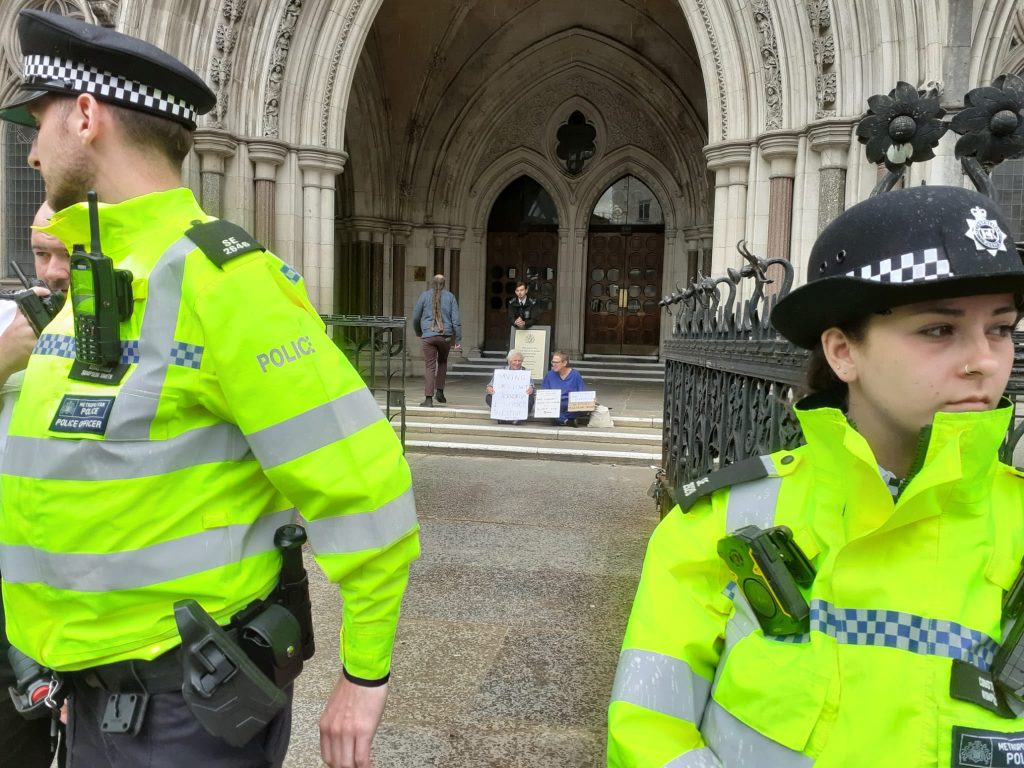
The arrest came as the Court of Appeal ruled in favour of the UK Government over its decision to proscribe Palestine Action under terrorism legislation.
The ruling overturned an earlier High Court decision which had found the ban unlawful. The Court of Appeal held that the Government’s decision was lawful and proportionate.
Palestine Action was banned after the Home Secretary moved to proscribe the group under the Terrorism Act 2000. Supporting or inviting support for a proscribed organisation can be a criminal offence.
Radnor Palestine Links said the protest formed part of an ongoing campaign against the use of counter-terrorism laws against peaceful demonstrators.
Ms Zelter, a long-standing peace and human rights campaigner, has been arrested more than 100 times worldwide during decades of non-violent direct action. She is also known as a founder of Trident Ploughshares.
Speaking after her arrest, Ms Zelter said: “I think it’s a terrible indictment of the criminal justice system that you are charging me with terrorism for holding a peaceful sign.
“We have to uphold the most important international laws. Peaceful, disruptive protest is absolutely essential to protect democracy.”
The Metropolitan Police has been asked to confirm the circumstances of the arrest, whether Ms Zelter was formally charged, and the conditions of her release.

Photo caption: Court protest: Angie Zelter outside the Royal Courts of Justice in London holding a sign in support of Palestine Action (Pic: Radnor Palestine Links).



Business19 hours ago
Celtic Freeport five-year plan puts Milford Haven at centre of green energy future
Strategy promises investment, skilled jobs and new supply chains, but major barriers remain over grid connections, planning and delivery THE...


Education21 hours ago
Closure of Ysgol Clydau approved after emotional council debate
COUNCILLORS WARNED RURAL COMMUNITIES WILL REMEMBER DECISION PEMBROKESHIRE councillors have voted to close Ysgol Clydau following an emotional debate over...


Education21 hours ago
Manorbier school closure process to continue after narrow council vote
Questions remain over insurance, rebuilding costs and possible legal action by Diocese PEMBROKESHIRE councillors have voted to press ahead with...

Community24 hours ago
The father, son and daughter lifeguard trio saving lives in Pembrokeshire
A FATHER, son and daughter are preparing to help keep beachgoers safe on the Pembrokeshire coast this summer as part...

Community1 day ago
Beating of the Bounds brings music, boats and tradition to Haverfordwest
CENTURIES-OLD CEREMONY DRAWS FAMILIES TO THE RIVERSIDE HAVERFORDWEST’S historic Beating of the Bounds returned on Sunday (Jun 14), with boats,...


Community2 days ago
Milford Haven School pupil praised after stepping in during real-life emergency
A YEAR 11 pupil at Milford Haven School has been praised after putting his first aid training into action to...


Community2 days ago
River festival brings crowds to Haverfordwest
A CELEBRATION of the River Cleddau brought crowds into Haverfordwest on Saturday (June 13) as the town’s River Festival returned...


Charity2 days ago
Voices at the Castle hailed as unforgettable night after weather setback
Russell Watson headlines spectacular charity concert at Pembroke Castle A SPECTACULAR evening of live music at Pembroke Castle has been...


Local Government3 days ago
Council admits 74 rights of way complaints remain unresolved
Key post vacant since February as walker raises safety concerns over paths near Llanteg and Amroth PEMBROKESHIRE COUNTY COUNCIL has...


Education4 days ago
Diocese threatens legal action as Manorbier school closure battle intensifies
Church says council could face judicial review over fire-hit school A BITTER row over the future of Manorbier Church in...
-

 Community2 days ago
Pembrokeshire Chess Club crowned Welsh champions
-
Education4 days ago
Diocese threatens legal action as Manorbier school closure battle intensifies
-

 Crime7 days ago
Haverfordwest pair accused of £80,000 rogue trading frauds
-

 Crime5 days ago
Man accused of six rapes including alleged Haverfordwest offence
-

 Crime5 days ago
Pembroke Dock teenager sentenced over train strangulation attack
-

 Crime7 days ago
Families condemn failed appeal by paddleboard boss jailed over Haverfordwest tragedy
-
 Crime7 days ago
Knife blankets call as school staff face rising violence fears
-

 Local Government4 days ago
Taxi suspended after county-wide licensing checks