


Education
Pembrokeshire creative project experiences ‘significant success’


YR EGINY, University of Wales Trinity Saint David’s creative and digital centre on the Carmarthen campus, is proud to report the early impact of ground-breaking project Gwd Thing: Sir Benfro!
The project received £49,952 in funding from the UK Government through the UK Shared Prosperity Fund, distributed by Pembrokeshire County Council and in only 6-months Gwd Thing: Sir Benfro! has engaged with 49 businesses and community groups, worked alongside 10 creative freelancers and social media specialists and trained in depth six young content creators to capture and share the stories and heritage of Pembrokeshire.
At the heart of the project was a commitment to provide young people with hands-on, real-world experience in researching, filming and engaging audiences with authentic digital content creation. Thanks to Yr Egin’s industry expertise, mentoring, and infrastructure, the participants, who were all aged between 18-22 years old, gained first-hand insight into production and storytelling.
The Project was delivered through a dedicated Instagram platform, generating 134,714 content views since launching mid-August; with each content maker developing their own style, all while making contacts for further work.
Manon John, from Crymych and a recent graduate of UWTSD, one of the six content creators, shared how transformative the experience has been for her:

“Being part of Gwd Thing: Sir Benfro has changed the way I see myself. After studying BA Perfformio at The Wales Academy of Voice and Dramatic Arts, I always thought I’d be in front of the camera. But now, I realise I’m just as passionate about producing and working behind the scenes.
“I’ve loved uncovering under-represented stories across Pembrokeshire, like the community fundraising efforts for Eisteddfod y Garreg Las 2026, and the work happening at diversity group, Llwy Gariad. There are so many voices in our communities that need to be heard and celebrated, and I feel honoured to help share their stories.
“As the project comes to an end, I am now so proud to have secured a role working at Yr Egin, where I can continue to build on my skills and network with the many creative businesses working within the space. This wouldn’t have been possible without the opportunities offered by Gwd Thing:Sir Benfro.”
Commenting about boosting the creative sector and businesses in West Wales, is Carys Ifan, Director of Yr Egin:

“Gwd Thing: Sir Benfro wasn’t just about storytelling, it was about future-proofing.
“Projects like this are vital to securing the future of the creative sector in West Wales. Yr Egin has always aimed to generate linguistic, cultural, economic, and social benefits for our region, and this project does all that. By giving young people practical training in content creation and real-world opportunities, we’re helping to build the next generation of creators. At the same time, the stories reported helped change perspectives and raise awareness of the many small businesses, community groups and talented artistes, that make Pembrokeshire such a special place to live, work and enjoy.”
The project’s impact has travelled beyond social media, with Molara Awen, founder of weekly safe-space group for young black and brown people in rural Pembrokeshire, Llwy Gariad, has seen a profound impact through its inclusion in the project.

Molara, said: “One of the most powerful aspects of Gwd Thing: Sir Benfro is how it amplified under-represented voices.
“Gwd Thing has helped raise visibility for Llwy Gariad in a way we never imagined. For our young people, this space is more than a meeting point, it’s a place where they can connect, explore their identities, feel seen and heard. Having our group feature as part of the project has been fantastic in raising awareness of our members and the challenges they can sometimes face living in rural Wales.
Following the Gwd Thing: Sir Benfro programme that ran from June to November 2025, Yr Egin expects its effects to ripple well beyond that timeline. The training, content, and connections made will persist as part of a longer-term legacy; nurturing talent, increasing digital capacity, and strengthening cultural infrastructure in West Wales.


ATTENDANCE was formally identified as one of the key weaknesses at Milford Haven School after inspectors placed the school into special measures — an issue that has also been raised at the Senedd as part of growing concern about school attendance across Wales.
In its November 2025 inspection report, Estyn made six recommendations for improvement at Milford Haven School, including a specific call to improve attendance, listed as Recommendation R5. Inspectors concluded that special measures were required and said progress would be monitored regularly.
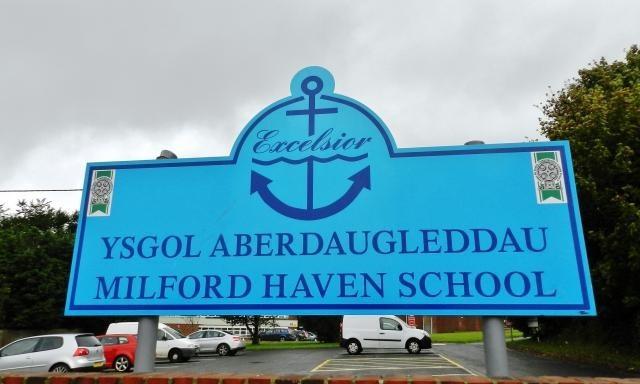
The focus on attendance locally mirrors a broader national debate, after figures discussed in the Senedd showed that attendance levels across Wales remain significantly below pre-pandemic levels, particularly among vulnerable pupils.
During Spokesperson’s Questions to the Welsh Government’s Cabinet Secretary for Education, the Welsh Conservatives highlighted that more than half of the most vulnerable pupils in Wales were persistently absent during 2024/25, compared with 30.4 per cent in 2018/19. Persistent absence is defined as missing at least ten per cent of school sessions in a year.
The figures also showed that Year 11 pupils recorded the lowest attendance, averaging 86.8 per cent in 2024/25 — 6.4 percentage points lower than before the pandemic.
Political reaction
Following the exchange, Natasha Asghar MS, the Welsh Conservatives’ shadow cabinet secretary for education, said the Welsh Government was failing to meet its own targets on attendance.
She said the government had promised to restore attendance to pre-pandemic levels by the end of the current Senedd term, but warned that with only a few months remaining, that commitment looked unlikely to be met.
She said vulnerable pupils were being disproportionately affected, adding that behind the figures were children missing out on learning, with potential long-term consequences for their education and future prospects.
The Welsh Conservatives also criticised the recent Labour–Plaid Cymru budget agreement, arguing that it would not deliver the changes needed to improve attendance or educational outcomes.
Local and national pressure
Estyn’s recommendation to improve attendance at Milford Haven School comes alongside other concerns highlighted in the inspection, including teaching quality, leadership and management, facilities, and financial oversight.
The inspection found that attendance at the school was below that of similar schools and well below pre-pandemic levels — a pattern reflected across much of Wales, according to national data.
Education professionals and children’s organisations have repeatedly warned that attendance challenges are closely linked to wider issues, including mental health, additional learning needs, family pressures and disengagement following the pandemic.

What happens next
Under the special measures process, Milford Haven School is required to produce a detailed action plan setting out how it will address Estyn’s recommendations, including attendance. Inspectors are expected to return every four to six months to monitor progress.
Pembrokeshire County Council has previously said it is working closely with the school and Estyn to support improvements, while the Welsh Government has said it continues to work with local authorities to improve attendance and re-engage pupils.
As scrutiny of school standards intensifies both locally and nationally, attendance is likely to remain a central issue — for Milford Haven School and for education policy across Wales.
Mother raises concerns over delay in being informed following cannabis incident
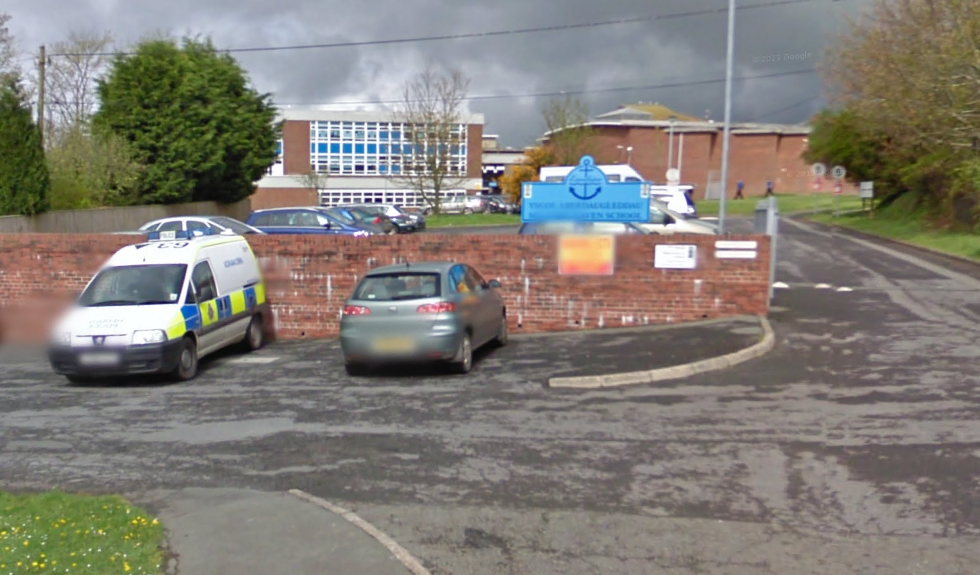
A MILFORD HAVEN parent has raised serious safeguarding concerns after her 13-year-old son—who has ADHD and autism—was questioned by police at Milford Haven School in connection with suspected cannabis, without her being informed for several hours.
Jenn Reynolds said the incident occurred at around 12:00pm, but she was not contacted until 5:00pm, when deputy head Mr Thomas phoned her. She alleges another pupil brought suspected cannabis into school and handed it to her son, Rhys, who she says was “forced” into looking after it. Rhys was searched and questioned by attending officers, and did not disclose the matter to his mother beforehand.
“My kid is vulnerable—he would agree to anything,” Ms Reynolds said. “He has additional needs, and I should have been notified immediately so I could be present during any search or questioning.”
She added that her son now faces disciplinary action, including possible expulsion or placement in the school’s “REMOVE” provision, an internal withdrawal or isolation room. Ms Reynolds also referenced a prior Year 7 incident in which her son was assaulted and footage circulated on Snapchat; she claims she was initially told the perpetrator was expelled but later learned it was only temporary, and her expressions of concern at that time led to a temporary ban from the school premises.
The matter is now being discussed in local parent group chats, with some encouraging escalation.
Council and school response
Pembrokeshire County Council confirmed its education and safeguarding teams are involved and that “appropriate communication was held with key agencies.”
On the delay in parental notification, a spokesperson said: “The parent should be advised of any safeguarding concerns as soon as possible—this may mean a delay as the school looks into the concerns and liaises with agencies such as police.”
The council emphasised support for vulnerable learners, adding: “Support is provided to any young person with an appropriate adult present and the process explained to them in a way which they would understand.”
In a further clarification, the authority confirmed that an appropriate adult was present during police interaction with the pupil. The council said the school would continue to maintain support and communication with the family.
Recent Estyn inspection and special measures
The incident comes against the backdrop of Milford Haven School being placed into special measures, Estyn’s most serious category of follow-up, following a core inspection, with the report published on Wednesday last week (Jan 22). Both the school and Pembrokeshire County Council have accepted the findings in full and committed to rapid improvements.
Estyn identified a number of areas requiring urgent action, including weaknesses in teaching quality and consistency, low pupil attendance—below that of similar schools and well below pre-pandemic levels—with particular concerns around pupils eligible for free school meals, shortcomings in self-evaluation and improvement planning, a need to strengthen leadership challenge, inadequate toilet provision for pupils, and the requirement for more robust financial management.
Despite these concerns, inspectors also highlighted several strengths, describing the school as a “caring and inclusive community” where pupils feel safe. Estyn praised the school’s work to promote positive behaviour, its use of restorative approaches to tackle bullying, the range of curriculum and digital skills opportunities on offer, and its commitment to supporting disadvantaged learners.

Pembrokeshire County Council said it is working closely with Estyn and the school on a detailed post-inspection action plan. Regular updates, engagement events, and communication with parents, carers, and the wider community are expected as improvements are implemented. Estyn monitoring visits are anticipated every four to six months until sufficient progress allows the school to be removed from special measures. Further details of the approved action plan are expected to be published on the Milford Haven School website.
The incident has prompted renewed local discussion about how schools—particularly those under heightened scrutiny—handle safeguarding, drug-related incidents, vulnerability among neurodivergent pupils, and timely parental involvement.
The Herald will continue to follow developments, including progress on the school’s improvement plan.


A PETITION plea to save a Pembrokeshire village school under threat of potential closure will be heard at full council.
At the December meeting of Pembrokeshire County Council, a call for a breathing space before any decision is made on Stepaside school, Kilgetty, part of a wide-ranging range of education changes mooted in the south of the county, was defeated.
At that meeting, a recommendation before members asked that the Director of Education be authorised to undertake a public consultation on establishing a new 3-19 school, on a split site initially, but as part of a future investment to rebuild/extend Tenby’s Ysgol Greenhill site, or potentially on a new site was backed.
As part of that it also recommended Tenby Church in Wales Voluntary Controlled School and Ysgol Greenhill are discontinued.
A second part of the series of recommendations was a call to establish a new 3-11 primary school on the Saundersfoot School site, discontinuing Saundersfoot School and Stepaside school.

A report for members said there were many surplus places for all the schools in the proposals, with Stepaside having a surplus capacity of over 50 per cent.
The Tenby area proposals were backed, with amendments, but a call for a deferral on the second part concerning Stepaside was made by local member Cllr Alistair Cameron.
Cllr Cameron’s amendment call for a deferral was defeated by 37 votes to 12, the original proposal was later passed by 42 votes to seven, with the intention public consultations would be held next year.
Since then, an e-petition on the council’s own website, started by Angela Robinson, calls upon Pembrokeshire County Council “to Save Stepaside School and work with local communities to look at alternative solutions”.
“Stepaside School in Kilgetty is the heart of our community. It represents a high-performing local education asset that delivers significant public value. Any proposal to close it must be assessed not only in terms of short-term financial pressures, but against wider statutory duties, long-term social impact, and the strategic use of public funds that invests in our children best interest.”
The lengthy petition adds: “The rationale for closure appears primarily financial, yet any credible public spending decision must be based on a holistic assessment of costs, benefits, risks, and outcomes. This includes impacts on carers, children with additional learning needs, families from global majority backgrounds, and those reliant on local support networks.”
The e-Petition, which has attracted 582 signatures to date, runs to February 17.
If a petition gets 500 signatures or more, the creator will have an opportunity to debate it at a future full council meeting.
At the December meeting petition pleas to save Manorbier School and Ysgol Clydau, also at threat of potential closure, were heard; members noting those petitions.



News19 hours ago
Wales’ first minister keeps distance from Starmer before May vote
Senedd race not Westminster THE FIRST MINISTER has moved to draw a clear dividing line between the Welsh Labour campaign...

News23 hours ago
Kurtz raises Gumfreston flooding in the Senedd as petition deadline nears
LOCAL Senedd Member Samuel Kurtz has raised the long-running flooding problems affecting the B4318 at Gumfreston in the Senedd, as...


Community2 days ago
Anchor re-dedicated to mark 30 years of US–Haverfordwest ties
Service honours shared history, service and friendship on the Quayside A SYMBOL of Haverfordwest’s wartime and Cold War connections with...


Business2 days ago
Senedd urged to act as Welsh pubs fall further behind England on business rates
Industry leaders warn of closures and job losses as pressure mounts on ministers to pass on funding PUBS across Wales...


Crime2 days ago
Haverfordwest man jailed for online death threat
A Haverfordwest man has been sentenced to a year in prison after sending a threatening message online. Michael Carruthers, 34,...


Community2 days ago
Storm Chandra: Morning impacts across Pembrokeshire
HEAVY overnight rain and strong winds brought by Storm Chandra have caused disruption across Pembrokeshire, with fallen trees and localised...


Business3 days ago
Business voices heard as Kurtz and Davies urge action on business rates
LOCAL businesses from across West Wales have voiced serious concerns about the impact of business rates at a dedicated roundtable...


Crime3 days ago
Milford Haven man appears in court charged with burglary and GBH
Bail granted with tagged curfew and ban from Pembrokeshire A MILFORD HAVEN man has appeared in court charged with burglary...


News4 days ago
First Minister warns UK could break up as Starmer faces pressure ahead of elections
Eluned Morgan says there is a “real possibility” the Union could fracture as Labour braces for losses and Prime Minister’s...


Crime4 days ago
New national police force planned in biggest shake-up for generations
Ministers promise “British FBI” to take on terrorism, fraud and organised crime as forces face new performance targets and intervention...
-
 Community7 days ago
CPRW welcomes long-awaited grid report and calls for more transparency
-

 Health7 days ago
Hywel Dda board to consider refreshed health strategy to 2040
-

 Health5 days ago
Health Board to decide on future model for nine clinical services
-

 Crime7 days ago
Haven Master spared jail after River Cleddau kayak crash
-

 News7 days ago
Milford Haven School placed in special measures after Estyn inspection
-
Health7 days ago
Withybush staff fear crèche fee rise will price parents out
-

 Business6 days ago
New planning rules could block Welsh pubs from running pop up campsites
-

 News7 days ago
IPSO rejects complaint concerning Pembrokeshire Herald court report