


News
Wales set to ‘lose out’ on more than £1bn in transport funding


Lib Dems accuse UK Government of “deliberately depriving Welsh communities”, but Labour insists investment plans remain fair
WALES is set to lose out on more than £1 billion in transport funding over the coming years after the Welsh Liberal Democrats highlighted that the UK Labour Government has confirmed Northern Powerhouse Rail will proceed as an “England and Wales” project – despite the scheme not touching a single centimetre of Welsh soil.
Northern Powerhouse Rail – sometimes described informally as High Speed 3 – aims to improve rail connections between Liverpool, Manchester, Leeds and other major cities across northern England. But by designating it as an “England and Wales” scheme, the Treasury avoids triggering Barnett consequentials that would otherwise flow to the Welsh Government.
Sixth-billion shortfall
According to figures released by the Lib Dems, the decision could deprive Wales of between £1.34bn and £1.59bn over the project’s lifetime. This is in addition to the estimated £4bn in lost funding when HS2 was similarly classified, and a further £306m–£363m linked to East–West Rail between Oxford and Cambridge.
In total, Wales could be missing out on around £6bn across the three projects.
By contrast, Scotland is expected to receive £2.7bn in consequentials from Northern Powerhouse Rail, while Northern Ireland is set to receive just under £1bn.

Lib Dem criticism of Labour stance
The Welsh Liberal Democrats say the figures undermine Labour’s claim that Wales is receiving fair transport funding. Labour has pledged £445m for rail in Wales over ten years – an amount the Lib Dems described as “an absolute joke” when set against the billions flowing elsewhere.
The party has again called for heavy rail to be devolved to Wales, as it is in Scotland and Northern Ireland, arguing this would prevent future funding disputes. They also point out that the UK Government could choose to classify such schemes as “England only” – as was done with Crossrail – which would automatically provide Wales with consequential funding.
Welsh rail projects still awaiting decisions
Critics also note that several Wales-specific rail improvements, including electrification of the North and South Wales Mainlines, have not yet been committed to by Labour, despite being previously supported while in opposition.
‘Wales left behind’ – Chadwick
Welsh Liberal Democrat Westminster spokesperson David Chadwick MP said: “This Labour Government is deliberately depriving Welsh communities of billions of pounds in transport funding, whilst expecting a pat on the back for delivering crumbs.

“Labour has the power to change the system and stop these funding scandals, but has made its position clear – they are happy for Wales to be left behind, paying for megaprojects in England whilst our own rail and transport infrastructure collapses.
“The Welsh Liberal Democrats will continue to fight for fair transport funding that delivers for our communities and businesses.”
Labour response
A UK Labour Government spokesperson has previously said that its investment plans will deliver “a fair and balanced package for every part of the UK”, and that decisions on rail funding are being taken “in line with long-standing Treasury processes”. The Government maintains that its £445m investment commitment demonstrates its intent to improve Wales’s rail network.

The Welsh Government has also been approached for further comment.


Hit-packed celebration of the 1950s and 60s promises a night of nostalgia, live music and dancing
MUSIC lovers are being invited to step back in time for an evening of nostalgia as Lipstick on Your Collar arrives at the Torch Theatre later this month.
Packed with more than forty classic hits from the 1950s and 60s, the show celebrates the golden age of music, from the birth of rock ’n’ roll to the beat group sounds of the British Invasion and beyond.
Audiences can expect favourites made famous by stars including Connie Francis, Brenda Lee, Buddy Holly, Chuck Berry, The Beatles, The Ronettes, Cliff Richard and Cilla Black.
Performed by a full live band featuring some of the country’s top musicians, the production promises excellent vocals, tight harmonies and an infectious sense of fun.
Organisers say dancing in the aisles is “strictly compulsory”, with audiences encouraged to dust off their dancing shoes and enjoy an evening of feel-good entertainment.
Lipstick on Your Collar comes to the Torch Theatre in Milford Haven on Sunday (June 28) at 7:30pm.
Tickets cost £27 and are available from the Torch Theatre box office on 01646 695267 or online at torchtheatre.co.uk.
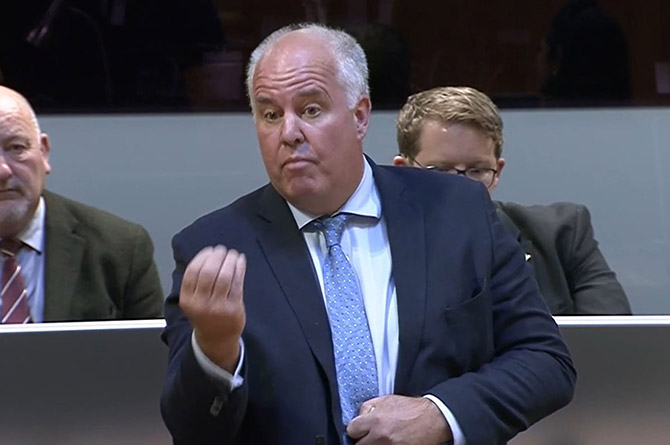
MINISTERS are facing calls to explain what checks were in place after the Ministry of Defence confirmed that an Afghan national resettled in the Vale of Glamorgan was convicted of a sexual offence.
Conservative Senedd Member Andrew RT Davies said the case raises “serious questions” for authorities after months of correspondence about the use of the Holiday Inn Express in Rhoose as temporary accommodation under Afghan resettlement arrangements.
The issue was first raised by Mr Davies in August last year, after he met Ministry of Defence officials about the decision to house Afghan families at the hotel.
Following that meeting, he asked whether anyone housed in the Vale of Glamorgan under Afghan resettlement schemes had been charged with or convicted of sex offences or other crimes.
Delayed response
The Home Office initially refused to provide the information, saying it would exceed the cost limit for Freedom of Information requests because thousands of Afghan national records would have to be checked.
However, the Ministry of Defence has now confirmed that it holds information relating to ten cases in which a person relocated to the UK under the Afghan Relocations and Assistance Policy or Afghan Response Route later committed a criminal offence.
Of those ten cases, five people were resettled under ARAP, three under ARR, while the MOD said it did not hold information on which route applied to the remaining two.
The department also confirmed that one person was based in the Vale of Glamorgan at the time the offence was committed and had been convicted of a sexual offence.
The MOD said the individual is no longer part of the Afghan Resettlement Programme.
A further two of the ten cases related to sexual offences, bringing the total number of sexual offence cases held by the MOD to three.
‘Public safety implications’
Mr Davies said: “It’s disgraceful that the Government failed to provide this information for so long.
“After authorities chose to use the Holiday Inn Express in Rhoose for temporary accommodation, I asked them to confirm if any individuals relocated under various Afghan resettlement schemes were convicted of sex offences.
“But they failed to answer the request repeatedly.
“Now it has confirmed an Afghan resettled in the Vale of Glamorgan was convicted of a sex crime, the Government has serious questions to answer.
“There are public safety implications that must be addressed.”
MOD caveat
In its response, the Ministry of Defence stressed that its figures should not be treated as a complete picture.
The department said that once an eligible person is resettled in the UK, integration and ongoing support becomes the responsibility of the relevant local authority.
It added that the MOD does not routinely collect data on people once they begin the resettlement and integration process.
The MOD also said it does not hold information on the specific category of sexual offences committed.
Mr Davies has previously raised concerns from residents about whether statements made about those housed at the hotel accurately reflected the schemes under which they had been resettled.
He said constituents deserved transparency over both the resettlement process and any public safety issues arising from it.

PEMBROKESHIRE sheep farmers are being urged to use weaning as a key opportunity to check ewe condition and deal with any problems before tupping.
With many local flocks now moving towards weaning, farmers are being advised to assess body condition score, as well as checking teeth, feet and udders, while there is still time to improve nutrition ahead of the breeding season.
Dr Alison Bond, Technical Services Manager at Rumenco, said close monitoring at this stage can help avoid major changes in ewe condition and improve overall flock productivity.
She said weaning at around 12 weeks was a good target, when lambs should usually be between 25kg and 30kg and taking very little milk from the ewe.

“There will of course be a focus on the lambs’ readiness for market at this stage, but it is equally important to put a hand across the ewes to assess their condition,” she said.
For lowland flocks, ewes with a body condition score below 2.5 at weaning should be given priority, as they may struggle to reach the target score of around 3.5 by tupping.
Those poorer condition ewes should be grouped separately, moved onto the best available grazing and given appropriate supplementary feeding where needed.
Dr Bond said waiting until closer to tupping could be less effective and may affect performance.
She added that ewes in good condition at tupping are more likely to scan with more lambs, produce healthier lambs after birth, and rear heavier lambs by eight weeks of age.
“It affects the whole production cycle, and not just one element,” she said.
The advice will be particularly relevant to farms across Pembrokeshire, Carmarthenshire and Ceredigion, where sheep remain a major part of the rural economy and where grass quality can vary sharply depending on weather, soil type and stocking pressure.
Dr Bond said the aim should be to keep ewes between body condition score 2.5 and 3.5 throughout the cycle, avoiding big dips and peaks.

Routine checks at weaning, she said, give farmers the best chance of correcting problems before the tups go in two to three months later.
Pic: Farmers are being urged to check ewe condition at weaning to protect flock performance ahead of tupping (Pic: Tim Scrivener/Agriphoto).



Business5 hours ago
Celtic Freeport five-year plan puts Milford Haven at centre of green energy future
Strategy promises investment, skilled jobs and new supply chains, but major barriers remain over grid connections, planning and delivery THE...


Education6 hours ago
Closure of Ysgol Clydau approved after emotional council debate
COUNCILLORS WARNED RURAL COMMUNITIES WILL REMEMBER DECISION PEMBROKESHIRE councillors have voted to close Ysgol Clydau following an emotional debate over...


Education7 hours ago
Manorbier school closure process to continue after narrow council vote
Questions remain over insurance, rebuilding costs and possible legal action by Diocese PEMBROKESHIRE councillors have voted to press ahead with...

Community9 hours ago
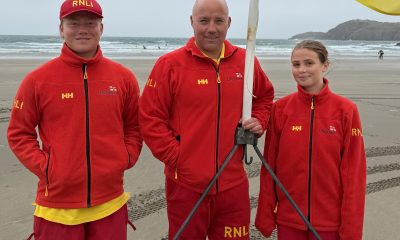
The father, son and daughter lifeguard trio saving lives in Pembrokeshire
A FATHER, son and daughter are preparing to help keep beachgoers safe on the Pembrokeshire coast this summer as part...


Community20 hours ago
Beating of the Bounds brings music, boats and tradition to Haverfordwest
CENTURIES-OLD CEREMONY DRAWS FAMILIES TO THE RIVERSIDE HAVERFORDWEST’S historic Beating of the Bounds returned on Sunday (Jun 14), with boats,...


Community1 day ago
Milford Haven School pupil praised after stepping in during real-life emergency
A YEAR 11 pupil at Milford Haven School has been praised after putting his first aid training into action to...


Community1 day ago
River festival brings crowds to Haverfordwest
A CELEBRATION of the River Cleddau brought crowds into Haverfordwest on Saturday (June 13) as the town’s River Festival returned...


Charity1 day ago
Voices at the Castle hailed as unforgettable night after weather setback
Russell Watson headlines spectacular charity concert at Pembroke Castle A SPECTACULAR evening of live music at Pembroke Castle has been...

Local Government2 days ago
Council admits 74 rights of way complaints remain unresolved
Key post vacant since February as walker raises safety concerns over paths near Llanteg and Amroth PEMBROKESHIRE COUNTY COUNCIL has...


Education3 days ago
Diocese threatens legal action as Manorbier school closure battle intensifies
Church says council could face judicial review over fire-hit school A BITTER row over the future of Manorbier Church in...
-
 Community22 hours ago
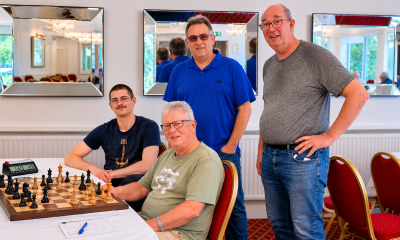
Pembrokeshire Chess Club crowned Welsh champions
-

 Crime6 days ago
Haverfordwest pair accused of £80,000 rogue trading frauds
-
Education3 days ago
Diocese threatens legal action as Manorbier school closure battle intensifies
-

 Crime4 days ago
Man accused of six rapes including alleged Haverfordwest offence
-

 Crime4 days ago
Pembroke Dock teenager sentenced over train strangulation attack
-

 Crime6 days ago
Families condemn failed appeal by paddleboard boss jailed over Haverfordwest tragedy
-
 Crime6 days ago
Knife blankets call as school staff face rising violence fears
-

 Local Government3 days ago
Taxi suspended after county-wide licensing checks