


Health
Paediatricians urge parents in Wales to get children vaccinated against flu this winter

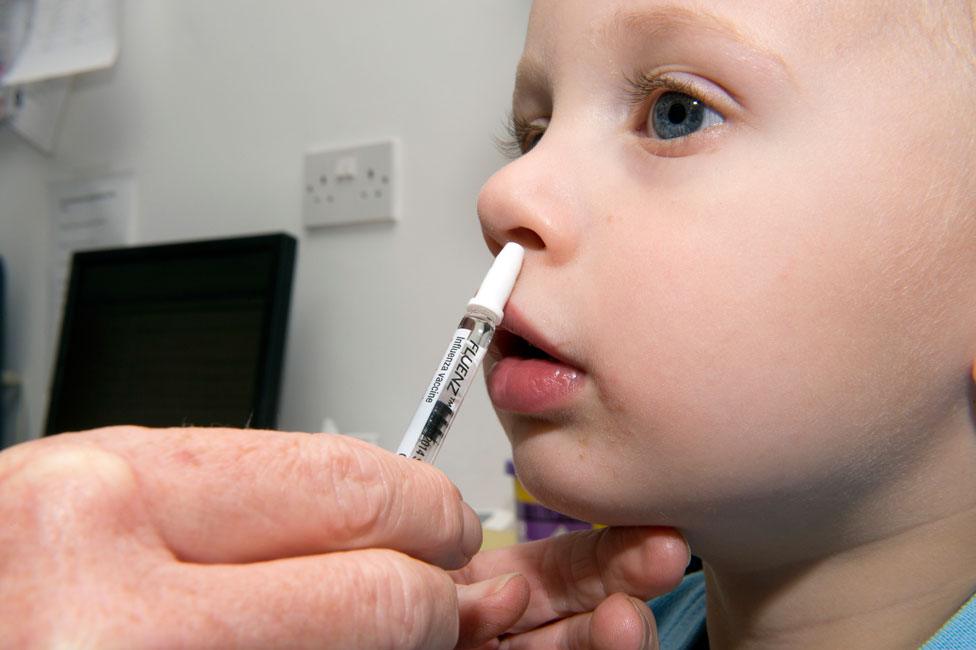
PAEDIATRICIANS are urging parents and carers across Wales to ensure their children receive the flu vaccine, as early-season data shows high rates of flu among babies, children and young people.
The Royal College of Paediatrics and Child Health (RCPCH) has published a new fact sheet for families in Wales, amid concerns that flu is already circulating widely in communities. Clinicians say many people still underestimate the seriousness of flu, wrongly believing it to be little more than a heavy cold.
However, flu can cause severe illness in children and lead to complications such as pneumonia and bronchitis. Each winter, thousands of children across the UK – including those with no underlying health conditions – require hospital care because of flu.
The RCPCH fact sheet aims to provide clear, evidence-based information for families and includes:
• Who is eligible for the flu vaccine
• Where to get vaccinated in Wales
• What to do if an appointment has been missed
• Answers to common questions on safety and effectiveness
The guidance is available now and comes as health services prepare for what is expected to be a challenging winter.
Dr Malcolm Gajraj, RCPCH Officer for Wales, said: “Flu is not something to take lightly. We are already seeing considerable cases of flu among children in Wales, and we know from experience that flu can lead to serious illness and hospital stays. The vaccine is safe, effective and the best way to protect your child. By getting your child vaccinated, you’re helping to keep them well and reduce the spread of flu in our communities.”

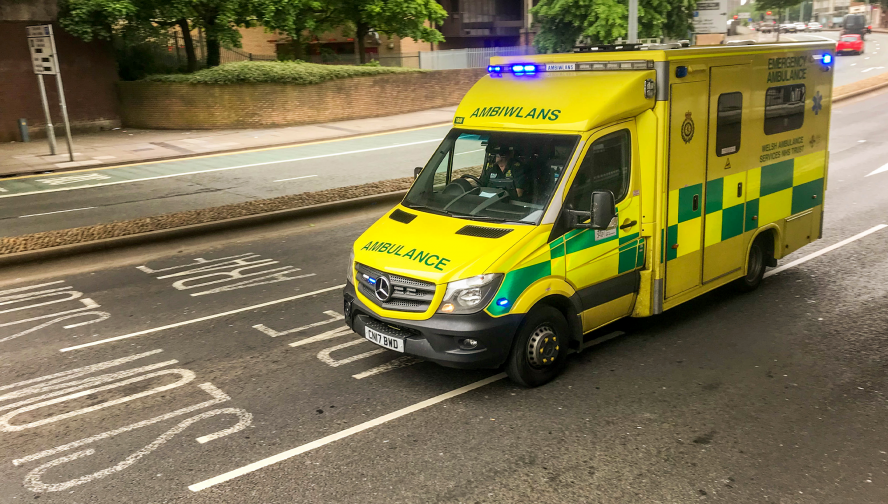
THE WELSH AMBULANCE SERVICE has revealed a series of inappropriate 999 calls made last year — including one from a person who rang emergency services after accidentally swallowing a small amount of mouthwash.
The call was among dozens of examples released by the trust to underline the growing pressure on emergency services caused by non-urgent use of the 999 system.
Figures show that of the 414,118 incidents recorded by the Welsh Ambulance Service in 2025, around 15 per cent — 62,454 calls — were deemed not suitable for an emergency ambulance response. That equates to roughly one in every seven calls.
Other examples included callers reporting a sore throat, a loose tooth, ointment in an eye, and minor ear and finger injuries — conditions that could have been treated through alternative NHS services.
Senior ambulance leaders warned that such calls divert vital resources away from genuine emergencies, including heart attacks, strokes, serious injuries and life-threatening incidents.
Andy Swinburn, executive director of paramedicine, said staff are trained to respond rapidly to severe and urgent medical situations, but misuse of the emergency line slows response times for those in real danger.
“When people call 999 for minor ailments, it takes valuable time away from call handlers and clinicians who may be trying to help someone in cardiac arrest or with catastrophic bleeding,” he said.
“Our message is simple — use common sense and help us protect emergency services for those who need them most.”
Lee Brooks, executive director of operations, added that none of the highlighted calls required an ambulance and that many would now be dealt with by telephone advice only under the service’s updated clinical model.

“This is not about blaming people,” he said. “We understand that worry and anxiety can cloud judgement. But the ambulance service exists for urgent and life-threatening situations — not routine illnesses or minor injuries.”
He warned that calling 999 does not guarantee an ambulance will be dispatched, nor does arriving at hospital by ambulance mean a patient will be treated more quickly.
“While crews are tied up with non-urgent calls, someone else’s parent, child or friend could be lying unconscious after a serious collision or suffering a cardiac arrest,” he said.

The trust is urging the public to familiarise themselves with alternatives to 999, including NHS 111 Wales for urgent health advice, pharmacists for common conditions, and minor injury units for less serious injuries.
A spokesperson added that keeping basic medicines at home and staying on top of prescriptions can also reduce unnecessary pressure on emergency services.
The Welsh Ambulance Service said the real-life examples were shared to encourage responsible use of 999 and ensure help reaches those who need it most — when seconds truly matter.

AN OPTICIANS in Haverfordwest is proving that the traditional Saturday job is far from dead, offering young people practical experience, transferable skills and a genuine pathway into long-term careers.
With figures suggesting almost one in eight people aged 16–24 are not in education, employment or training, the decline of weekend work has increasingly been cited as a barrier to young people becoming workplace-ready. But the locally owned and run Specsavers Haverfordwest is bucking that trend by actively recruiting and supporting young staff.
The store currently employs Kyle Ashbourne, 16, who has worked weekends as a trainee optical assistant since November while studying at college. The role provides hands-on experience in customer service and retail, alongside an introduction to the technology and processes involved in eye examinations and the wider optical profession.
Speaking about his experience, Mr Ashbourne said: “Working at Specsavers alongside my studies has been a great experience. I’ve developed my confidence and communication skills and learnt a lot about customer care and the optical industry. The flexibility of weekend work really helps me balance my job with college, and I feel supported to develop my skills for the future.”
Weekend roles at the store typically involve welcoming customers, supporting appointments and learning how the practice operates day to day. For many young people, it is their first experience of the workplace, helping them build confidence and develop skills that extend well beyond retail.
Specsavers Haverfordwest store director Andy Britton said weekend positions can play a crucial role in opening doors. He said: “A Saturday role is an ideal way for young people to gain early insight into the profession while picking up valuable, real-world experience in a supportive environment.
“It’s not just about earning money. It’s about building confidence, learning how to work as part of a team and developing strong communication and customer service skills that will serve them well throughout their lives. Many of our colleagues started in weekend roles and have gone on to enjoy long and rewarding careers with us, which we’re proud to support.”
Specsavers offers a range of career routes, from retail and customer service to clinical roles in optics, with ongoing training and development opportunities designed to help staff progress.
For more information, or to book an eye examination or hearing check, call Specsavers Haverfordwest on 01437 767788 or visit the store’s website.


Concerns over workforce pressures, social care and long waits resonate strongly in Pembrokeshire
The health of the nation must be placed at the heart of the next Welsh Government’s agenda, NHS leaders have warned, as the countdown to the Senedd election reaches 100 days.
With health and the NHS consistently ranked among the public’s top priorities, NHS leaders across Wales are urging all political parties to commit to five major changes aimed at improving population health and securing the long-term sustainability of health and social care services.
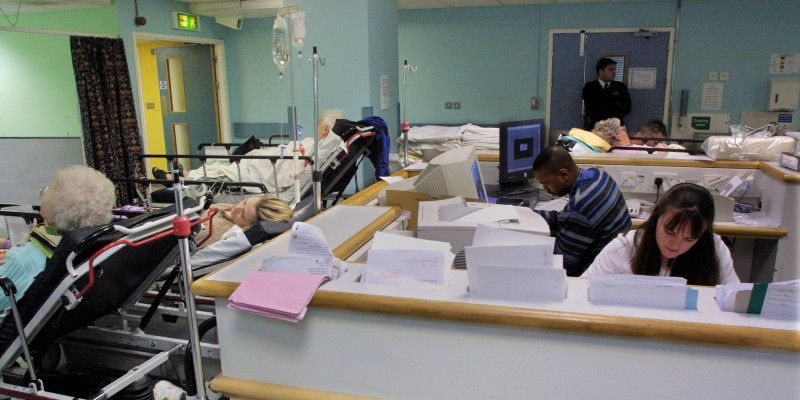
The call comes from the Welsh NHS Confederation, which represents senior NHS leaders across the country. It is urging parties to set out clear and credible plans in their election manifestos, warning that without decisive action, existing pressures will continue to intensify.
The issues highlighted are already familiar to many communities in Pembrokeshire, where residents regularly raise concerns about access to GP appointments, pressure on hospital services at Withybush, delayed discharges linked to social care shortages, and workforce recruitment challenges across health and care settings.
At the top of NHS leaders’ priorities is the creation of a cross-government strategy on prevention, aimed at tackling health inequalities and reducing avoidable ill health. They argue that without joined-up action across areas such as housing, education, transport and social services, the NHS will remain locked into responding to crisis rather than preventing it.
Other priorities include strengthening the health and social care workforce, creating joint financial and performance frameworks to support better integration between services, stabilising the social care sector, and developing a long-term strategy for NHS estates and infrastructure — including digital transformation.
The recommendations follow a survey of 95 NHS leaders from across Wales, reflecting both the immediate pressures facing frontline services and the longer-term challenges expected to worsen over the coming years.
Darren Hughes, director of the Welsh NHS Confederation, said the organisation was urging all political parties to take the five priorities seriously as polling day approaches.
He said the proposals were grounded in the lived experience of those working at the heart of the health and care system.
“Unless there is a cross-government plan to reduce inequalities and preventable ill health, the NHS and care sectors will merely be working harder to stand still, consuming an ever-increasing slice of the new Welsh Government’s money,” he said.
Mr Hughes warned that demographic change was already driving demand sharply upwards, with Wales’ population becoming older, frailer and living with more complex long-term conditions — trends that are particularly evident in rural and coastal counties such as Pembrokeshire.
“Our population is getting older, frailer and sicker with ever increasing demand for services, including more people with multiple long-term conditions needing more complex care,” he said.

He added that data showed worsening population health and demographic change would continue to push demand higher, even as NHS organisations are required to deliver significant efficiencies simply to maintain current service levels.
The Confederation also cautioned against viewing NHS pressures in isolation, such as long waits for appointments or treatment, noting that these are symptoms of wider, whole-system challenges spanning health and social care.
“So often issues are looked at in isolation,” Mr Hughes said. “But these pressures are symptoms of wider, whole-system challenges. Without bold, long-term action across government, the NHS and social care will struggle to keep pace with the needs of the people of Wales.”
With just over three months until voters go to the polls, NHS leaders say the decisions taken by the next Welsh Government will be critical — not only for the future of the NHS, but for communities like Pembrokeshire where health, social care and local services are deeply interconnected.



News21 hours ago
Wales’ first minister keeps distance from Starmer before May vote
Senedd race not Westminster THE FIRST MINISTER has moved to draw a clear dividing line between the Welsh Labour campaign...
News1 day ago
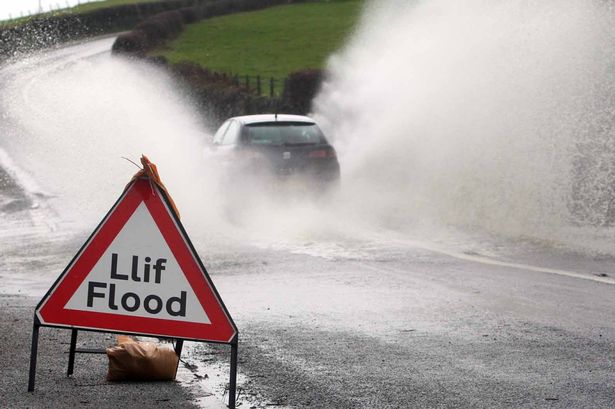
Kurtz raises Gumfreston flooding in the Senedd as petition deadline nears
LOCAL Senedd Member Samuel Kurtz has raised the long-running flooding problems affecting the B4318 at Gumfreston in the Senedd, as...


Community2 days ago
Anchor re-dedicated to mark 30 years of US–Haverfordwest ties
Service honours shared history, service and friendship on the Quayside A SYMBOL of Haverfordwest’s wartime and Cold War connections with...


Business2 days ago
Senedd urged to act as Welsh pubs fall further behind England on business rates
Industry leaders warn of closures and job losses as pressure mounts on ministers to pass on funding PUBS across Wales...

Crime2 days ago
Haverfordwest man jailed for online death threat
A Haverfordwest man has been sentenced to a year in prison after sending a threatening message online. Michael Carruthers, 34,...

Community2 days ago
Storm Chandra: Morning impacts across Pembrokeshire
HEAVY overnight rain and strong winds brought by Storm Chandra have caused disruption across Pembrokeshire, with fallen trees and localised...


Business3 days ago
Business voices heard as Kurtz and Davies urge action on business rates
LOCAL businesses from across West Wales have voiced serious concerns about the impact of business rates at a dedicated roundtable...

Crime3 days ago
Milford Haven man appears in court charged with burglary and GBH
Bail granted with tagged curfew and ban from Pembrokeshire A MILFORD HAVEN man has appeared in court charged with burglary...


News4 days ago
First Minister warns UK could break up as Starmer faces pressure ahead of elections
Eluned Morgan says there is a “real possibility” the Union could fracture as Labour braces for losses and Prime Minister’s...


Crime4 days ago
New national police force planned in biggest shake-up for generations
Ministers promise “British FBI” to take on terrorism, fraud and organised crime as forces face new performance targets and intervention...
-
 Community7 days ago
CPRW welcomes long-awaited grid report and calls for more transparency
-
 Health7 days ago
Hywel Dda board to consider refreshed health strategy to 2040
-

 Health5 days ago
Health Board to decide on future model for nine clinical services
-
 Crime7 days ago
Haven Master spared jail after River Cleddau kayak crash
-
 News7 days ago
Milford Haven School placed in special measures after Estyn inspection
-
Health7 days ago
Withybush staff fear crèche fee rise will price parents out
-

 Business6 days ago
New planning rules could block Welsh pubs from running pop up campsites
-

 News7 days ago
IPSO rejects complaint concerning Pembrokeshire Herald court report