


News
Reflection on 2025: Challenge, resilience and community resolve


AS 2025 draws to a close, The Pembrokeshire Herald’s reporting tells the story of a county under sustained pressure — socially, economically and institutionally — but also one marked by resilience, civic engagement and a strong sense of community identity.
Across the past twelve months, our coverage repeatedly returned to a handful of defining themes: crime and public safety, strain within health and social care, political and economic tension in rural Wales, and the enduring strength of local communities. While many of the year’s biggest stories were troubling, they were frequently balanced by moments of progress, collective action and determination to bring about change.
More than anything, 2025 demonstrated the continuing importance of local journalism — not just in reporting events, but in prompting scrutiny, amplifying community concerns, and, in some cases, helping to drive tangible outcomes.
Crime and public safety: Unease — and accountability

Crime was an unavoidable feature of the news agenda throughout 2025. Court reports, police appeals and community warnings reflected widespread concern about violence, drugs and safeguarding, particularly where alcohol misuse or exploitation of young people was involved.
Among the most shocking cases was the jailing of a woman who stole £245,000 from a Pembrokeshire charity — a crime that went beyond financial loss to represent a profound breach of trust. Elsewhere, stories of youth drug dealing, sexual offences, domestic abuse and organised fraud painted a picture of communities grappling with harm that often occurred behind closed doors.

At the same time, the reporting also highlighted accountability. Investigations into rogue traders, sentencing for repeat offenders and renewed focus on safeguarding failures demonstrated the role of the courts and regulators in restoring public confidence.
One of the most significant long-running stories was the confirmation that the Criminal Cases Review Commission continues to actively review the conviction of John Cooper. That ongoing scrutiny, rooted in earlier investigative reporting, stands as a reminder that justice is not static — and that persistent journalism can play a role in ensuring historic cases are not immune from challenge.
Taken together, the crime coverage of 2025 reflected a sense of unease, but also a demand — from residents and victims alike — for transparency, responsibility and reform.
Health and social care: Under strain, held together by people

Health reporting this year exposed a system stretched to its limits. Emergency departments across Wales recorded some of the worst waiting times on record, with clinicians openly warning that services were “beyond breaking point”.
Behind the statistics were human stories: exhausted staff, patients left waiting in pain, and unpaid carers describing distress as a routine part of life rather than an exception. These accounts illustrated the real-world consequences of under-resourced services and delayed reform.
Yet the coverage also highlighted dedication and progress. Awards recognising frontline staff, the launch of research addressing long-standing gender health inequalities, and continued efforts by Hywel Dda health leaders to celebrate workforce resilience all showed a system held together by commitment as much as funding.
Importantly, some of the most hopeful stories came from community-level solutions. The expansion of grant funding supported by second-home council tax premiums offered practical support for local health, care and accessibility projects — modest interventions, but ones with immediate impact.

Politics, farming and the rural economy: A year of contention — and concessions
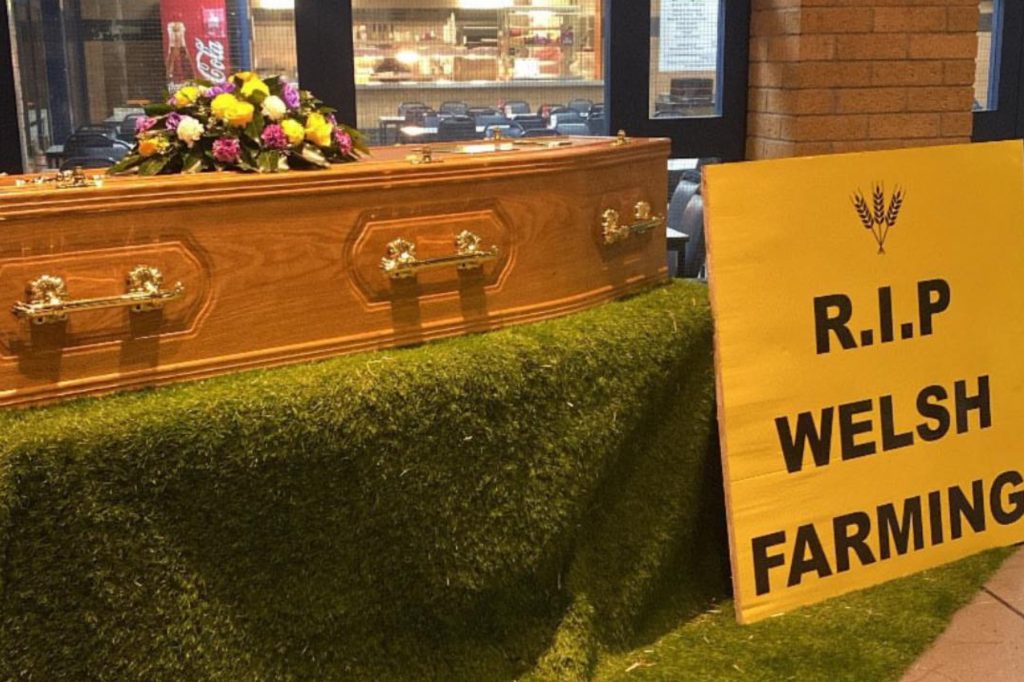
Politics in 2025 was defined by tension between national policy and rural reality. Few issues illustrated this more clearly than farming.
Months of protest eventually led to a major shift in inheritance tax policy, with the threshold for agricultural property relief increased to £2.5 million. For many farming families, this was not just a financial issue but one of survival, succession and identity — and the concession was widely seen as a hard-won victory.
Elsewhere, debates over livestock protection, climate policy, hunting, greyhound racing and rural traditions exposed deep divisions over how Wales balances environmental ambition with economic viability.
Economic pressures were felt far beyond agriculture. Rising business rates, stalled house prices and warnings about town centre decline all featured prominently, reinforcing the sense that many communities are operating close to the edge.
Against that backdrop, practical improvements mattered. One of the most positively received stories of the year was the repair and prevention of tens of thousands of potholes across South West Wales — a reminder that infrastructure investment, however unglamorous, has an immediate effect on safety and daily life.
Community, sport and environment: The county’s backbone

If crime and crisis dominated the hard news, community stories provided the emotional counterweight.
Sport, in particular, offered moments of pride and unity — from local football success to Pembrokeshire’s connections with elite motorsport. Ironman Wales once again placed Tenby on the world stage, combining athletic achievement with fundraising and economic benefit for the area.
Charitable efforts, often small in scale but large in heart, ran throughout the year: festive initiatives for children, support for the homeless, funding for local causes and quiet acts of generosity that rarely seek headlines.
Environmental reporting reflected both beauty and vulnerability — flooding, coastal concerns and wildlife management sparked debate, but also prompted action. Motions brought forward by councillors to address flood risk demonstrated how local pressure can translate into policy attention.
Looking ahead
Taken as a whole, The Pembrokeshire Herald’s coverage of 2025 tells a story of a county facing real and sometimes uncomfortable challenges — but one that continues to respond with resolve.
Fraud, violence, health system strain and economic uncertainty all tested communities this year. Yet so too did we see farmers defend their livelihoods, volunteers step in where systems faltered, and local voices push institutions to act.
As Pembrokeshire moves into 2026, the lessons of the past year are clear: strong communities need strong scrutiny, local solutions matter, and progress is most often driven not by grand promises but by persistent effort.
It is in that space — between challenge and change — that local journalism continues to matter most.


THE WELSH AMBULANCE SERVICE has issued a fresh appeal to the public following the declaration of a critical incident on Friday (June 26), as exceptionally high demand continues to place pressure on crews across Wales.
In a social media post published today (Saturday, June 27), the Trust warned that hot weather is contributing to a rise in ambulance call-outs, including incidents involving heat-related illness, falls, breathing difficulties and existing medical conditions worsened by the heat.
The message comes less than 24 hours after the service declared a critical incident amid unprecedented demand, with ambulance resources stretched across Wales.
The Trust is urging people to call 999 only for serious or life-threatening emergencies, contact NHS 111 Wales for urgent health advice, and use local pharmacies for minor illnesses and ailments.
It said choosing the right service can help ambulance crews reach the sickest patients more quickly while pressures remain high.

SIX people have been arrested following Immigration Enforcement raids at Florentino’s Italian restaurants in Tenby and Carmarthen.
Officers visited the Tenby branch in St Julian’s Street on June 18, where two Romanian nationals were identified as allegedly having no right to work in the UK. Both were arrested on suspicion of illegal working.
The Tenby operation followed an earlier raid at Florentino’s in Carmarthen in February, where four workers — two Romanian nationals, a Bangladeshi national and a Mongolian national — were also arrested on suspicion of illegal working.

The Herald previously reported in March that the Carmarthen restaurant had been linked to a major HMRC case, after Claudio Cernat Ltd, formerly trading as Florentino’s on Jacksons Lane, was listed over a £278,000 deliberate tax underpayment and a further £186,000 penalty.
Immigration officials say inquiries are now under way to establish who may be liable for employing the individuals. Employers found to have breached illegal working rules can face civil penalties of up to £60,000 per worker.
One of the Tenby workers has already returned, while the other is in the process of returning. Of the Carmarthen workers, two have returned, one was placed on immigration bail and another was de-arrested with a warning.
Immigration Enforcement Lead for Wales, Richard Johnson, said: “I want to thank my officers who showed the highest levels of professionalism under challenging circumstances on these operations.
“Immigration Enforcement teams in Wales continue to work round the clock to ensure businesses play by the rules and those with no right to be in the UK are tracked down and returned at the earliest opportunity.”
The Home Office says illegal working enforcement has increased significantly since July 2024, with raids and arrests rising across the UK and Wales.
No finding has yet been made against the restaurant operators in relation to the latest arrests.
Florentino’s has been approached for comment.

A WATCHDOG has rated Dyfed-Powys Police only “Adequate” in its response to serious and organised crime, despite praise for the wider southern Wales regional crime unit.
HMICFRS inspected the regional response involving Dyfed-Powys Police, South Wales Police, Gwent Police and Tarian, the Regional Organised Crime Unit for southern Wales.
Tarian was graded “Good”, as was South Wales Police. But Dyfed-Powys Police and Gwent Police were both graded “Adequate”.
The finding means the force covering Pembrokeshire, Carmarthenshire, Ceredigion and Powys has been told there is still work to do in how it identifies and tackles organised criminality.
Inspectors said the southern Wales region had recorded just 93 serious and organised crime threats by July last year. The next lowest region in England and Wales had identified 219.
HMICFRS said that gap was “concerning”, even allowing for the smaller size of the region.
The report also found that recorded threats were heavily focused on drugs, raising concerns that other forms of organised crime may not be being identified as effectively.
However, Tarian recorded 2,650 disruptions between June 2024 and June 2025, the second highest total among regional organised crime units in England and Wales. These included arrests, the closure of drugs lines and safeguarding work.
Across 2025, Tarian investigations led to 285 arrests, the safeguarding of 1,488 children and 598 vulnerable adults, and combined prison sentences totalling 320 years.
Inspectors praised strong regional partnership working and highlighted Tarian’s use of technology, including systems capable of reducing some data-review work from weeks to around 30 minutes.
The report also noted that Tarian is the only regional organised crime unit in the network to have a dedicated artificial intelligence coordinator.
But inspectors made clear that improvements are needed. They recommended that Tarian and the three forces improve how serious and organised crime threats are recorded and identified across a wider range of criminality.

They also called for better joined-up procurement of specialist technical equipment.
Assistant Chief Constable Gemma Morris, who leads Tarian ROCU, said serious and organised crime causes “significant harm” to communities and that much of the work carried out by the unit is “necessarily covert and often unseen by the public”.
She said the report recognised the strength of regional partnerships and innovation, while acknowledging that improvements were already being taken forward.
For Dyfed-Powys Police, the “Adequate” grading will raise questions about whether organised crime threats in rural and coastal communities are being properly identified.
The force area includes some of the most geographically dispersed communities in Wales, with long transport routes, isolated properties, ports, tourist economies and vulnerable young people all potentially attractive to organised criminals.
The inspection’s central warning is not that police are inactive. It is that the full picture of organised crime may still not be clear enough.
The report says work is now underway across the region to address the recommendations.



Crime2 hours ago
Dyfed-Powys Police rated only ‘Adequate’ in organised crime inspection
A WATCHDOG has rated Dyfed-Powys Police only “Adequate” in its response to serious and organised crime, despite praise for the...


News6 hours ago
Two taken to hospital after aircraft ditches in Cardigan Bay
Coastguard helicopter spotted two casualties after light aircraft came down off west Wales coast TWO people were taken to hospital...


Sport23 hours ago
Long Course Weekend gets underway in Tenby as thousands head for county
Three days of swimming, cycling and running begin with The Wales Swim at North Beach THOUSANDS of athletes and supporters...


Climate1 day ago
Welsh waters, Westminster profits: Crown Estate row reignited in Wales
PLAID CYMRU has renewed calls for the Crown Estate to be devolved to Wales after figures showed income linked to...


News1 day ago
Reform MS: ‘I felt like shouting get out of the water’
Paul Marr says children playing in streams at Pembrokeshire beaches deserve better protection from pollution risks REFORM UK MS Paul...


Health2 days ago
Senedd backs call to rule out hospital downgrades after heated NHS debate
Reform UK amendment passes as West Wales hospital fears remain central political issue THE SENEDD has backed a call for...

News2 days ago
Coastguard callout payments axe sparks fears for coastal communities
VOLUNTEER coastguards across the UK are set to lose callout payments, prompting concern over the future resilience of emergency cover...


Farming2 days ago
Rural Wales ‘left out’ of net zero debate, warns carbon entrepreneur
A WELSH carbon entrepreneur has warned that rural Wales risks being left behind in the national conversation about net zero....


Local Government3 days ago
Tenby Spectacular row continues as organisers say key question remains unanswered
Round Table says legal clarity over pedestrian access is still holding up event plan TENBY ROUND TABLE has welcomed Pembrokeshire...


Community4 days ago
Manorbier fire scandal: Council’s payout just £63,777 after school destroyed
PEMBROKESHIRE COUNTY COUNCIL has accepted an insurance settlement which leaves it with just £63,777.07 after the catastrophic fire which destroyed...
-

 Crime2 days ago
Police appeal after reported rape at Young Farmers rally
-

 Community6 days ago
The gentle giant behind the tattoos
-

 Entertainment6 days ago
Harbour Fest to bring music, food and maritime magic to Milford Waterfront
-
Health6 days ago
Welsh Government refuses to halt Withybush and Bronglais service review
-

 News6 days ago
Long Course Weekend set to bring thousands to Pembrokeshire
-

 News5 days ago
Rhun ap Iorwerth urges new deal for Wales after Starmer quits
-

 Charity5 days ago
Sea shanties and street food bring crowds to Cardigan RNLI festival
-

 Charity6 days ago
Voices at the Castle hailed a huge success for Paul Sartori Foundation