


Science and technology
£2.5m Aberystwyth drone project to tackle malaria in Africa


DRONES and AI will be used in a new £2.5 million Aberystwyth University-led effort to wipe out malaria hot spots in Africa, supported by funding from the Gates Foundation.
Malaria is one of Africa’s most devastating public health challenges, causing hundreds of thousands of preventable deaths each year.
A new international research project in Zanzibar, led by Aberystwyth University, will target the aquatic habitats of mosquito larvae before they mature.
The project will exploit the latest drone, satellite and artificial intelligence technology to help identify these sites more effectively. It builds upon success in previous projects that used smartphones and drones.

The initiative brings together researchers, public health experts, and community stakeholders to develop sustainable, locally-led strategies for mosquito control, supported by funding from the Gates Foundation.

The research team will overcome the limitations of conventional mapping by using drones equipped with advanced sensors – including near-infrared and thermal imaging – to tackle challenges such as water hidden by dense vegetation. Satellite imagery will also be used to map larger water bodies. The combination of these technologies will enable mosquito habitat mapping over a large area without requiring extensive fieldwork.
Artificial intelligence will be trained to analyse the images and accurately find mosquito breeding grounds, even in complex or obscured environments like rice paddies or swamps with thick aquatic vegetation or algae cover.
Key software developed by the project will be open source, with the ultimate goal being to create a transferable and scalable model for malaria-hit regions worldwide.
Dr Andy Hardy, lead researcher from Aberystwyth University’s Department of Geography and Earth Sciences, said:

“This project is reinventing mosquito control in a bid to tackle one of sub-Saharan Africa’s most urgent public health challenges. By using drones, satellite imagery, and AI, we can rapidly and precisely map breeding grounds, making interventions more targeted and effective.
“Our focus on the ecology of mosquito habitats and collaboration with local communities will help build a scalable, sustainable model that could serve as a blueprint for malaria control across the globe.”
In addition to technological innovation, the project will invest in community engagement, in order to overcome any concerns or resistance to the new technologies, and to train people in methods of eradicating mosquito larvae before they emerge from the water as adults.

The three-year project will create a digital toolkit to streamline mosquito control operations. It will feature a central dashboard for managers to plan and oversee activities, alongside a smartphone app that will help field staff to map, spray, and monitor tasks.
The system will recommend the most effective way to map an area based on terrain and budget and include guidelines to support consistent and effective implementation.
Dr Shija Joseph Shija from the Zanzibar Malaria Elimination Program which is collaborating on the project, said:
“Zanzibar has made tremendous progress in the fight against malaria, yet we continue to face the persistent challenge of mosquito breeding sites that are often difficult to detect and control. This new £2.5 million initiative, led by Aberystwyth University and supported by the Gates Foundation, represents a powerful step forward in our efforts to eliminate malaria from our islands.
“We are particularly encouraged that the tools and software developed through this project will be open source. This means Zanzibar will be among the first regions globally to benefit from a fully transferable, data-driven model that can support real-time planning, monitoring, and decision-making in larval source management.”
Other partners on the project include the London School of Hygiene & Tropical Medicine, Liverpool School of Tropical Medicine, Ifakara Health Institute in Tanzania, and Zzapp Malaria.

Simple home urine test being developed at Aberystwyth University with NHS backing
A GROUNDBREAKING new home test for early breast cancer detection is being developed in Wales, with scientists at Aberystwyth University leading research that could transform diagnosis for women across rural communities including Pembrokeshire and Carmarthenshire.
Backed by Welsh Government funding and supported by Hywel Dda University Health Board, the pioneering work aims to deliver a simple urine-based test that could ease pressure on NHS Wales services while improving early detection rates in areas where access to specialist diagnostics remains a challenge.
The prototype test, currently under development, is designed as a lateral flow device—similar to a pregnancy or COVID-19 test—that could detect early biochemical signs of breast cancer from a single urine sample.
Researchers say the innovation could support faster diagnosis, reduce reliance on invasive procedures, and ultimately improve survival rates by identifying the disease at its earliest and most treatable stage.
Breast cancer remains the most commonly diagnosed cancer among women globally and is a leading cause of cancer-related deaths in more than 100 countries. While mammograms, MRI scans and biopsies are essential tools, there is growing demand for simpler, more accessible methods of detection.
Rural impact significant
For patients in West Wales, where travel to major hospitals can be time-consuming and access to specialist services limited, the development could prove particularly significant.
A reliable home testing kit could reduce the need for repeated hospital visits and help identify cases earlier, easing pressure on already stretched NHS diagnostic services.
The Herald understands that improved early detection could also play a role in reducing waiting times across NHS Wales, where diagnostic backlogs remain a persistent concern.
Welsh research leading the way

The study at Aberystwyth University is focusing on identifying metabolic changes linked to breast cancer that are excreted in urine, enabling earlier and less invasive detection.
Professor Luis Mur, who is leading the research, said: “Our work is revealing a distinct biochemical ‘signature’ associated with the earliest stages of breast cancer—one that can be detected in a simple urine sample.
“By translating these findings into a lateral flow test, we hope to create a diagnostic tool that is affordable, easy to use at home, and capable of detecting cancer earlier than many current methods.

“Early diagnosis saves lives, and our aim is to make that crucial first step accessible to as many women as possible.”
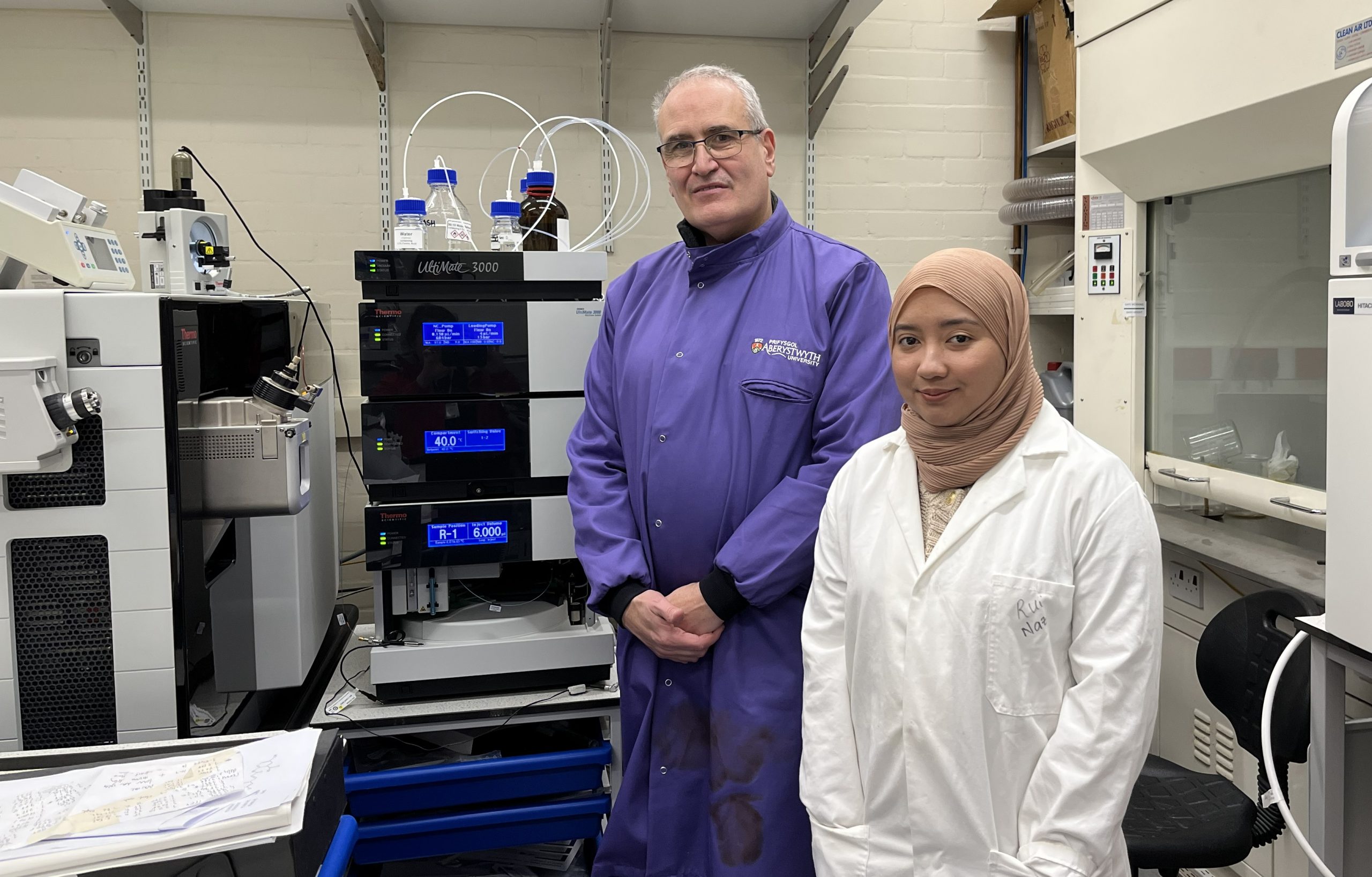
Professor Mur and breast cancer study manager Dr Aimi Zainurin are working closely with NHS colleagues to ensure the research can move quickly from laboratory discovery to real-world clinical use.
This approach is designed to shorten the time it takes for new medical innovations to reach patients—currently estimated at around 17 years.
Backed by Welsh Government
The project is supported through the Welsh Government’s SMART Award programme, which aims to accelerate innovation and strengthen collaboration between academia and industry in Wales.
It is also co-sponsored by Dynamic Extractions Ltd, whose expertise in separation technologies supports the development of the diagnostic tool.
Dr Helen Munro, National Clinical Lead for Women’s Health based at Hywel Dda University Health Board, said: “This funding has the potential to significantly shorten the time it takes for vital women’s health research to reach real-world clinical practice.
“We’re working closely with our academic partners and health boards to close that gap and ensure innovations—such as the work underway at Aberystwyth University—benefit patients far more quickly.”
Wider women’s health benefits
Alongside breast cancer, the research team is also exploring urine-based diagnostics for conditions including endometriosis and polycystic ovary syndrome (PCOS), both of which are often under-diagnosed.
Scientists hope the wider programme could help tackle long-standing delays in women’s healthcare by providing faster, more accessible diagnostic tools.
If successful, the Welsh-led innovation could place the country at the forefront of a new generation of non-invasive cancer screening—offering hope to thousands of women across Wales and beyond.
Caption:
Top team: Professor Luis Mur and Dr Aimi Zainurin, Aberystwyth University

A MAJOR new hydrogen production facility worth around £50 million is expected to begin construction in Milford Haven later this year, marking another step in Pembrokeshire’s transition towards low-carbon energy.
The West Wales Hydrogen project, planned for land at the Impala Terminal within the port of Milford Haven, will transform part of a former oil refinery site into one of the UK’s early commercial-scale hydrogen production facilities.
Developers say the plant could create around 60 jobs during construction and support about ten permanent roles once operational, with commissioning currently targeted for early 2028.
The project is being led by MorGen Energy, a Zurich-based company founded in 2021 to develop large-scale green hydrogen projects across Europe.

Built at former refinery site
The facility will be located at the Impala Terminal site, formerly operated by Puma Energy, which historically handled refined oil products.
Milford Haven has long been known as the UK’s largest energy port, home to major LNG import terminals and oil infrastructure. Supporters of the hydrogen scheme say the new plant will help the port shift gradually towards cleaner energy technologies while making use of existing industrial infrastructure.
The project also sits within the Celtic Freeport zone, an area covering Milford Haven and Port Talbot that aims to attract investment into low-carbon industries, advanced manufacturing and renewable energy.
MorGen says the plant will benefit from the port’s existing storage facilities, energy connections and shipping infrastructure.
How the hydrogen will be produced
The proposed plant will produce hydrogen using electrolysis, a process which splits water into hydrogen and oxygen using electricity.
When powered by renewable energy, this method produces low-carbon or “green” hydrogen, which can be used as an alternative fuel in heavy industry.
Once fully operational, the facility is expected to produce around 2,000 tonnes of hydrogen per year. Developers estimate this could cut more than 15,000 tonnes of carbon dioxide emissions annually, compared with conventional fossil fuel-based hydrogen production.
Electricity used to power the plant is expected to come largely from renewable energy sources, particularly wind farms.
Hydrogen produced at the facility could be used for several industrial purposes, including:
- industrial heating
- manufacturing processes
- heavy transport
- decarbonising port operations
Government backing
The project has received backing through the UK Government’s Hydrogen Allocation Round (HAR), a funding programme designed to support the development of low-carbon hydrogen production across the country.
The scheme aims to help the UK develop a domestic hydrogen industry capable of reducing emissions from sectors that are difficult to electrify.
Welsh Secretary Jo Stevens said the project showed Wales was playing a leading role in the shift to cleaner energy.
She said the investment would help create jobs while supporting economic growth.
UK Energy Minister Michael Shanks said hydrogen would play a crucial role in cutting industrial emissions and strengthening energy security.
Industrial uses for hydrogen
Energy experts say hydrogen is particularly important for sectors that require extremely high temperatures, such as steel, glass, ceramics and heavy manufacturing, where electrification alone may not be practical.
Professor Sara Walker, an energy specialist at the University of Birmingham, said hydrogen could allow these industries to reduce their reliance on fossil fuels.
She explained that many industrial processes already use hydrogen, but most of it is currently produced from natural gas. Producing hydrogen using renewable electricity instead could significantly reduce carbon emissions.

A growing energy hub
Milford Haven has increasingly been identified as a key location for the UK’s emerging hydrogen economy.
The port already handles large volumes of energy imports, including LNG, and its industrial landscape has attracted several proposals linked to hydrogen, floating offshore wind and carbon capture.
Supporters argue the new hydrogen plant could help position Pembrokeshire at the centre of Britain’s clean energy transition, while maintaining the area’s historic role as a major energy hub.
MorGen Energy chief executive Werner Lieberherr described the project as a major milestone for both the company and the UK hydrogen sector.
He said it demonstrated that green hydrogen projects in the UK were becoming viable long-term infrastructure investments.
If delivered on schedule, construction could begin later this year, with the facility expected to start producing hydrogen by 2028.

Campaigners say mast rent reforms have damaged cooperation between operators and landowners as rural Wales continues to struggle with patchy mobile coverage
CAMPAIGNERS representing rural landowners have launched a new website aimed at gathering evidence about what they describe as a “broken mast policy”, which they say is contributing to poor mobile coverage across parts of Wales, including Pembrokeshire.
The campaign comes amid fresh analysis highlighting persistent connectivity problems in rural areas. Research by broadband intelligence firm Ookla shows that large parts of West Wales continue to lag behind the UK average for mobile download speeds. In many parts of Pembrokeshire, typical mobile data speeds are reported to sit in the mid-teens to low-twenties megabits per second, with widespread mobile “not-spots” where coverage drops out altogether.
Local residents and businesses have long complained about unreliable signal in rural parts of the county. Coastal communities, farming areas and smaller villages often struggle with patchy reception, particularly during busy tourist periods when networks come under additional strain.
Campaigners say the situation has been made worse by changes introduced under the Electronic Communications Code reforms in 2017, which significantly altered the way telecoms operators pay landowners who host mobile phone masts.
Before the reforms, landowners typically received commercial rents for hosting telecommunications infrastructure. However, the updated legislation aligned mast rents more closely with the value of the land itself rather than the commercial benefit to the operator. In many cases this has led to payments being reduced by as much as ninety per cent when existing agreements are renewed.
Landowner groups say the changes have damaged relationships between network operators and site providers, making negotiations over new sites and renewals more difficult.
A spokesperson for the campaign said the new website will allow landowners across the UK to submit evidence and case studies about how the policy has affected the rollout of mobile infrastructure.
They said: “Many rural landowners feel they have been pushed into a David versus Goliath battle with telecoms operators. The reforms drastically reduced mast rents and undermined long-standing agreements, which has damaged cooperation just at the time when better mobile connectivity is needed most.
“We are launching this platform so that landowners can record what is actually happening on the ground. Without fair relationships between site providers and operators, the rollout of modern mobile networks will continue to face unnecessary barriers.”

The campaigners argue that the breakdown in trust between operators and landowners risks slowing the expansion of mobile networks in rural areas, including the rollout of newer technologies such as 5G.
Although mobile companies say the reforms were intended to reduce the cost of infrastructure and accelerate deployment, critics argue that in practice the changes have led to legal disputes, stalled negotiations and delays to upgrades.
For counties like Pembrokeshire, where the geography is already challenging, the issue has particular significance. The county’s rugged coastline, dispersed rural settlements and areas of national park land can make it more difficult and expensive to install new masts or upgrade existing ones.
Industry and government have acknowledged the scale of the rural coverage problem. The UK Government’s Shared Rural Network programme is currently working with mobile operators to extend coverage across the countryside by upgrading existing masts and building new sites.
The programme aims to eliminate many of the UK’s so-called “partial not-spots”, where customers can only access one mobile network. However, much of the initiative is focused on expanding 4G coverage rather than directly funding widespread 5G deployment.
As a result, many rural communities are still waiting for the faster speeds and lower latency promised by next-generation mobile networks.
Local businesses say improved connectivity is increasingly essential to the county’s economy. Tourism operators rely heavily on mobile networks for bookings and contactless payments, while farmers and rural enterprises are increasingly using digital tools and connected equipment that require reliable mobile data.
Campaigners behind the new website say they hope the evidence gathered from landowners will help policymakers better understand the practical challenges facing rural connectivity.
They warn that unless the policy framework governing mast sites is reviewed, ambitions to expand mobile infrastructure across rural Britain may be harder to achieve.
Industry bodies and government officials maintain that the reforms were designed to make it easier and more affordable to deploy digital infrastructure. Landowner groups, however, insist that the changes have had unintended consequences and may ultimately slow the rollout they were meant to accelerate.
For communities across Pembrokeshire still struggling with unreliable signal, the debate over mast policy could play an important role in determining how quickly faster and more reliable mobile coverage arrives in the years ahead.



Business39 minutes ago
Could Primark be coming to Haverfordwest? Major retailer in talks for former Wilko site
Council confirms advanced discussions as speculation grows over high street boost HAVERFORDWEST could soon see a major high street revival,...


Business1 hour ago
Rail investment ‘could unlock 40,000 jobs and £11bn for Wales’ says new report
RAILWAY stations across Wales could help unlock around 40,000 jobs and more than £11 billion for the economy by 2036,...


Local Government2 hours ago
Milford Haven set for £200m investment with schools, leisure centre and rail upgrade
Council outlines major plans for town with backing from Welsh Government MILFORD HAVEN is set for a major transformation with...


Community20 hours ago
Broad Haven volunteers secure ‘national asset’ status for nature reserve
A SMALL stretch of woodland and former opencast coal mine has been transformed into a nationally recognised biodiversity site, in...


Entertainment2 days ago
Tenby steams up in spectacular style as crowds flock to festival
Colourful parade, towering creations and Victorian flair bring town centre to life TENBY was transformed into a vibrant Victorian fantasy...


Crime3 days ago
Publican jailed for six years for supplying cocaine and cannabis
Milford Haven man sentenced at Swansea Crown Court following drug dealing operation A MILFORD HAVEN publican has been jailed for...


Local Government3 days ago
Poverty summit highlights support efforts across Pembrokeshire
A SUMMIT bringing together key organisations from across Pembrokeshire has highlighted both the scale of local poverty and the work...


Education4 days ago
Milford Haven school plans unveiled but funding not yet secured
PLANS for a new £100 million school in Milford Haven have been unveiled, but the project has not yet secured...


News4 days ago
Council unveils plans for new state-of-the-art secondary school in Milford Haven
PEMBROKESHIRE COUNTY COUNCIL has revealed plans for a new state-of-the-art school in Milford Haven, promising modern, inspiring learning spaces for...


Health4 days ago
NHS waiting list falls — but cancer delays and diagnostic backlog worsen
Record progress claimed by Welsh Government as critics warn key targets are still being missed THE NHS in Wales has...
-

 News6 days ago
Emergency services flood Haverfordwest after reports of person in river
-

 Crime5 days ago
Mother given community order after admitting child cruelty offence
-
Health4 days ago
NHS waiting list falls — but cancer delays and diagnostic backlog worsen
-

 News6 days ago
Senedd vote to ban greyhound racing hailed as ‘landmark moment’ by charities
-

 News6 days ago
Senedd votes to ban Greyhound racing in Wales to protect animal welfare
-

 News5 days ago
Reform secures first Pembrokeshire councillor in Hakin by-election win
-

 News6 days ago
Could Pembrokeshire hold the key to St Patrick’s lost birthplace?
-

 Crime5 days ago
Woman stole from pharmacy despite ban, court hears