


Entertainment
Pembrokeshire star-struck as Olivia Dean gets call from Sir Elton John while camping

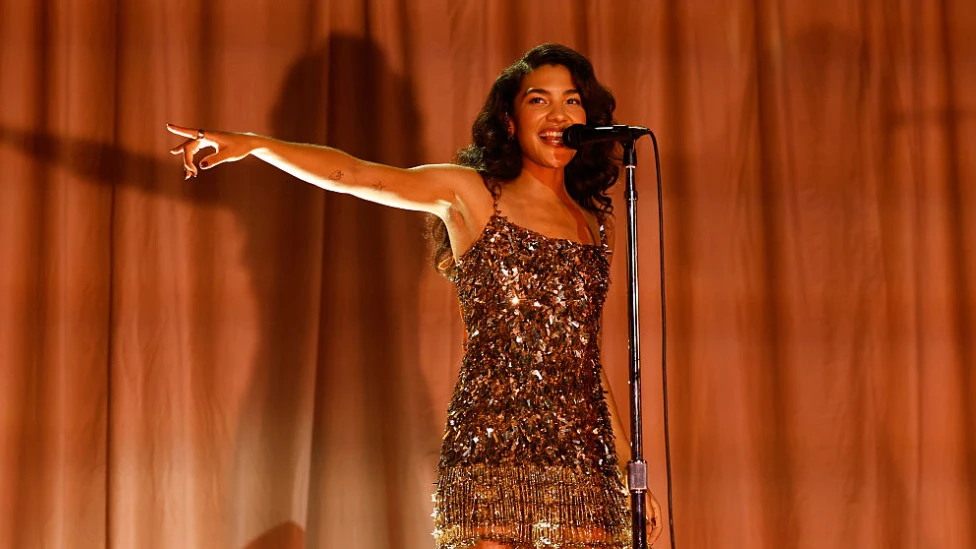
RISING soul star Olivia Dean has revealed how a quiet camping trip in Pembrokeshire turned into the call of a lifetime after she received a FaceTime from music legend Sir Elton John.
The 26-year-old singer told BBC’s The Graham Norton Show that she was cooking “sausages and beans” on a small gas stove when her phone rang and Sir Elton’s name appeared on the screen.
Dean said her team had warned her the star might get in touch, but she panicked when the moment arrived and initially declined the video call.

“It rang and it was a FaceTime and I said ‘no – I’m not ready’,” she told the audience, as the studio erupted with laughter.
Realising what she had done, Dean said she immediately regretted it and feared she had missed her chance — but Sir Elton called back moments later.

The Your Song hitmaker then offered words of encouragement, telling her he was proud of her and that it looked like she had worked hard and was “ready now”.
Dean said she managed a quick thank you before collapsing on the ground “like a starfish”.
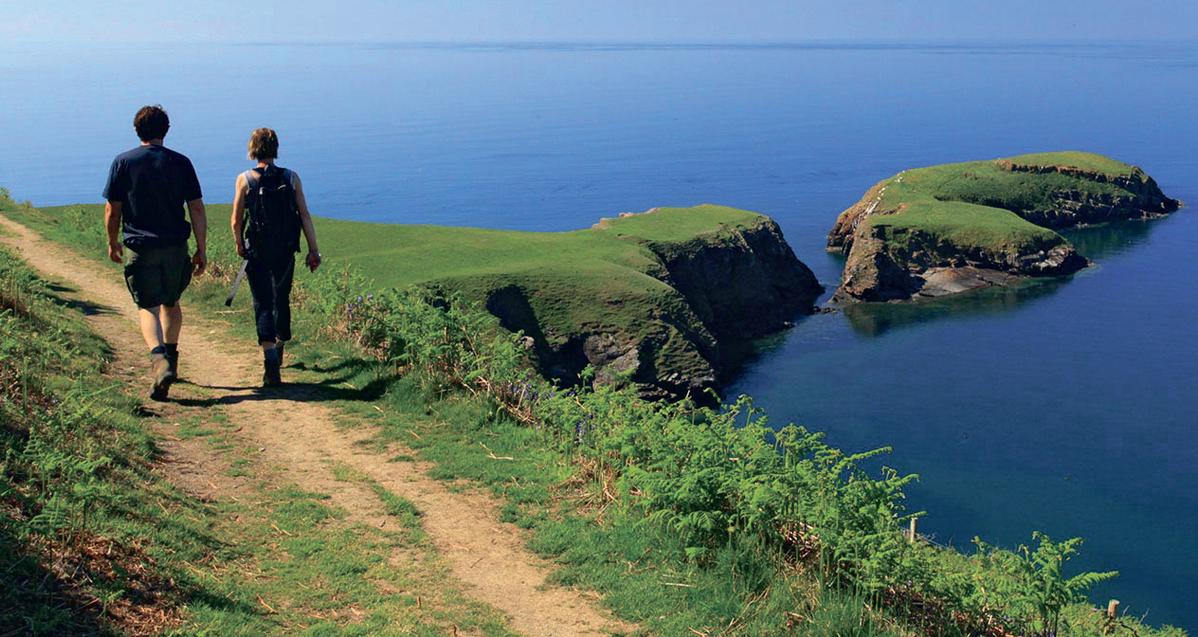
The light-hearted story has once again shone a spotlight on Pembrokeshire’s reputation as a place to switch off and recharge, with its beaches, coastal paths and campsites offering a peaceful escape from busy city life.
Dean, who is London-born and has Jamaican-Guyanese heritage, has previously spoken fondly about the county’s coastline and the appeal of getting away from the spotlight.

Her surprise call from Sir Elton also reflects his well-known habit of supporting fellow artists, with host Graham Norton joking that the music icon “loves the phone” during the segment.
A short clip of the moment has since been shared online, with viewers praising both Dean’s down-to-earth reaction and the county she chose for her downtime.

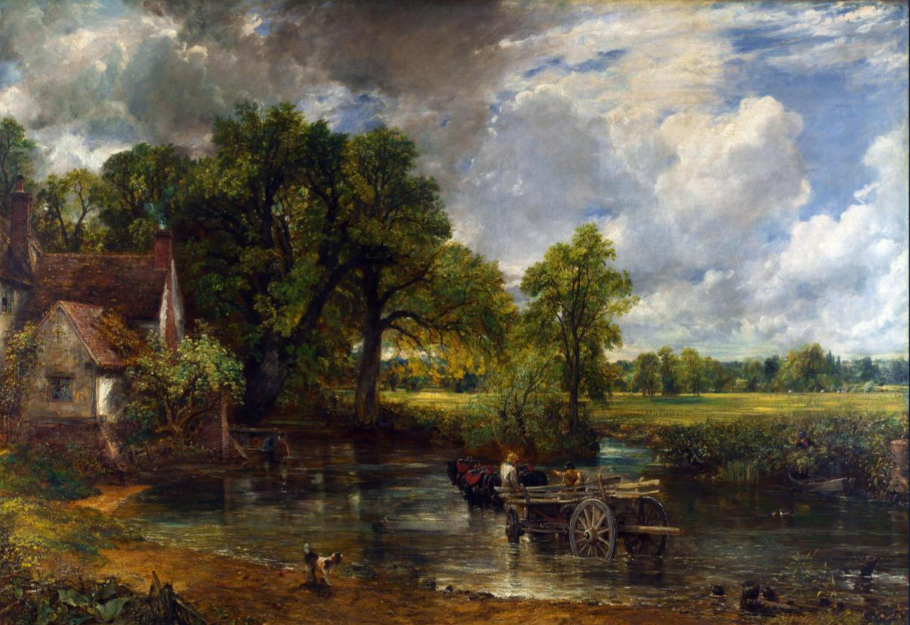
PEMBROKESHIRE could soon see life-size artwork reproductions of many National Gallery masterpieces, including works by Turner, Constable and Cezanne at locations throughout the county, in a scheme submitted to the national park.
In a Pembrokeshire Coast National Park application to the park’s own planners, permission is sought for the installation of 12 life-size National Gallery artwork prints on various locations in the national park, between June and November of this year.
Of the 12 locations for the ‘Art on your doorstep’ project, 11 will be on existing structures, the last on a self-standing structure at Oriel y Parc, St Davids.
Carew will see four artworks: Constable’s The Hay Wain, at the tidal Mill Bridge; Koninck’s ‘An extensive landscape by a road, with a river,’ in the car park opposite Carew River which overlooks the castle; Hans Holbein the Younger’s ‘The Ambassadors,’ in the national park workshop; and Turner’s The Fighting Temaraire, by the village’s war memorial.
Castell Henllys will feature two works: Cezanne’s Bathers, and Titian’s Baccus and Ariadne.
St Davids’ Oriel y Parc will feature Van Gogh’s Wheatfield of Cypresses, and Canaletto’s The Stonemason’s Yard.
Porthclais will host Van Gogh’s Sunflowers, with Claude-Joseph Vernet’s A shipwreck in Stormy seas at Strumble Head.
Rosebush’s Tafarn Sinc will display Turner’s Rain, Steam, Speed, and a site at the skate park overlooking Tenby’s South Beach will host Monet’s Bathers at La Grenoville.
The application will be considered by the national park planning committee.

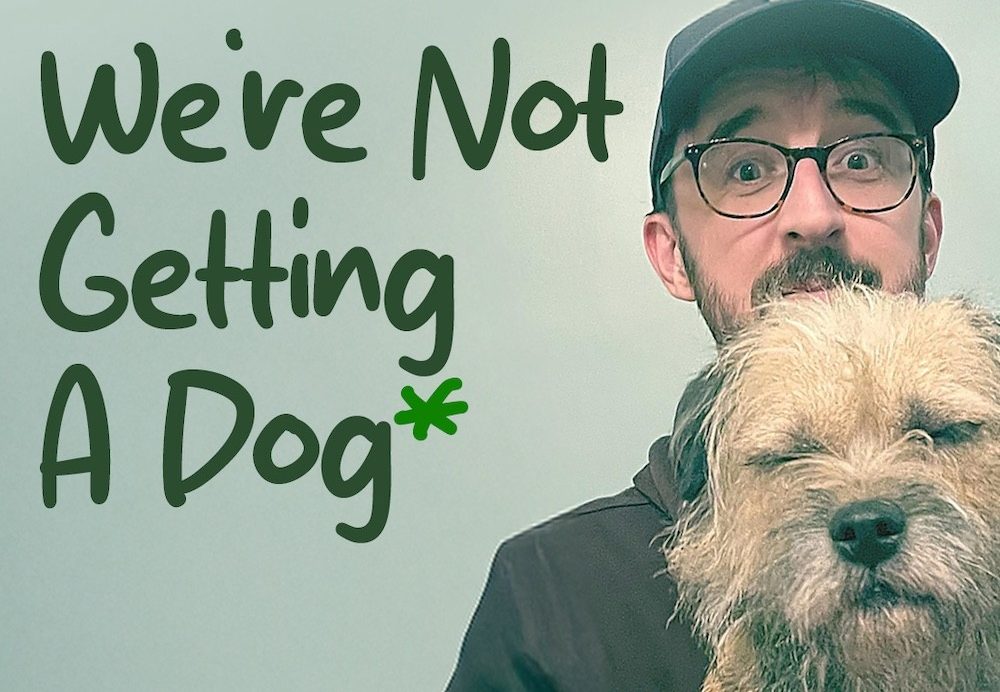
ACCLAIMED theatre-maker Sam Freeman is bringing We’re Not Getting A Dog to the Torch Theatre in Milford Haven this February — a new, comic, roughly 72-minute solo show packed with domestic observation and a quietly rueful bite.
Told through passive-aggressive letters, early-morning jet-washing and the small rituals we cling to in an effort to make a house feel like a home, the production casts a wry eye on what it means to live close to other people — neighbours we see every day, yet barely know.
“It’s really hard to describe the show,” Freeman said. “I guess it’s best to imagine a really gorgeous Radio 4 late-night comedy, but performed live — it’s heart-warming and like being wrapped in a warm hug. It’s a show to warm the soul.”
The performance weaves multiple storylines together: a couple sprinting through rain to catch a bus, a man staring at a blank laptop screen in despair, and a woman opening an envelope to reveal a photograph. Each moment builds towards a bigger picture, drawing the audience into a narrative where not everything is as straightforward as it first appears.
“It’s a real joy to perform because you let this story unfold,” Freeman added. “You see these moments where people laugh, occasionally cry, but also join the dots and discover that not everything is as simple as it first may seem.”

Read from a little black book, the show has been described as a hidden gem — a quietly powerful and comic examination of home, connection and distance.
And for anyone wondering about the dog on the poster, Freeman has an answer.
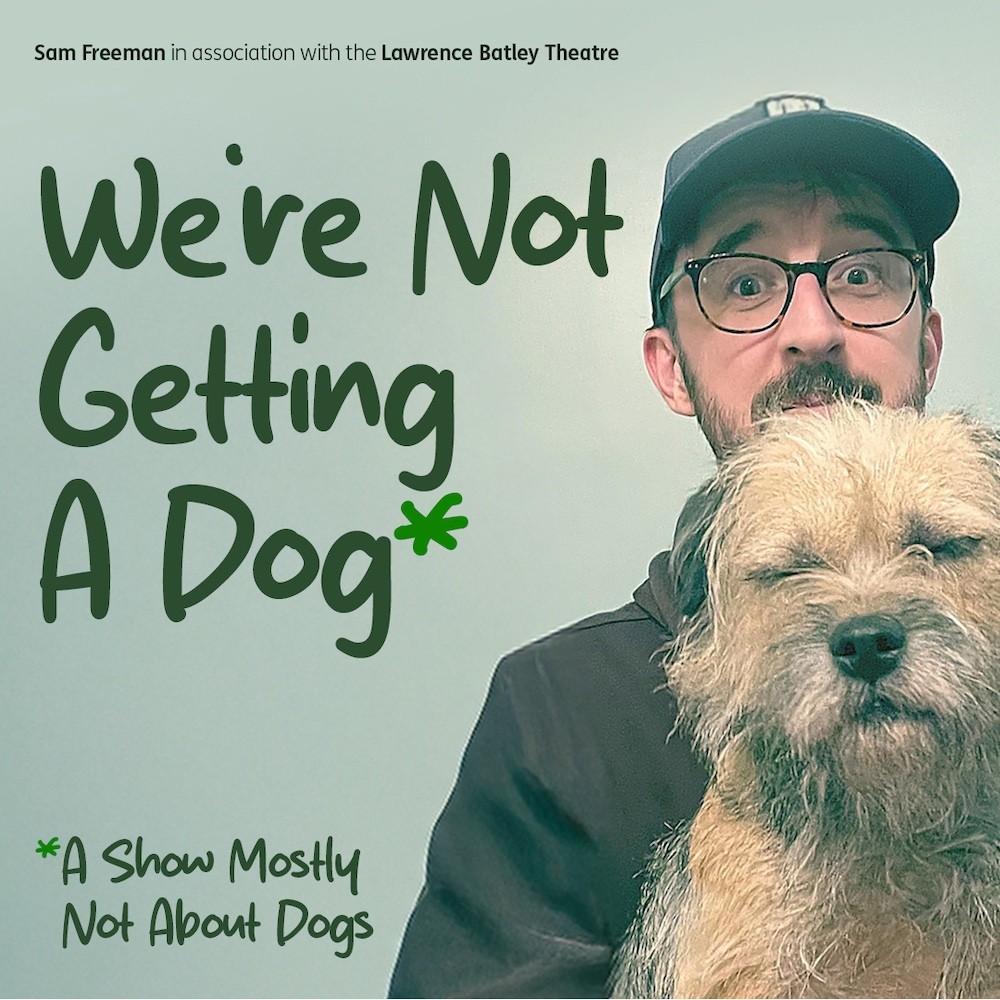
“Everyone wants to know about the dog on the poster… It’s my border terrier Poppy — absolute psychopath,” he said. “Whether she makes it into the show… well… you’ll have to see it to find out.”
We’re Not Getting A Dog will be performed at the Torch Theatre on Saturday, 14 February at 7.30pm. Tickets are £8. For more information, visit the Torch Theatre website or contact the Box Office on (01646) 695267.

Trading has crept into everyday conversation. You hear it in adverts, see it on social media, and watch it turn into a kind of entertainment. For many people, that creates confusion: is trading investing? Is it gambling? Is it something normal people should do, or is it a specialist world best left alone?
Let’s start with the basic question: what is trading? Trading is buying and selling financial instruments with the goal of profiting from price movement. That could mean shares in a company, currencies, commodities, or broader market indices. It can happen over minutes, days, or months. What makes it trading is the intention to act on price changes rather than simply holding long term.
Trading versus investing: the difference that matters
Investing usually means buying something because you believe in its long-term value. You might hold for years, collecting dividends or benefiting from growth over time. Trading is more tactical. A trader might buy the same share, but their focus is on near-term movement, not a multi-year thesis.
This difference matters because it changes how you manage risk. A long-term investor can often tolerate short-term volatility. A trader needs clearer exit plans, because the trade’s “reason” can disappear quickly.
Many people sit somewhere in the middle: they invest most of their money long term and experiment with small amounts in more active strategies. That can be sensible, but only if the “experiment” is treated as education rather than income.
Why trading became popular in the UK
Part of the rise is cultural and technological. Apps made markets feel accessible. News coverage made market moves feel like sport. Low savings rates in the 2010s pushed people to look for alternatives. Then, periods of volatility created the illusion of easy opportunity.
But accessibility can be a trap. Easy access does not mean easy skill. Trading is one of those activities where “a little knowledge” can be worse than none, because it tempts you to act confidently without a proven process.

What people trade, in practice
In the UK, many new traders encounter shares, indices, and currency products. The more liquid the market, the more predictable its pricing behaviour tends to be. That doesn’t mean it’s safe—it means it’s less prone to wild distortions.
The instrument you choose shapes your experience. Some instruments move slowly and steadily; others are sharp and fast. For beginners, slower tends to be better, because it allows time to think.

Risk: the part that decides whether trading becomes a problem
If there’s one point worth repeating, it’s that trading outcomes are dominated by risk management. You can have a good idea and still lose money if you risk too much. You can also have an average idea and still survive if your losses are controlled.
This is where people drift into gambling behaviour without noticing. If you’re increasing size after a loss to “win it back”, trading has become emotional. If you’re placing trades because you’re bored, trading has become entertainment. If you’re following anonymous tips, trading has become outsourcing your decisions to strangers.
A healthy approach is to decide your risk before you enter. That means knowing where you’re wrong and how much that wrongness costs. Without that, you’re not trading—you’re hoping.
Scams and misinformation: a local consumer issue, not just a finance issue
Readers in Wales and across the UK are not immune to scams dressed up as trading. Fake “investment groups”, impersonation adverts, and pressure tactics thrive in uncertain economic times. The safest assumption is that anyone promising guaranteed returns is not serious.
It’s also worth remembering that legitimate finance includes warnings for a reason. Risk disclosures are not decoration. If you don’t understand the product, pause. If you can’t explain it in plain language, you shouldn’t be risking money on it.
So, should you trade?
That depends on your goals, your temperament, and your willingness to treat it as a skill. If you want a stable financial future, the boring fundamentals—budgeting, emergency savings, sensible long-term investing—matter more than trading.
If you are curious, approach trading as education: start small, use a structured plan, and focus on process, not quick wins. The win is learning without damaging your finances or your headspace.
Trading is real. It’s not inherently good or bad. But it demands respect—because the market will take money from people who treat it casually.


Community8 hours ago
Storm Ingrid bears down on Pembrokeshire with heavy rain and 50–60mph gusts
Residents and visitors across Pembrokeshire are preparing for a spell of unsettled weather as Storm Ingrid approaches, with strong winds...

Community11 hours ago
Flood alert issued for Pembrokeshire coast as high tides and conditions raise risk
A FLOOD ALERT has been issued by Natural Resources Wales for the Pembrokeshire coastline, with flooding possible along stretches between...

Crime1 day ago
Haven Master spared jail after River Cleddau kayak crash
Teenager, 14, came within inches of death when speeding motor boat hit his kayak near Burton, court told A COURT...

Crime1 day ago
CCRC refers sexual offence convictions for appeal as new evidence emerges
Man convicted at Swansea Crown Court in 2017 has case sent to Court of Appeal THE CRIMINAL CASES REVIEW COMMISSION...


Crime2 days ago
West Wales teenager jailed for raping 12-year-old girl
Jake Richards, 19, sentenced to three-and-a-half years in young offenders’ institution A 19-year-old man from Garnswllt, Carmarthenshire, has been sentenced...

Business2 days ago
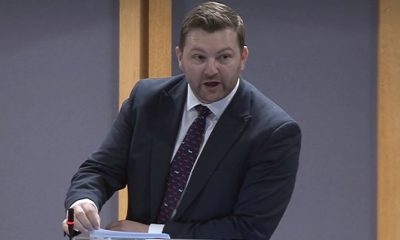
Rates shock fears reach the Senedd as 100+ west Wales firms back Kurtz briefing
BUSINESS rates fears in west Wales reached the Senedd this week after Samuel Kurtz MS warned that hospitality and tourism...


News3 days ago
Milford Haven man expelled from Russia amid spy allegations
A MAN originally from Milford Haven has been expelled from Russia after being accused of espionage by the country’s security services —...

Crime3 days ago
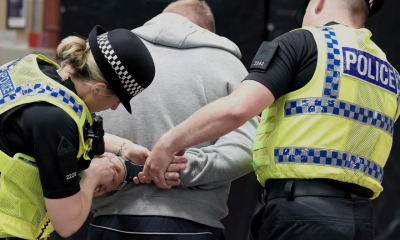
Two female police officers assaulted during arrest in Haverfordwest
Pensioner describes ‘terrifying’ struggle as suspect made off before being arrested again A RETIRED Haverfordwest woman has described a “terrifying”...

Crime3 days ago
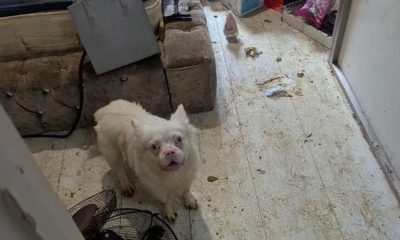
Milford Haven couple jailed after nearly 50 animals found in ‘filthy conditions’
RSPCA officers said the stench hit them before they entered a Coombs Road home where dogs, puppies, snakes and other...

Crime4 days ago
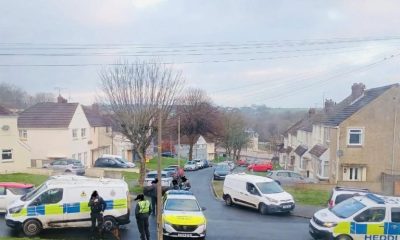
Armed police operation in Milford Haven leads to drugs arrests
Two young men held after officers attend addresses in Vicary Crescent and Hakin ARMED police were called to addresses in...
-

 Health1 day ago
Hywel Dda board to consider refreshed health strategy to 2040
-
 Community1 day ago
CPRW welcomes long-awaited grid report and calls for more transparency
-
News3 days ago
Milford Haven man expelled from Russia amid spy allegations
-

 News5 days ago
Campaigners threaten judicial review over state pension redress talks
-
Crime1 day ago
Haven Master spared jail after River Cleddau kayak crash
-
 Community4 days ago
Jenkins & Davies investigating alleged racist remarks after video circulates online
-

 Education6 days ago
Calennig singers take message to streets as campaign grows to save Ysgol Clydau
-

 Local Government3 days ago
Final budget published with £1.2bn uplift for Wales