


News
Welsh Government support to help keep families together

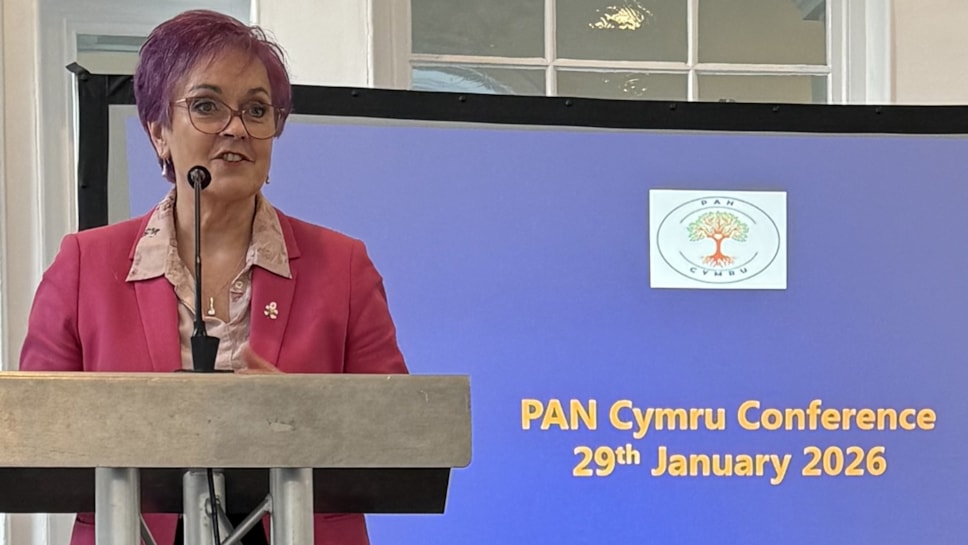
MORE than £800,000 is being provided to help parents going through child protection processes, ensuring their voices are heard and they feel supported every step of the way.
Speaking at the Parent Advocacy Network (PAN) Cymru Conference in Port Talbot, Minister for Children and Social Care Dawn Bowden confirmed £133,600 of the funding will be provided to roll out its popular Parent Café model to more areas.
The cafés offer parent-led peer support spaces, helping families build confidence and resilience.
Research shows parental advocacy reduces the number of children entering care, improves relationships between parents and social workers, and gives parents greater confidence in engaging with services.
The £800,408 total investment includes continued funding for professional advocacy providers National Youth Advocacy Service (NYAS), Tros Gynnal Plant (TGP) Cymru and Mental Health Matters, alongside the investment in PAN Cymru’s peer-led approach.

Parental Advocacy is embedded in the Welsh Government’s Programme for Government, which includes a clear commitment to prevent families breaking up by funding advocacy services for parents whose children are involved in child protection processes.
A new National Framework for Parental Advocacy will be developed to ensure consistent support across Wales.
Minister for Children and Social Care, Dawn Bowden said: “We all want to improve outcomes for children and families across Wales.
“PAN Cymru has achieved remarkable progress in transforming how families experience and engage with children’s social services in Wales.

“When I visited a Parent Café last summer, I heard parents describe finding renewed purpose and improved wellbeing. The power of peer support can be life-changing and that was clear to see.
“This funding will help more families across Wales access this crucial support, helping to keep children safely with their families wherever possible.”
Advisory Project Manager at PAN Cymru, Fiona MacLeod said: “‘This funding marks a significant moment for PAN Cymru and for families across Wales.

“It recognises the power of parent led, professionally supported collaboration to strengthen families and communities and ensure families are genuinely heard with compassion and fairness.”


A PEMBROKESHIRE councillor has spoken out after learning that the Santander branch in Haverfordwest is set to close later this year, warning the decision will have a serious impact on local residents, families and businesses.
The bank’s Bridge Street branch is due to close on Monday (May 5) as part of a wider UK restructuring programme.
Councillor Thomas Baden Tudor said he was “lost for words” and urged the bank to reconsider, describing the closure as devastating for customers who rely on face-to-face services.
Santander says the decision is driven by declining footfall, with more customers banking online, and that services will remain available via digital platforms and Post Office counters.
However, the announcement follows a steady erosion of high-street banking in Pembrokeshire. The Herald recently reported that Haverfordwest’s former Halifax branch is set to reopen as a nail salon.

In what appears to be a serious failure of planning, there is now not a single bank branch left anywhere in south Pembrokeshire. Towns including Tenby, Pembroke and Pembroke Dock are all without face-to-face banking facilities.
North Pembrokeshire has also been affected, with Fishguard and St Davids now lacking bank branches.
Pembrokeshire is understood to be left with just four bank branches in total — Nationwide in Milford Haven, and HSBC, NatWest and Lloyds Bank in Haverfordwest.
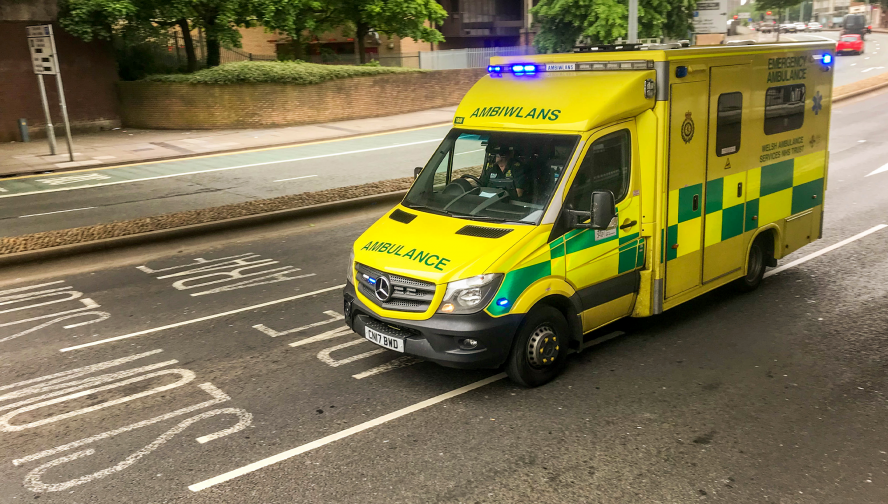
THE WELSH AMBULANCE SERVICE has revealed a series of inappropriate 999 calls made last year — including one from a person who rang emergency services after accidentally swallowing a small amount of mouthwash.
The call was among dozens of examples released by the trust to underline the growing pressure on emergency services caused by non-urgent use of the 999 system.
Figures show that of the 414,118 incidents recorded by the Welsh Ambulance Service in 2025, around 15 per cent — 62,454 calls — were deemed not suitable for an emergency ambulance response. That equates to roughly one in every seven calls.
Other examples included callers reporting a sore throat, a loose tooth, ointment in an eye, and minor ear and finger injuries — conditions that could have been treated through alternative NHS services.
Senior ambulance leaders warned that such calls divert vital resources away from genuine emergencies, including heart attacks, strokes, serious injuries and life-threatening incidents.
Andy Swinburn, executive director of paramedicine, said staff are trained to respond rapidly to severe and urgent medical situations, but misuse of the emergency line slows response times for those in real danger.
“When people call 999 for minor ailments, it takes valuable time away from call handlers and clinicians who may be trying to help someone in cardiac arrest or with catastrophic bleeding,” he said.
“Our message is simple — use common sense and help us protect emergency services for those who need them most.”
Lee Brooks, executive director of operations, added that none of the highlighted calls required an ambulance and that many would now be dealt with by telephone advice only under the service’s updated clinical model.
“This is not about blaming people,” he said. “We understand that worry and anxiety can cloud judgement. But the ambulance service exists for urgent and life-threatening situations — not routine illnesses or minor injuries.”
He warned that calling 999 does not guarantee an ambulance will be dispatched, nor does arriving at hospital by ambulance mean a patient will be treated more quickly.
“While crews are tied up with non-urgent calls, someone else’s parent, child or friend could be lying unconscious after a serious collision or suffering a cardiac arrest,” he said.

The trust is urging the public to familiarise themselves with alternatives to 999, including NHS 111 Wales for urgent health advice, pharmacists for common conditions, and minor injury units for less serious injuries.
A spokesperson added that keeping basic medicines at home and staying on top of prescriptions can also reduce unnecessary pressure on emergency services.
The Welsh Ambulance Service said the real-life examples were shared to encourage responsible use of 999 and ensure help reaches those who need it most — when seconds truly matter.

OPPOSITION calls on Labour Government to restore 30mph default, revive frozen projects, and advance long-stalled infrastructure schemes amid ongoing controversy over speed limits and road investment.
In a session that began around 4:30pm and was broadcast live via the Senedd’s online proceedings, the Welsh Conservatives presented a detailed motion urging the Welsh Labour Government—supported by Plaid Cymru under their co-operation agreement—to reverse several high-profile transport decisions. At the heart of the debate was a call to restore the default speed limit on restricted roads from 20mph back to 30mph, a policy introduced in September 2023 that continues to divide opinion sharply.
The Conservatives framed their proposals as a comprehensive plan to “fix Wales’ transport system,” emphasizing that robust road networks are fundamental to supporting businesses, generating employment, and stimulating economic growth. They argued that current policies—including the 20mph default, the long-standing cancellation of the M4 relief road around Newport, and the effective moratorium on new major road projects—amount to an “attack on Welsh motorists” that is exacerbating economic stagnation, lengthening journey times, increasing costs for commuters and hauliers, and contributing to Wales trailing other UK nations in wages and overall prosperity.
The specific demands outlined in the motion included:
- Restoring the default speed limit to 30mph (with the party noting that 20mph zones would remain appropriate in sensitive locations such as near schools, hospitals, and residential areas with high pedestrian activity);
- Proceeding with construction of an M4 relief road to alleviate severe congestion in and around Newport, a bottleneck that has persisted for decades despite repeated promises and planning;
- Upgrading the A55, the key North Wales corridor linking Holyhead port to the English border and vital for tourism, freight, and daily commuting;
- Dualing sections of the A40 in West Wales to address chronic bottlenecks that hinder access to regions like Pembrokeshire and Carmarthenshire;
- Delivering a third Menai crossing to enhance connectivity between mainland Gwynedd and Anglesey, reducing reliance on the existing bridges which face capacity and maintenance challenges;
- Unfreezing all paused road projects to resume investment in infrastructure that supporters say has been neglected for too long.
Leading the debate, Sam Rowlands MS—Welsh Conservative Shadow Cabinet Secretary for Finance, Transport and Infrastructure—described Labour and Plaid Cymru’s approach as one that is “slowing Wales down and holding our economy back.” He positioned the Conservative agenda as pragmatic and economy-focused, arguing that good transport links are indispensable for prosperity, job creation, and reversing underinvestment in Wales’ crumbling infrastructure.
This latest intervention comes against a backdrop of sustained political contention over transport policy in Wales. The 20mph default speed limit, championed by the Welsh Government as a road safety measure expected to reduce collisions, injuries, and NHS costs (with some early data showing positive trends in casualty reductions on affected roads), has faced widespread public backlash. A record-breaking Senedd petition opposing the change amassed nearly half a million signatures, and opinion polling has consistently shown strong opposition—often around 70%—particularly among drivers who report increased journey times, frustration in rural and suburban areas, and occasional non-compliance.
The Welsh Conservatives have capitalized on this discontent, repeatedly branding the policy “anti-motorist” and positioning themselves as defenders of drivers, rural communities, businesses dependent on road freight, and those in less well-served regions where public transport alternatives are limited. Critics of the current approach, including the opposition, point to economic modeling (including some Welsh Government estimates) suggesting potential costs from slower average speeds running into billions over time, alongside enforcement expenses and perceived over-application in areas where higher speeds were historically considered safe.
For their part, the Welsh Government and its supporters defend the 20mph limit as evidence-based, life-saving, and aligned with broader goals of sustainable transport, reduced emissions, and safer communities—especially in built-up areas. They have highlighted data indicating collision and injury reductions in the first year of implementation, while acknowledging implementation challenges and engaging in reviews and “listening” exercises in response to criticism. Previous Senedd debates on the issue (including those prompted by petitions and opposition motions) have seen the government largely hold firm, though with signals of potential adjustments toward more targeted application rather than blanket coverage.
The debate also occurs in the early stages of the run-up to the May 2026 Senedd election, where transport—alongside health, the economy, and devolved powers—remains a key battleground. Polling suggests a competitive landscape, with Labour facing pressure to retain its historic dominance, Plaid Cymru gaining ground, and emerging challengers like Reform UK adding volatility. The Welsh Conservatives hope to frame themselves as offering a clear, motorist-friendly alternative that prioritizes economic connectivity and infrastructure delivery.

No immediate outcome from the January 28 debate was detailed in public releases, but such opposition-led motions typically serve to highlight divisions, rally supporters, and keep issues prominent in the media and public discourse ahead of the election. Sam Rowlands MS was made available for media interviews following the session, underscoring the party’s intent to sustain momentum on these themes.
The session underscores the ongoing tension in Welsh politics between competing visions of transport: one emphasizing road-user convenience, economic efficiency, and major infrastructure projects; the other prioritizing safety gains, environmental sustainability, active travel alternatives, and long-term decarbonization. As Wales approaches a pivotal election year, debates like this one are likely to shape voter perceptions of how best to balance these priorities.



News20 hours ago
Wales’ first minister keeps distance from Starmer before May vote
Senedd race not Westminster THE FIRST MINISTER has moved to draw a clear dividing line between the Welsh Labour campaign...
News1 day ago
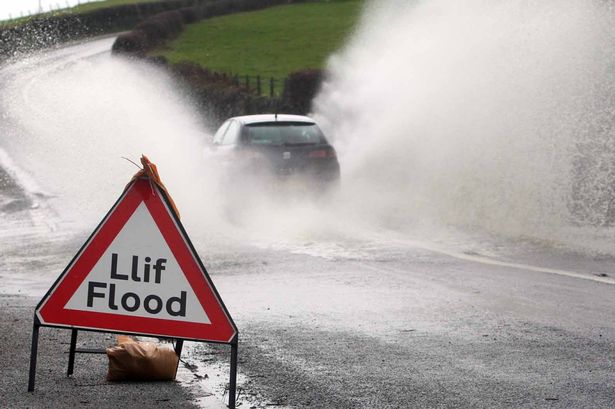
Kurtz raises Gumfreston flooding in the Senedd as petition deadline nears
LOCAL Senedd Member Samuel Kurtz has raised the long-running flooding problems affecting the B4318 at Gumfreston in the Senedd, as...


Community2 days ago
Anchor re-dedicated to mark 30 years of US–Haverfordwest ties
Service honours shared history, service and friendship on the Quayside A SYMBOL of Haverfordwest’s wartime and Cold War connections with...


Business2 days ago
Senedd urged to act as Welsh pubs fall further behind England on business rates
Industry leaders warn of closures and job losses as pressure mounts on ministers to pass on funding PUBS across Wales...


Crime2 days ago
Haverfordwest man jailed for online death threat
A Haverfordwest man has been sentenced to a year in prison after sending a threatening message online. Michael Carruthers, 34,...


Community2 days ago
Storm Chandra: Morning impacts across Pembrokeshire
HEAVY overnight rain and strong winds brought by Storm Chandra have caused disruption across Pembrokeshire, with fallen trees and localised...


Business3 days ago
Business voices heard as Kurtz and Davies urge action on business rates
LOCAL businesses from across West Wales have voiced serious concerns about the impact of business rates at a dedicated roundtable...

Crime3 days ago
Milford Haven man appears in court charged with burglary and GBH
Bail granted with tagged curfew and ban from Pembrokeshire A MILFORD HAVEN man has appeared in court charged with burglary...


News4 days ago
First Minister warns UK could break up as Starmer faces pressure ahead of elections
Eluned Morgan says there is a “real possibility” the Union could fracture as Labour braces for losses and Prime Minister’s...


Crime4 days ago
New national police force planned in biggest shake-up for generations
Ministers promise “British FBI” to take on terrorism, fraud and organised crime as forces face new performance targets and intervention...
-
 Community7 days ago
CPRW welcomes long-awaited grid report and calls for more transparency
-

 Health7 days ago
Hywel Dda board to consider refreshed health strategy to 2040
-

 Health5 days ago
Health Board to decide on future model for nine clinical services
-

 Crime7 days ago
Haven Master spared jail after River Cleddau kayak crash
-
 News7 days ago
Milford Haven School placed in special measures after Estyn inspection
-
Health7 days ago
Withybush staff fear crèche fee rise will price parents out
-

 Business6 days ago
New planning rules could block Welsh pubs from running pop up campsites
-

 News7 days ago
IPSO rejects complaint concerning Pembrokeshire Herald court report