


News
Huge knowledge gap over who runs Wales, major poll reveals


Many voters still unclear which powers belong to Welsh Government and which remain with Westminster
A NEW poll has revealed widespread public confusion about Welsh devolution ahead of the Senedd election in May, with many voters unsure which level of government is responsible for key decisions affecting their daily lives.
Researchers at Cardiff University found that large numbers of people in Wales struggle to identify whether policy responsibilities sit with the Welsh Government, Westminster, or local councils.
The survey, conducted with YouGov and based on responses from 1,544 adults in Wales between February 12 and February 25, suggests that gaps in public understanding remain more than twenty-five years after devolution began.
Academics involved in the study say the findings raise concerns about democratic accountability as voters prepare to choose the next Welsh Government.
Professor Stephen Cushion, from Cardiff University’s School of Journalism, Media and Culture, said confusion about policing stood out as one of the most significant knowledge gaps.

“Almost seven in ten respondents could not correctly identify who is responsible for policing,” he said.
“Nearly half assumed it was devolved to the Welsh Government when it is actually controlled by Westminster.”
The research also found that a significant minority of voters remain unsure about the status of major devolved services.
Around thirty percent of respondents did not know that health and education are run by the Welsh Government – two of the most visible policy areas in Wales.

Professor Cushion said such misunderstandings could affect how voters judge political performance.
“During an election period these gaps matter for democratic accountability because people need to make well-informed decisions about who is responsible for running Wales over the next few years,” he added.
Knowledge of devolved powers
The survey found varying levels of awareness about who controls different policy areas.

Knowledge was weakest around social care delivery, where 81% of respondents either answered incorrectly or said they did not know that local councils hold responsibility.
Policing also showed high levels of confusion, with 69% of people either incorrect or unsure about the role of the UK Government.
Broadcasting was another area where many people were unclear, with 58% unable to correctly identify Westminster as responsible.
By comparison, understanding was stronger in some of the most visible areas of devolved policy.
Seven in ten respondents correctly identified the Welsh Government as responsible for education, while 69% recognised its role in health and social care. Transport was also widely associated with the Welsh Government, with 65% answering correctly.
Immigration was the area where the UK Government was most clearly recognised as responsible, with 71% identifying Westminster.
Recognition of party leaders
The poll also examined how well voters recognise Welsh political leaders.
First Minister Eluned Morgan was recognised by 62% of respondents, while Plaid Cymru leader Rhun ap Iorwerth was known by 47%.
Recognition of other leaders was significantly lower. Welsh Conservative leader Darren Millar was recognised by 21% of respondents, while Welsh Liberal Democrat leader Jane Dodds was known by 18%.
Wales Green Party leader Anthony Slaughter was recognised by just 4%.
In contrast, Reform UK leader Nigel Farage was recognised by 94% of respondents. Dan Thomas, the party’s leader in Wales, was known by 10%.
Understanding the new Senedd voting system
The survey also found limited understanding of the new voting system that will be used at the next Senedd election.
Only 7% of respondents correctly identified the closed-list proportional system that will replace the current arrangement.
Eighteen percent believed the system would be First Past the Post, while 13% thought the Additional Member System would still be used.
Four percent chose the Single Transferable Vote system, while a majority of respondents – 58% – said they did not know.
Media consumption
Researchers also examined how people in Wales consume political news.
The study found that UK-wide media outlets remain the main source of information for many people. Forty-six percent said they rely mostly on UK-wide news, compared with just 10% who mainly use Wales-produced news.
Thirty-four percent said they use both equally.
Online news consumption followed a similar pattern, with 53% mainly using UK-wide websites and 14% relying mostly on Welsh-produced outlets.
When asked to evaluate coverage of Welsh politics, 46% of respondents said UK-wide media do a bad job reporting on the subject, while 28% said they do a good job and 26% were unsure.
Professor Cushion said the findings highlighted the importance of clear reporting about devolved powers.
“The survey underlines the importance of robust reporting that clearly distinguishes between the responsibilities of Wales and Westminster,” he said.
“Clearer signposting of devolved and reserved powers would help voters understand which level of government is responsible for the policies affecting them.”
About the survey
The survey was conducted online by YouGov Plc. A total of 1,544 adults aged 16 and over in Wales took part between February 12 and February 25, 2026.
The results were weighted to be representative of the Welsh population.
The research was funded by the Welsh Government through Creative Wales, with analysis supported by the Arts and Humanities Research Council’s project Enhancing the Impartiality of Political News.


Dyfed’s High Sheriff supports charity following dramatic family rescue years ago
THE HIGH Sheriff of Dyfed has spent her year in office raising thousands of pounds for the Wales Air Ambulance charity — a cause close to her heart after the lifesaving service once came to the aid of her own son.
Ann Jones, who has lived in the village of Llandewi Brefi in Ceredigion for forty years, chose to champion the charity during her term, highlighting the vital role it plays in supporting rural communities.

Speaking about her decision, she said the service was particularly important in remote areas such as the foothills of the Cambrian Mountains.
She said: “There are two reasons why I wanted to support the Wales Air Ambulance during my year as High Sheriff.
“Firstly, we are at the foothills of the Cambrian Mountains. As you can imagine it is quite a remote area. It is beautiful, but the road network is dreadful.
“When someone falls critically ill, or there is a serious road accident, the air ambulance is a lifeline for our community.”
The second reason, she explained, is personal.
“Many years ago, my son was riding a horse when he was knocked unconscious,” she said.
“The air ambulance came to his aid. Thankfully there was no serious damage and he made a complete recovery. As a family, we’ve never forgotten that.”
Wales Air Ambulance is a consultant-led service which takes hospital-standard treatments directly to patients at the scene of emergencies. If required, crews can also transfer patients directly to the most appropriate hospital for their illness or injury.
The service operates through a partnership between the charity and the NHS. While highly skilled consultants and critical care practitioners are supplied by the Emergency Medical Retrieval and Transfer Service (EMRTS), the charity itself relies on public donations to raise the £13 million needed each year to keep helicopters flying and rapid response vehicles on the road.
This advanced critical care capability allows crews to administer anaesthesia, deliver blood transfusions and even carry out minor surgical procedures at the scene.

During her year in office, Ann visited the charity’s headquarters in Dafen near Llanelli.
“It was fascinating to meet Rory the pilot and Tony who is an Operational Support Assistant,” she said.
“They took the time to explain what they do. What struck me was how calm and professional they were. The alarm could have gone off at any minute, and it was reassuring to see they were ready and able to respond.”
Ann described her year as High Sheriff as “memorable”, with the visit to the air ambulance base providing the “icing on the cake”.
Her term began with a declaration service at her local chapel on Tuesday (Mar 25, 2025).
Since then, a series of fundraising events has been organised to support the charity, including a special evening at the Tyglyn Hotel near Aberaeron organised by Chelsea Flower Show gold medal winner Donald Morgan.
The evening featured entertainment from local group Mishmash and attracted strong community support.
One of the highlights was a festive tractor run in December which saw around forty-five decorated tractors take part.
“There were Christmas trees on the roofs of the tractors and lights everywhere,” she said.
“People were incredibly creative and created themes. Pickup trucks also joined in so families — including elderly residents — could take part.”
Children were also invited to decorate their own ride-on toys, bikes and miniature tractors for the event.
An auction featuring twenty-five lots was held alongside the run, while refreshments were provided by Café Dewi, a voluntary café run by the local Women’s Institute.
Despite the village’s small size, the event raised £7,200.
“It’s incredible really that on a Sunday before Christmas, when money is short for many people, the community gave so generously,” Ann said.
In total, Ann expects to raise more than £12,000 for the charity before the end of her term.
“I have relied on friends, family and local businesses for support — both financially and practically,” she said.
“It just shows how generous the people of Cardiganshire are.”
Her final fundraising event will be a fashion show at the Falcondale Hotel in Lampeter.
Emily Bell, Wales Air Ambulance Regional Fundraising Coordinator, praised the High Sheriff’s efforts.
“What an incredible year,” she said.
“The High Sheriff of Dyfed has championed Wales Air Ambulance throughout her term in office and we are hugely grateful for her support.
“We would also like to thank everyone who supported the High Sheriff’s fundraising activities — every pound raised helps save lives.”
Cover image:
Emily Bell, Wales Air Ambulance Regional Fundraising Coordinator and Ann Jones, High
Sheriff of Dyfed 2025-2026

Council votes to discontinue Ysgol Llansteffan after months of opposition
CARMARTHENSHIRE County Council has approved plans to close Ysgol Llansteffan, despite a sustained campaign by parents and community supporters to keep the village school open.
The decision was confirmed at a council meeting held today (Wednesday, March 4).
Under the plans, Ysgol Llansteffan will close on August 31, 2026, with pupils transferring to Ysgol Llangain from September 1. The existing catchment area currently served by Ysgol Llansteffan will also be absorbed into the Ysgol Llangain catchment.
Parents and guardians will still be able to apply for places at other schools in Carmarthenshire through the council’s usual admissions process.
The school was identified for closure under Carmarthenshire County Council’s Modernising Education Programme, approved by Cabinet on November 18, 2024. Officials cited extremely low pupil numbers, a high number of surplus places, and financial pressures including a projected deficit budget.
Council leaders also noted that many children living within the school’s catchment area already attend other schools, limiting demand for provision in the village.
Cabinet Member for Education Cllr Glynog Davies said the decision had been difficult.
“The decision to close Ysgol Llansteffan is difficult for everyone involved and it is with sadness that this has been agreed,” he said.
“Following a robust process, the discontinuation of Ysgol Llansteffan will enable the school to combine with Ysgol Llangain to provide safer staffing, the wider sharing of the Welsh language among pupils and a more sustainable rural community.”

Campaigners’ concerns
The decision follows months of opposition from parents and campaigners who argued the case for closure was flawed.
The school’s Parent Teacher Association, supported by Welsh language campaigners, had urged councillors to delay the decision, saying important evidence remained unresolved. Campaigners also raised concerns about the language impact assessment used to support the closure proposal.
Parents argued that pupil numbers had recently increased and that projections used by the council were outdated. They said the school roll had risen earlier this year, challenging claims that numbers would remain extremely low.
During the consultation process, the council received more than 200 responses, with the majority opposing the closure. Residents raised concerns about transport arrangements, the potential impact on pupils’ wellbeing, and the effect on the wider village community if the school were lost.
Supporters of the school also argued that small rural schools play an important role in maintaining Welsh language use and community life, warning that once the village school is lost it would be unlikely to reopen.
Despite these objections, councillors ultimately approved the proposal, meaning Ysgol Llansteffan will close at the end of the summer term.
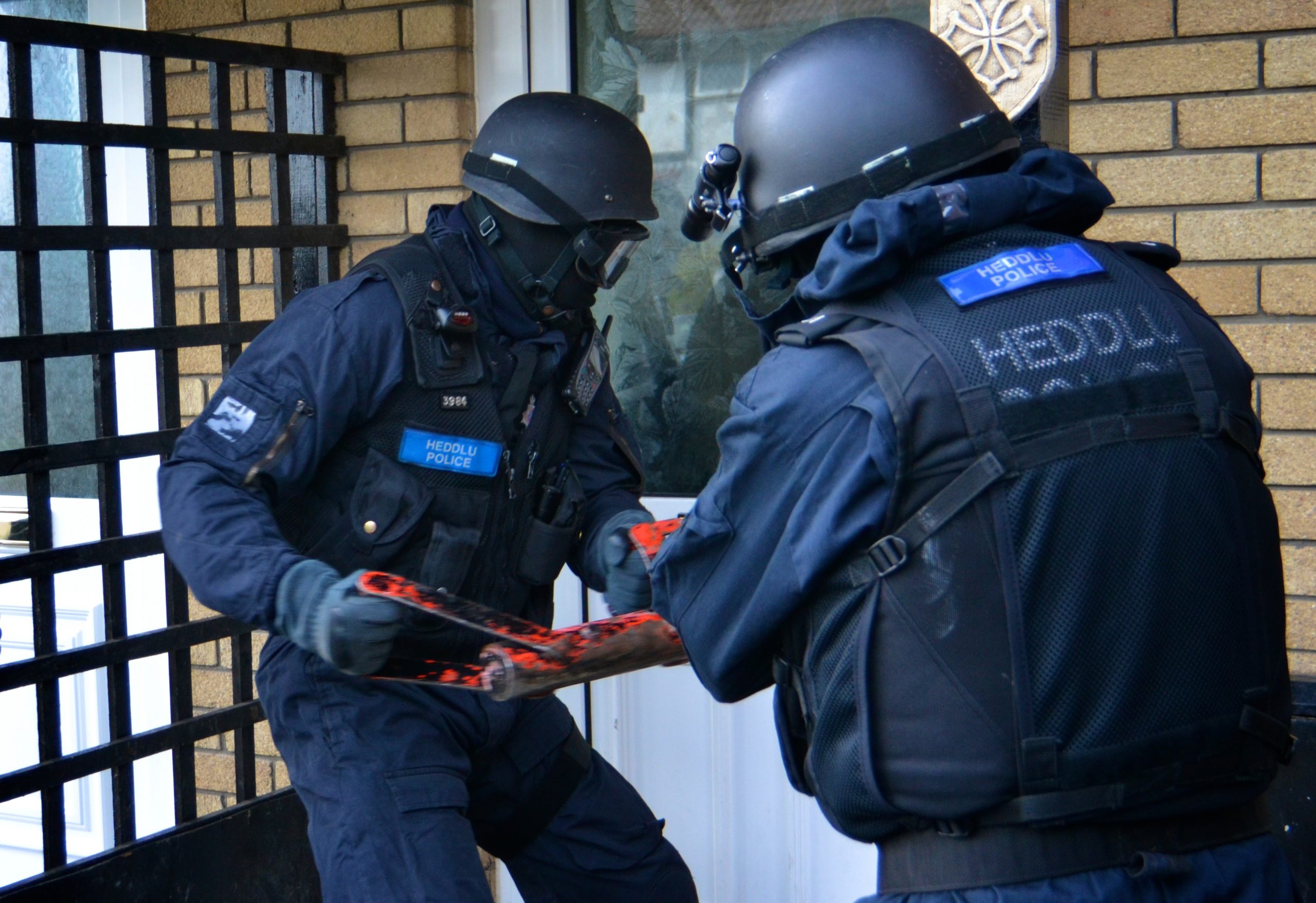
Counter-terror officers arrest man in Powys as part of national security investigation
THREE men have been arrested in Wales and London on suspicion of assisting Chinese intelligence services in the United Kingdom.
The arrests were made on Wednesday (Mar 4) as part of a counter-terrorism policing investigation being carried out under the National Security Act 2023, the Metropolitan Police confirmed.
Two of the suspects were detained in Wales, while a third man was arrested in London.
Police said the men are aged 39, 43 and 68.
The 43-year-old was arrested at an address in Pontyclun, while the 68-year-old was detained in Powys. A 39-year-old man was arrested in London.
Shocking links to Westminster
The Guardian has reported that one of the men arrested is the partner of a sitting Labour MP, while another is said to be the partner of a former Labour MP. Police have not confirmed the identities of the suspects.
Officers also carried out searches at a number of properties linked to the suspects, including addresses in Cardiff and East Kilbride in Scotland, as part of the ongoing investigation.
The Metropolitan Police said the arrests relate to suspected offences involving assisting a foreign intelligence service, believed to be connected to China.
In a statement, police emphasised that the operation is being handled by Counter Terrorism Policing, which is responsible for national security investigations in the UK.

Suspects in police stations
Officers confirmed the suspects remain in custody while enquiries continue.
Police also reassured the public that there is no immediate danger.
A spokesperson for the Metropolitan Police said: “There is no imminent or direct threat to the public.”

The National Security Act, introduced in 2023, created new offences designed to combat espionage, foreign interference and covert activity by hostile states operating in the UK.
The investigation is continuing.


Crime2 hours ago
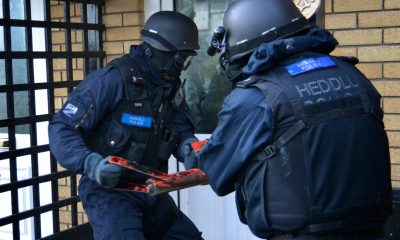
Chinese intelligence probe reaches Dyfed-Powys Police area
Counter-terror officers arrest man in Powys as part of national security investigation THREE men have been arrested in Wales and...


Crime3 hours ago
Man sentenced after punching convicted paedophile in Haverfordwest pub
A HAVERFORDWEST man has been sentenced after punching a convicted paedophile inside a town centre pub. Haverfordwest Magistrates’ Court heard...


Health18 hours ago
Davies and Kurtz attack ‘fantasy hospital’ pledge for west Wales
Senedd Members demand immediate investment in Withybush and Bronglais as election campaign intensifies SENEDD Members Paul Davies and Samuel Kurtz have launched a fresh...


Health1 day ago
Hywel Dda warns of ‘significant pressure’ as A&E departments remain packed
Patients urged to use NHS 111 as Withybush, Glangwili and Bronglais face continued strain HYWEL DDA University Health Board has...


News2 days ago
War stops Qatar gas: Milford Haven LNG supplies disrupted
UK energy security concerns grow after shutdown at major export facilities ENERGY bills in the UK could rise sharply after...


Community2 days ago
Martyn Butler dies aged 71 months after Haverfordwest visit
Co-founder of Terrence Higgins Trust attended local plaque unveiling honouring friend Terry Higgins A LEADING figure in the UK’s response...

Crime2 days ago
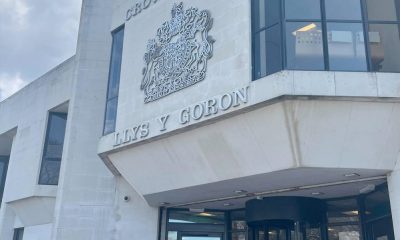
Nine deny Class A drugs conspiracy as case set for Crown Court trial
Eight remanded in custody as four-week trial fixed for May 18 NINE people have denied conspiring to supply Class A...


Community2 days ago
No asylum seekers housed in west Wales hotels, latest Home Office figures show
WEST Wales currently has no asylum seekers being housed in hotels, according to the latest figures published by the Home...


Community5 days ago
St David’s Day parade brings colour and celebration to Haverfordwest
HAVERFORDWEST town centre was a hive of activity today (Friday, Feb 27) as hundreds of children from schools across Pembrokeshire...


News6 days ago
Hoax 999 call sparks massive lifeboat and helicopter rescue — man arrested
Emergency services diverted from real incidents after false report off south Wales coast A MAJOR sea rescue operation involving three...
-

 Business7 days ago
Council reviewing complaints over Computer Solutions Wales as concerns continue
-

 Health7 days ago
Petition calling for Withybush intervention nears 5,000 signatures
-
 Crime7 days ago
Milford Haven pensioner admits sexually assaulting two shop workers
-

 News7 days ago
Welsh Government criticised after Russian-linked drone image used in defence announcement
-
News6 days ago
Hoax 999 call sparks massive lifeboat and helicopter rescue — man arrested
-
Crime6 days ago
West Wales man jailed for murder of five-month-old baby
-

 Community7 days ago
Pub reopens with VIP club launch and free drink offer
-

 Health6 days ago
Petition against hospital service changes surges past 6,000 signatures