


News
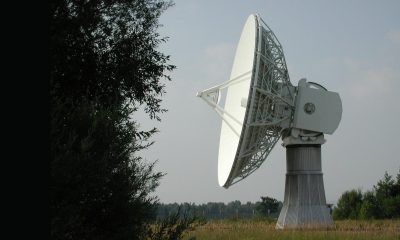
Greens oppose US space radar plan for St Davids Peninsula

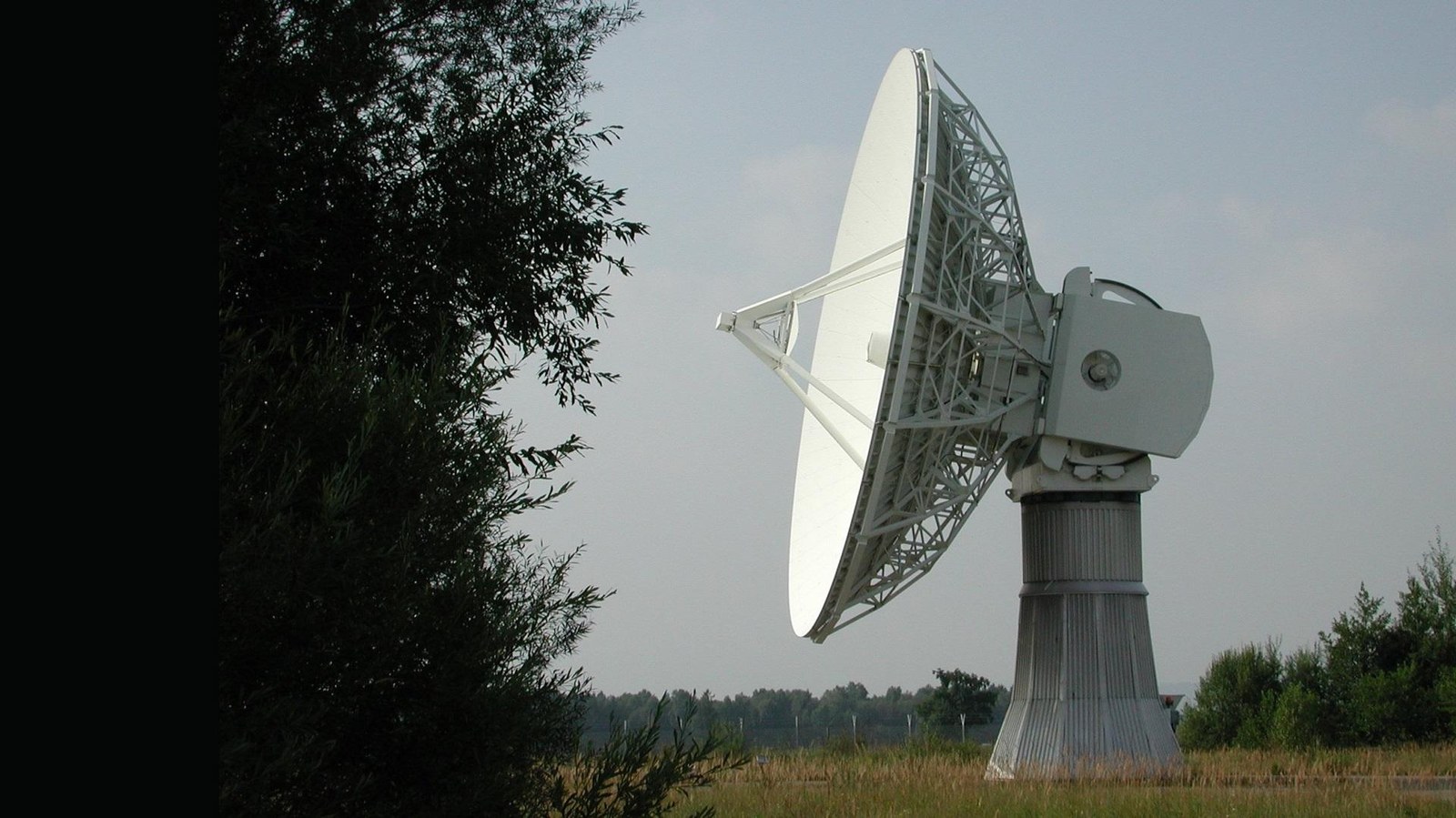
CANDIDATE CRITICISES DARC PROPOSAL
THE GREEN PARTY has voiced strong opposition to plans for a major US military radar installation on Pembrokeshire’s St Davids Peninsula, warning the development risks escalating global tensions and damaging the area’s environment and tourism industry.
The proposed project, known as the Deep Space Advanced Radar Capability (DARC), would involve the construction of 27 large radar dishes designed to track objects in space. The system would form part of a US-led network intended to monitor satellites and other activity in orbit.
Amy Nicholass, the Green Party’s number one candidate for the Ceredigion Penfro constituency in the upcoming Senedd elections, said the proposals represented a return to Cold War-style thinking.
She said: “The DARC proposals are a disgrace. They benefit no one except the US government. When the US tells Westminster to jump, the Westminster government simply asks how high.
“We should be putting all our efforts into creating lasting peace, not allowing anyone to recreate Cold War tactics where none of us feel safe. Peace is at the heart of Welsh culture.”

Campaigners have also raised concerns about the wider implications of militarising space. The radar system would be used to monitor satellites and other objects in orbit, including those belonging to potential adversaries.
Critics argue that the destruction of satellites could create large amounts of debris in space, which could threaten other satellites used for weather forecasting, telecommunications and navigation.
Local residents have also expressed concern about the potential impact on the landscape and tourism industry.
A community group known as PARC Against DARC has been campaigning against the proposals, warning the development could harm the reputation of the St Davids Peninsula, an area widely regarded as one of Wales’ most important natural and tourism assets.

The campaign group describes the peninsula as a “jewel-in-the-crown natural wonder” and a key attraction for visitors to Pembrokeshire.
Nicholass said developments of this scale must involve local communities in the decision-making process.
“It is vitally important that local people have a say on developments like this,” she said. “We need more local power when it comes to large planning decisions that could fundamentally change our landscape.”

She added that the current international climate made diplomacy more important than ever.
“We understand how precarious the world can feel for many people,” she said. “We are fortunate to live in a peaceful part of the world, but proposals like this risk bringing global conflict closer to home.
“We all share this one planet and need to be part of the conversation about how to stand up for each other in peaceful ways.”











Party hopeful cites national security report on ecosystem collapse and food supply threats
A GREEN PARTY candidate standing in the upcoming Senedd elections has warned that biodiversity loss and environmental decline could pose serious risks to food supplies and national security.
Amy Nicholass, the Green Party’s Ceredigion Penfro lead candidate for the May election, has highlighted the findings of a report titled Global biodiversity loss, ecosystem collapse and national security, which examines how environmental breakdown could affect the stability of societies.
Nicholass, who holds a Master’s degree in Environmental Science, said the report shows the need for communities to become more resilient in the face of environmental shocks.
“We need to create resilient communities,” she said. “Such communities are being formed all over the UK at the moment.”
The report outlines how biodiversity decline and ecosystem damage could disrupt food production and increase pressures on national infrastructure.
Environmental campaigners have also launched a new initiative called SAFER – Strategic Adaptation for Emergency Resilience – which aims to help communities prepare for major shocks linked to climate change and ecological decline.
The campaign has been promoted by former Green MP Dr Caroline Lucas and environmental thinker Dr Rupert Read.
Nicholass said the involvement of national security experts highlights the seriousness of the issue.
“There are still people, and political leaders who deny that climate change is real,” she said. “Now is the time to come together to acknowledge the truth and find solutions that are good for nature and good for people, and which do not leave poorer members of our society behind.”
The report also highlights the challenges already facing farmers, with changing weather patterns and biodiversity loss affecting crop production.
Nicholass said farmers are on the front line of the crisis but must also be supported as part of the solution.
A spokesperson for the Department for Environment, Food and Rural Affairs said: “Nature underpins our security, prosperity and resilience.”
Nicholass added that communities had shown during the Covid pandemic that rapid change is possible when people understand the scale of a challenge.
“In the Green Party we always look for hope,” she said. “The pandemic showed that people and communities can be resilient and rethink priorities in times of crisis.”
THE INDEPENDENT PRESS STANDARDS ORGANISATION has rejected a complaint made against The Pembrokeshire Herald over its reporting of a Domestic Violence Protection Order hearing.
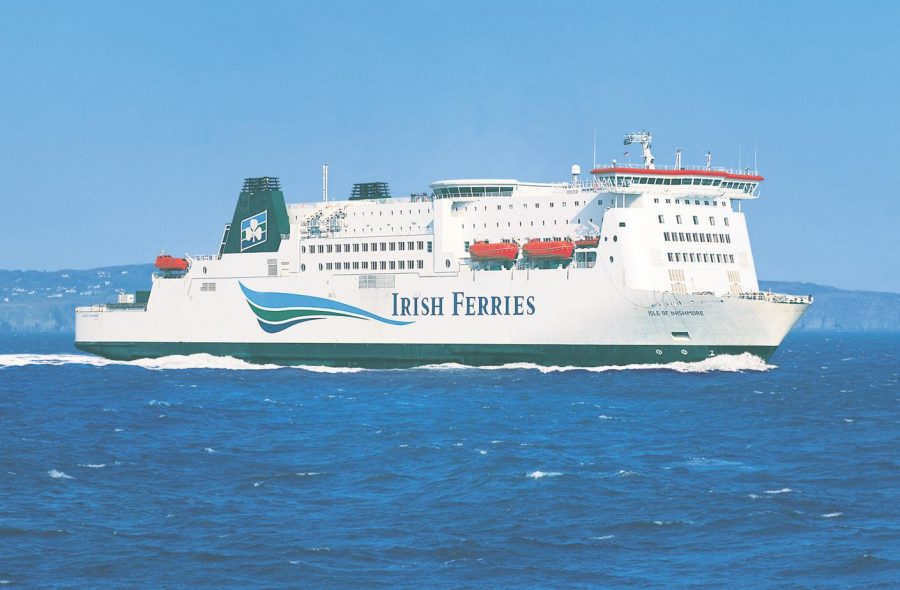
The complaint related to an article headlined “Dorset man stopped at Fishguard ferry given domestic violence order,” which was published on February 2, 2026.
The complainant alleged the report breached Clause 1 (Accuracy) of the Editors’ Code of Practice, claiming the article gave readers the misleading impression that he had a proven history of domestic violence and criminal behaviour.
However, after reviewing the complaint, IPSO’s Complaints Team concluded that the article did not raise a possible breach of the Editors’ Code.
In its decision, the regulator noted that newspapers are responsible for accurately reporting what is said in court proceedings, rather than verifying the accuracy of statements made during those hearings.
IPSO said the complainant did not dispute that the allegations referenced in the article had been raised during the court hearing.
The regulator also noted that the report made clear the nature of a Domestic Violence Protection Order, explaining that it is a civil safeguarding measure and does not amount to a criminal conviction.
On that basis, IPSO concluded that the article was not misleading and that there were no grounds to investigate a breach of the Code.
The complainant has seven days to request that the decision be reviewed by IPSO’s Complaints Committee.


A RAPIDLY escalating war between Iran, Israel and the United States has expanded dramatically across the Middle East, with major airstrikes on Tehran, missile and drone attacks across the Gulf, and the sinking of an Iranian warship in the Indian Ocean marking one of the most dangerous global crises in decades.
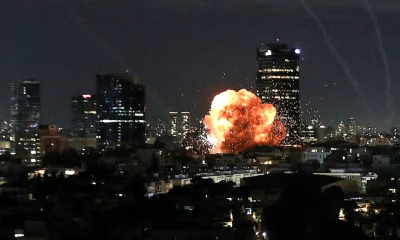
The conflict, which began only days ago following joint US–Israeli strikes inside Iran, has now spread across multiple countries and military theatres, drawing in NATO air defences, threatening global oil supplies and triggering international evacuations.
Military analysts warn the situation could develop into a full regional war if the cycle of retaliation continues.
War triggered by assassination of Iran’s supreme leader
The current crisis began after coordinated American and Israeli strikes targeted senior Iranian leadership and military infrastructure.
Among those killed was Iran’s Supreme Leader, Ayatollah Ali Khamenei, a development that has plunged the Islamic Republic into both military confrontation and political uncertainty over who will lead the country next.

The attacks were reportedly planned weeks in advance and targeted command centres, security headquarters and other strategic sites across Iran.
Tehran responded by launching waves of missiles and drones across the region, including attacks on Israel and military installations hosting US forces in Gulf states such as Bahrain, Kuwait and the United Arab Emirates.
Air raid sirens have repeatedly sounded in Israeli cities as interceptors attempt to shoot down incoming Iranian missiles.
Israeli airstrikes hammer Tehran and Lebanon
Israeli forces have continued a sustained bombing campaign across Iran, targeting Revolutionary Guard facilities, police headquarters and other security infrastructure in Tehran.
Explosions have been reported across several districts of the capital as Israeli aircraft and missiles strike strategic targets.
At the same time, Israel has expanded operations against Iranian allies in Lebanon, striking Hezbollah positions and ordering civilians to evacuate areas close to the border.
The Israeli military says the aim is to dismantle Iran’s ability to wage war through its regional proxy networks.

NATO intercepts missile heading towards Turkey
The conflict has also spilled towards NATO territory.
Turkish defence officials confirmed that a ballistic missile launched from Iran crossed Iraqi and Syrian airspace before being intercepted by NATO air defence systems in the eastern Mediterranean.
The missile was destroyed before entering Turkish airspace, and no casualties were reported.
NATO has condemned the attack and warned Iran that further escalation could threaten the security of alliance members.
British military base struck in Cyprus
The war has already touched British military infrastructure.
A drone believed to be Iranian-made struck RAF Akrotiri in Cyprus earlier this week, marking the first attack on the UK’s key Middle East airbase in decades.
The base plays a central role in British operations in the region, and the strike has raised concerns that UK forces could be drawn more deeply into the conflict.
US submarine sinks Iranian frigate
One of the most dramatic developments occurred thousands of miles away in the Indian Ocean.
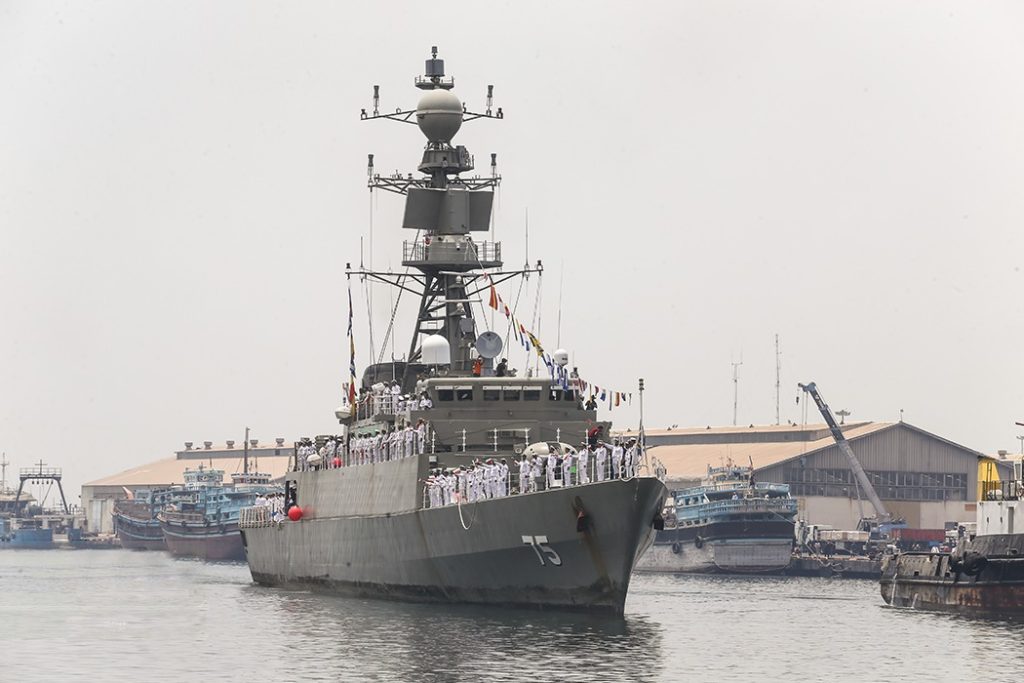
A US Navy submarine torpedoed and sank the Iranian frigate IRIS Dena off the southern coast of Sri Lanka.
The ship was carrying about 180 crew members when it was hit while travelling in international waters.
Sri Lankan naval vessels launched a major rescue operation after receiving a distress call from the stricken vessel.
So far only thirty-two sailors have been rescued, with dozens confirmed dead and many more still missing.
The attack is historically significant — it is the first time since the Second World War that an American submarine has sunk an enemy warship using a torpedo.
US defence officials say the strike was part of a wider campaign to destroy Iran’s naval capability.
Hundreds killed as fighting spreads
Casualty figures across the region are rising rapidly.
Officials say more than a thousand people have been killed in Iran since the bombing campaign began, with further deaths reported in Israel, Lebanon and among American forces deployed in the region.
The United Nations has also expressed alarm after reports that a girls’ school in southern Iran was struck during the early stages of the fighting, killing large numbers of children.
Both Israel and the United States say the strike was not deliberate and that investigations are under way.
Strait of Hormuz disruption sends shock through markets
The conflict is already having major economic consequences.
Iran has effectively halted much of the shipping traffic through the Strait of Hormuz — the narrow sea passage through which a large proportion of the world’s oil exports normally pass.
Drone attacks have struck several tankers and maritime traffic has dropped sharply as insurers and shipping companies avoid the area.
Energy analysts say the disruption could trigger global fuel price rises if the crisis continues.
Iran vows devastating retaliation
Iran’s Revolutionary Guard has warned that continued attacks on the country could lead to “widespread destruction” across the Middle East.
Officials in Tehran have vowed retaliation against American and Israeli targets across the region.
At the same time, the country faces a leadership vacuum following the death of its supreme leader, with religious authorities now responsible for selecting a successor.
Some analysts believe the instability inside Iran could intensify the conflict further.
What happens next
Military leaders in Washington say the campaign against Iran could last weeks, with additional strikes expected deeper inside the country.
Israel has also warned that it will target any new Iranian leadership if attacks against Israel continue.
With missile exchanges, naval battles and drone strikes already spreading across multiple countries, the conflict now risks becoming one of the largest wars in the Middle East in decades — with potentially global economic and political consequences.


News8 minutes ago
Greens oppose US space radar plan for St Davids Peninsula
CANDIDATE CRITICISES DARC PROPOSAL THE GREEN PARTY has voiced strong opposition to plans for a major US military radar installation...

Crime5 hours ago
Chinese intelligence probe reaches Dyfed-Powys Police area
Counter-terror officers arrest man in Powys as part of national security investigation THREE men have been arrested in Wales and...


Crime6 hours ago
Man sentenced after punching convicted paedophile in Haverfordwest pub
A HAVERFORDWEST man has been sentenced after punching a convicted paedophile inside a town centre pub. Haverfordwest Magistrates’ Court heard...


Health21 hours ago
Davies and Kurtz attack ‘fantasy hospital’ pledge for west Wales
Senedd Members demand immediate investment in Withybush and Bronglais as election campaign intensifies SENEDD Members Paul Davies and Samuel Kurtz have launched a fresh...


Health1 day ago
Hywel Dda warns of ‘significant pressure’ as A&E departments remain packed
Patients urged to use NHS 111 as Withybush, Glangwili and Bronglais face continued strain HYWEL DDA University Health Board has...


News2 days ago
War stops Qatar gas: Milford Haven LNG supplies disrupted
UK energy security concerns grow after shutdown at major export facilities ENERGY bills in the UK could rise sharply after...


Community2 days ago
Martyn Butler dies aged 71 months after Haverfordwest visit
Co-founder of Terrence Higgins Trust attended local plaque unveiling honouring friend Terry Higgins A LEADING figure in the UK’s response...

Crime2 days ago
Nine deny Class A drugs conspiracy as case set for Crown Court trial
Eight remanded in custody as four-week trial fixed for May 18 NINE people have denied conspiring to supply Class A...

Community2 days ago
No asylum seekers housed in west Wales hotels, latest Home Office figures show
WEST Wales currently has no asylum seekers being housed in hotels, according to the latest figures published by the Home...


Community5 days ago
St David’s Day parade brings colour and celebration to Haverfordwest
HAVERFORDWEST town centre was a hive of activity today (Friday, Feb 27) as hundreds of children from schools across Pembrokeshire...
-

 Health7 days ago
Petition calling for Withybush intervention nears 5,000 signatures
-

 News7 days ago
Welsh Government criticised after Russian-linked drone image used in defence announcement
-
 News6 days ago
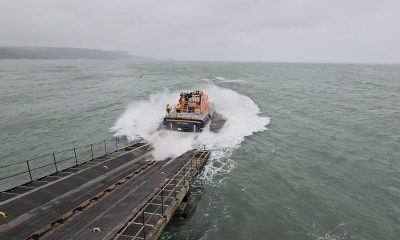
Hoax 999 call sparks massive lifeboat and helicopter rescue — man arrested
-

 Community7 days ago
Pub reopens with VIP club launch and free drink offer
-

 Charity6 days ago
Big Bash brings community together to support grieving children
-

 Health6 days ago
Petition against hospital service changes surges past 6,000 signatures
-

 Crime6 days ago
St Dogmaels man jailed over hundreds of indecent images
-
Crime6 days ago
West Wales man jailed for murder of five-month-old baby