


News
Candidates quizzed on climate and environment at Narberth hustings


SIX Senedd candidates have been questioned on climate change, wildlife and the green economy at an election hustings in Narberth.
The event, organised by Pembrokeshire Friends of the Earth, was held at the Queen’s Hall and brought together candidates from six political parties standing in the forthcoming Senedd election.
Those taking part were Alistair Cameron for the Liberal Democrats, Amy Nicholass for the Green Party, Claire George for the Welsh Conservatives, Gwyn Evans for Gwlad, Marc Tierney for Welsh Labour, and Cris Tomos for Plaid Cymru.
They were pictured with the chair of the evening, Neil Kingsnorth, and Bettina Becker, both of Pembrokeshire Friends of the Earth.
Notably absent from the platform was Reform UK, which is also contesting the election and whose national policy includes scrapping net zero.

Candidates were questioned on a range of environmental and economic issues, including the rise in extreme weather linked to climate change, the need to grow more food locally, pollution in local rivers and seas, the decline of wildlife, improvements to public transport, and the job opportunities offered by the green economy.
A spokesperson for Pembrokeshire Friends of the Earth said: “The candidates mostly said the right things about important environmental and economic issues, as they have been doing for many years, but now have to show far more commitment to put these concerns into practice.
“We don’t want this to be just another exercise in lip service. We need far more action now to offer our children and grandchildren a better future by preventing nature and climate collapse.”
For further information, contact Bettina Becker, Coordinator of Pembrokeshire Friends of the Earth, at [email protected] or on 01437 563657.

Pictured: Candidates at the Narberth hustings with chair Neil Kingsnorth and Bettina Becker, both of Pembrokeshire Friends of the Earth.

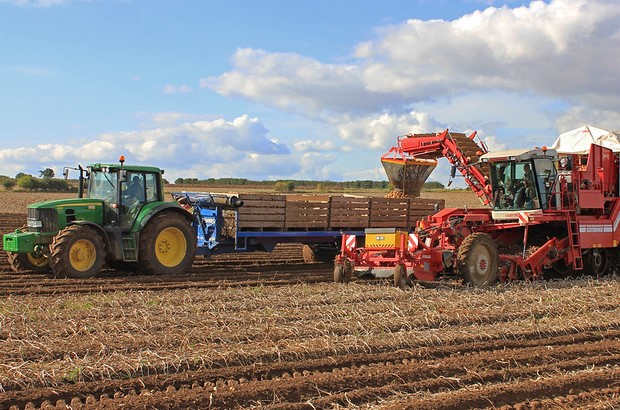
A REVIEW into red tape faced by Welsh farmers has been welcomed by the Welsh Conservatives, but the party has warned that the industry needs urgent action rather than another lengthy process.
The Welsh Government has appointed former NFU Cymru president John Davies to lead a nine-month review into the bureaucratic burden on Welsh farm businesses.
Mr Davies, a beef and sheep farmer from near Brecon, will speak directly to farmers and agents about the paperwork, rules and compliance requirements affecting day-to-day farming.
The review will examine the cumulative impact of regulation on farm businesses and consider where changes could be made.
Welsh Government says the move delivers one of its first 100-day manifesto commitments to the farming sector. Rural Resilience and Sustainability Minister Llyr Gruffydd said regulation remained necessary to maintain standards, but should be proportionate and should not get in the way of sustainable food production and land management.
He has also asked Mr Davies to identify “quick wins” where possible, so changes can begin before the final report is completed.
However, Welsh Conservative Shadow Minister for Farming and the Environment Andrew RT Davies said farmers could not afford to wait months for action.
He said: “Any serious effort to cut red tape for Welsh farmers is welcome.
“But we have seen this before. New governments often launch these kinds of reviews, only to reach the end of their term having created a whole load of new red tape that strangles the industry.
“If this review is going to be effective, it needs to happen quickly. Waiting nine months for the review team to present its report is painfully slow.
“Welsh farmers are already under huge pressure. They need action, not more process. They should be allowed to get on with running their businesses and supporting rural communities.”
The review comes at a sensitive time for Welsh agriculture, with farmers facing pressure over subsidy reform, environmental rules, bovine TB, water quality regulations and rising costs.

Supporters of the review say it offers a chance to properly examine how overlapping requirements affect farm businesses. Critics say the timescale risks frustrating farmers who have already spent years warning that bureaucracy is making it harder to run viable rural businesses.
The findings of the review are expected to help shape future Welsh Government policy on farming regulation.

Joint operation targets school transport and taxi ranks across Pembrokeshire during National Licensing Week
A TAXI operating in Pembrokeshire has been suspended following a series of vehicle inspections carried out by council licensing officers, police and school transport teams.
The checks took place on Thursday as part of National Licensing Week 2026 and focused on taxis used for school transport as well as vehicles operating on taxi ranks across the county.
The operation began in Fishguard during school drop-off time at Ysgol Bro Gwaun before officers moved on to taxi ranks in Milford Haven and Haverfordwest.
In total, sixteen vehicles were inspected by officers from Pembrokeshire County Council’s licensing team, working alongside school transport staff and officers from Dyfed-Powys Police.
The checks resulted in one vehicle being suspended from operating, while several other drivers were issued notices requiring remedial work to be completed.
The council has not yet released details of the reason for the suspension or the nature of the defects found on the vehicles.
A spokesperson for Pembrokeshire County Council’s licensing team said the checks formed part of efforts to ensure passenger safety.
“Licensing exists to regulate businesses and to protect the public,” the team said.
National Licensing Week is an annual campaign highlighting the work carried out by licensing authorities and partner agencies to ensure licensed businesses and vehicles meet required standards.
The operation comes amid ongoing scrutiny of taxi safety standards across Wales, particularly where vehicles are used to transport school pupils.


Campaigners urge supporters to pack County Hall as councillors prepare to decide future of rural school
CAMPAIGNERS fighting to save Ysgol Clydau are urging families and residents to turn out in force next week, describing Monday’s council meeting as the community’s “last chance to be heard” before a final decision on the school’s future.
Supporters of the north Pembrokeshire school have launched a fresh appeal ahead of a meeting at County Hall in Haverfordwest on Monday (Jun 15), where councillors are expected to determine whether the Welsh-medium village school will close.
In a strongly-worded social media appeal, the Save Ysgol Clydau campaign called on residents to stand together and show councillors the impact the school has had on children and families.
Campaigners said: “If you have ever said ‘someone should do something’ about the proposed closure of Ysgol Clydau, that someone is all of us on Monday morning.”
The group is asking supporters to gather outside County Hall at 9:00am, saying the meeting could be the community’s final opportunity to influence the outcome.
The campaign argues that Ysgol Clydau plays a unique role not only in education but also as the heart of a Welsh-speaking rural community.
Supporters say the school has transformed the lives of some pupils, helped vulnerable families during difficult times, and provides opportunities that could be lost forever if closure plans go ahead.
“We know many people are disappointed by the decision that has already been made,” campaigners said.
“We know many feel their voices have not been heard. But if we stay silent now, there will be no voice left to hear.”
The proposed closure has sparked strong feelings locally, with many residents warning that the loss of another rural school would deal a major blow to village life in north Pembrokeshire.
Campaigners have adopted the slogan: “Once a rural school is gone, it’s gone forever.”
Monday’s gathering at County Hall is expected to attract parents, pupils, former pupils and residents from across the area as the long-running battle over the school reaches a critical stage.
A spokesperson for the campaign said the message was simple: “Stand with our children. Stand with our community. Stand with Ysgol Clydau.”
Photo caption:
Save our school: Campaigners are urging supporters to attend County Hall on Monday (Pic: Save Ysgol Clydau).



Crime23 hours ago
Man accused of six rapes including alleged Haverfordwest offence
A MAN has been sent to Crown Court accused of six rapes, including an alleged offence at a Haverfordwest campsite....


News1 day ago
Childcare row erupts as Plaid faces questions over costs and delivery
Opposition parties clash over flagship pledge as Senedd debate exposes growing divisions PLAID CYMRU’S flagship promise to create what it...


Crime2 days ago
Farmers fined in bovine TB scandal face fresh court action
Hartt family members listed at Haverfordwest Magistrates’ Court over unpaid penalties linked to major cattle prosecution TWO PEMBROKESHIRE farmers convicted...


Crime2 days ago
Pembrokeshire child killer stabbed to death in prison cell, murder trial hears
Kyle Bevan, jailed for the murder of Haverfordwest toddler Lola James, was allegedly stabbed 25 times and left ‘as if...


News2 days ago
Pendine cliff fall victim recovering after major emergency response
A 22-YEAR-OLD man who suffered serious injuries after falling from cliffs overlooking Pendine Beach is recovering well following emergency surgery....


Community2 days ago
Commissioner launches free course to help tackle ageism in Wales
A NEW free learning course has been launched to help people across Wales recognise and challenge ageism. The Older People’s...


News3 days ago
First Minister challenged over jobs for student nurses
REFORM WALES has accused the First Minister of failing to guarantee jobs for student nurses in Wales, despite continuing pressure...

Crime3 days ago
Knife blankets call as school staff face rising violence fears
GMB says protective equipment should be considered where risk assessments show staff could face blades SCHOOL staff should be given...


News3 days ago
Claire Archibald secures review of Milford Haven train times
RURAL TRANSPORT CONCERNS RAISED WITH TFW CLAIRE ARCHIBALD MS has secured a review of train times between Milford Haven and...


Crime3 days ago
PCC review calls for stronger youth crime prevention work
REPORT MAKES 13 RECOMMENDATIONS A REVIEW into crime and anti-social behaviour services for young adults has called for stronger prevention...
-

 Crime7 days ago
Paddleboard company owner loses bid to cut sentence over Haverfordwest tragedy
-

 Crime6 days ago
Milford Haven man admits harassment and assault
-

 News6 days ago
Community appeal for privacy after serious emergency in Pendine
-

 Crime4 days ago
Sex offender in senior role at Tenby family hotel
-

 Community4 days ago
Forgotten wartime archive found in Pembroke Dock attic after 80 years
-

 Crime3 days ago
Haverfordwest pair accused of £80,000 rogue trading frauds
-
Crime3 days ago
Families condemn failed appeal by paddleboard boss jailed over Haverfordwest tragedy
-
Crime3 days ago
Knife blankets call as school staff face rising violence fears