


Business
New government minister declares Wales is ‘open for business’

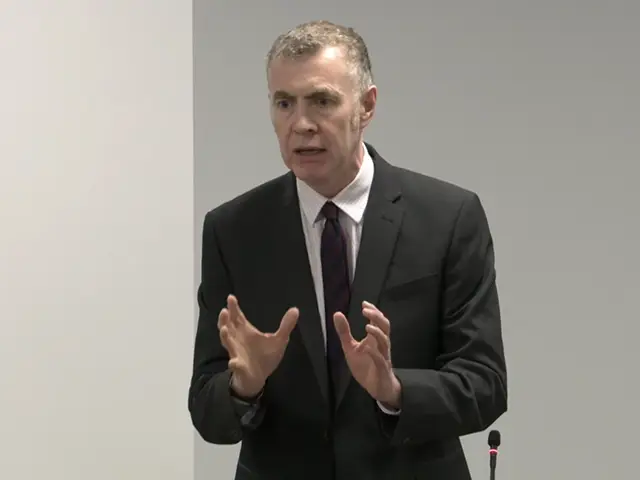
WALES is “open for business”, according to the new minister for enterprise, connectivity, and energy.
Former Plaid Cymru leader, Adam Price, who was appointed to the role last month, told Senedd colleagues on Tuesday, June 2 that the new Welsh Government will be “placing productivity at the heart of its approach”.
In his new role, Mr Price has responsibility over areas such as tourism, Business Wales, and international trade policy and promotion, including overseeing matters relating to the UK/EU Trade. He is also responsible for economic strategy and policy.
He said: “Productivity is the foundation of long-term prosperity. It underpins wages, living standards and competitiveness.
“Today, Wales continues to lag behind, with productivity around 15% lower than the UK average. But productivity is not an abstract measure; it’s about raising incomes, creating better jobs, and ensuring prosperity is shared all across Wales.”

Mr Price said the Welsh Government would be adopting a new approach, which he described as a “mission to tackle productivity and a target to reduce Wales’s productivity gap by half with the UK within ten years”.
Concluding his speech to the Senedd, he said: “This is a moment of opportunity. Wales has the assets, the talent, and potential to succeed. What is now needed is leadership and delivery.
“It requires focus and a relentless emphasis on delivery. It requires a government prepared to make choices and act with pace.
“And it requires a clear mission, one that puts productivity, people and firms at its core. That is our mission.”


Jason O’Connell, Reform’s shadow minister for economy and transport, challenged Mr Price on his plans to establish a new national development agency.
He questioned plans to bring back a “failed” Welsh development agency and said: “History tells us that it was another unnecessary bureaucratic quango that was linked to illegally inflated redundancy payments, where directors flew first class around the world while communities across Wales were left behind.
“And this is Plaid’s answer to the economic decay that infects our towns and valleys. The same model, the same results, not even new branding.”

The shadow minister acknowledged the previous Welsh Development Agency created jobs but claimed it also created a “hollowed-out Welsh economy”.
Mr O’Connell said his party would instead allow “no additional bloated quangos, no new layers of bureaucracy and no abdication of ministerial responsibility to unnamed and unaccountable civil servants”.
In response Mr Price expanded upon his reasoning for creating the new agency and said: “We want to be evidence-led, and the evidence from right across the world shows pretty conclusively, if you ask pretty much any leading economist in this area, that development agencies are the tried-and-tested tool for any nation, region or anywhere else that has driven up the kind of trajectory in terms of productivity growth that I’ve described.
“Is it the only thing that you should do? Absolutely not. We’re not going to achieve it just through the development agency, but it’s a pretty necessary tool in the toolbox, based on the experience elsewhere.”

Labour’s spokesperson for employment, equalities, and economic transformation, Shav Taj, also pressed Mr Price on his plans.
She said: “We’ve heard a lot about the government’s plans, of course, about the new Welsh development agency, but people aren’t asking for promises – they want action, and they want it now.”
Ms Taj, part of the new cohort of Senedd Members following last month’s election, continued: “Creating a new sort of agency takes time, it takes effort, it takes money and it takes focus, of course, and people in Wales don’t want or need quangos or structures just for the sake of it.
“What we need is more well-paid, skilled and secure work in every single part of our country, because right now families are genuinely feeling the pressure. Making ends meet, paying the bills – that is the stark reality.”
Ms Taj pointed to the previous Labour government’s work and said: “In the 12 months leading up to the Wales investment summit, Wales attracted £4.6 billion of inward investment”.
“We know that Plaid talk about their ambition for Wales, and, of course, we all share that.
“The reality is: will those actions then match it? Can the cabinet secretary tell us whether his new development agency will beat this figure?”
Mr Price responded: “I think that it’s important to bring us back, isn’t it, to the focus of today, which is the announcement of a goal, a target, which we lacked for 20 years.
“Nobody can absolutely predict the future with 100% certainty. It’s not possible. But one thing we can predict: if you don’t have a goal at all, if you don’t have a target at all, you’ll never achieve it; you can’t even measure progress.
“And that’s why the first step in any plan to revitalise the Welsh economy is to be clear about the direction of travel. In the absence of that clarity in the previous administration, we had decades of drift. So, we are setting that right.”

Janet Finch-Saunders, the Conservative spokesperson for enterprise, connectivity, and energy, highlighted the importance of co-operation within the Senedd and believing in Wales.
She said: “I’d like to stop, right from the start of this new government, where we talk Wales down.
“I have more confidence and some faith in the new government. I’ve worked with them for over 15 years, many of their members.”
She continued: “We’ve got to be positive now, because, as has been said here today, Wales is in a mess business wise, and there’s a lot to be done.”
Noting her planned meeting for next week to discuss the Menai Bridge, Ms Finch-Saunders continued to stress the importance of all the parties of the Senedd working together to achieve the best outcomes for Wales.
The Bangor Conwy Mon MS went on to quiz Mr Price on issues such as mobile phone connectivity, broadband connectivity, and transport infrastructure.
She said: “You talk of Wales being open for business, but, in your first statement as cabinet Sec, there is a complete absence of a plan to fix our roads.
“So, I feel that’s a glaring omission. Our transport system is not fit for purpose. We have to get more inward investment into Wales, but, unless you put those priorities in place, then we’re not going to see any improvements.”
Mr Price, in response, welcomed Ms Finch-Saunders’ commitment to cross-party working, and said: “New ideas from any direction, I think, are absolutely incredibly valuable, and we will approach this important responsibility that we have in a collaborative manner, in the way that she described.”
He agreed with her on the “absolute centrality of infrastructure” and continued: “If we think about the productivity goal that we’ve set out as the mission today, then, you know, most economists would say that there are three key elements in terms of the long-term success of achieving that kind of productivity growth.
“One is skills, the other one is innovation, the third one is infrastructure, and so getting the infrastructure right so that our businesses then have the platform that they need in order to deliver their own business potential.”

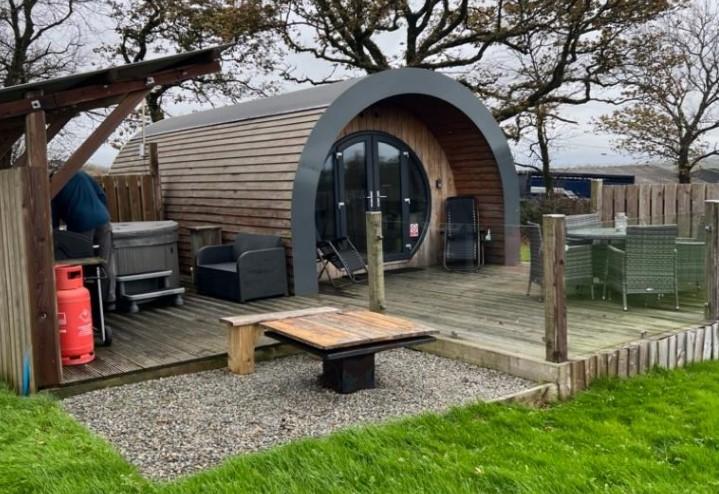
A CALL to keep a holiday pod sited on a Pembrokeshire farm, as part of a wider holiday pod farm diversification over two areas which saw the larger part supported, has been approved by county planners.
In an application given delegated approval at the June meeting of Pembrokeshire County Council’s planning committee, Bill Ridge of Vaynor Farm Ltd, Bethesda, through agent Gerald Blain Associates Limited, sought retrospective permission to keep a self-catering pod at Broomley Farm, Sodston, Narberth, works having been completed in 2022.
The application is part of a wider scheme of holiday pods diversification encompassing two farms.
Back in December 2025, Pembrokeshire County Council’s planning committee granted delegated retrospective permission to Vaynor Farm Ltd for the siting of two self-catering holiday accommodation pods at The Cart House, Vaynor Farm, Bethesda, near Narberth as part of a farm diversification enterprise.
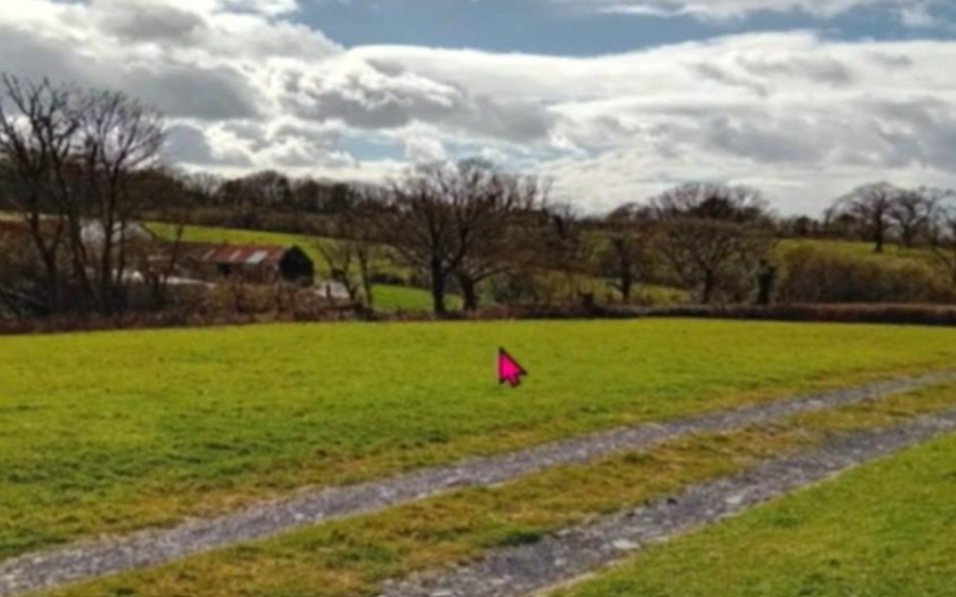
A supporting statement accompanying the latest application said: “Vaynor farm is a 400-acre working dairy farm with a herd of 700 milking cows. The enterprise comprises of three self-catering pods. Two of the pods are situated at the Vaynor homestead and another at the opposite end of the holding at Broomley farm.
“The first unit was sited adjacent to Vaynor farm stead some four years ago and a further two added in subsequent years. The units have enjoyed successful occupancy rates over several years offering a unique secluded tourism offer on a working dairy farm, more detail of which is outlined within the supporting business plan.”
It said the Broomley farm application before committee was a resubmission of a previously refused scheme, adding: “It should be noted that this application was originally part of [the application] which was recommended approval at planning committee in December 2025. This element however was separated due to its location on another part of Vaynor farm deeming it not possible to be considered under the same application.”
At the December meeting, an officer report said: “A business plan has been submitted with [that] application, which explains that due to uncertainties associated with dairy farming, the applicant has sought to diversify the farm enterprise to incorporate tourism accommodation.”
An officer report accompanying the latest application for members said: “The development of the accommodation pod has led to positive economic and social impacts, evidence has clearly demonstrated how income from the accommodation pods is used to support the overall combined Broomley Farm and Vaynor Farm enterprise.
“The proposed location of the accommodation pod is not considered to have led to an unacceptable impact on the character and appearance of the area given their siting adjacent to the Broomley Farm farmstead complex.”
Members backed the head of planning being given delegated powers to approve the scheme subject to a Section 106 legal agreement and conditions including the pod be limited to short-term holiday use only.

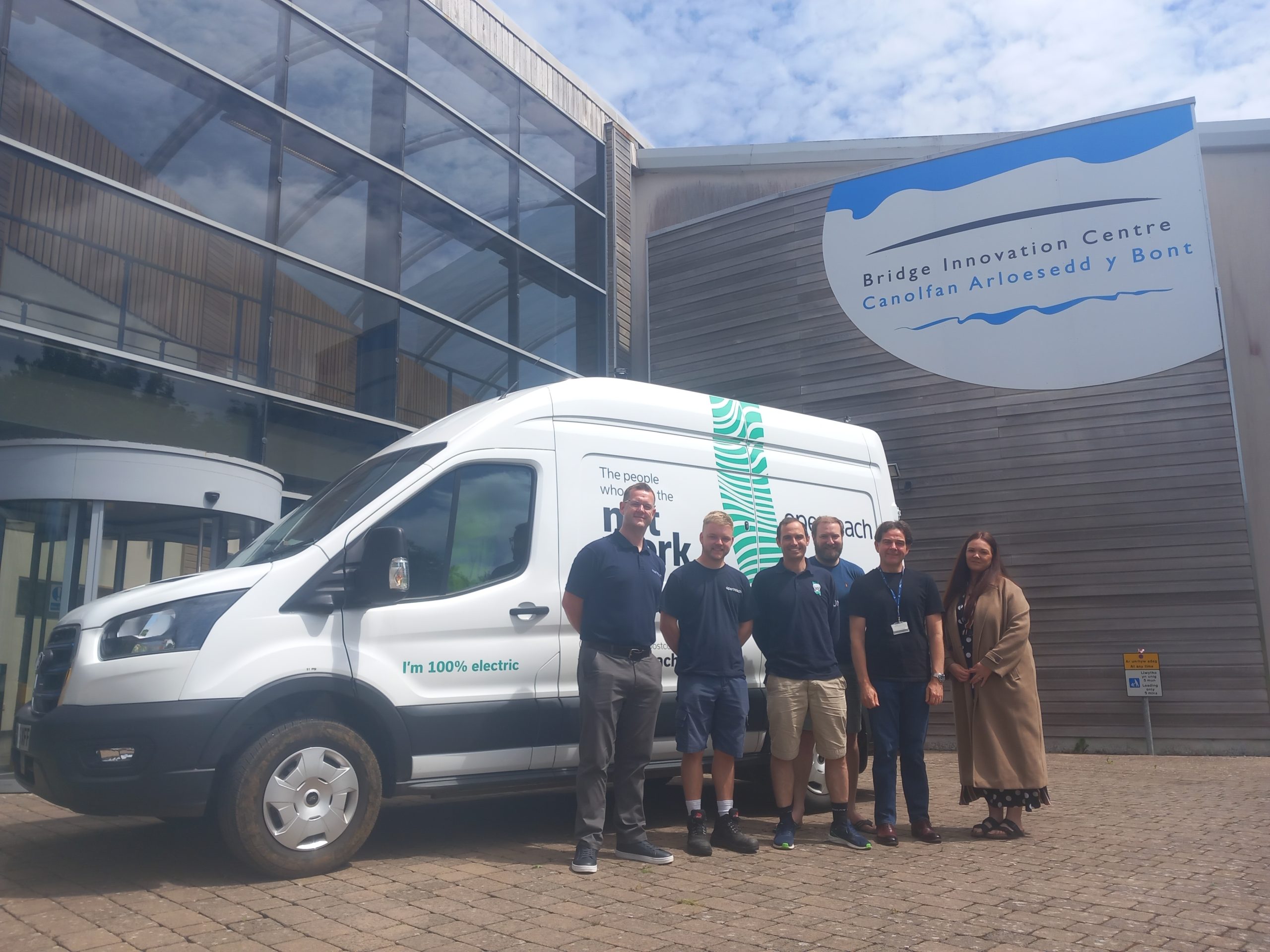
PEMBROKESHIRE has reached a major digital milestone, with 75% of the county now able to access gigabit-capable broadband.
The figure marks a dramatic rise from just over 5% coverage in 2019, with year-on-year growth driven by public and private investment, community engagement, and support from the Swansea Bay City Deal’s Digital Infrastructure Programme.
Early commercial interest in rural Pembrokeshire was limited, so a strong focus was placed on working with communities to demonstrate demand and remove barriers to deployment. That approach helped create the conditions for competitive investment and has since transformed the local market.
Today, 43.7% of gigabit coverage in Pembrokeshire is delivered by alternative network suppliers, including Ogi, Voneus and local provider Dragon WiFi. Openreach also remains a major network developer in the county and is expected to continue playing a key role.
Cllr Paul Miller, Deputy Leader and Cabinet Member for Place, the Region and Climate Change at Pembrokeshire County Council, who has had portfolio responsibility for digital infrastructure since 2017, said: “Reaching over 75% gigabit-capable coverage is a major milestone for Pembrokeshire and demonstrates what can be achieved through partnership working.
“In 2019, large parts of the county were being overlooked for investment and just 5% could get gigabit speeds. Since then, working with partners across the sector, approximately 50,000 homes and businesses in Pembrokeshire have been connected.
“While we recognise there is more to do before we reach 100%, the progress so far, particularly given the rural nature of our county, has been incredible.”
Delivery across the county has been supported by a combination of public and private investment, including the Local Full Fibre Networks programme, which connected around 70 public sector sites, the UK Government’s Gigabit Broadband Voucher Scheme, Openreach’s Fibre Community Partnerships, Welsh Government’s Access Broadband Cymru grants, planned commercial builds and the Digital Infrastructure Programme’s Better Broadband Infill Project.
Martin Williams, Partnership Director for Wales and the West of England at Openreach, said: “We’re proud to be supporting Pembrokeshire’s digital future, with our full fibre network now reaching 43,000 premises, backed by £12.9m of investment.
“This milestone means faster, more reliable connectivity for homes and businesses across the county, especially in rural areas. Working closely with Pembrokeshire County Council and the UK Government, we’re continuing to bring full fibre to even more communities.”
Pembrokeshire County Council said its Digital Champions have played a key role in increasing connectivity. Through a proactive “barrier-busting” approach, the team has helped streamline internal processes and provide coordination to support suppliers and speed up deployment.
Work will now continue to extend coverage further, particularly in harder-to-reach rural areas, as Pembrokeshire builds the digital foundations needed to support economic growth, public services and resilient local communities.

For more information about connectivity in your area, email [email protected]
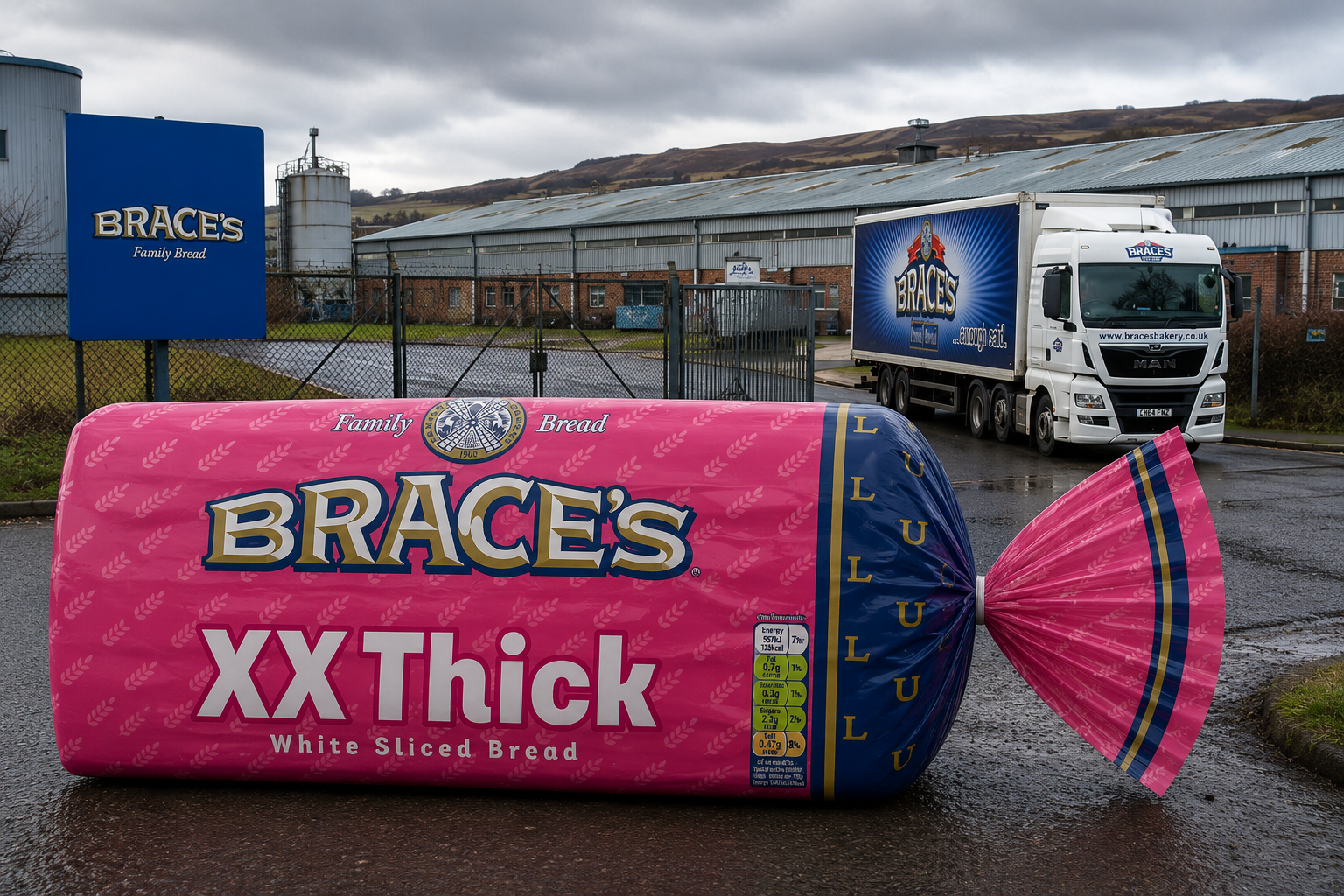
Concern mounts over future of production as Wales’ famous bakery battles falling sales and changing consumer tastes
ONE of Wales’ best-known bakery brands is facing a major threat as changing eating habits, rising costs and falling demand for the traditional sliced loaf put pressure on jobs and production.

Brace’s Bakery, founded in 1902, has warned that the market for standard sliced bread has changed dramatically, with the company blaming an “acceleration of the decline in standard sliced bread” for its recent financial pressures.
The issue has now taken on fresh urgency amid fears over the future of production at one of the company’s Welsh sites.
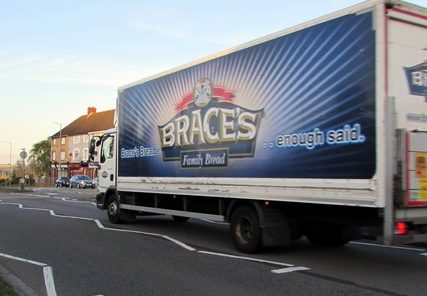
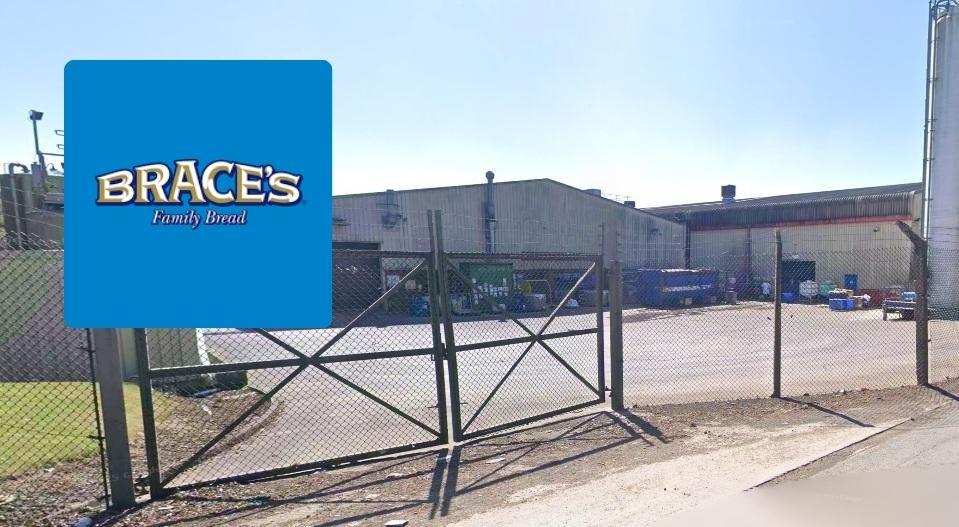
Industry reports have said Brace’s planned to close its Pen-y-Fan Industrial Estate site as part of a wider business “reset”, with production being consolidated at its larger Croespenmaen operation. Earlier reports suggested the company expected fewer than 20 redundancies, with most staff transferring, but latest local reporting has raised concerns among workers that the situation may be moving faster than previously expected.
The company has said the Pen-y-Fan factory has one production line, while Croespenmaen has two sliced bread plants and also produces Welsh cakes, rolls and artisan-style products.
Brace’s director Mark Brace has previously described the pressures facing the industry as severe.
He said: “We are a long-standing family business in a very challenging marketplace as the rest of the baking industry is UK wide.”
He added that since Covid there had been a slow annual decline in standard bread sales, but that in the last two years major competitors such as Kingsmill and Hovis had also seen declines of more than 15 per cent.
Leon James, director of finance at Brace’s, gave an even starker assessment, saying: “There has been a massive reduction in the consumption of standard white bread – and the white loaf is our cash cow.”
He also warned of the difficulty in passing rising costs on to customers, saying: “If we put our prices up, customers will very quickly switch.”
The problem is not unique to Brace’s. Across Britain, the traditional wrapped sliced loaf has been losing ground as shoppers change the way they eat. Market research cited by The Guardian found that sliced loaf bread sales had fallen by around 15 per cent over five years, while only around a third of people now eat sliced loaf bread daily, down from about half in 2015.

Kiti Soininen, head of food and drink research at Mintel, said: “Whenever a new breakfast or lunch option comes into the market, more often than not it’s bread that loses out.”

Younger consumers are increasingly turning to wraps, flatbreads, oats, yoghurt, salads, rice bowls, noodles, sushi and higher-protein meals. At the same time, concerns over ultra-processed foods and refined carbohydrates have pushed some shoppers towards seeded, wholegrain, sourdough and higher-fibre breads.
The UK bread industry is already responding with consolidation. Associated British Foods, the owner of Kingsmill, agreed a £75m deal to buy Hovis, a move expected to create the UK’s biggest bread brand if approved by the Competition and Markets Authority. The deal follows falling sales and losses in parts of the traditional bread sector.
For Wales, however, Brace’s carries a particular significance. This is not just another food manufacturer. It is a household name whose loaves have been bought in corner shops, supermarkets and family kitchens for generations.
The crisis highlights a wider question for Welsh manufacturing: how can long-established family firms survive when consumer habits change faster than factories can adapt?
Brace’s has already shifted more attention towards Welsh cakes, rolls, premium loaves and artisan-style products. But the pressure on the standard sliced loaf remains a serious challenge for a company whose name has long been associated with everyday bread.
Bread itself is not disappearing from Welsh homes. But the kind of bread people buy, and the way they eat it, has changed.
For Brace’s, the future may now depend on whether one of Wales’ most familiar food brands can move beyond the old white sliced loaf without losing the loyalty, identity and scale that made it famous.



Community15 hours ago
HMS Erebus tragedy links Pembroke Dock ship to Templeton family
DNA breakthrough identifies cabin boy David Young as exhibition marks 200 years since ship’s launch ON MAY 19, 1845, a...


Community18 hours ago
Narberth cash machine closures spark urgent access review
CALLS have been made for an urgent review of access to cash in Narberth after two town centre ATMs were...


Health1 day ago
First Minister quizzed on Welsh NHS pressures in his first-ever FMQs
SENEDD Members pressed the First Minister over the state of the health service in Wales, as the Plaid Cymru leader...


Community2 days ago
Historic paddle steamer Waverley to return to Fishguard this month
THE WORLD’S last seagoing paddle steamer will return to Fishguard this month as part of her annual visit to South...


Local Government2 days ago
National Express use of new Haverfordwest interchange still subject to risk checks
A RUMOUR that National Express coaches may struggle to use Haverfordwest’s new transport interchange has been denied by Pembrokeshire County...


Crime2 days ago
Milford Haven man jailed for illegal Premier League streaming service
A MILFORD HAVEN man who supplied illegal Premier League streams and loaded Firesticks to almost 2,000 customers has been jailed...


Community3 days ago
RNLI lifeguards rescue beachgoers during busy heatwave weekend
FOUR PEOPLE RESCUED AS RIP CURRENTS AND OFFSHORE WINDS HIT PEMBROKESHIRE BEACHES RNLI lifeguards in Pembrokeshire rescued four people and...

Local Government3 days ago
Council and school staff pay row could hit Pembrokeshire services
COUNCIL workers, carers and school support staff in Pembrokeshire could be drawn into a growing UK-wide pay dispute after GMB...

Health3 days ago
Hywel Dda to hold second consultation on future of stroke services
A SECOND phase of public consultation is to be held on the future of stroke services across Hywel Dda University...


Community3 days ago
Warning as algal blooms mistaken for sewage on Welsh coast
Beachgoers urged to avoid contact with suspicious foam and report pollution concerns NATURAL RESOURCES WALES has issued summer advice to...
-

 Health7 days ago
Paul Davies warns health board over Withybush and Bronglais services
-

 Crime7 days ago
Carmarthenshire man sent to Crown accused of 33 historic sexual offences
-
Crime2 days ago
Milford Haven man jailed for illegal Premier League streaming service
-
Crime2 days ago
Haverfordwest man admits cocaine offence as Crown disputes basis of plea
-

 Crime17 hours ago
Milford Haven man bit neighbour’s neck near cashpoint
-

 Crime7 days ago
Suspended prison sentence for man who left dogs without vet care
-

 News7 days ago
Vehicle destroyed in early morning fire in Pembroke
-

 News7 days ago
Davies calls for NHS foreign language interpreters to be scrapped