


Community
Eating sweets need NOT damage your teeth

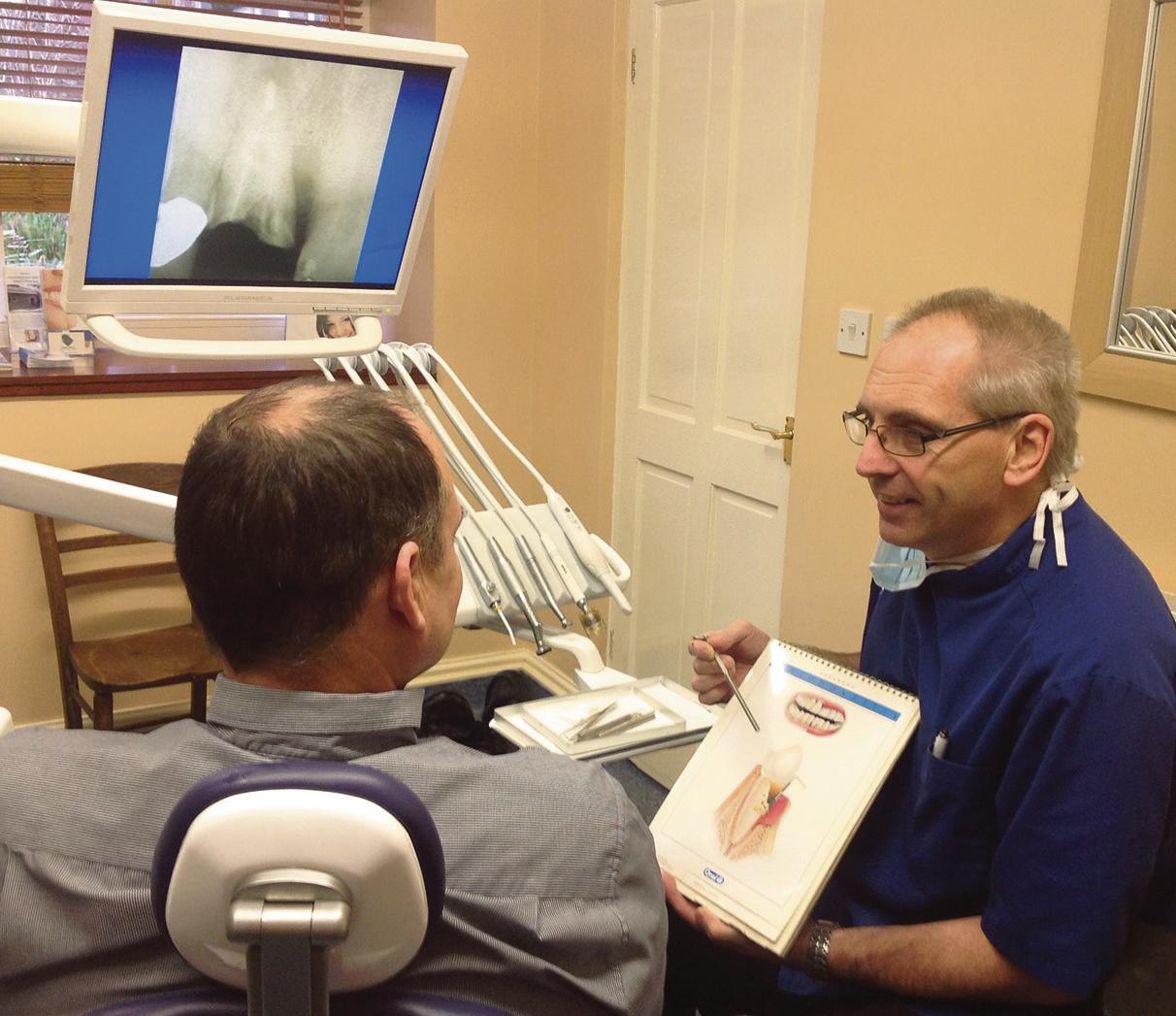
IF YOU need a filling at the dentist how many times have you heard the message ‘you must stop eating sweets and sugar’? Really, in this day and age with

Dr Mark Boulcott: Explaining dental disease to a patient.
sugar being added or included in almost all foods as not only a sweetener but as a preservative, texture modifier, fermentation substrate, flavouring and colouring agent, bulking agent and emulsifier, is it even possible to comply with this message and not starve?
It is no surprise, therefore that the statistics of decayed teeth in Pembrokeshire as regularly reviewed by the Hywel Dda Health Board Oral Health Profile (last published in 2013) shows an appalling incidence of dental decay in 5 year olds – and yet dental decay is a totally preventable disease!
So what in reality can you and your children eat and be reassured that your teeth will remain decay free? The answer is that there are really no safe foods. The food industry confuses us with statement like ‘no added sugar’, ‘contains natural sugars’ or ‘reduced sugar’. Sucrose, Glucose, Maltose, Fructose (as labeled on many foodstuffs) are all naturally occurring sugars and all, when eaten, cause acid to form in the mouth: The cause of dental decay with the acid ‘dissolving’ teeth. What is less obvious is the amount of sugar contained within the product.
In essence, sugar is sugar: They all cause dental decay no matter how much or how little you eat. One teaspoon of sugar (sucrose) in your Tea is just as bad for your teeth as five sugars. The only difference is that you may get fat, more prone to diabetes and other health complications with a higher sugar intake but much lower amounts of sugar ingestion will still cause teeth damage. So we have to assume all foods we eat contain sugar (fermentable carbohydrate) of some type.

This dissolving of the teeth, called dental decay or dental caries, puts you and your child at the risk of dental pain, infection and the need for treatments possibly including tooth removal.
Thinking that, in the case of young children, it does not matter (after all, ‘baby teeth’ will be replaced) is wrong. The decay of deciduous teeth may still lead to your child having pain and infection but worse, teeth removal possibly needing General Anaesthesia. This is a procedure not without risk and not easy to access in Pembrokeshire with the nearest GA treatment centre being in Swansea with waiting times often inappropriate for acute pain. There is also the fact that early loss of first teeth is much more likely to lead to crowded or crooked permanent teeth: a fact that may require later orthodontics (treating with braces).
The dentists at Herbrandston, one of Pembrokeshire’s most proactive dental practices in regard to prevention of dental disease, give a different message. Dr Mark Boulcott, the principal dental surgeon states: “I never tell parents to stop giving sweets. That message is unrealistic and unhelpful. The modern diet is full of sugary drinks, sugary confectionary and sugar containing meals. Instead I am far more interested in the frequency of sugar ingestion: how often patients eat sugar, not how much sugar.”
“It has been known for decades that sugar causes bacteria in the mouth to form acid which in turn damages teeth. Of course, no sugar equals no tooth decay, but what most patients (and indeed many dentists) fail to understand is that the amount of sugar required to cause bacteria to produce acid is minimal. The more sugar you eat does not mean more acid in your mouth – but even the slightest sugar intake causes tooth damage.”

Dr Boulcott points to evidence from as far back as the 1940s, when Dr Robert Stephan postulated the coincidence of reducing pH (acidity) and tooth decay: “It is evident even before the advent of the NHS that dental decay was not caused by having too much sugar, but by having too great a frequency of intake. Sugar causes damage by allowing mouth bacteria to produce acid but the amount of sugar eaten is irrelevant. Any damage caused by the acid (at a microscopic level) should be repaired provided the saliva is allowed and able to work properly, converting acid back to neutral products and acting to ‘repair’ damaged teeth. If sugar is regularly ingested and more acid is produced before this ‘repair’ process is completed then dental decay will result. The upshot of this is that if a child ate a chocolate bar for breakfast, lunch and dinner, it is in fact unlikely that they will get significant dental decay. If they eat the same amount of chocolate between meals, then they are much more likely: Twice the cycle of damage and far less time for repair. It should be understood that a sugar diet is inevitable,” states Dr Boulcott.
“What people must understand is that keeping food intake to mealtimes only is the best way to keep your teeth safe. This one fact is more important than tooth brushing or Fluoride. So, yes, Children (and adults) can eat sweets but keep these short acting (chocolate rather than a chewy sweet) and confine these to mealtimes – avoid eating between meals.”
Sadly some 60 years on and this simple message is still failing to get through. Dentistry and preventive messages still seem to mean little to a large percentage of the population with people in Wales being less likely to have been seen a dentist in the past two years than people in England. (52.2% of adults in Wales and 56% in England; and 64.7% of children in Wales compared to 69.1% in England). Many people argue that the reducing amount of NHS dentistry is to blame but in reality many patients (over half the population of Wales) seek dentists only in event of an emergency; citing anxiety rather than money (or NHS access) as being the major obstacle to visiting.

At Herbrandston, the dentists are trying to change this attitude by breaking down the barriers of fear and anxiety offering often unique ways of dealing with even the most difficult of dental phobias. This not only includes a gentle caring atmosphere of quiet professionalism mixed with genuine friendliness but also techniques such as dental sedation, hypnosis, introductory sessions without treatment and even animal therapy using pigs and ferrets to desensitize. They are working hard to emphasise the preventative message rather than the cycle of repair after repair. A very busy practice despite being in a rather isolated part of Pembrokeshire, Herbrandston will be expanding to open a state of the art new practice in Narberth in March.



PLANS to make Wales the best place in the UK for British Sign Language (BSL) users moved a significant step closer to becoming law with the Senedd’s unanimous support.
If ultimately passed, the BSL bill – introduced by the Conservatives’ Mark Isherwood – would end Wales’ status as the only UK nation without specific sign language protections.
Leading a debate on Wednesday December 17, Mr Isherwood said the Senedd supporting the bill’s general principles was a “huge step ahead” for the “vital” legislation.
Mr Isherwood, a disability rights campaigner for decades, explained his backbench bill would introduce legal requirements to promote and facilitate the use of BSL in Wales.
He said the bill, if passed, would be the most progressive piece of BSL legislation anywhere in the UK, recognising BSL is a language in its own right, not a communication support need.

He highlighted that the bill would establish a BSL adviser role, the first statutory post of its kind in the UK, describing its importance as something that “cannot be overstated”.
Mr Isherwood, who chairs cross-party groups on disability and deaf issues, told the Senedd: “This isn’t just my bill. This is the bill of the BSL community. Let’s make this happen together and be proud of it together on behalf of deaf people across Wales.”
Jenny Rathbone, the Labour chair of the Senedd’s equality committee, was convinced of the “overdue” need for legislation to give more standing to British Sign Language.
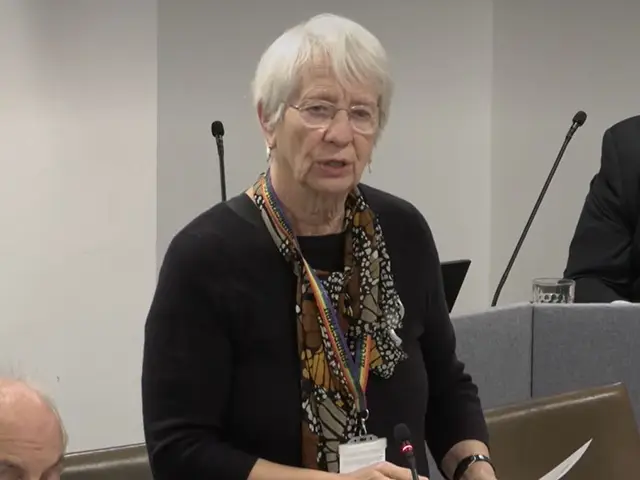
Ms Rathbone said the committee heard the biggest barrier “by some margin” was the availability of interpreters and the sustainability of the workforce.

She quoted a signer who told the committee: “The bill would make us feel respected and valued. But without proper funding, planning and deaf-led leadership, it won’t go far enough.”
Sioned Williams, Plaid Cymru’s shadow social justice secretary, told Senedd members: “Language is a part of our identity, our culture and our personal dignity.
“When someone cannot use their language, they are excluded from education, health care, employment and public life – and that is not acceptable in today’s Wales.”

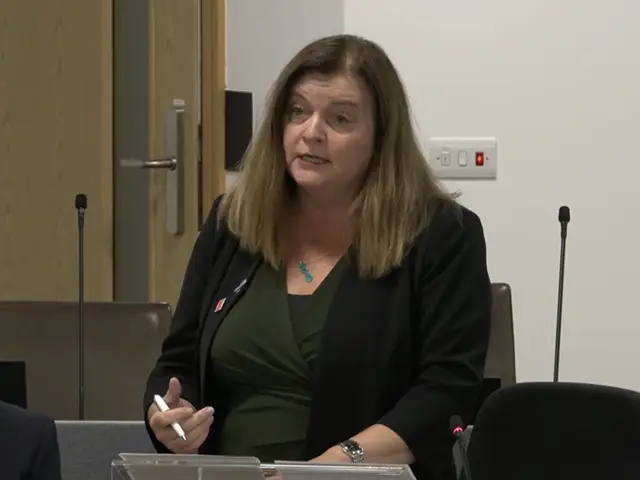
Ms Williams warned that if the legislation fails to deliver real change, the deaf community would be left “angry, disappointed and very, very disheartened”.
She expressed concern that the bill does not legally require the BSL adviser to be a deaf person, arguing it is “not appropriate, possible or efficient” for non-signers to lead the way.
Mr Isherwood defended the decision not to require that the adviser must be deaf, warning a successful legal challenge to a single such provision could cause the entire bill to fail.
Welsh Liberal Democrat leader Jane Dodds warned of an immediate workforce crisis, with only 54 registered sign language interpreters in Wales as of July.
With many now approaching the end of their working lives, she said: “We cannot – we must not – allow this bill to fail because we didn’t have the foresight to address this crisis now.”
Support for the bill stretched across the political spectrum, with Reform UK’s Laura Anne Jones similarly welcoming the “long-overdue” and “vital” legislation.
Jane Hutt, Wales’ social justice secretary, confirmed the Welsh Government’s financial backing, committing £214,300 for the bill’s first year of implementation in 2026/27.
If it clears the final hurdles, Mr Isherwood’s proposal will be the first backbench bill to enter the statute book in about a decade following the Nurse Staffing Levels (Wales) Act 2016.

NEARLY four in ten disabled children in Wales “never or hardly ever” play outside due to a “heartbreaking” lack of accessible parks, politicians have warned.
Rhys ab Owen, an independent, described the situation as “disgraceful” as he cited a Play Wales report showing 37% of disabled children are effectively shut out of playgrounds.
Leading a debate in the Senedd on Wednesday December 17, he read the testimony of a ten-year-old boy from Blaenau Gwent who said: “Nowhere disabled friendly – parks haven’t got disabled friendly equipment, so I can’t play.”
Mr ab Owen warned: “There shouldn’t be any discrimination… disabled children do face much greater problems in terms of park maintenance, and with accessibility and inclusion.”
He shared the experience of a 13-year-old girl from Newport who told researchers: “There’s nowhere I can play or hang out safely by myself as I use a frame to help me walk.”
The former barrister warned budget cuts were leading to a managed decline in standards, quoting a 13-year-old from Caerphilly who said: “Due to anti-social behaviour our equipment gets broken, burnt and vandalised and is then not replaced.”
The Conservatives’ Natasha Asghar was stunned by the scale of the crisis and revealed that only 11% of playgrounds in Wales are rated “green”, meaning they are fully accessible. By contrast, almost half are rated “red” for poor accessibility.

Listing the barriers families face, Ms Asghar highlighted that 30% of sites lack accessible paths and nearly one in five have gates too narrow for wheelchairs. “Those are just two of the barriers preventing disabled children from accessing play,” she said.
Jane Dodds, the leader of the Liberal Democrats in Wales, argued the shocking statistics should be a wake-up call for Senedd politicians.
“To hear that 37% of disabled children in Wales say they never or hardly ever play outside should be a figure to stop us all in our tracks,” she said.
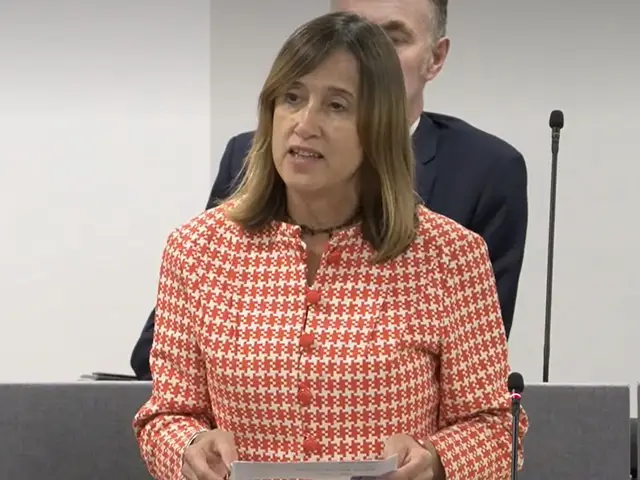
Meanwhile, Mike Hedges pointed out that Wales became the first country in the world to put a duty on councils to secure “sufficient play opportunities” for children in 2010.
And Julie Morgan, a fellow Labour backbencher, celebrated Cardiff becoming the UK’s first Unicef-accredited child-friendly city in 2023.
Dawn Bowden, the minister for children, pointed to £5m to improve playgrounds this year but she too was “disappointed” by play satisfaction figures falling from 84% to 71% since 2019.

She said the Welsh Government has provided a “toolkit” to Wales’ 22 councils, “ensuring a holistic outcome-focused approach” to inclusive and accessible play.
The cross-party motion, which called for play to be protected from cuts – as well as improved access for disabled children – was agreed unanimously but does not bind ministers.

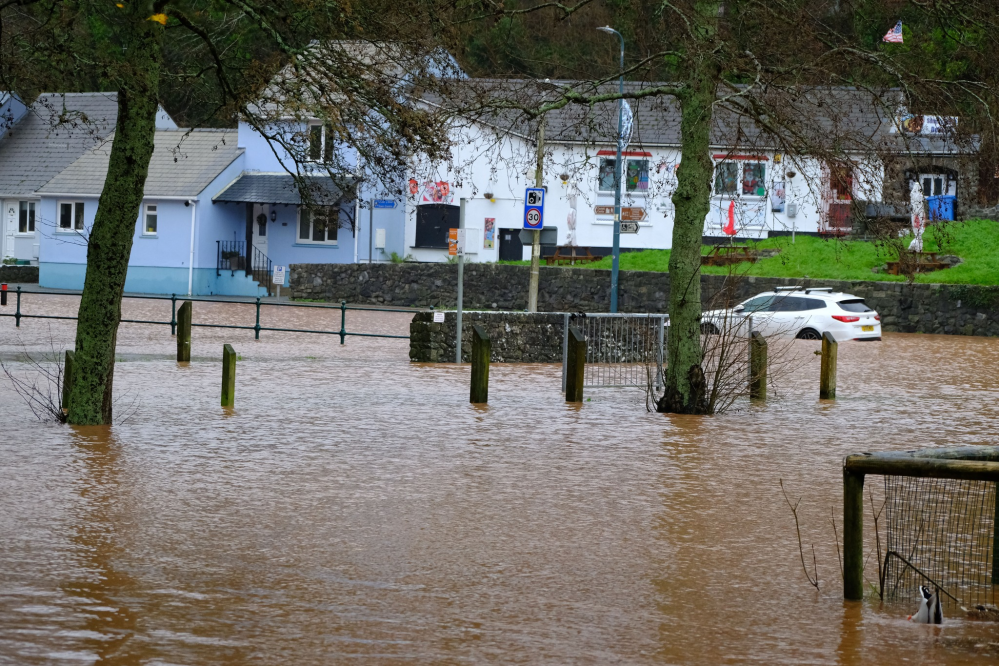
SIGNIFICANT issues with a part of Pembroke’s tidal barrage are not expected to be fully fixed before late January, councillors heard.
Pembroke councillors Aaron Carey and Jonathan Grimes submitted an urgent question heard at the December meeting of Pembrokeshire County Council, which said: “In light of the repeated flooding events across the county – including the recent overflow at Castle Pond and the acknowledgement by your own Coastal, Rivers & Drainage Team that the barrage tipping gate remains inoperable until mid-January can you explain what assessment has been made of the adequacy of our tidal outfall infrastructure in the face of current and projected future storm surges and sea-level rise?
“If no such assessment has yet been undertaken, will you commit now to commissioning an immediate structural and risk-capacity audit, with a report to full council within three months, and with proposals for funding any remedial works required — to avoid recurring damage and disruption to residents, highways, and public amenities?”
Responding to the urgent question, Cabinet Member for Residents Services Cllr Rhys Sinnett said a significant assessment of the Pembroke Tidal Barrage had already been undertaken over the past two years, with regular inspections.
He said “a comprehensive package of works” began in September which were due to be completed before Christmas but said there had been “significant issues” with the tipping gate hydraulic ram, with a significant overhaul now taking place, with reinstatement expected by late January.
He told members additional mitigation measures were now in place and, once works are completed, enhanced works will provide improved resilience and “long-term reliability,” with further reports due to come to Cabinet.
Cllr Carey and Cllr Grimes had also submitted a notice of motion saying: “That this council notes with concern the repeated and increasingly severe flooding experienced in our coastal, estuarial and river-fringe communities over recent weeks — in particular the flooding events affecting the Commons/Castle Pond area.
“That the council further notes that, according to correspondence from the Coastal, Rivers & Drainage Team Manager, the tipping gate at the barrage remains out of operation until mid-January due to mechanical issues; meanwhile high tide, heavy rain, wind-driven tidal surges and overspill at the sluice have combined to overwhelm the drainage/outfall infrastructure.
“That we recognise the current maintenance schedule (delayed ‘til after the summer season) and the justification given — but further that such planning failed to foresee the likelihood of severe winter storm and surge events, which climate change makes more frequent and more intense.
“That this council therefore calls on the Cabinet to commission an urgent review of:
- The adequacy of the current drainage/outfall and tidal-sluice infrastructure (barrage tipping gate, sluice/sluice-valve, flap valve, outfall capacity) for current and projected climate/tide conditions.
- The maintenance scheduling policy for coastal and estuarial flood-risk assets, with a view to ensuring critical maintenance is completed before winter high-tide / storm-surge season, rather than — as at present — being delayed until after summer for ‘recreational / biodiversity’ reasons.
“That, pending the outcome of the review, the council should allocate appropriate emergency capital funding to remediate the barrages / sluices / outfalls at risk of failure or blockage — to safeguard residents, properties, highways and public amenities from further flooding.
“That, further, this council resolves to publish a public flood-resilience plan for the county, identifying all coastal and river-fringe ‘hotspots,’ maintenance schedules, responsible teams, and a transparent timeline for upgrades or remedial works — so residents have clarity and confidence in flood prevention measures.”

The notice of motion itself will be considered by the council’s Cabinet at a later date.



Community gathers to remember Corrina Baker
Lanterns and balloons released in emotional acts of remembrance FAMILY, friends and members of the local community came together to...


Teenager charged following rape allegation at Saundersfoot nightclub
Incident reported at Sands Nightclub in early hours of Sunday DYFED-POWYS POLICE is investigating an allegation of rape following an...


Milford Haven man jailed after drunken attack on partner and police officers
A MILFORD HAVEN man who launched a violent drunken assault on his partner before attacking two police officers has been...


Court hears historic child sex abuse claim emerged after ‘tarot reading’
Judge reminds jurors there is no standard timeframe for victims to come forward as trial reaches final stage A JURY...


Rape allegation investigated at Saundersfoot nightclub
Police appeal for witnesses after incident reported in early hours of Sunday DYFED-POWYS POLICE are investigating an allegation of rape...

Milford ground worker denies historic child sex abuse charges at Crown Court
Accused tells jury claims did not happen as trial hears evidence about alcohol use and alleged controlling behaviour A MAN...


Three inmates deny murder of Lola James killer at Wakefield prison
THREE prisoners have denied murdering child killer Kyle Bevan, who was found dead in his cell at HMP Wakefield. Bevan,...


Dyfed-Powys Police reassure communities after Bondi Beach mass shooting
Officers monitor local tensions following terror attack on Jewish event in Sydney DYFED-POWYS POLICE have issued reassurances to communities across...


Search under way in Pembroke Dock for missing man Lee
Coastguard, RNLI and rescue helicopter launched as fears grow he entered the water A MAJOR search and rescue operation is...


Search under way in Pembroke as man reported missing
Rescue teams battle worsening weather ahead of amber rain warning A MULTI-AGENCY search and rescue operation is under way in...
-
Crime23 hours ago
Milford Haven man jailed after drunken attack on partner and police officers
-

 News4 days ago
Dyfed-Powys Police launch major investigation after triple fatal crash
-
Crime22 hours ago
Teenager charged following rape allegation at Saundersfoot nightclub
-
Crime3 days ago
Man sent to Crown Court over historic indecent assault allegations
-
 Crime2 days ago
Man charged with months of coercive control and assaults
-
Crime5 days ago
Man spared jail after baseball bat incident in Milford Haven
-

 Crime3 days ago
Milford Haven man admits multiple offences after A477 incident
-

 Crime2 days ago
Woman ‘terrified in own home’ after ex breaches court order