


News
Badger and the little yellow god

 THE LONG-FORGOTTEN J. Milton Hayes it was originally who told the story of Mad Carew and his attempt to steal the green eye of the little yellow god. Honestly: Badger had to look it up — especially after the great Keats/ Shelley debacle: Badger thought the tale of Mad Carew was by Harry Champion (who popularised such music hall classics as “I’m Henery the Eighth, I Am” and “Any Old Iron”). For those of Badger’s readers born into the great slough of despond that was education during the last thirty years or so, Badger recommends dipping into poetry now and again. it illuminates and entertains in equal measure.
Sitting in his sett on a chill evening, while above spring has sprung and young rascals take long refreshing walks with their (frequently temporary) beloveds, Badger likes to read poetry. One thing that Badger has realised is that poetry often provides uncanny parallels with life in Pembrokeshire. Who can read the lines “The boy stood on the burning deck, when all but he had fled”, and not be touched by the plight of “popular” one-time yoghurt salesman Jamie Adams as he heads full speed into an iceberg to try and douse the flames? But it is to Mad Carew we turn. Badger does not mean the estimable IPPG member for that ward. Councillor David Neale is a man who listens to his constituents’ his unfailing support for Jamie and the officers’ club that make up Meibion Bryn.
No Badger speaks of the protagonist of Hayes’ verse. You see, in the poem Mad Carew is set a dreadful task to perform by the object of his affections, his commanding officer’s daughter. Braving disaster he acquires the green eye of the little yellow god, only for her to refuse to take it from him and leaving him to a gloomy fate: “the vengeance of the little yellow god”. And so it is, when Badger sat in his sett pondering the words of the poem, he thought about the officers who are involved in the ongoing grants imbroglio that is rumbling its way on to a no doubt messy conclusion involving the weasel words that “lessons will be learned”. Consider them in the role of Mad Carew. Seized by the illusion of their acumen and vim, the County Council sent them out to grab the green eye of European funding.
With a healthy rake off the top for the Council, it was in its interests to encourage the officers to get as much as they could and then hunker down in County Hall while their gains were counted out. They have succeeded handsomely in grabbing oodles of Euro-swag. All in exchange for far too few questions asked. But the cost! What — apart from too-fat salaries, that is — has been Dave Pugh, Jamie-no-mates and the rest of Meibion Bryn to launch their scurrilous and untrue attack upon him in an attempt to stop the truth coming out, breached the code of conduct for Council staff which prohibits favouring one party over another, or acting in a manifestly self-serving way to cover-up their own inadequacies.
Those officers are now left gently swinging in the breeze; hoist by their own arrogance, unjustified self-belief and a failure to tell right from wrong and how many beans make five. Badger has pointed out before the actions of the person at their head, Dr Steven Jones, who was rapidly out of the blocks at January’s Audit Committee meeting to say, in terms, “the buck ain’t gonna stop with me!” Now Badger discovers that officers have been reduced to tampering with minutes of meetings to shore-up their desperate failure to properly scrutinise tenders, documents and bills of quantities: the officers, rather like Mad Carew, have returned panting and tattered from the ordeal of gaining their prize, only to find themselves objects of derision and despair. Desperate to shore up their tattered reputations and cover up further abject failure in scrutiny, officers have “creatively adjusted” the minutes of meetings to make it look as though they undertook scandal overseen by complacent and over-confident officers and a compliant and over-confident IPPG Cabinet, Badger does not know. But one thing is certain, an attempt to rewrite history to exonerate or exculpate officers from the consequences of their (in) actions is unlikely to be smiled upon by the rozzers. Links between evidence are vital in putting together events.

Move a link or adjust its setting, and the whole chain is jeopardised. For self-serving reasons, a senior manager at the Council thought it necessary to fiddle the record and attempt to mislead whoever depended upon the documentary record to make an informed decision. At worst they have tampered with evidence; at least, they are guilty of being idiotically self-centred and arrogant. In Pembrokeshire County Council terms, of course, Badger believes that the officer (and Badger has three strong sources who name the officer responsible) will be regarded as most culpable for getting caught. Much will be Bryn’s displeasure, no doubt. Mighty Bryn’s wrath.
The Eleventh Commandment of the little tin god in County Hall (Thou shalt not get caught) has been broken. it is only by the merest chance that this person’s attempt to establish that scrutiny that he realises with the benefit of hindsight should have been undertaken at the relevant time — i.e. now the grants scandal has been rumbled — was done when it mattered. Hayes’ verse warns that just because something glitters and is valuable, does not make it a prize of worth and prestige. For Hayes’ hero the reward for his exploit in seizing the green eye was a sticky end. Mad Carew, Badger ponders … A person who confuses his own self-interest with the public interest must be off their bloody rocker!


Fire set in shared home left sleeping residents at risk and caused £130,000 damage
A TEENAGER who started a fire in his bedroom while other residents slept has been jailed for four years.
Jack Gornall, aged 18, of no fixed abode, was sentenced at Swansea Crown Court after admitting a series of offences including arson, threats with a knife, assault, and sending malicious communications.
The court heard that in the early hours of Sunday (Nov 17), Gornall deliberately started a fire inside his room at a shared property on Mansel Street, Carmarthen.
He then barricaded the door before climbing out of a first-floor window, leaving others inside the building at risk.
One resident was asleep at the time and had to be rescued by police. Two officers were later treated for smoke inhalation after tackling the incident before firefighters brought the blaze under control.

The fire caused extensive damage to the property, estimated at around £130,000.
Prosecutor Dean Pulling told the court that Gornall had earlier gone out to buy cigarettes and a lighter, and had carried out internet searches relating to accelerants in the days leading up to the fire.
The court also heard details of other offences.
In October 2024, Gornall repeatedly contacted his sister after being blocked, including calling her child’s phone. When she answered, he became abusive and threatened to report her to social services.

On another occasion in January 2025, he approached a car in Llandysul and produced a kitchen knife, waving it at occupants through an open window. The driver sped away and alerted police.
He also admitted stealing alcohol from a supermarket in Carmarthen, during which he became aggressive and assaulted a member of staff.
Gornall pleaded guilty to all offences at an early stage.

Judge Catherine Richards sentenced him to four years’ detention in a Young Offender Institution.
Climate
Port Talbot confirmed as ‘cornerstone’ of wind industry — questions remain for Milford Haven
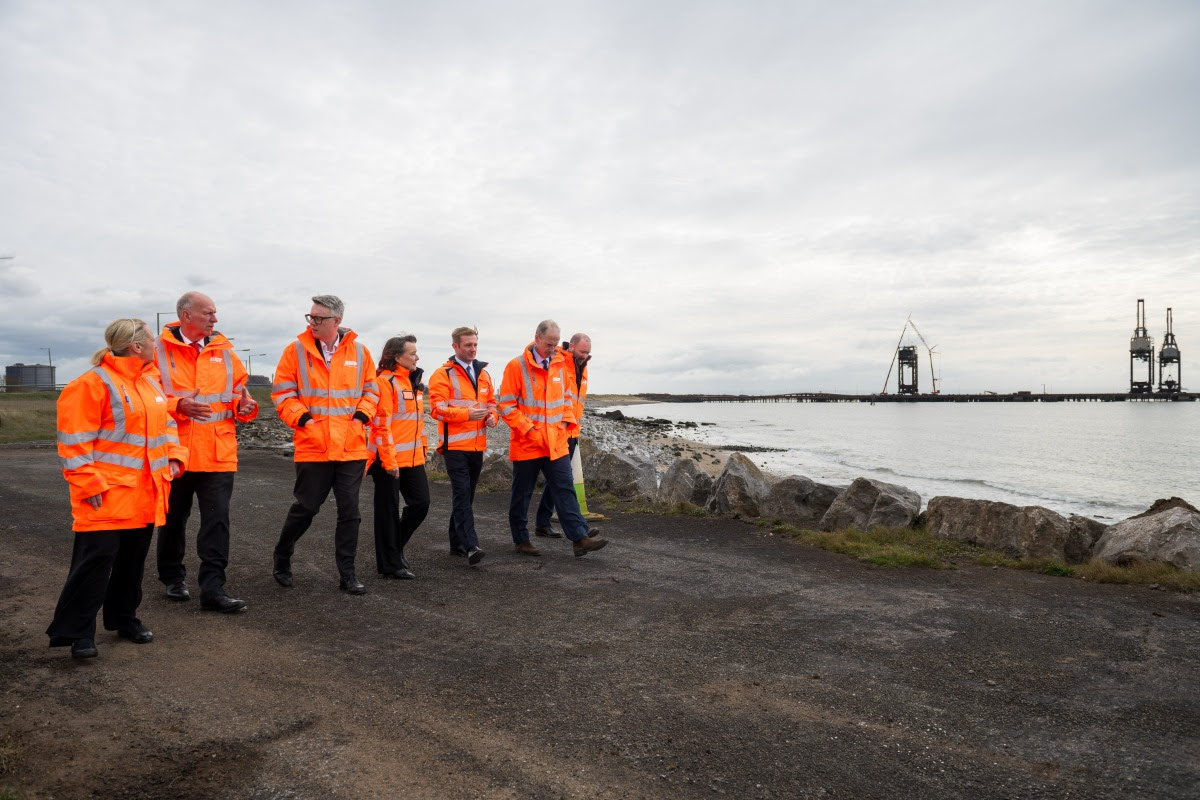
New government-backed deal with ABP reinforces Port Talbot’s central role in Celtic Sea wind plans
PORT TALBOT has been firmly established as the “cornerstone” of the UK’s floating offshore wind ambitions in the Celtic Sea, following a major agreement between the UK Government and Associated British Ports.
The deal confirms government support for the development of large-scale port infrastructure at Port Talbot, enabling manufacturing, assembly and deployment of floating wind turbines for gigawatt-scale projects.
The announcement strengthens Port Talbot’s position as the primary industrial hub for the emerging sector.
Henrik L. Pedersen, Chief Executive of Associated British Ports, said the development would “establish the port as a cornerstone of the Celtic Sea floating offshore wind industry.”
Clear role for Port Talbot
The agreement, subject to final regulatory approval, will support the delivery of major offshore wind projects awarded through the latest Celtic Sea leasing round.

Government ministers visiting the site described the development as a key step in building the UK’s clean energy future.
Energy Secretary Ed Miliband said the project would help Wales “storm ahead in floating offshore wind,” supporting thousands of jobs and driving economic growth.
Secretary of State for Wales Jo Stevens added that the investment would “further cement Port Talbot as a hub of the industries of the future.”
Milford Haven still waiting for detail
The latest announcement comes just days after questions were raised about Milford Haven’s role within the wider Celtic Freeport.

While Port Talbot’s position as a manufacturing and assembly hub is now clearly defined, there has still been no detailed breakdown of what activity will be based in Pembrokeshire.
Industry figures continue to point to Milford Haven’s strengths in operations, maintenance, logistics and servicing of offshore wind projects.
However, no formal commitments have yet been made.
Industry backing grows
Developers involved in Celtic Sea wind projects welcomed the progress at Port Talbot, describing it as essential infrastructure for delivering future schemes.
Ocean Winds said strengthening port infrastructure was “essential” to ensuring regional ports can support the rollout of offshore wind.
The Crown Estate also described the move as a key step towards unlocking the economic potential of the Celtic Sea, which could create thousands of jobs across Wales and beyond.
Growing pressure for answers
With Port Talbot now firmly positioned at the centre of construction and deployment, attention is likely to turn to how other ports—including Milford Haven—fit into the wider strategy.
For Pembrokeshire, the question remains unchanged:
As billions of pounds flow into the Celtic Sea over the coming decade, will Milford Haven secure a defined share of that investment—or continue to wait for clarity?
Pictured above:
From left to right: Cabinet Secretary for Economy, Energy and Planning, Rebecca Evans; David Rees MS for Aberavon; Minister for Energy Consumers, Martin McCluskey; Secretary of State Jo Stevens; Ashley Curnow, Divisional Port Manager (ABP); Julian Walker, Chief Commercial Officer and Regional Director (ABP), Mike Goddard, Head of Programme, Future Port Talbot (ABP)


Local athlete Mogsy Morgan breaks into world top ten in elite ocean discipline
TENBY waterman Gareth “Mogsy” Morgan is making a name for himself on the world stage after breaking into the top ten of one of the most demanding single-handed watersports disciplines.
Morgan has been ranked sixth in the world in the latest Hydrofoil Downwind leaderboard for 2026, based on performance over a 10km ocean swell navigation split—an elite benchmark in the sport.
Hydrofoil downwinding involves riding offshore ocean swells using a board, hydrofoil and paddle, often far from shore and exposed to challenging conditions. Athletes use GPS tracking to log their routes, which are then uploaded to global ranking systems for comparison.
Morgan said he is now competing alongside some of the sport’s biggest names, including Hawaiian world champions John Florence and Nathan Florence.
“I’m right up there in the world rankings,” he said. “I’ve trained hard to get into peak condition, and I’m continuing to improve my performance. The momentum is definitely on my side.”
He added that the sport offers a unique experience: “There’s a real flow state when you’re riding ocean swells—linking one wave to the next. It’s an incredible, almost meditative feeling, even though you’re exposed to real hazards offshore.”
Morgan has spent recent years travelling internationally to develop his skills, bringing that experience back to Wales as he pushes towards even higher rankings.
His recent success builds on a strong 2025, when he placed 69th in the world for the same 10km category and also ranked within the top 100 for shorter sprint distances.
“I’ve already improved on my 2025 results in the first few months of this year,” he said. “My goal now is to break into the top 50 worldwide.”
Morgan was an early pioneer of hydrofoiling in Wales, first adopting the technology during his time competing in the British Kite Racing Circuit, where he secured a third-place podium finish in his division.
He was also invited to take part in Olympic kite racing trials at the British Sailing Academy in Weymouth and has previously been crowned UK Kitesurfing Circuit Wavemaster Champion in his category.
Today, he continues to promote the sport locally by organising hydrofoil events across Pembrokeshire and South Wales, helping to grow interest and develop new talent.

With his sights firmly set on climbing the global rankings, Morgan added: “I’m still getting faster and pushing the limits. Watch this space—Cymru am byth.”



Crime4 hours ago
Teen jailed after starting fire while others slept
Fire set in shared home left sleeping residents at risk and caused £130,000 damage A TEENAGER who started a fire...


Health9 hours ago
GP crisis driving NHS pressure in Wales, Senedd report warns
Falling GP numbers and funding gaps blamed for worsening hospital delays THE NHS crisis highlighted earlier this week is being...


News1 day ago
Reform reveals west Wales candidates for Senedd battle
Monkton councillor tops Pembrokeshire list as party confirms Carmarthenshire names and includes Haverfordwest councillor in unwinnable Swansea spot REFORM UK...


Health1 day ago
Clash over Withybush Hospital services as Paul Davies challenges First Minister
A HEATED exchange in the Senedd has laid bare growing tensions over the future of hospital services in west Wales....


Crime2 days ago
Police stop car in Pennar as three arrested in drugs investigation
Suspected drug driver report leads to major police response and multiple arrests DRAMATIC scenes were reported in Pennar on Monday...


Business2 days ago
New pilot vessel Llanion arrives at Milford Haven
State-of-the-art 22-metre craft marks reset after £3.6m pilot boat controversy THE PORT OF MILFORD HAVEN has taken delivery of a...


Community3 days ago
Sycamore Gap legacy tree to take root in Pembrokeshire landscapes
A SAPLING grown from the famous Sycamore Gap tree is set to become part of Wales’ protected landscapes — with...


Business3 days ago
Could Primark be coming to Haverfordwest? Major retailer in talks for former Wilko site
Council confirms advanced discussions as speculation grows over high street boost HAVERFORDWEST could soon see a major high street revival,...


Business3 days ago
Rail investment ‘could unlock 40,000 jobs and £11bn for Wales’ says new report
RAILWAY stations across Wales could help unlock around 40,000 jobs and more than £11 billion for the economy by 2036,...


Local Government3 days ago
Milford Haven set for £200m investment with schools, leisure centre and rail upgrade
Council outlines major plans for town with backing from Welsh Government MILFORD HAVEN is set for a major transformation with...
-

 Crime6 days ago
Pembroke man remanded in custody over knife threat, assault and damage allegations
-

 Crime6 days ago
Broad Haven man remanded in custody over sexual harm prevention order breach
-

 Crime6 days ago
Publican jailed for six years for supplying cocaine and cannabis
-
 Business7 days ago
Plans to rebuild arson hit building at farm with one of largest sheep flocks in Wales
-
Business3 days ago
Could Primark be coming to Haverfordwest? Major retailer in talks for former Wilko site
-

 Business7 days ago
Rosemarket Dawn Till Dusk golf club 18-hole plans lodged
-

 Business2 days ago
Taxi fare shock in Milford Haven as drivers switch to meters
-

 News6 days ago
Pembrokeshire’s Muslims gather to celebrate Eid al-Fitr as Ramadan ends