


Community
The perfect time to try pork from Wales

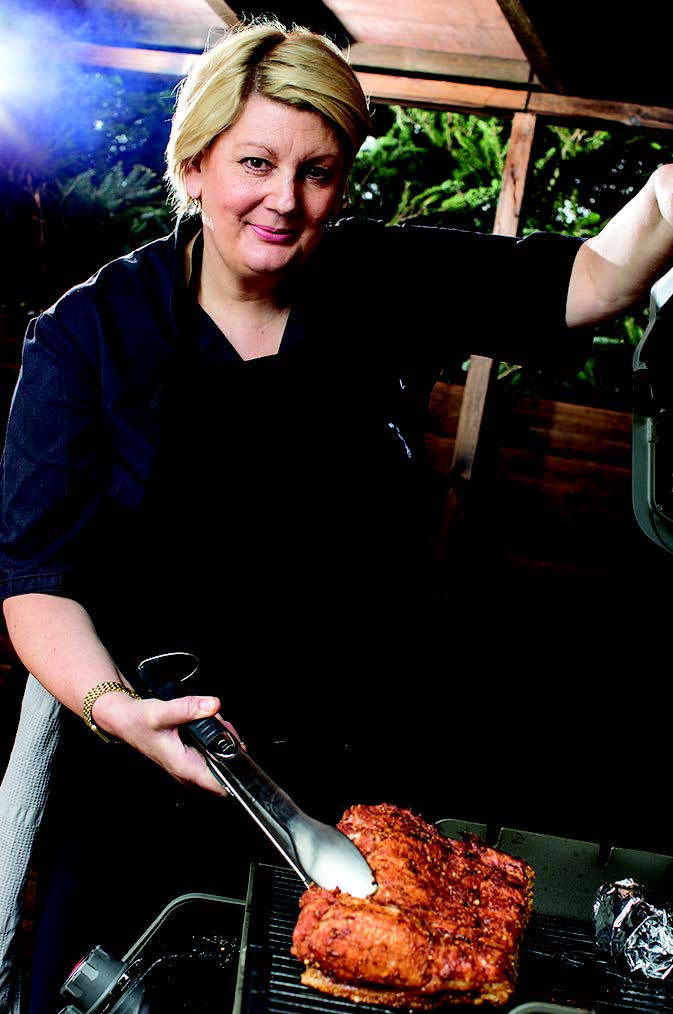

TV chef Angela Gray: Pork for
Wales ambassador
FROM September 19 to October 4, British Food Fortnight will celebrate the finest local produce from around the UK. Taking place at harvest time, this annual national festival promotes the benefits of eating seasonal food which, in the autumn, includes ham and sausages. And you won’t find any better than those made with pork from Wales.
Pork from Wales is steeped in the tradition, knowledge and expertise, handed down over many generations, needed to ensure that the quality of the end product is first class. Welsh farmers adapt their farming methods according to the time of year, giving the pigs the care they need in every season. The climate and landscape of Wales both contribute to producing quality pork.
Welsh pig farms are typically smaller and more specialised than their European equivalents. The pigs, mainly rare breeds including the native Pedigree Welsh, are kept in smaller herds and reared for longer, allowing them to mature. As a result, pork from Wales has a darker colour to its skin and rose-coloured flesh and this is reflected in its taste, as testified by TV chef Angela Gray, who runs a cookery school at Llanerch Vineyard in the Vale of Glamorgan.
She said: “Generally kept in smaller herds, the pigs tend to live in a more natural environment and are less stressed, improving the overall quality of the meat. From taste to texture, the difference in quality is clear: compared to supermarket products, Welsh pork is much better for cooking.”
Angela is one of 14 ambassadors for pork from Wales who have been chosen to feature on the new Porc.Wales website, which was created to showcase the fantastic pork that Wales produces.

Emma Rose, who runs Rhosyn Farm near Carmarthen with her husband Neil, features on the new Porc.Wales website which is designed to encourage people to eat local pork. Emma is just one of a small handful of producers who were picked to tell the story about why pork produced in Wales is so special.
Emma and Neil have been running the farm since 2006 and now have around 100 acres of woodland for their herd of Gloucestershire Old Spot pigs. Their flavoured sausages have won six gold awards at the Royal Welsh Winter Fair, where they also won gold for their bacon and came third overall in the competition.
Emma said: “Thanks to grazing on a wide variety of nutrients and minerals from the woodland soil, our pigs produce stronger flavours and tastier produce. This breed is special to us as it delivers both wonderful bacon and pork, but it is also one of our rare breeds; one which I am keen to support and protect.”
Michelle and her husband, from Cosheston, started keeping pigs as a hobby before deciding to go into rearing them to sell at local farmers’ markets. Then in 2014 they set up Slow Pig, a hot food van serving up slow roast pork, handmade burgers, chorizo and their own frankfurters at food and music festivals, weddings and events across Wales.

She said: “We now keep around 50 pigs at our farm, where they are free to roam outdoors in pasture and Beech woodland. We raise mainly Saddleback and Magalitza breeds; the latter are a rare, curly-coated Hungarian breed known for their high fat content, making them particularly suited to charcuterie. Our pigs are reared to 14 – 19 months and because they’ve taken longer to rear, this makes for a tastier product and we think that makes all the difference.
“The connection between the farm and the van means that we use the whole of the pig, meaning we get to try out lots of interesting dishes, and that nothing is wasted, from beautiful slow-braised pigs’ cheeks to a Welsh favourite, homemade faggots. Our trademark dish is the Crispy Pig Burger, slow-roasted pulled pork, shaped into a patty, then coated in a panko crumb, deep fried and served with an apple slaw.
“Our pigs are reared in small herds and are free-range means they have the best standard of living. Slow Pig customers care about food provenance and don’t mind paying a little extra for a premium product.”

Hybu Cig Cymru – Meat Promotion Wales (HCC), which created Porc.Wales, is the organisation for the development, promotion and marketing of Welsh red meat. They work with all sectors of the red meat industry, from farmers through to retailers, to develop profitable markets for PGI Welsh Lamb, PGI Welsh Beef and pork from Wales.
Melanie Hughes, Market Development Officer at HCC said: “The pork industry in Wales is growing and also innovating and it’s something that we can all be very proud of. The new Porc.Wales website informs foodies about the wonderful people and products that we have in this sector of the meat industry in Wales and it will hopefully encourage consumers to buy good quality, locally produced pork.”

Spring appeal launched to rehome 180 birds by Friday deadline
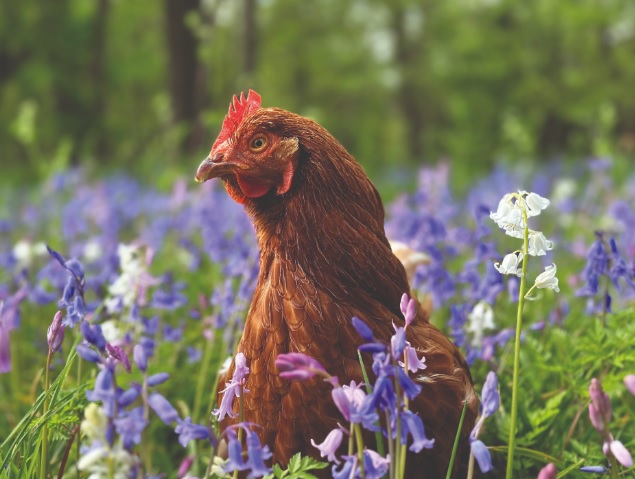
AN URGENT appeal has been launched to find homes for 180 ex-commercial laying hens in Boncath before next weekend, with campaigners warning the birds may otherwise face slaughter.
The British Hen Welfare Trust is holding a rehoming event in Boncath on Saturday (Apr 11), but says kind-hearted adopters must register by 2:00pm on Friday (Apr 10) if the hens are to be given a second chance.
The charity says the birds, all around 18 months old, have reached the end of their commercial laying lives, despite still having plenty to offer as pets.
Supporters say hens are friendly, curious and easy to care for, and can continue to provide eggs while enjoying retirement in a garden or smallholding setting.
Andy Hill, of the British Hen Welfare Trust said: “People are often surprised by how much joy hens bring. They’re funny, curious little characters, they love routine, and they’re genuinely a delight to care for. Plus, they’re still more than happy to pop out the occasional egg.

“With spring finally here, this is the ideal time to start. These girls are more than ready for a fresh beginning, and they really do make wonderful pets.”
The trust says anyone willing to adopt must be able to provide food, water, shelter, security and a little care and attention.
The charity, founded in 2005, says it has now found retirement homes for more than one million ex-commercial hens across the UK, all of which would otherwise have been destined for slaughter.
People interested in adopting can visit the British Hen Welfare Trust website and select the Boncath rehoming event, or call the rehoming team on 01884 860084.
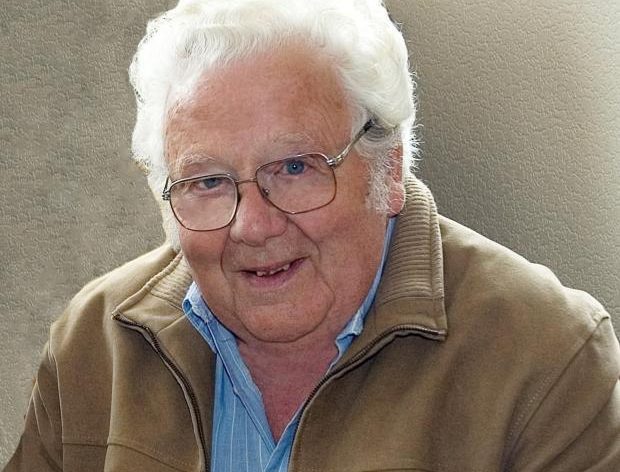
TRIBUTES have been paid to Johnny Morris, a much-loved Fishguard photographer who has died at the age of 91.
For decades, Johnny was a familiar figure across north Pembrokeshire, capturing community life through his camera lens for the local press, as well as for countless local groups, charities and organisations.
He was widely regarded as the go-to photographer for Fishguard and the surrounding area, with an extensive archive of images documenting local people, events and history over many years.
As well as his photography, Johnny was known for his love of gardening, his knowledge of local history and his gift for telling stories. Friends said he was often happiest in his garden, where he won several local trophies for his growing skills.
Johnny died peacefully on Sunday, March 22, at Park House Court in Tenby. He was predeceased by his wife Irene. He is survived by his daughter Joy, son-in-law Dilwyn, and his brother Derek.

Former Western Telegraph reporter Anwen Baldwin paid tribute, describing him as a lovely man and a great photographer.
She said: “He knew so much about the local area, its people, events and history.
“He had a great sense of humour and I loved hearing his stories about Fishguard past and present, although not all of them were for publication.
“He had a huge archive of pictures documenting the area over the years, and if I ever needed an image for a story, he would have it, no matter how obscure the request.

“He took me under his wing when I first started as the Western Telegraph’s north Pembrokeshire reporter and became a good friend who I always looked forward to catching up with.
“He will be greatly missed by the local community and the many reporters and editors who were always pleased to see a picture from Johnny Morris on their pages.”
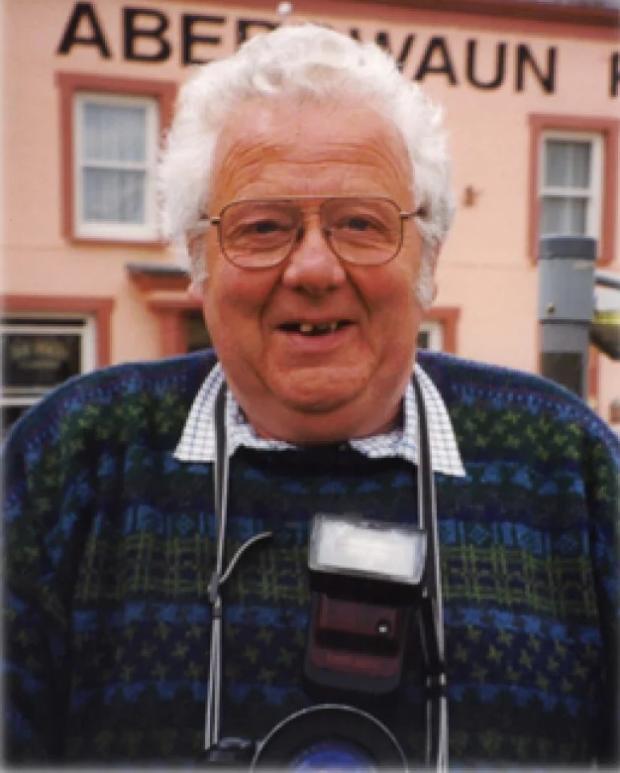
Fishguard RNLI said Johnny had played an important role in recording the life of the station over many years. In a mark of respect, the flag at the lifeboat station has been lowered to half-mast.

A spokesperson said: “It is with great sadness that we learn of the passing of local photographer and supporter of Fishguard RNLI, Johnny Morris.
“As the station’s photographer Johnny documented a vast array of station life, from crew photos and station fundraising events, to the arrival of our current D-Class inshore lifeboat, as well as countless other community events.
“As a mark of respect, the flag over the station will continue to be flown at half-mast.”
Fishguard and District Round Table also paid tribute, describing Johnny as a local photography legend and a strong supporter of community events and charities.
The group said he had always been on hand to record important milestones in the town.
Long-standing member Gwil Evans added: “He had a brilliant knack of being able to make even the worst of us look like a million bucks.”
Johnny’s funeral will take place on Friday, April 10, at 11:30am at the Chapel of Rest, Feidr Castell, Fishguard, followed by interment at Hermon Cemetery.
Family flowers only are requested. Donations in lieu of flowers may be made payable to Fishguard Lifeboat, care of Paul Jenkins & Sons Funeral Directors, Feidr Castell, Fishguard.

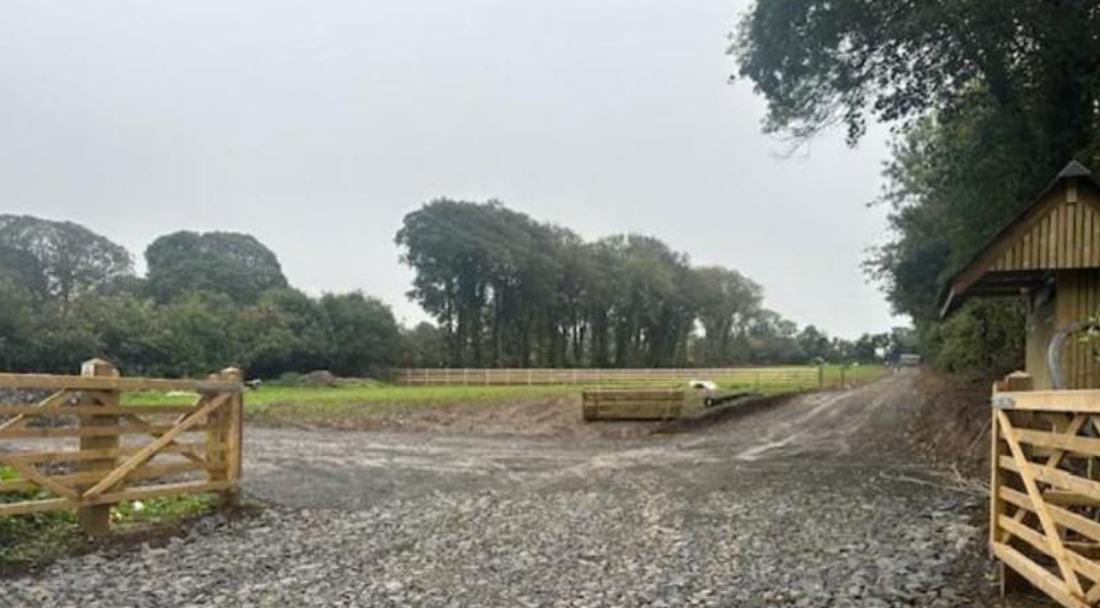
A CALL for a 60-foot-long shed and stables at the proposed home of a gypsy traveller family near a Pembrokeshire village has been refused by planners.
In an application to Pembrokeshire County Council, Ryan Surname Boswell & Family, through agent Hayston Developments & Planning Ltd, sought provision for an access road and replacement of temporary stables and storage containers with a multi-purpose shed and stables at Greenwells, Cosheston Bridge, Cosheston.
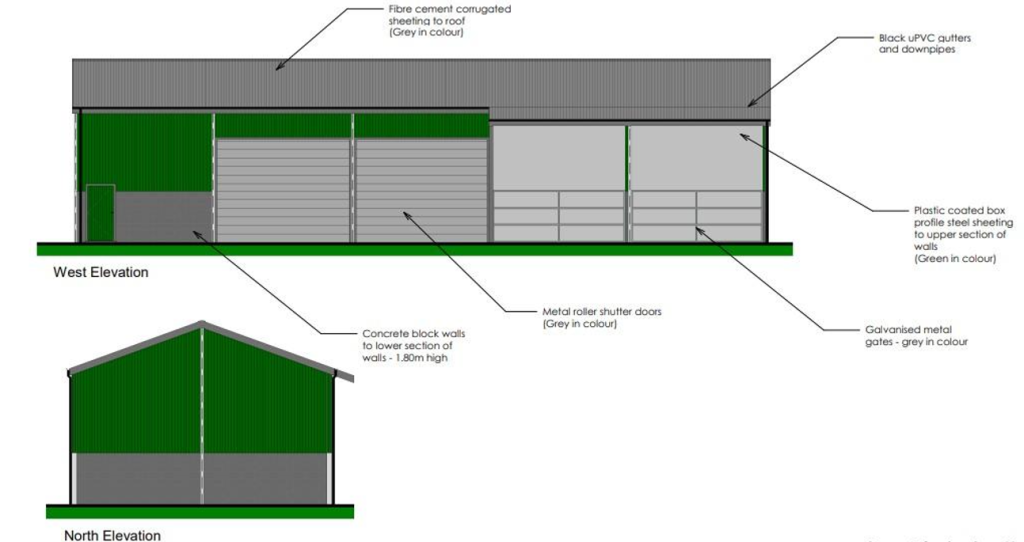
The application initially sought a 24.3 by 9.1 metre building, which has now been reduced to 18.3m by nine.
A supporting statement said that land to the north “is subject to a current planning application for the provision of two traveller family pitches with improvements to access and ecological enhancements with other land in our client’s ownership being un-affected”.
It added: “Mr Boswell and his family are of traveller origin and intend to make this site their family home. They own various domestic equipment, children / family articles, mowers / tools and farming equipment that require secure storage. The shed will also be used to house horses/ponies that are currently stabled in the temporary wooden stable block currently on skids on the land in question.”
It concluded: “The scale, design and use of materials (and colours) of the proposed shed is comparable to many new such sheds throughout Pembrokeshire. There will be no significant negative impacts on the level of amenity enjoyed by any neighbours or those travelling along the minor county road to Cosheston from any aspects of the proposed development.”
Local community council Cosheston had raised concerns including the “excessive” size of the proposed building, feeling “this is on the large side of what is required for a couple of ponies”.
It added: “Our concern is that the applicant intends to run his building/property maintenance business from the property. If the council grants the application, restrictions should made on the property’s use. i.e. restricted to agricultural use only.
“We have no objection to the construction of a small stable block, similar in size to the existing one on site.”

Objections were also received from two members of the public, raising concerns including the scale, environmental concerns, and a potential conflict with the ongoing application.
An officer report recommending refusal said the scheme was part-retrospective due to the prior formation of an access track within the field.
It added: “Despite amendments to the application as originally submitted by the reduction in building footprint and scale, the proposal remains a substantial and visually intrusive structure in the open countryside. An essential countryside need has not been justified nor evidence provided of an agricultural or equine enterprise warranting a building of this size or permanence.”

The application was refused on the grounds it “is not typical of a structure intended solely for the storage of paraphernalia associated with grazing land or for equine use and no information has been provided within the application to demonstrate the functional need for a building of this scale”.
It added: “The nature, siting and scale of the building would not be compatible with the capacity and rural character of the site, and together with the access track results in an unjustified and visually intrusive form of development in the open countryside, which does not represent sustainable development.”



Crime7 hours ago
Four youths stabbed at Tenby railway station as two arrested
British Transport Police lead investigation after serious disorder involving group of youths FOUR youths suffered stab wounds during a major...


News9 hours ago
Major emergency response in Tenby after incident near train station
Witnesses report injuries as police and ambulance crews remain at scene on Warren Street POLICE and ambulance crews remain at...


News19 hours ago
Haverfordwest County AFC faces High Court winding-up threat from HMRC
Chairman says issue has been dealt with, but winding-up notice is still listed ahead of High Court hearing HAVERFORDWEST County...


Local Government19 hours ago
Food hygiene checks have not been carried out in parts of a Welsh county since 2019
FOOD hygiene checks have not been carried out in parts of a Welsh county since 2019 due an inspection backlog,...


Local Government20 hours ago
Bridge works on Neyland-Burton road to continue into late April
Council says safety repairs remain on programme but traffic lights will stay in place as major bridge scheme moves into...

Charity2 days ago
Angle RNLI answers string of call-outs across the Milford Haven Waterway
Volunteer crew launched for searches, police incidents, a medical evacuation and a grounded yacht during a busy spell from mid-February...

Charity2 days ago
St Davids RNLI launches on Easter Monday after drifting kayak spotted off Solva
Missing vessel recovered near shore after coastguard confirms it had been reported lost days earlier ST DAVIDS RNLI launched on...

News2 days ago
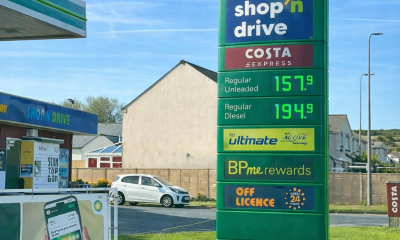
Diesel nears £2 a litre in Pembrokeshire as drivers scramble for cheaper fuel
Johnston forecourt hits 194.9p while wide price gaps and rush to fill up pile pressure on motorists across the county...

News3 days ago
St Davids Cathedral marked Easter Sunday with full day of worship
FROM dawn vigil to choral evensong, the cathedral welcomed worshippers for one of the most important days in the Christian...


Crime3 days ago
Neyland man spared immediate jail over aggravated vehicle taking
Defendant given a suspended prison sentence after magistrates heard the offence was serious enough to cross the custody threshold KRISTIAN...
-
 News5 days ago
Accommodation providers in Wales will be required to register under new law
-

 Entertainment5 days ago
From Milford Haven to the world: The story of The Evolution Experience
-
 Entertainment6 days ago
BBC unveils major new Welsh dramas with Tenby set for prime-time spotlight
-

 News7 days ago
Health minister refuses to act on Withybush despite 15,000-signature petition
-
 Community6 days ago
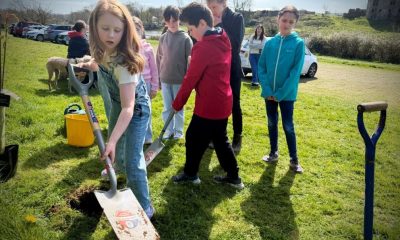
Sycamore Gap legacy takes root at Carew Castle
-

 Crime6 days ago
Driver spared jail after crash killed young couple
-

 Business6 days ago
Fire damaged Newgale Duke of Edinburgh Inn plans refused
-

 News3 days ago
Eluned Morgan targets Haverfordwest as Welsh Labour fights to hold its ground