


News
Tenby set to lose 25% of CCTV

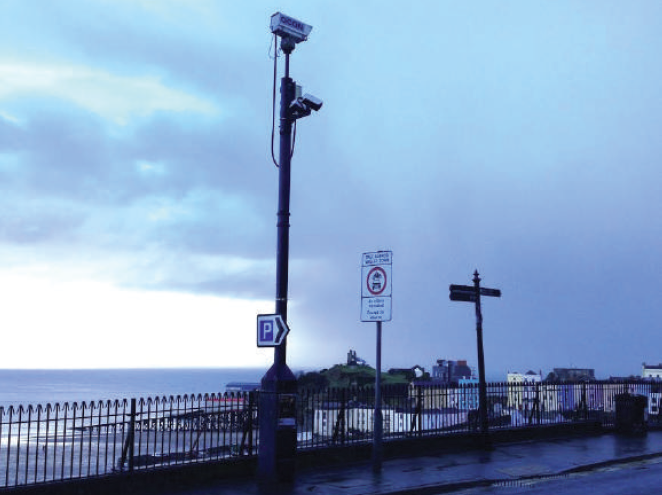

CCTV: Could this be one of the cameras to go?
TENBY is set to lose two of its eight CCTV cameras after budget cuts by its Town Council.
Councillors have decided to remove the £2,250, which the authority pays towards the line rental costs of the eight cameras, which are located throughout the town centre and harbour area.
On Tuesday (Feb 16) police attended a meeting of the council to urge members to change their minds, with the decision sure to affect the busy summer season, as it would come into effect at the start of the new financial year 2016-17.
Pembrokeshire County Council, whose environment and civil contingencies director Richard Brown attended the meeting, pays the remainder of the funding required to run the eight cameras.
Pembrokeshire has maintained its support for community CCTV despite councils in Powys and Ceredigion having withdrawn their support.

If Tenby Town Council decides to stand by its decision to cut its funding for the cameras the matter will be referred to the County Councils cabinet, who would then have to authorise a consultation on which two of the eight cameras should be turned off.


Volunteer crew launched for searches, police incidents, a medical evacuation and a grounded yacht during a busy spell from mid-February to early April
ANGLE RNLI volunteers were called out to a series of incidents across the Milford Haven Waterway in recent weeks, including missing person searches, a medical evacuation and assistance to vessels in difficulty.
The first of the incidents took place late on Sunday, February 16, when the crew was paged at 11:04pm to assist St Govan’s Coastguard Rescue Team and Dyfed-Powys Police with a missing person search at Cleddau Reach, Llanion. The launch was later cancelled after the casualty was located safe and well by police.
In the early hours of Tuesday, March 11, at 1:12am, the lifeboat crew was tasked alongside Dale Coastguard Rescue Team to assist with an ongoing police incident at Hakin Point, Milford Haven. The lifeboat launched and stood by within the marina lock until the incident was safely concluded. The crew was back alongside and ready for service again by 2:00am.
A further launch followed on Friday, March 21, at 1:09pm, when the crew was requested to assist a seven-metre motor vessel with three people on board suffering machinery failure off the Behar Wreck in Dale Roads.
Once on scene, the volunteer crew assessed the situation and decided the safest course of action was to establish a tow. The vessel was taken under tow before the line was handed over off Hobbs Point to a workboat from Rudders Boatyard for the remainder of the journey back to the slipway. With no further assistance required, the lifeboat returned to station and was ready for service again by 3:30pm.
Just after midnight on Tuesday, April 1, at 1:15am, Angle RNLI was again paged to help Dale Coastguard Rescue Team and Dyfed-Powys Police, this time in the search for a despondent woman in the Milford Haven area. As the crew prepared to launch, the casualty was found safe and well by police and the launch was cancelled.
Later the same day, at 9:52pm, the lifeboat was requested to assist with a medical evacuation after reports of a man suffering chest pains on board a harbour tug moored off South Hook.
A Port Authority pilot boat had already transferred the casualty from the vessel and was making for its jetty. The lifeboat rendezvoused with the pilot vessel, where casualty care-trained crew members boarded. Supported by Dale Coastguard Rescue Team, the man was assessed and extracted from the vessel before being handed into the care of colleagues for transport to hospital.
The lifeboat was back alongside her berth and ready for service again by 11:30pm.

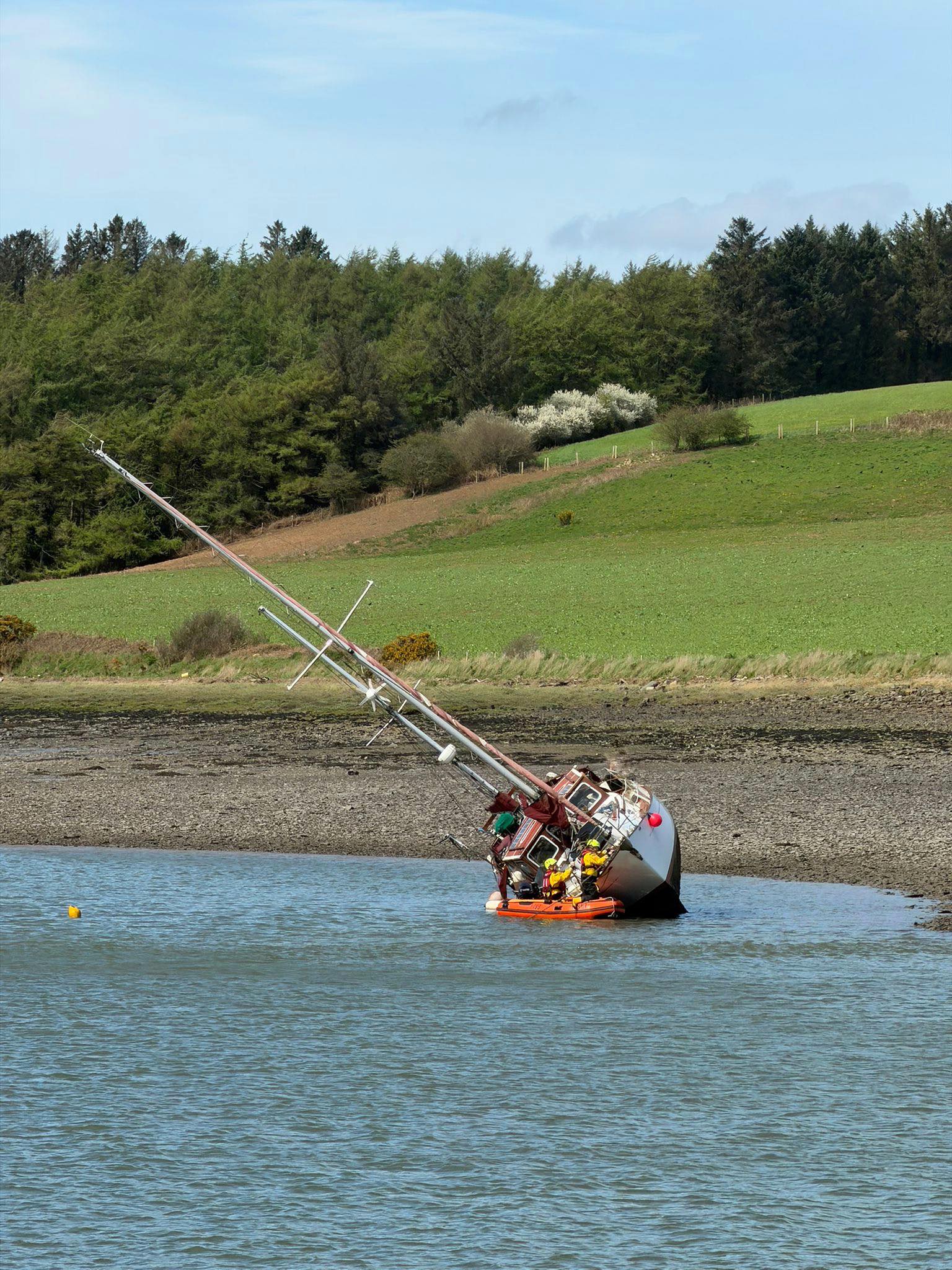
Most recently, on Monday, April 6, at 1:05pm, the crew was tasked to assist a fourteen-ton yacht with one person on board which had run aground and was listing near Mill Bay.
With the tide still ebbing, the immediate concern was the welfare of the lone skipper. The lifeboat launched shortly afterwards and located the yacht around twenty minutes later. With the vessel by then listing significantly, the crew deployed the inflatable Y boat to speak with the skipper and discuss the options.
The owner, who was understandably reluctant to leave the yacht, was helped to deploy an anchor. With no further assistance required, and the skipper content to remain on board and await the returning tide, the crew was stood down. The lifeboat was back alongside and ready for further service by 3:00pm.


Report finds previous recommendations led to better management of public money, but warns more work is needed by health boards and councils
AUDIT WALES has said the Welsh Government has made clear improvements in the way it manages the Regional Integration Fund, but warned that health boards and local authorities still need to strengthen their oversight of how the money is spent.
A report published by the Auditor General for Wales found that positive action taken in response to earlier audit recommendations has helped improve the use of public money.
The Regional Integration Fund supports efforts to better join up health, social care and housing services across Wales.
Audit Wales said the fund helped 181,922 people live independently during 2024-25 by supporting the management of their health and care needs.
The latest report follows an earlier 2019 review of the Integrated Care Fund, which identified both positive impacts and weaknesses in the way the fund was managed. That earlier review made six recommendations to the Welsh Government, all of which were accepted.

Since then, the Welsh Government has replaced the Integrated Care Fund with the Health and Social Care Regional Integration Fund, introduced in April 2022. Capital elements of the previous scheme were replaced by a new Housing with Care Fund.
According to Audit Wales, five of the six original recommendations have now been fully implemented, with the sixth partially implemented.
The report says the Welsh Government has improved the speed of its decision-making, strengthened monitoring arrangements and helped Regional Partnership Boards share learning and good practice.
However, the report also found weaknesses in how health boards and local authorities oversee the work of Regional Partnership Boards and the way Regional Integration Fund money is used.
Between 2021-22 and 2026-27, Regional Partnership Boards will have had access to £1.45 billion in Welsh Government funding, including £731 million through the Regional Integration Fund.
As statutory members of those boards, health boards and local authorities are responsible for oversight of the activity and spending. Audit Wales said more needs to be done to ensure that responsibility is being carried out properly and in line with Welsh Government guidance.
Auditor General for Wales Adrian Crompton said he was encouraged that the Welsh Government had taken the findings of the 2019 report seriously and acted on the recommendations.
He said the follow-up report showed clear improvements in the management of public money by both the Welsh Government and Regional Partnership Boards.
Mr Crompton added that, as more funding is channelled through Regional Partnership Boards, it is important that the Welsh Government continues working with partner bodies to make sure public money is being overseen and spent wisely.
The report also includes further recommendations intended to help shape the future management of the fund.
Missing vessel recovered near shore after coastguard confirms it had been reported lost days earlier
ST DAVIDS RNLI launched on Easter Monday after an upturned kayak was spotted drifting east of Solva Harbour.
The all-weather lifeboat, Norah Wortley, was requested to launch at 11:04am on Monday (Apr 6) after the vessel was seen floating in the water.
Heading into a strong south-easterly wind, the Tamar-class lifeboat made directly for Aber-west. Members of HM Coastguard St Davids Cliff Rescue Team assisted from the clifftop, helping to guide the volunteer crew to the kayak.
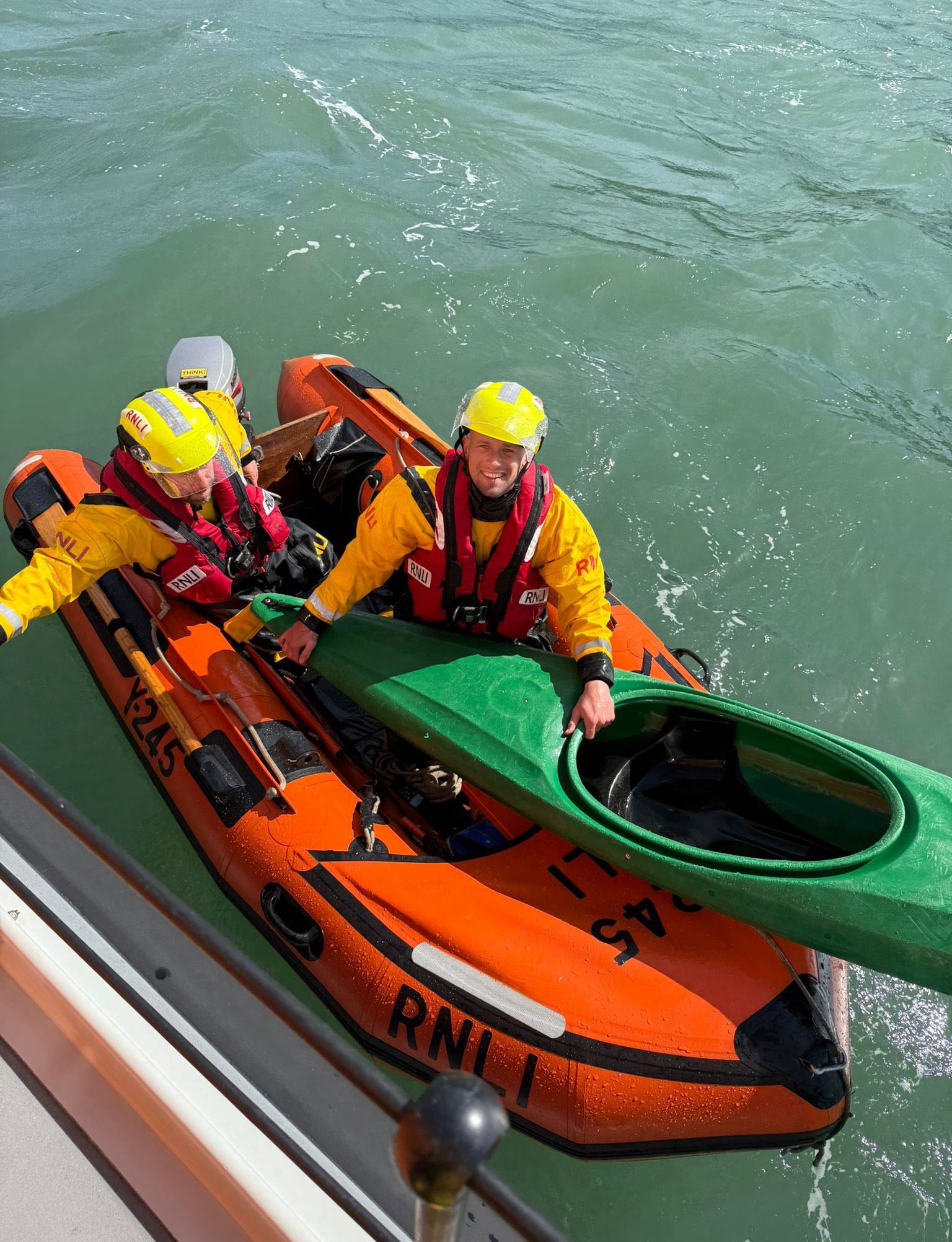
As the vessel was lying close to the shore, the lifeboat’s daughter boat was launched to recover it and bring it aboard the Norah Wortley.
Photographs of the kayak were then sent to HM Coastguard in Milford Haven, which confirmed it had been reported missing from Porthclais several days earlier.
That meant there was no need for a shoreline search for the owner.
The kayak was taken to Solva Harbour, where it was handed over to HM Coastguard and secured on the quay wall. The lifeboat returned to station at about 12:30pm.
St Davids RNLI Coxswain Will Chant said: “The timely reporting of a missing kayak by the owner potentially saved an unnecessary search operation. Thank you to members of St Davids Coastguard team for their assistance during this shout.”
Picture caption:

Easter Monday shout: St Davids RNLI recovers a drifting kayak off Solva after it was reported missing days earlier (Pics: RNLI)


Charity9 hours ago
Angle RNLI answers string of call-outs across the Milford Haven Waterway
Volunteer crew launched for searches, police incidents, a medical evacuation and a grounded yacht during a busy spell from mid-February...

Charity11 hours ago
St Davids RNLI launches on Easter Monday after drifting kayak spotted off Solva
Missing vessel recovered near shore after coastguard confirms it had been reported lost days earlier ST DAVIDS RNLI launched on...

News15 hours ago
Diesel nears £2 a litre in Pembrokeshire as drivers scramble for cheaper fuel
Johnston forecourt hits 194.9p while wide price gaps and rush to fill up pile pressure on motorists across the county...

News1 day ago
St Davids Cathedral marked Easter Sunday with full day of worship
FROM dawn vigil to choral evensong, the cathedral welcomed worshippers for one of the most important days in the Christian...


Crime1 day ago
Neyland man spared immediate jail over aggravated vehicle taking
Defendant given a suspended prison sentence after magistrates heard the offence was serious enough to cross the custody threshold KRISTIAN...

Health2 days ago
Crumbling NHS faces £1bn repairs bill in Wales
Senedd election promises collide with the harsh reality of ageing hospitals, fire safety concerns and a maintenance crisis stretching across...

News3 days ago
Emergency services respond to incident in Haverfordwest town centre
EMERGENCY SERVICES were called to an incident in Haverfordwest town centre on Saturday morning (Apr 4), with police and ambulance...
News3 days ago
Teenager intervenes after bridge incident
A TEENAGER was left shaken after stepping in to help a young woman in distress on Clay Lanes bridge in...


Crime4 days ago
Driver spared jail after crash killed young couple
A PEMBROKE DOCK driver who caused the deaths of a young couple in a road crash has been given a...

Entertainment5 days ago
BBC unveils major new Welsh dramas with Tenby set for prime-time spotlight
New crime series Old Town Murders and supernatural thriller The Witch Farm will both be filmed and set in Wales...
-

 News4 days ago
Accommodation providers in Wales will be required to register under new law
-
 Business6 days ago
Fishguard to Wexford rail tunnel plan backed by Elon Musk firm
-

 Entertainment4 days ago
From Milford Haven to the world: The story of The Evolution Experience
-
Entertainment5 days ago
BBC unveils major new Welsh dramas with Tenby set for prime-time spotlight
-
 Crime6 days ago
Driver trapped after crash while nearly four times over drink-drive limit
-
 Business6 days ago
Refusal over Pembrokeshire shepherd hut let goes to appeal
-

 News5 days ago
Health minister refuses to act on Withybush despite 15,000-signature petition
-

 Crime6 days ago
Care worker sentenced after assault on elderly resident